
Taiwan seabream
Taiwan seabream is a small sparid known from the waters around Taiwan; FishBase gives the distribution as the northwest Pacific, Taiwan only. It is recorded as marine, demersal and temperate, with no depth, temperature or spawning data. It is also small: males reach 18.4 cm standard length and females 21.6 cm standard length, at the small end of the genus.

Taiwan seabream is a small sparid known from the waters around Taiwan; FishBase gives the distribution as the northwest Pacific, Taiwan only. It is recorded as marine, demersal and temperate, with no depth, temperature or spawning data. It is also small: males reach 18.4 cm standard length and females 21.6 cm standard length, at the small end of the genus. IUCN lists it as Data Deficient, assessed on 4 December 2009.
Black and white, with a shoulder spot
The dorsal fin has XI–XII spines and 10–12 soft rays; the anal fin has III spines and 8–9 soft rays. There are 3.5 scale rows between the base of the fifth dorsal spine and the lateral line, and 3–4 cheek scale rows; scale counts and molars separate the closely similar Acanthopagrus species more reliably than colour. the body is rounded; the lips are thin, especially anteriorly; the second anal spine is robust with a dull point; the upper and lower molars are strongly developed and flattened, becoming more molariform posteriorly. The field mark is the colour: the head and body are mostly black, sharply demarcated from a whitish belly and chin, with a dark spot at the top of the pectoral-fin base. That black-and-white boundary plus the shoulder spot is faster than counting rays.
Taiwan only, on paper
FishBase records Taiwan and nothing else. The country table also lists only Taiwan/Chinese Taipei, as native. GBIF's 67 preserved records are 64 from Taiwan and two from Japan; the Japanese records have no matching distribution statement and look like mislabels or old accessions, so this page does not treat them as a range extension. iNaturalist has a taxon for the species but very few observations. It is marked demersal, marine and temperate, with no depth or substrate information. Where to fish can only be transferred from the genus: rocky shore, harbour mouths, breakwaters and the hard edge outside estuaries. That is genus-level experience, not a FishBase finding, and the text treats it conservatively.
No diet is recorded either; following the benthic habit of the genus, shellfish, crabs, prawns and worms are the sensible bait direction, and the text does not treat that as a confirmed finding.
No season table
There are no spawning months, no temperature band and no age data. A Taiwan-only range puts the fish at the temperate–subtropical boundary, but the record gives no numbers. Season has to come from local water temperature and fishing reports: northern Taiwan cools in winter and fish move deeper or into steadier water, while the south can produce fish all year. The temperate label fits that winter cooling, but the record gives no months, so any claim of a spring or autumn run has nothing behind it. No local season table is cited here, so no months are given.
Light tackle, small baits
Fish it as a small sparid: a light rock rod or a 7-foot lure rod, small hooks, fine line, and prawn, sandworm, crab or shellfish flesh. The heavy molars can crush shells, so a small hook with a soft bait enters better than a large hook with a whole prawn. Cast tight to structure — reef edge, breakwater base and hard harbour bottom. Add a split shot in strong current so the bait settles and hops with the flow. The fish does not make long runs; fine tackle is an advantage because it shows the soft bite.
The size ceiling is low
A 2000–3000 size spinning reel and an 8–12 lb fluorocarbon leader are enough. The 18.4 cm male and 21.6 cm female maxima are standard length, and the female ceiling is the higher of the two, so fish close to the top of the range are usually female; everyday fish are smaller, and this is not a big-fish target. No maturity length is recorded, so there is no defensible release size; the conservative move is to release fish close to the maximum and not to keep the smallest ones. A reef leader should be abrasion-resistant, but heavy tackle is unnecessary.
Eating and the rules
The only recorded use is commercial fisheries; there is no gamefish, aquaculture or aquarium entry. Treat the flesh like other sparids: steamed, braised or in soup, bled, gutted and iced promptly. IUCN status is Data Deficient, assessed in 2009. Data Deficient means the assessment lacked information, not that the stock is healthy; a small, endemic, sparsely recorded species deserves a conservative bag. In Taiwan region there is no nationwide recreational sea-fishing licence; inshore fishing is managed by the Fisheries Agency and local governments through closed areas, closed seasons, gear restrictions and minimum sizes, and the status of rocky shore and harbour spots varies. Check the current local notice. Hong Kong SAR and Southeast Asia are outside the range and not covered here.
What the record leaves open
The page uses FishBase taxonomy, morphology, distribution, environment, use and IUCN entries, with the country table for range and GBIF/iNaturalist for occurrence. FishBase has no biology, reproduction, depth or temperature record, and no estimates are added here. The two Japanese GBIF records conflict with the distribution text and are flagged, not used. A local name “Taiwan black seabream” has no settled formal literature, so the text keeps as the formal name.
How to catch it
Bottom fishing
Fished with the listed approach, matched to the recorded depth and size.
Lure fishing
Fished with the listed approach, matched to the recorded depth and size.
Where these facts come from
Check these pages before you rely on a size, range or protection status.
- FishBase — Acanthopagrus taiwanensis — FishBase · T2
- GBIF — Acanthopagrus taiwanensis occurrence records — GBIF · T2
- IUCN Red List — Acanthopagrus taiwanensis — IUCN · T1
- Photo record — iNaturalist — iNaturalist · T3
Fish in the same water
These fish live in the same place.
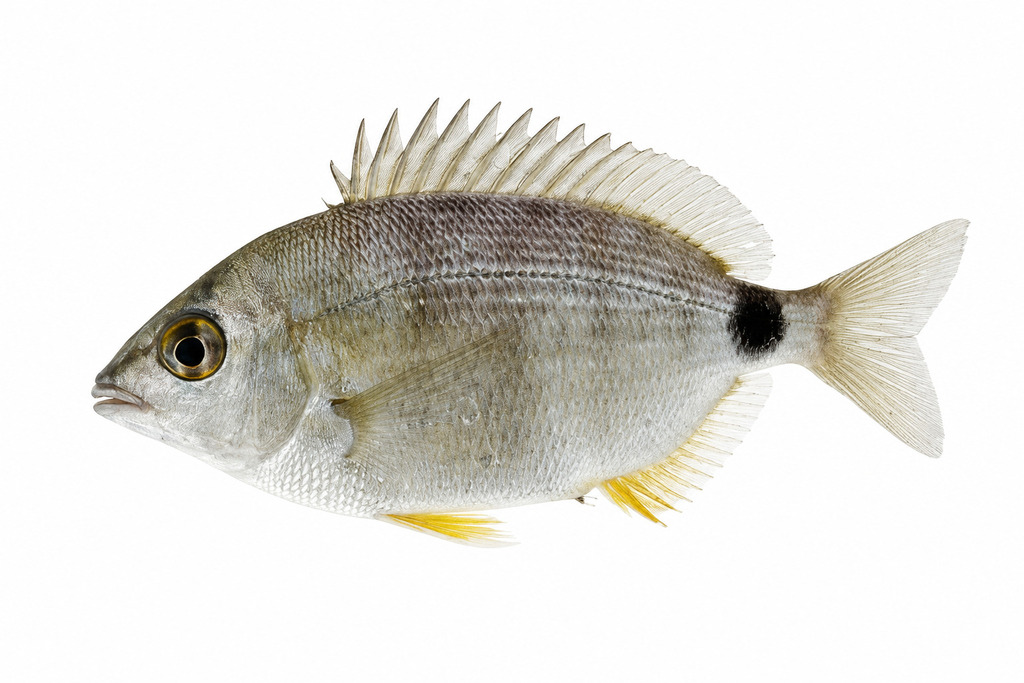
Annular seabream
- Family
- Sparidae
- Depth
- 0–90 m
- Season
- Jan, Feb, Mar, Apr, May, Jun, Jul, Aug, Sep
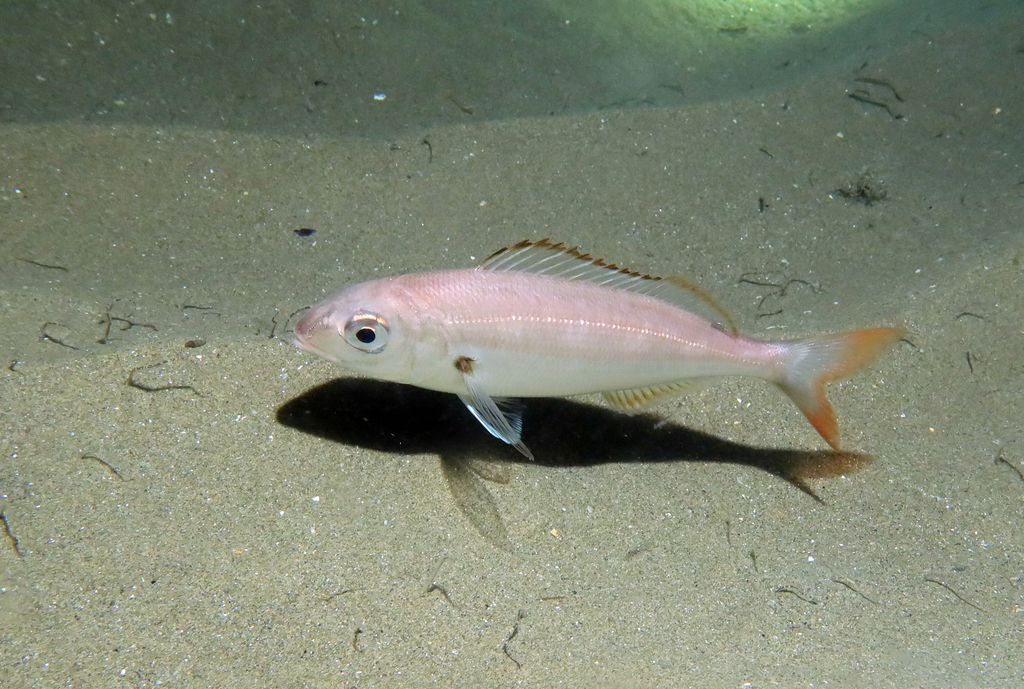
Axillary seabream
- Family
- Sparidae
- Depth
- 0–500 m
- Season
- Jan, Feb, Mar, Apr, May, Jun, Jul, Aug, Sep, Oct, Nov, Dec
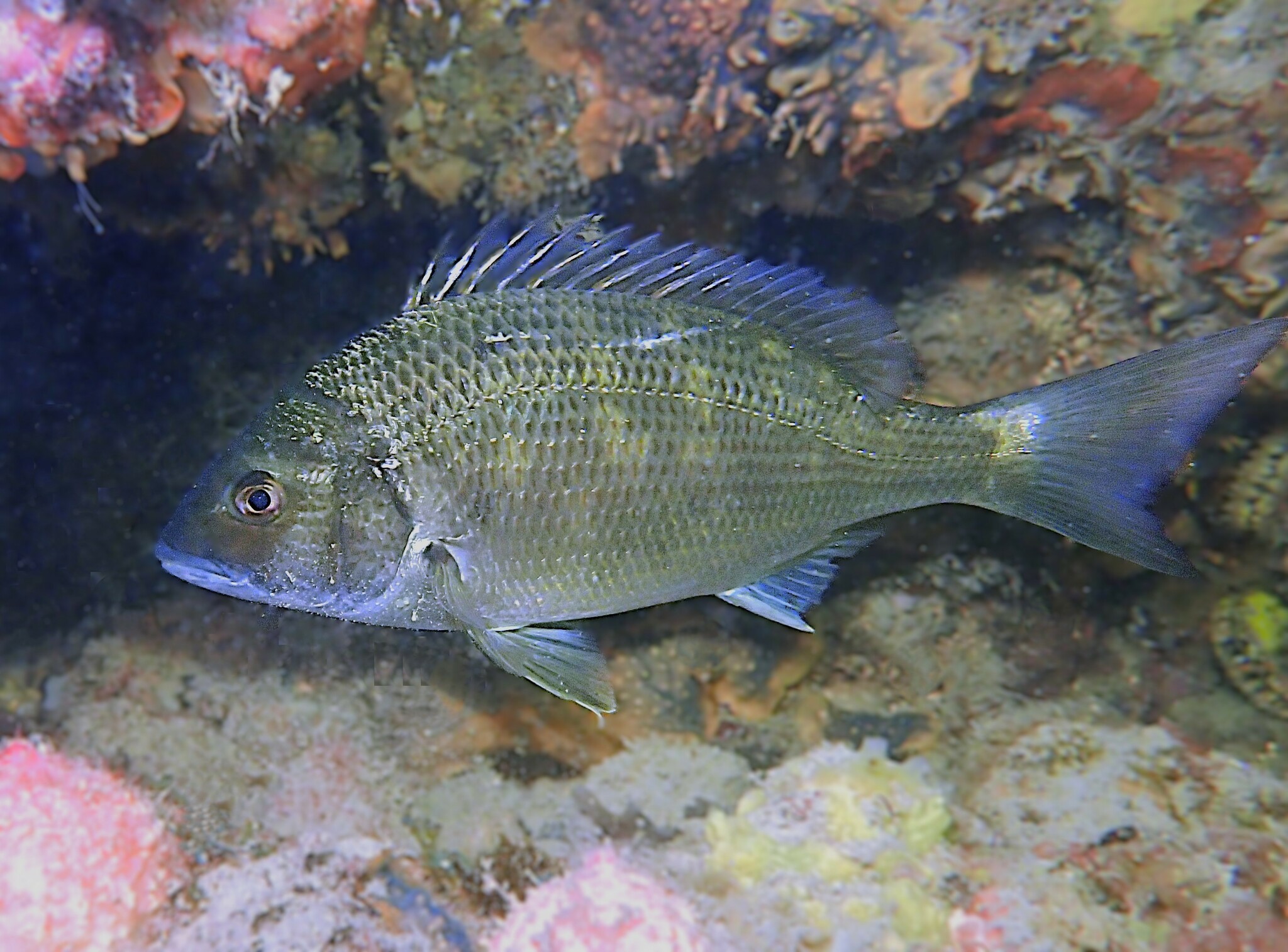
Black bream
- Family
- Sparidae
- Season
- Jan, Feb, Jul, Aug, Sep, Oct, Nov, Dec
Guides for this water
Technique, gear and safety guides that fit Taiwan seabream.