
Twaite shad
The twaite shad is a compact, herring-like member of the Alosidae that lives in coastal seas and migrates up rivers to breed. It occurs from Iceland and the British Isles south to Morocco, with additional populations in the Baltic, Mediterranean and Black Sea. FishBase gives a marine depth band of 10–400 m and spawning records from April to July, mostly in lower river reaches.
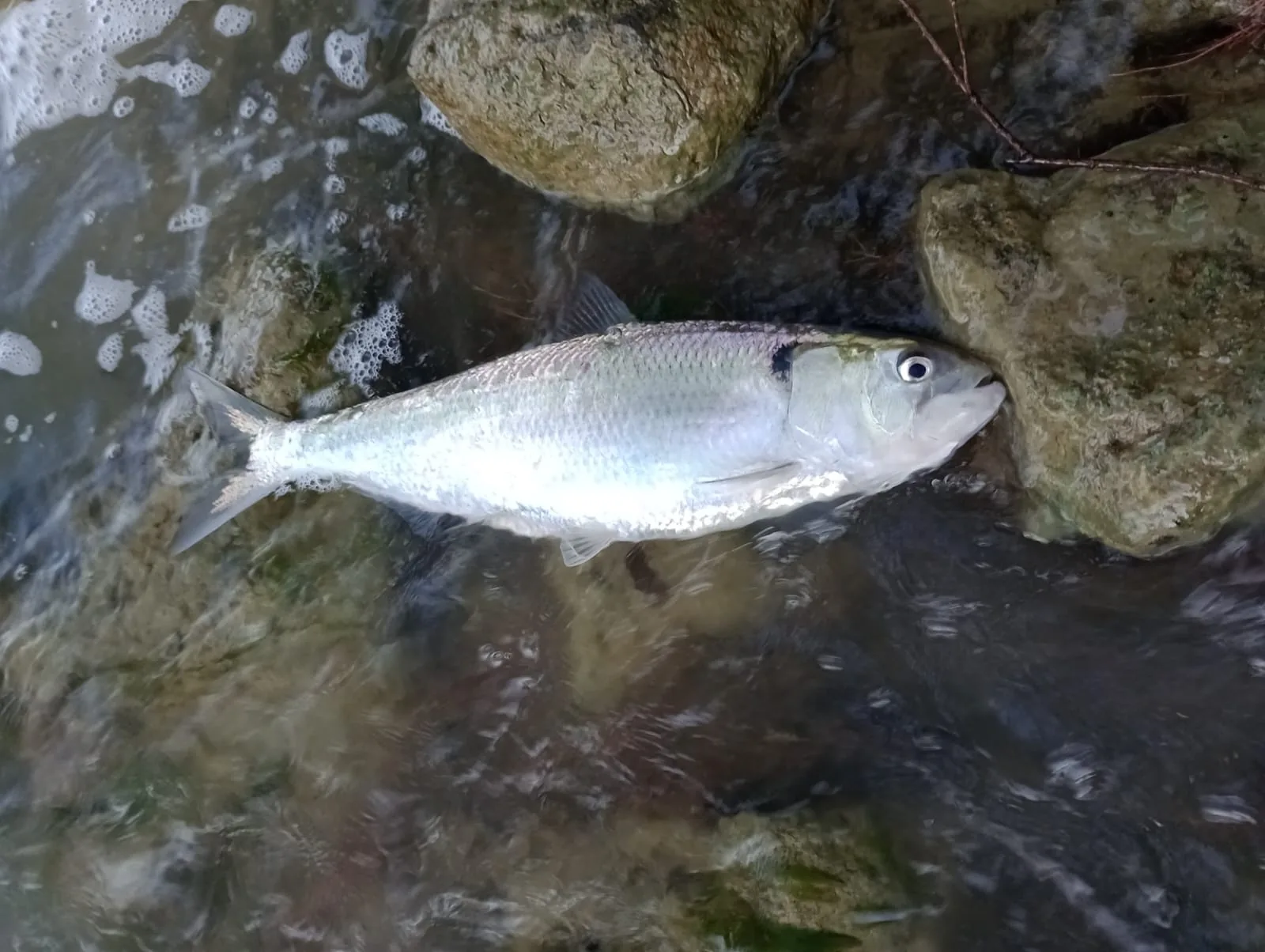
The twaite shad is a compact, herring-like member of the Alosidae that lives in coastal seas and migrates up rivers to breed. It occurs from Iceland and the British Isles south to Morocco, with additional populations in the Baltic, Mediterranean and Black Sea. FishBase gives a marine depth band of 10–400 m and spawning records from April to July, mostly in lower river reaches. At up to 60 cm standard length and 1.5 kg it is a minor commercial catch rather than an established sport target, and the 2022 IUCN assessment keeps it at Least Concern.
Identification
The English name has two spellings and several shortenings. FishBase's principal is Twaite shad, with Twait shad, Twaite, Killarney shad and Shad as variants; Wikipedia opens with "the twait shad or twaite shad". Chinese is , with and / as alternatives. The Killarney name is local; the species is otherwise a sea fish that runs into rivers.
Wikipedia supplies a field mark: the body is herring-like, with a row of six to ten distinct spots along the silvery flank. The capture's own counts describe a herring-shaped clupeid: dorsal soft rays 16–22, anal soft rays 19–26, anal spines zero, vertebrae 49–59, body fusiform, cross-section compressed. The size table gives 60.0 cm SL maximum, 40.0 cm SL common, 1.5 kg maximum weight, 25 years maximum age and 32.5 cm at first maturity.
One number matters here. The distribution text says subspecies were recognised on gill-raker counts and geography, and that some have since been raised to species; no raker count was captured. Without it the page can report the argument but not let a reader check the form in hand.
Habitat and distribution
The species is anadromous: marine, freshwater and brackish, pelagic-neritic, depth 10–400 m, temperate, 66°N–27°N and 25°W–42°E. Wikipedia states the pattern: it lives in the sea and migrates into fresh water to spawn, entering estuaries and then rivers.
The geographical text runs from southern and western Iceland to northern Morocco, taking in the North Sea and the Baltic, the Mediterranean and the Black Sea. The country table has 49 rows, all native and none introduced. GBIF returns 37 rows instead: 16 without a country code, Belgium 8, France 2, Sweden 2, Ukraine 2, and Denmark, Spain, the United Kingdom, Israel, the Netherlands, Norway and Poland one each. Six rows are marked native and two introduced, with 29 carrying no means. Those two introduced rows contradict the all-native table; the page records the conflict. iNaturalist holds 156 observations.
Season and fishing approach
Four spawning rows are carried, and the combined window is April to July. Europe is listed May–June; Italy and Tunisia May–June; France April–July in the lower reaches of rivers; Germany May–July in the Weser, Elbe and Ems. Read together, the season is a spring-to-early-summer run moving from estuary to river by country.
Wikipedia adds the age at which the run begins: fish become mature at three years or more, then migrate to estuaries and later up rivers. The capture gives no temperature trigger and no method.
The use line is minor commercial, with no gamefish entry. So: a commercial catch, a spring river run, no angling designation. The depth range, 10–400 m, covers the marine phase; the spawning rows cover the river phase.
Edibility and regulations
IUCN lists the species as Least Concern, assessed 26 June 2022. Wikipedia's account is less calm: populations have declined through overfishing, pollution and habitat destruction. Both can hold: a global assessment and local declines; the page presents them together.
The regulatory signal sits in that same Wikipedia sentence. Appendix III of the Bern Convention and Annexes II and V to the European Community's Habitats Directive cover the species, the source says. Those listings are site and species protections, not angling rules. The capture carries no size limit, season or bag limit, so a reader fishing a river run must check the national rule that implements the directive.
No food note is captured: the name carries a culinary reputation, but this bundle gives no detail on handling, taste or market size.
Where these facts come from
Check these pages before you rely on a size, range or protection status.
- FishBase — Alosa fallax — FishBase · T2
- GBIF — Alosa fallax occurrence records — GBIF · T2
- IUCN Red List — Alosa fallax — IUCN · T1
- Photo record — iNaturalist — iNaturalist · T3
Fish in the same water
These fish live in the same place.
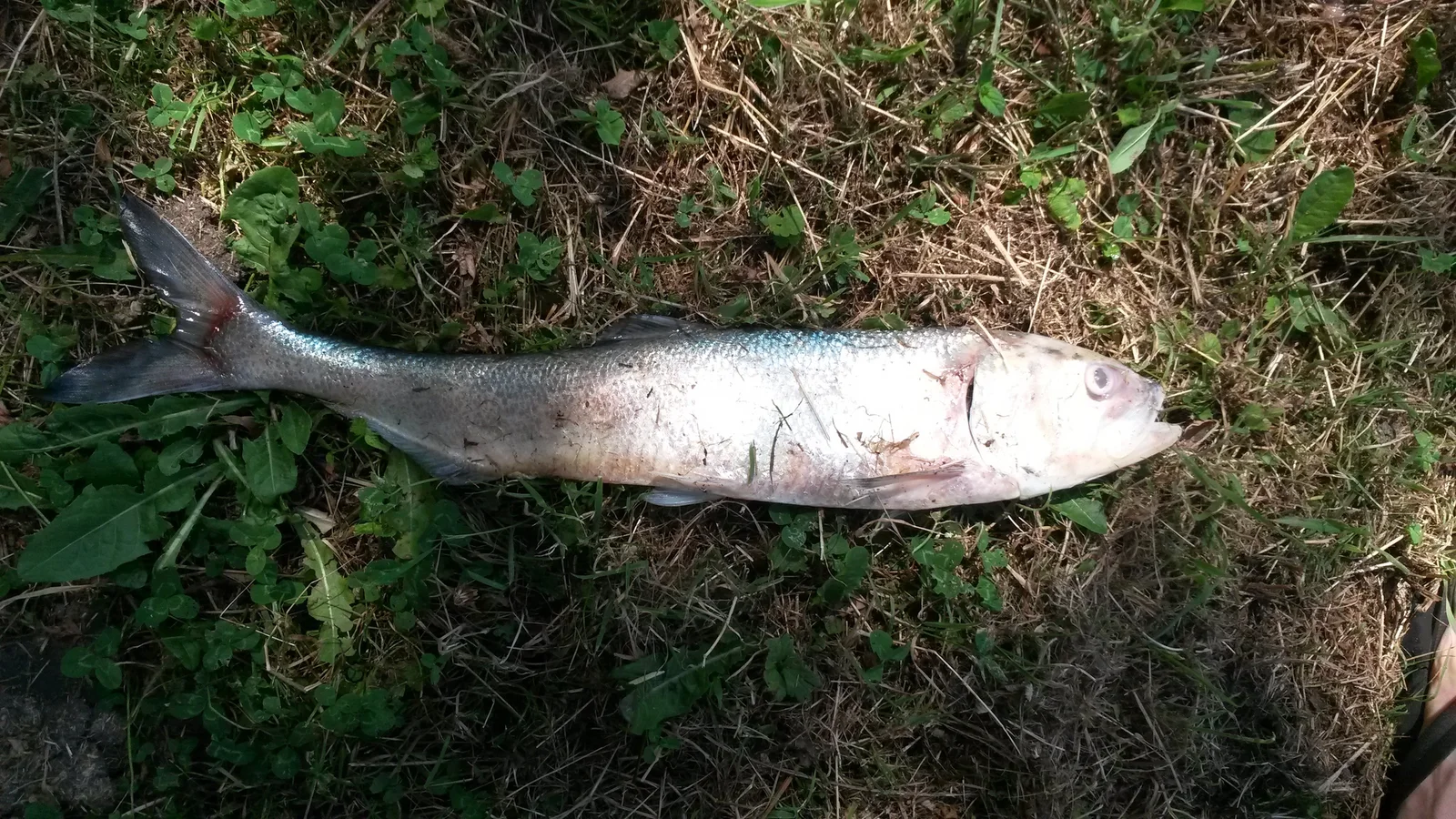
Allis shad
- Family
- Alosidae
- Depth
- 10–400 m
- Season
- Apr, May, Jun, Jul
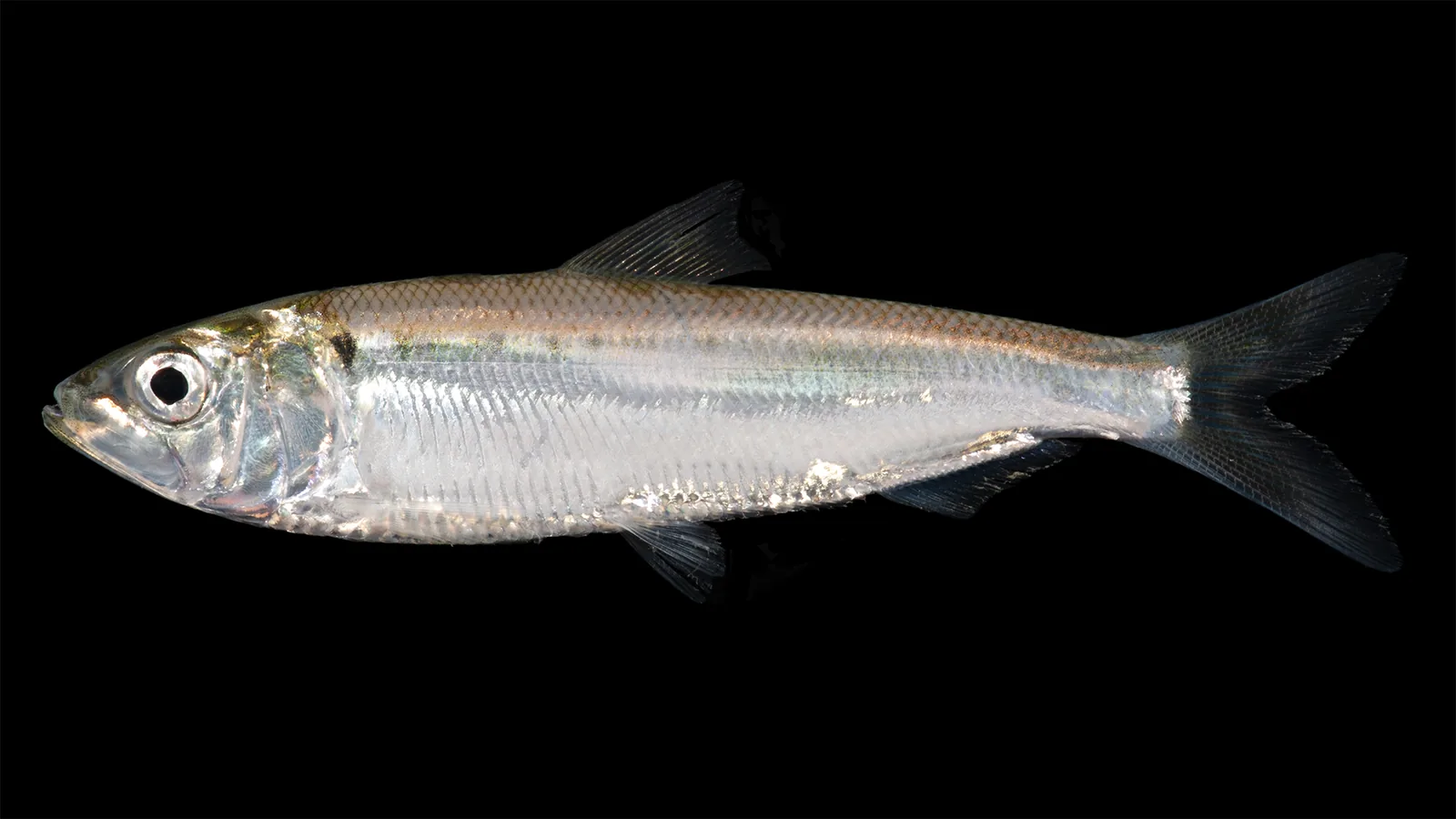
American shad
- Family
- Alosidae
- Depth
- 0–250 m
- Season
- Nov–Jun (spawning run)

European pilchard
- Family
- Alosidae
- Depth
- 10–100 m
- Season
- Jan, Feb, Mar, Apr, May, Jun, Jul, Aug, Sep, Oct, Nov, Dec
Guides for this water
Technique, gear and safety guides that fit Twaite shad.