
Starry ray
Starry ray is a cold-water skate of the North Atlantic and adjacent Arctic, from Canada to northern Europe. It feeds on crustaceans, fish, molluscs, worms and echinoderms over the continental shelf, from 5 to 1,540 m, in water of 1 to 14 °C. Adults reach 105 cm and 11.4 kg, and the species can live 28 years.

Starry ray (Amblyraja radiata) is a fish of the family Rajidae. FishBase gives its range as: North Atlantic and adjacent Arctic. It is recorded from 5 to 1540 m, in boreal water at 1–14 °C. The recorded maxima are 105 cm TL, 11.4 kg, 28 years. Diet includes crustaceans, fishes, molluscs, worms and echinoderms. IUCN status: Vulnerable (VU). Chinese name: .
One fish, ten names
The common-name table for this species is longer than the fish deserves. Sixteen English entries reduce to ten distinct strings: Artic thorny skate, Atlantic pricly skate, Maiden ray, Miller, Miller ray, Starry ray, Starry skate, Thornback, Thorny back and Thorny skate. The spellings "Artic" and "pricly" are printed as they stand in the source, not corrected here. The Chinese names arrive as two forms of one name plus a third that is not a synonym in the same sense: and are the same word in traditional and simplified script, while and name a blunt-headed ray. iNaturalist settles on Thorny Skate for its 258 observations. The lesson from the list is that a search for this animal should start from the scientific name, because "thornback" also belongs to a skate of a different genus on the same coast.
Range: two oceans, nineteen entries
FishBase's sentence is short, "North Atlantic and adjacent Arctic", and the territory table holds 19 entries. GBIF's distribution endpoint writes nineteen declarations of its own kind: ITIS records presence in both halves of the Atlantic, FADA regions for the Nearctic and Palaearctic, the IUCN global line, WoRMS marine regions for the Gulf of Maine, the Gulf of Saint Lawrence twice, European Marine Waters, the North West Atlantic, the Belgian EEZ, the Canadian Arctic EEZ and the Swedish EEZ, a Danish checklist with no status, a PRESENT entry keyed only as ISO:NO, and three Swedish native entries from the 2020 and 2025 Red Lists and Dyntaxa. One declaration sits outside the FishBase map entirely: South Africa, PRESENT, sourced to WoRMS. FishBase's 19 territories do not include South Africa. The two statements are reported side by side; nothing in either source explains the southern entry.
The brackish flag and the estuary that is not there
FishBase marks the species "Marine; brackish" and calls it oceanodromous. WoRMS also sets the brackish flag, with AphiaID 105865 under Donovan, 1808. The distribution endpoint, however, contains no estuary, no river mouth and no lagoon among its nineteen declarations: the marine entries are gulfs, shelf seas and EEZs. So the salinity line has two halves that do not meet. One half says the skate can enter water below full marine salinity; the other half lists no such water on the map. The record cannot be averaged into "sometimes estuarine", and the honest reading is that the physiological tolerance is flagged while the geographic evidence stays marine. The habitat keywords are sandy and muddy, which fits a shelf animal rather than a mudflat one.
Depth: 5 to 1540 metres, usually 25 to 440
Two depth statements run in parallel. The full range is 5 to 1540 m, and the usual range is 25 to 440 m. The second is the one that matters for planning: it removes the deepest 1100 metres from the everyday search and leaves a 415-metre working band. The temperature line is -1°C to 14°C, and the coordinate box is 79°N to 38°N, 95°W to 54°E, which spans the whole northern Atlantic and its Arctic shelf. The diet keywords list crustaceans, fishes, molluscs, worms and echinoderms; that is a bottom-scavenger and bottom-predator list rather than a midwater one. GBIF counts 210,721 occurrences for the key: Canada 120,732, Norway 29,945, Great Britain 25,751, Denmark 10,659 and the United States 10,259.
Size and age
The maximum is 105 cm TL male and unsexed, with 11.4 kg published weight, 87.5 cm at first maturity and an oldest recorded age of 28 years. No common length is published. The age figure is the unusual one on this page: 28 years against a 105 cm maximum and an 87.5 cm maturity length describes a slow, late-maturing skate, and the Vulnerable assessment of 1 July 2019 sits on that life history rather than on the current catch. The 11.4 kg weight is tied to the species, not to a measured specimen, so the weight cannot validate the 105 cm maximum.
Gear and approach
A 105 cm, 11.4 kg skate needs a rod and line above that load, a leader long enough to keep the bait clear of the wing, and a method of coming aboard that never relies on gripping the head. The 87.5 cm maturity length is the release measurement, and with a 28-year maximum age a released mature female is a long-lived animal returned to a slow population. The sources give no hook or leader specification, and the record's temperature floor of -1°C is the other practical limit: deck work in that water is a safety question before it is an angling one.
Rules and the last look
The IUCN category is Vulnerable, assessed 1 July 2019, and the species is minor commercial with gamefish yes. Catch rules are national. The Canadian stretch is administered by the Department of Fisheries and Oceans, European waters by the member state; neither FishBase nor GBIF nor WoRMS prints a size floor, a bag cap, or a closed period. The 87.5 cm maturity length is the only biological threshold on the page. The last look is the southern declaration: South Africa appears in GBIF's list but not in FishBase's 19 territories, and until a third source resolves it, the entry stays an unexplained extension.
Where these facts come from
Check these pages before you rely on a size, range or protection status.
- FishBase — Amblyraja radiata — FishBase · T2
- GBIF — Amblyraja radiata occurrence records — GBIF · T2
- IUCN Red List — Amblyraja radiata — IUCN · T1
- Photo record — iNaturalist — iNaturalist · T3
Fish in the same water
These fish live in the same place.

Blonde ray
- Family
- Rajidae
- Depth
- 10–380 m
- Season
- Feb, Mar, Apr, May, Jun, Jul, Aug
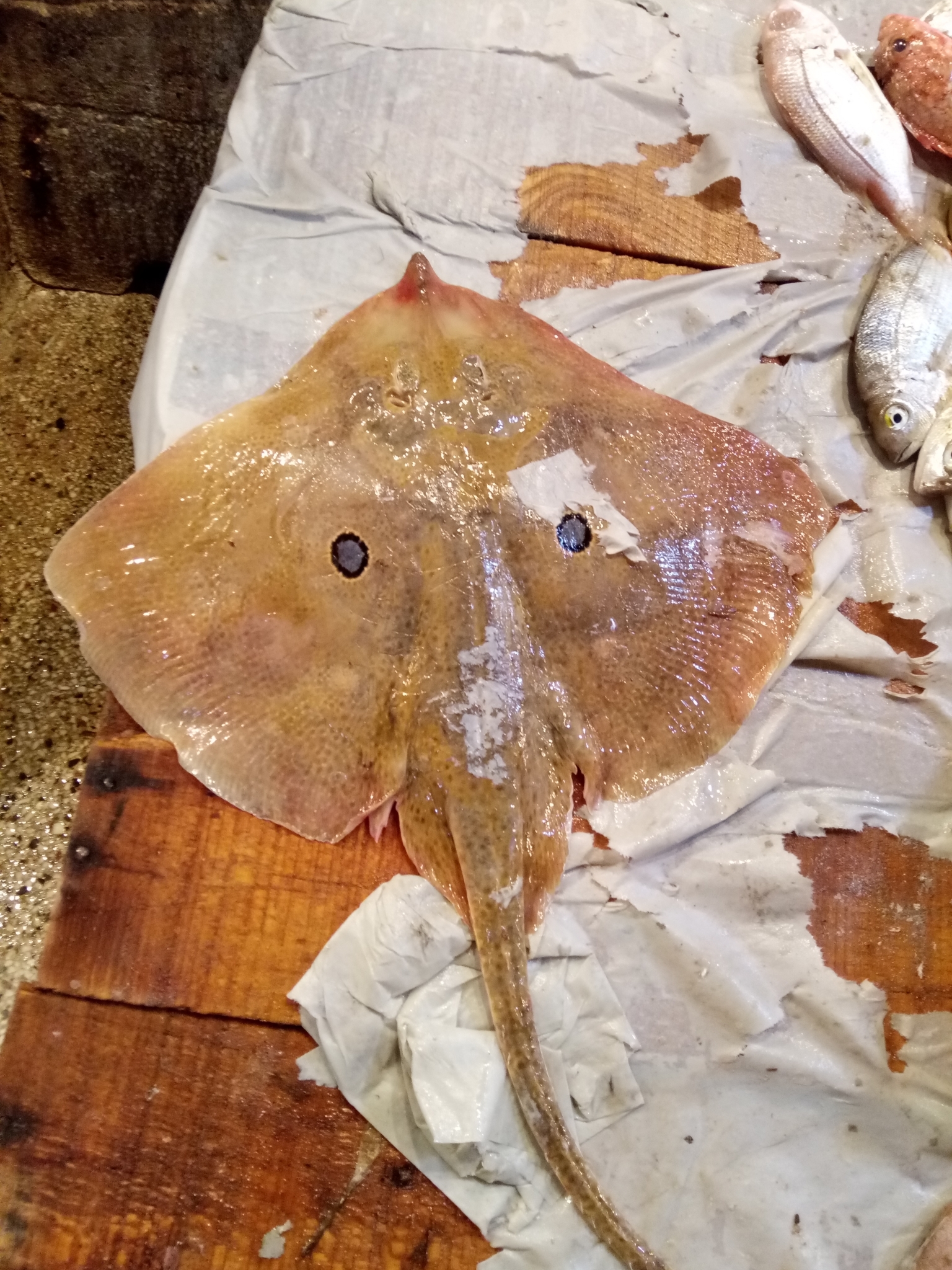
Brown ray
- Family
- Rajidae
- Depth
- 17–462 m
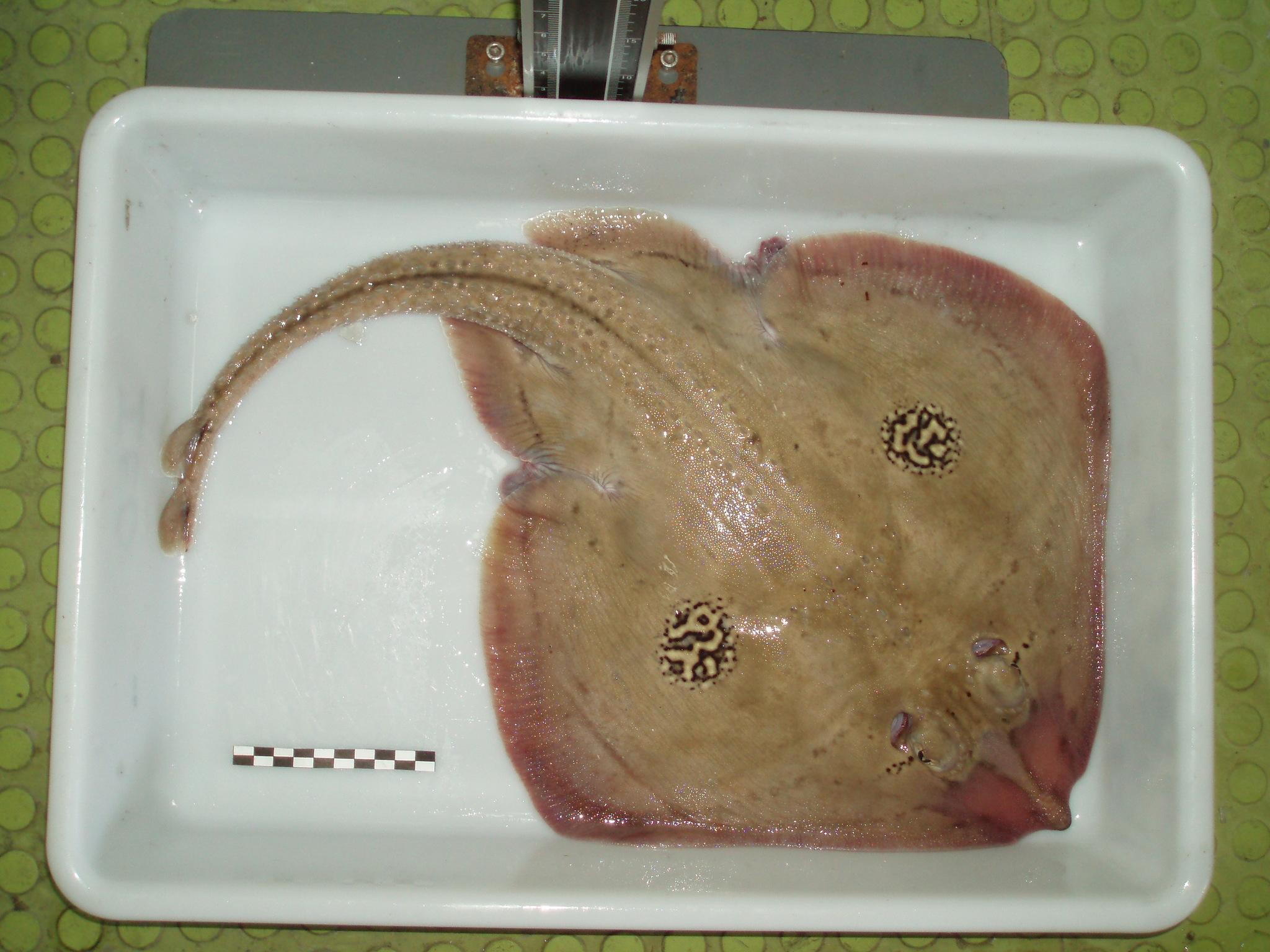
Cuckoo ray
- Family
- Rajidae
- Depth
- 12–900 m
- Season
- Jan, Feb, Mar, Apr, May, Jun, Jul, Aug, Sep, Oct, Nov, Dec
Guides for this water
Technique, gear and safety guides that fit Starry ray.