
Small sandeel
The small sandeel is a slender ammodytid ranging through the Northeast Atlantic from Murmansk to Spain, with Iceland and the Baltic included; Mediterranean reports are treated as misidentifications. It lives from 1 to 96 metres over sand, estuaries and coast, and reaches only 20 cm. FishBase calls it highly commercial and notes that it is usually used as bait, which is the honest role it plays for anglers — 13 cm is the approximate length at first maturity.
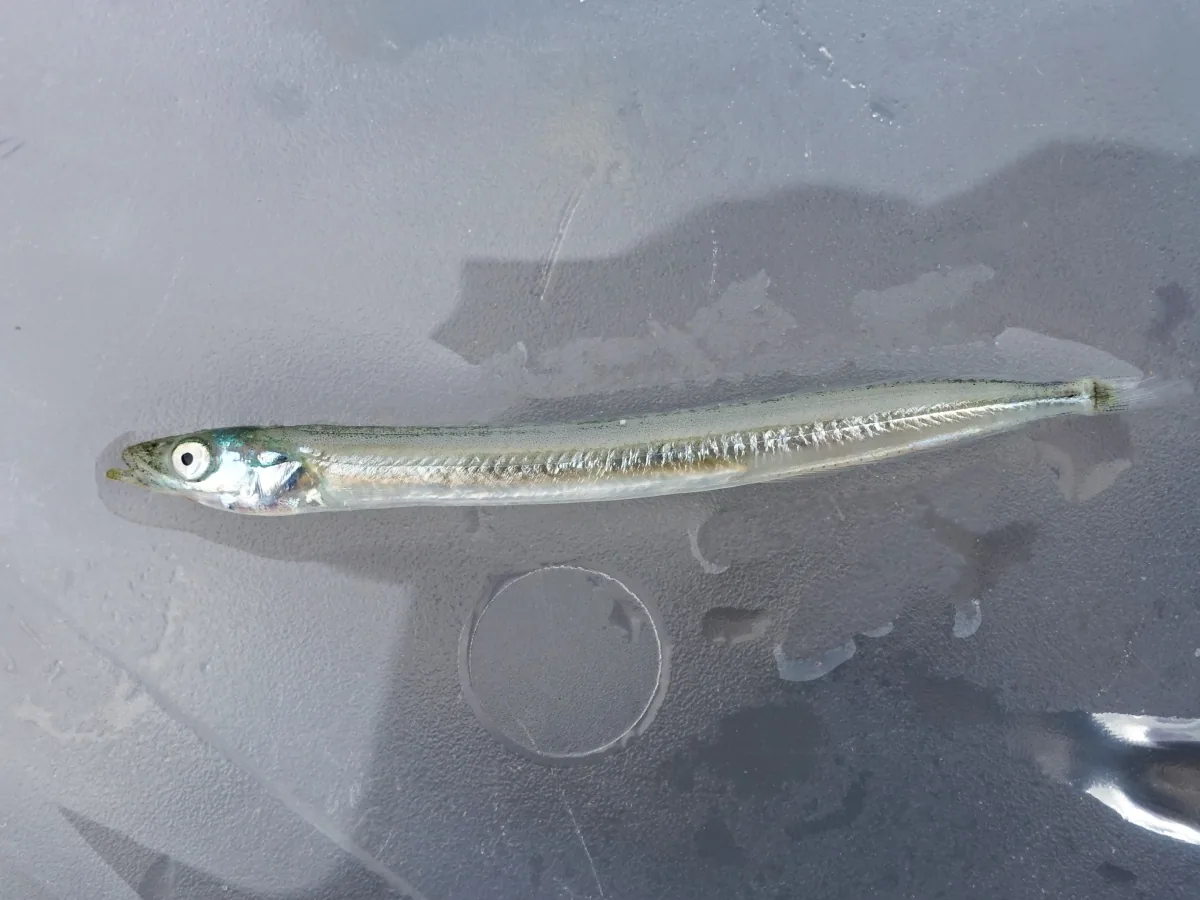
The small sandeel is a slender ammodytid ranging through the Northeast Atlantic from Murmansk to Spain, with Iceland and the Baltic included; Mediterranean reports are treated as misidentifications. It lives from 1 to 96 metres over sand, estuaries and coast, and reaches only 20 cm. FishBase calls it highly commercial and notes that it is usually used as bait, which is the honest role it plays for anglers — 13 cm is the approximate length at first maturity. It is listed as Data Deficient.
Identification
Maximum 20.0 cm SL, first maturity 13 cm within a range of 11–15 cm, oldest reported age seven years, and neither a common length nor a weight. Counts: 49–58 dorsal soft rays, 24–32 anal soft rays, 60–68 vertebrae, body elongated with a circular cross-section.
The name is the harder half. FishBase's principal English name is Small sandeel, and the vernacular list carries six further English strings — Lesser sand-eel, Lesser sandeel, Sand-eel, Sandeel, Smooth sand eel and Smooth sandeel. iNaturalist's preferred name is Lesser Sand Lance, and Wikipedia heads its page Lesser sand eel and describes the fish as elongated and cylindrical, up to 20 cm. The principal name and the page title are not the same name, and the string most likely to be written on a bag is the one this page does not lead with.
Habitat and distribution
Marine and brackish, demersal, 1–96 m, temperate, 72°N–36°N. Habitat keywords are sandy, estuary and coastal — the substrate word that Ammodytes marinus lacks is present here, which is one of the few clean separations between the two. Diet is zooplankton.
Distribution is Murmansk to Spain, including Iceland and the Baltic, and the record states that Mediterranean reports are misidentifications; 22 countries and territories in the table. GBIF holds 42 rows, eleven in Belgium, four in the Netherlands, two each in France and Sweden, and 17 without a country; iNaturalist holds 379 observations.
The record also describes two spawning groups that are often sympatric, spring and autumn, differing in mean vertebral number (higher in autumn), otolith structure and probably habitat, without subspecies status. Two groups under one name is the same problem in a second form.
Season and fishing approach
Spawning months are February–April and September–November, in two rows labelled Eastern North Atlantic and Northeastern Atlantic. Those two blocks are the two groups, not one long season with a summer gap.
The consequence for a reader is that a spawning mark is not one event: a shoal may hold the spring group and not the autumn one, and the vertebral count cannot be seen in the field. The species-level 60–68 vertebrae describe the whole taxon; the difference between groups is statistical.
Edibility and regulations
Data Deficient, assessed 10 March 2014. DD means the information was insufficient for a category — not "rare" and not "fine".
Highly commercial, bait usually, no gamefish entry. A Data Deficient species with a commercial fishery and a bait use is exactly where landings and assessment can drift apart, and this page does not close the gap. A category with a date and a commercial line do not correct each other.
Where these facts come from
Check these pages before you rely on a size, range or protection status.
- FishBase — Ammodytes tobianus — FishBase · T2
- GBIF — Ammodytes tobianus occurrence records — GBIF · T2
- IUCN Red List — Ammodytes tobianus — IUCN · T1
- Photo record — iNaturalist — iNaturalist · T3
Fish in the same water
These fish live in the same place.
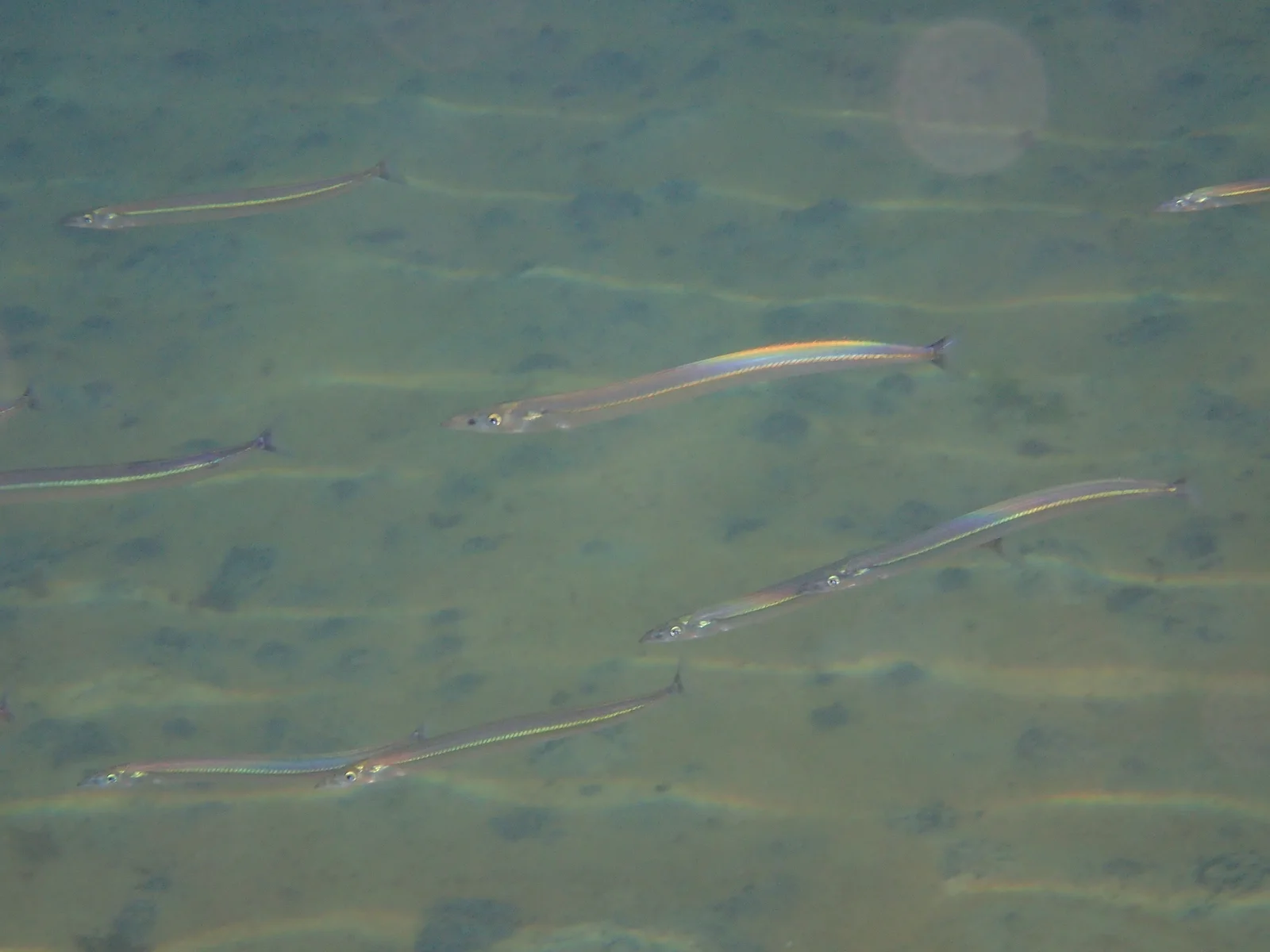
Great sandeel
- Family
- Ammodytidae
- Depth
- 6–30 m
- Season
- Apr, May, Jun, Jul, Aug, Sep
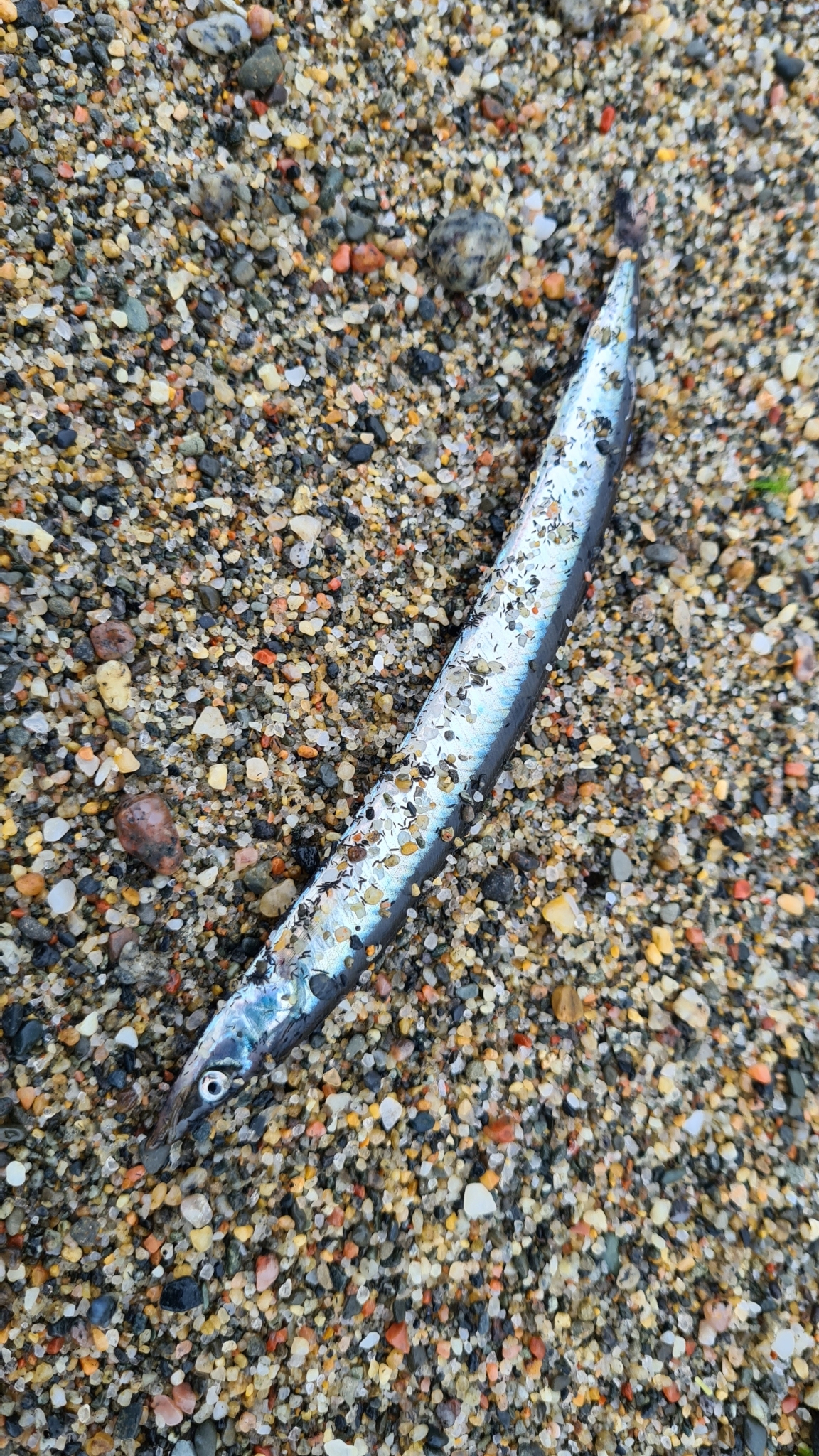
Lesser sand-eel
- Family
- Ammodytidae
- Depth
- 10–150 m
- Season
- Jan, Feb, Nov, Dec

Acoupa weakfish
- Family
- Sciaenidae
- Depth
- 1–20 m
- Season
- Jan, Feb, Mar, Apr, May, Jun, Jul, Aug, Sep, Oct, Nov, Dec
Guides for this water
Technique, gear and safety guides that fit Small sandeel.