
Great sandeel
The great sandeel is one of the Ammodytidae, a demersal and brackish-tolerant fish of the northeast Atlantic that runs from Murman and Spitzbergen to Portugal, taking in Iceland and much of the Baltic. It stays within a 6–30 m coastal band and feeds on fishes and zooplankton.
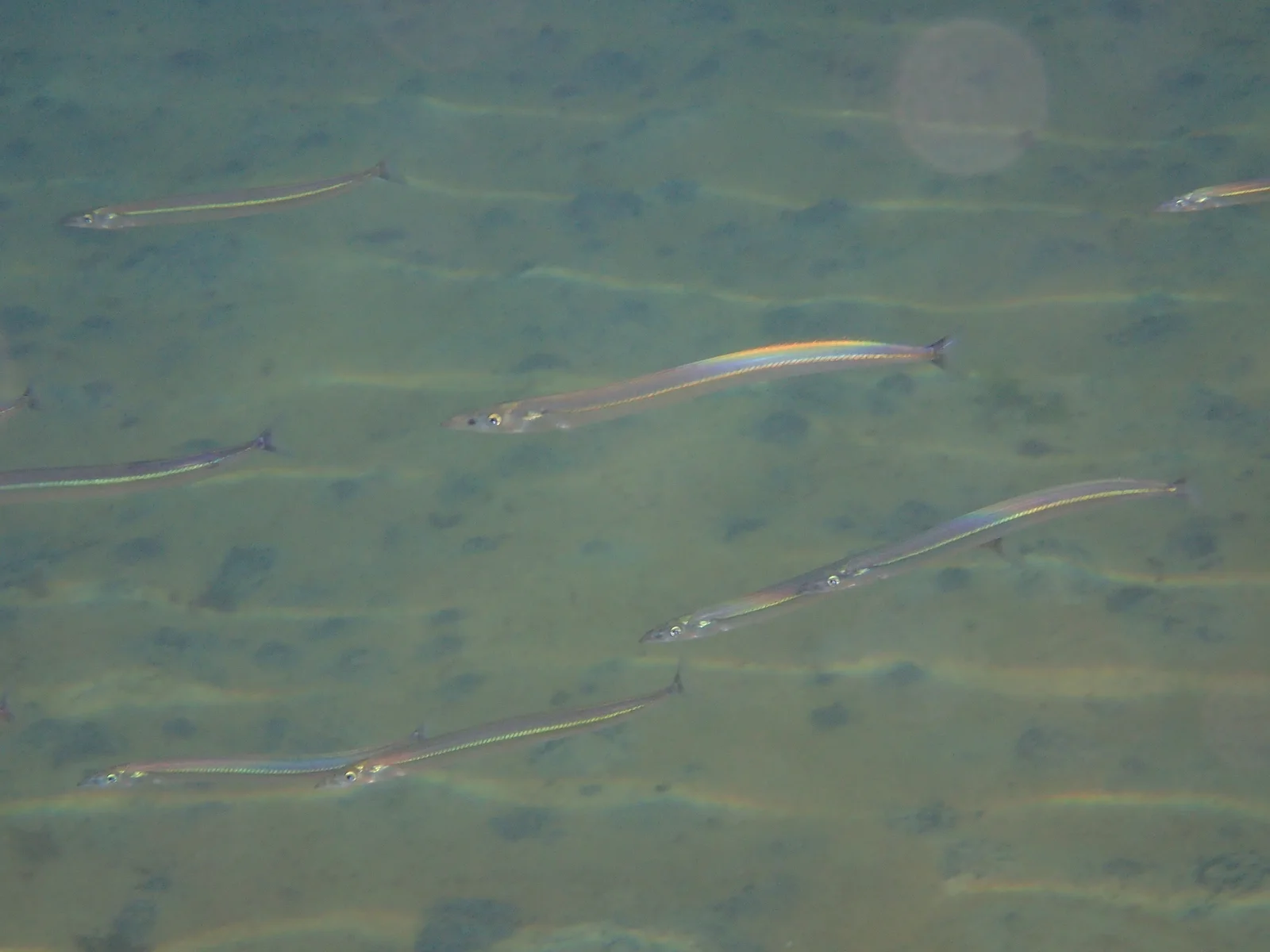
The great sandeel is one of the Ammodytidae, a demersal and brackish-tolerant fish of the northeast Atlantic that runs from Murman and Spitzbergen to Portugal, taking in Iceland and much of the Baltic. It stays within a 6–30 m coastal band and feeds on fishes and zooplankton. A maximum standard length of 40 cm against a common 20 cm makes it a substantial sandeel, yet it carries no gamefish entry: the fishery is highly commercial and the species is only occasionally used as bait. Anglers are more likely to encounter it as bait or as bycatch than as a quarry.
Identification
Three length figures arrive in two units and do not agree: 40.0 cm SL maximum, 20.0 cm TL common, and a first maturity of 13 cm within a range of 11–15 cm. Wikipedia gives 35 cm as the maximum. The 40 against 35 is a source conflict; the SL against TL is a measuring difference. Both are live questions for a fish this narrow.
No morphology block was captured, so there are no fin counts to fall back on. Identification here rests on the numbers and on two habitat tags, not on a description of the body.
Habitat and distribution
Depth is 6–30 m and nothing more: no usual band is given. For a demersal, brackish-tolerant, oceanodromous fish, a 30 m ceiling across 80°N–37°N is a coastal strip, not a shelf range. Habitat keywords are estuary and coastal; diet is fishes and zooplankton.
That 6–30 m window is the spine of this page. It is a whole band, not an average, and a tide moves the band bodily against a fixed cast: the shallow edge at low water stands where the middle of the band stood at high water. A mark that held fish on the flood can be out of the band, in depth terms, on the ebb.
Distribution is Murman and Spitzbergen to Portugal, including Iceland and much of the Baltic; 19 countries and territories in the table. GBIF's 27 rows put six in Belgium, three in the Netherlands, two each in France and Sweden, one each in Denmark, Great Britain, Ireland, Norway and Poland, and nine without a country; iNaturalist holds 63 observations.
Season and fishing approach
Spawning is April to September in a single row, and the row is the North Sea. One sea is one sample, not a range-wide season; it cannot carry Iceland and Portugal at the same time, and should not be quoted as if it could.
The species is highly commercial with bait recorded occasionally, and oceanodromous. A coastal band that also migrates can empty locally without any change in depth or weather. The practical reading is to use the window to choose ground and to treat a full mark as a bonus rather than a schedule.
Edibility and regulations
Least Concern, assessed 10 March 2014. LC is a dated category covering the whole range; it makes no claim about a single estuary. The commercial and bait lines sit beside it; Least Concern and local landing pressure remain compatible.
No gamefish entry. The size pair that matters is 20.0 cm common TL against 13 cm first maturity: most of the commercial size is above the maturity figure, and a fish at the 11 cm end is at the bottom edge of the recorded range.
Where these facts come from
Check these pages before you rely on a size, range or protection status.
- FishBase — Hyperoplus lanceolatus — FishBase · T2
- GBIF — Hyperoplus lanceolatus occurrence records — GBIF · T2
- IUCN Red List — Hyperoplus lanceolatus — IUCN · T1
- Photo record — iNaturalist — iNaturalist · T3
Fish in the same water
These fish live in the same place.
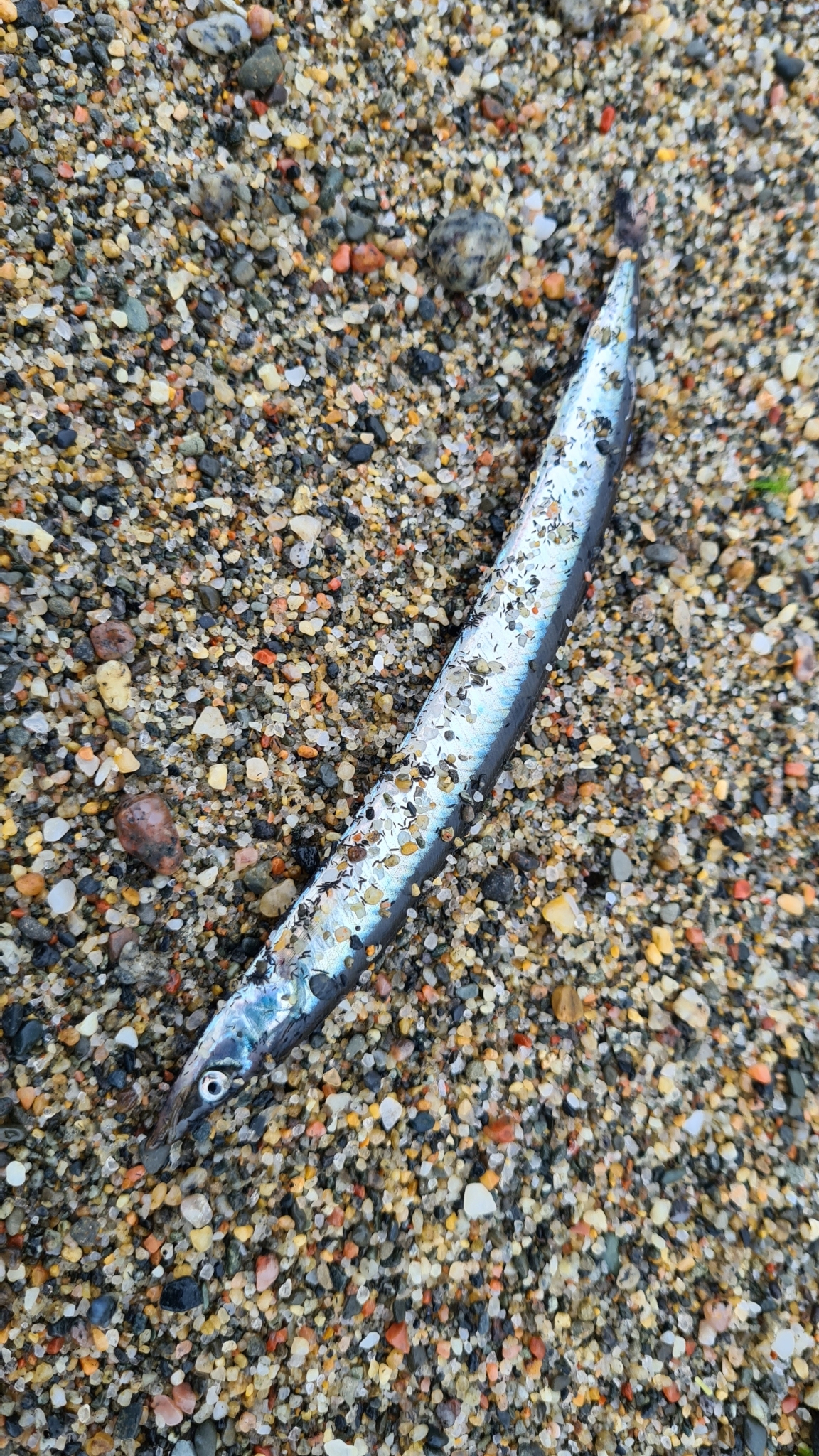
Lesser sand-eel
- Family
- Ammodytidae
- Depth
- 10–150 m
- Season
- Jan, Feb, Nov, Dec
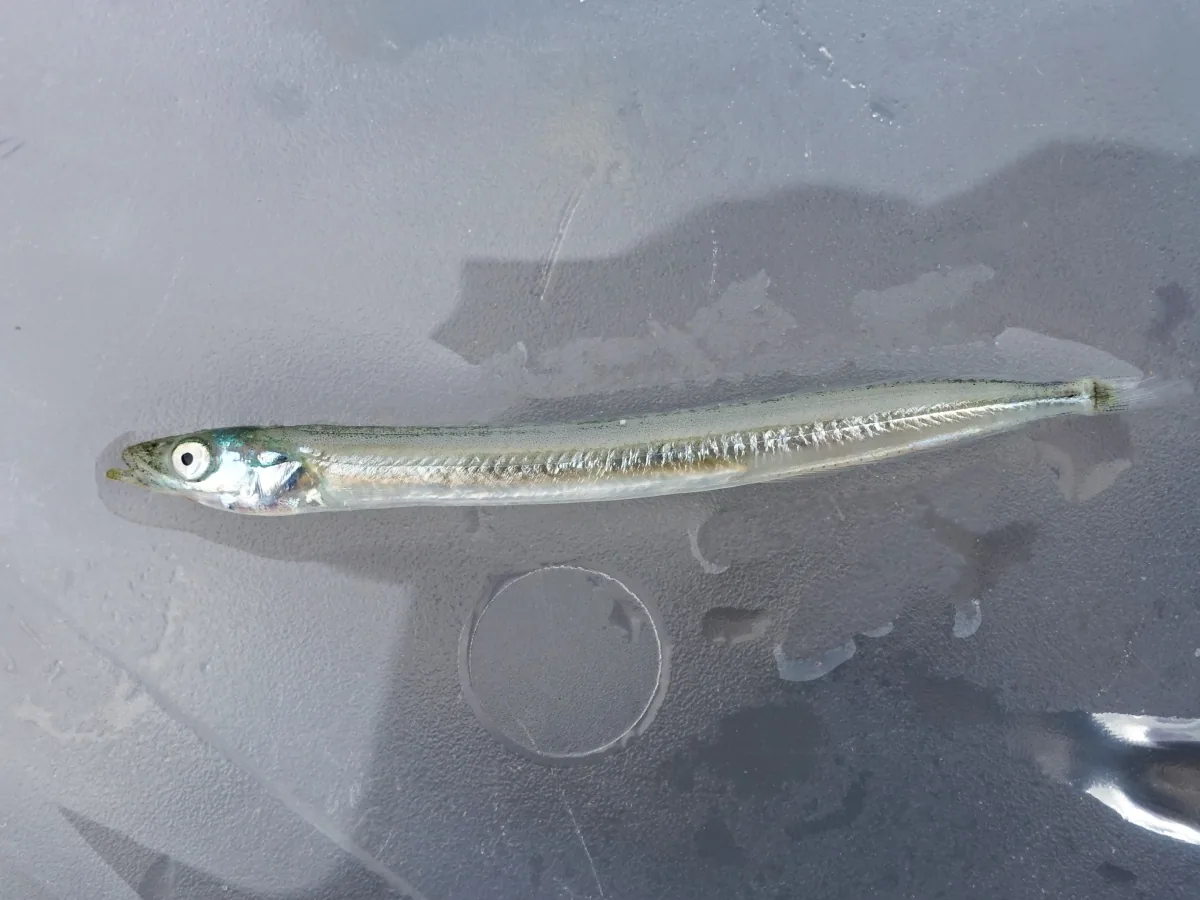
Small sandeel
- Family
- Ammodytidae
- Depth
- 1–96 m
- Season
- Feb, Mar, Apr, Sep, Oct, Nov

Acoupa weakfish
- Family
- Sciaenidae
- Depth
- 1–20 m
- Season
- Jan, Feb, Mar, Apr, May, Jun, Jul, Aug, Sep, Oct, Nov, Dec
Guides for this water
Technique, gear and safety guides that fit Great sandeel.