Sablefish
Sablefish is a deep-water fish of the North Pacific, from Kamchatka and Alaska south to Japan and Baja California. It works depths of 175 to 2,740 m, reaches 120 cm, feeds on crustaceans, fish and worms, and can live 94 years. It is available year-round.

Sablefish (Anoplopoma fimbria) is a fish of the family Anoplopomatidae. FishBase gives its range as: North Pacific: Bering Sea coasts of Kamchatka, Russia and Alaska southward to Hatsu Shima Island, southern Japan and Cedros Island, central Baja California, Mexico in the eastern Pacific. It is recorded from 175 to 2740 m, in deep water. The recorded maxima are 120 cm TL, 94 years. Diet includes crustaceans, fishes and worms. IUCN status: Not Evaluated (NE). Chinese name: .
Identification
Anoplopoma fimbria is the only species in its genus and one of two members of Anoplopomatidae. FishBase places the family in Perciformes, suborder Cottoidei. The fin counts on the page are 19 to 27 dorsal spines followed by 16 to 20 soft rays, and three anal spines with 15 to 19 soft rays; the body is fusiform in oval section. That combination is not a cod's: the true cods sit in Gadidae, and this fish is not one of them.
The size line is generous at one end and silent at another. The largest fish on record reaches 120 cm TL and the usual one is 80 cm TL; the oldest recorded fish reached 94 years. Maturity is recorded at 60.3 cm, within a band of 58 to 62 cm; that band is the release decision, because a fish under it has not spawned yet. No maximum weight is recorded, so the page will not tell you what a 120 cm fish weighs.
The market name
The English name table is a warning label in itself. It offers Sablefish, Black cod and Blue cod, among others, and attaches each one to a different country. Wikipedia adds butterfish and snowfish, and notes that many of these labels also name unrelated species. The US Food and Drug Administration accepts only "sablefish" as the market name and treats "black cod" as a vernacular regional name, according to the same source.
The negative is the important part: black cod is not a cod. Family Anoplopomatidae, not Gadidae. When a box is labelled black cod, the label tells you the price bracket, not the animal's relationships. Blue cod fails in the other direction, because that name is applied to a different fish elsewhere.
The depth record makes the naming confusion worse. Most people picture a cod as a shelf fish; this species is recorded from 175 to 2740 m, with the usual band at 175 to 1450 m. Whatever the label says, the animal on the end of the line is a slope fish.
Depth and ground
The environment line reads marine, bathydemersal, oceanodromous, 175 to 2740 m, usually 175 to 1450 m, deep-water, between 64°N and 23°N. The gap between the absolute floor and the usual band matters for effort: most of the fish are shallower than the deepest record, and a trip planned for the tail of the range is a different trip.
The bottom is mud, away from reef, and the diet is crustaceans, fishes and worms. That combination calls for baits fished on or just off soft ground, not lures ripped over rock. Wikipedia puts the species on muddy seabeds at 300 to 2700 m, which disagrees with FishBase at both ends; when two records disagree like that, the narrower band is the safer planning figure.
Seasonal window
Spawning is recorded from January through May, with a December row as well. Four rows support it: the Bering Sea off Alaska in February; the continental slope, generally deeper than 300 m, in January and February; an unspecified locality in January to March; and the Pacific off the North Kuril Islands and south-east Kamchatka in January to May and December. Every month named is winter or spring.
The 94-year maximum age and the 60.3 cm maturity length belong in the same paragraph as those months, because together they describe a slow animal. A fish that lives that long and matures at that size does not replace itself quickly, and a spawning window that short concentrates removals into a few weeks.
Gear and approach
The record gives no weight, only a 120 cm maximum and an 80 cm common length. Do not let the missing weight push you toward light tackle: a deep-dropped fish has to be winched through hundreds of metres, and line drag alone is substantial. Braid, a heavy sinker and a reel with line capacity are the baseline; an electric reel is the recreational version of the commercial method.
Plan around the 80 cm usual size rather than the 120 cm ceiling, and release the big ones because a 94-year fish is old long before it is large. A fish brought up from 600 m arrives in poor condition, so the release decision belongs before the first drop, not at the rail.
Edibility and regulations
FishBase records highly commercial fisheries, gamefish status, public aquarium display and aquaculture as a likely future use. Wikipedia notes commercial importance to Japan. The flesh is the reason for the market names, and the market names are the reason identification matters.
Three agencies decide what a sablefish trip may do. A minimum length and a daily limit, which govern whether a fish goes in the box, come from the National Marine Fisheries Service in the United States, the Department of Fisheries and Oceans in Canada and the Federal Agency for Fisheries in Russia, depending on whose water the boat is in. The days when fishing is shut are a separate instrument on a separate calendar, with boundaries of their own. None of those texts appears here, and this page is not permission to keep a fish.
Where to look
The distribution text runs from the Bering Sea coasts of Kamchatka and Alaska south to Hatsu Shima Island in southern Japan and Cedros Island in central Baja California, Mexico. The country table matches: Alaska, Canada, Japan, Mexico, Russia and the contiguous United States.
GBIF returns eleven rows, but they are not eleven places. The North Pacific Ocean, North East Pacific and "Pacific, Northeast" entries appear more than once, and the set includes the Coastal Waters of Southeast Alaska and British Columbia, British Columbia, the Canadian Pacific exclusive economic zone and a Mexican national checklist. One row is "North West Atlantic", which is not part of this species' range and should not be read as one. Eleven rows, several duplicates, one clear outlier.
iNaturalist holds 194 observations. They cluster on the north-east Pacific slope between the Bering Sea and Baja California, which is the mud band from 175 to 1450 m.
Where these facts come from
Check these pages before you rely on a size, range or protection status.
- FishBase — Anoplopoma fimbria — FishBase · T2
- GBIF — Anoplopoma fimbria occurrence records — GBIF · T2
- IUCN Red List — Anoplopoma fimbria — IUCN · T1
- Photo record — iNaturalist — iNaturalist · T3
Fish in the same water
These fish live in the same place.
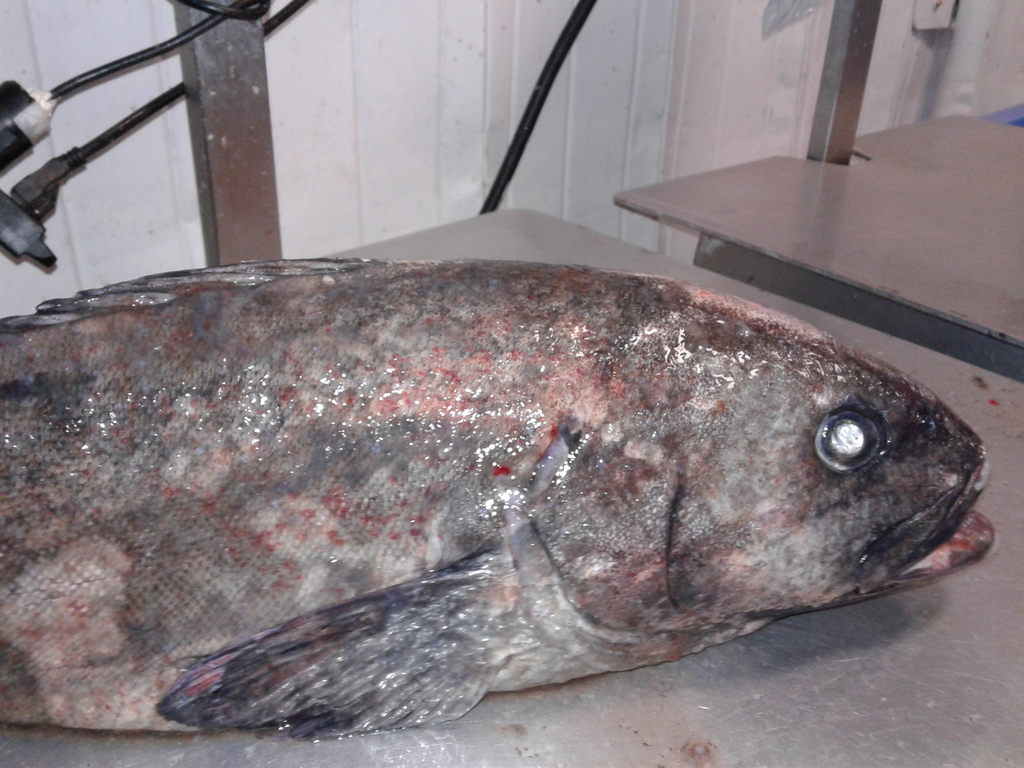
Skilfish
- Family
- Anoplopomatidae
- Depth
- 0–680 m
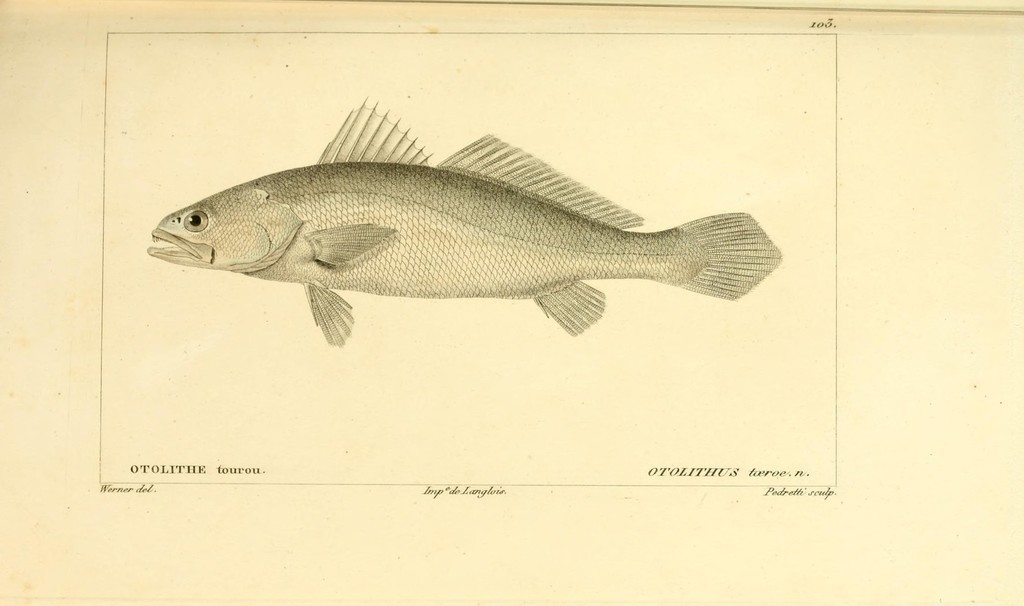
Acoupa weakfish
- Family
- Sciaenidae
- Depth
- 1–20 m
- Season
- Jan, Feb, Mar, Apr, May, Jun, Jul, Aug, Sep, Oct, Nov, Dec
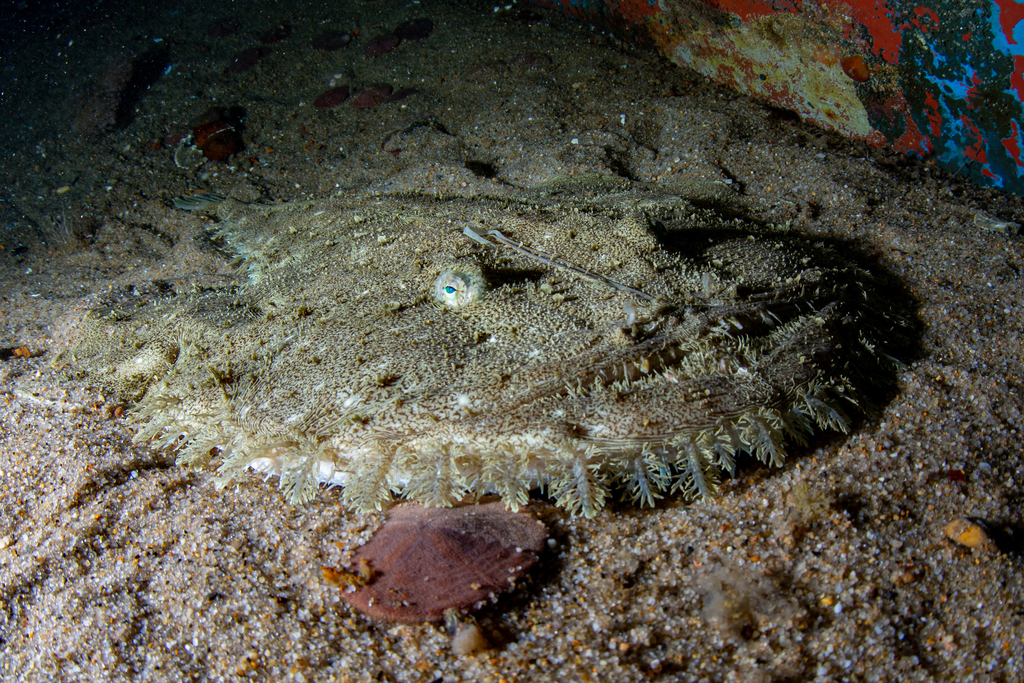
American angler
- Family
- Lophiidae
- Depth
- 0–800 m
- Season
- Mar, Apr, May, Jun
Guides for this water
Technique, gear and safety guides that fit Sablefish.