
Japanese sandfish
Japanese sandfish is recorded across the North Pacific, from Aleutian Islands (one record) to Okhotsk and Japan seas, within the family Trichodontidae. It is caught from 0 to 550 m, in deep water. Fish reach 30 cm TL and 0.2 kg. The season runs September to December.
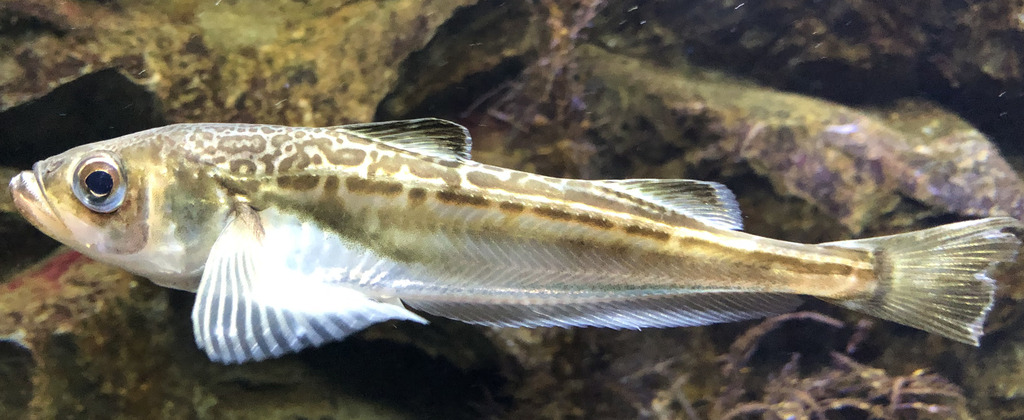
Japanese sandfish (Arctoscopus japonicus) is a fish of the family Trichodontidae. FishBase gives its range as: North Pacific: Aleutian Islands (one record) to Okhotsk and Japan seas. It is recorded from 0 to 550 m, in deep water. The recorded maxima are 30 cm TL, 0.2 kg, 6 years. IUCN status: Not Evaluated (NE). Chinese name: .
The tag says bathydemersal, the range starts at zero
The Japanese sandfish page carries two habitat statements that do not sit comfortably together. The environment line calls the species bathydemersal and gives a depth range of 0–550 m. The biology sentence says it is found on sandy-mud bottoms. A bathydemersal fish is, by the label, a deep-water bottom fish; a range that begins at 0 m includes the surface and the intertidal.
The numbers are the harder record. A 0–550 m range is a set of captured depths, while "bathydemersal" is a category assigned to the species. When the two disagree, the range tells you where records exist and the label tells you how the database classifies the fish. Neither is a map. The page gives no usual depth, so the 0–550 m envelope cannot be narrowed from this source.
Sand and mud, with no map
The sediment words are "sandy" and "muddy". They are habitat keywords, not a description of a particular ground. Nothing on the page divides the 0–550 m span into a sand section and a mud section, and no temperature or salinity figure is offered to separate them.
That is the second tag conflict: a fish recorded from 0 to 550 m on two sediment types cannot be pinned to one bottom by the page alone. The workable reading is that the sediment tags describe the bottom where the fish is caught, while the depth range describes the water column above it. A fisherman looking for sandfish needs both: the right bottom and the right depth, and the page supplies each separately.
A 14 cm fish with a 30 cm record
FishBase puts the longest sandfish at 30.0 cm TL and the typical one at 14.0 cm TL, with a top weight of 200 g and an age ceiling of 6 years; maturity is Lm 16.8 cm, with no range. The maturity length sits above the common length, which means the everyday 14 cm fish is not yet mature.
That is an unusual combination and it is worth stating plainly: the common length sits below the maturity length, so the typical fish on the page is not yet mature. The page does not explain the fishery's selectivity or the local rules, and it does not give a growth rate. What it does give is a 16.8 cm maturity point against a 14 cm common length, and those two numbers are the whole basis for the observation.
Three spawning clocks
The spawning table has three rows: South Korea, coastal Korean waters, November–December; Russia, Peter the Great Bay, September–October; Russia, Primorye, November–December. The three rows together cover September–December, and no row covers the whole span.
The two Russian rows are the interesting pair. They are in the same country but not the same window: Peter the Great Bay starts in September, Primorye starts in November. The source does not reconcile them, and this article does not either. For a trip plan, the correct move is to use the row nearest the port. A single "autumn spawn" statement would erase the difference between the two Russian localities.
One Aleutian record, four Alaskan records
The distribution sentence says North Pacific, Aleutian Islands, with "one record", to the Okhotsk and Japan seas. The country table lists Alaska, Japan, South Korea and Russia as native. The GBIF facet retrieved on 2026-11-08 gives 1,037 present records: Japan at 485, South Korea at 359, Russia at 119, the United States at 4, China at 1 and North Korea at 1. iNaturalist holds 19 observations.
The sentence says one Aleutian record; the GBIF facet says four US records. Alaska is not the Aleutians, and the GBIF query does not show which Alaskan waters those four records are from. The two statements are not necessarily contradictory, but they are not the same statement either. The 1,037 total is a record count, not an abundance estimate.
No morphology to fall back on
The morphology block is empty: no fin counts, no body shape, no colour notes. The page gives the name, the range, the sediment tags and the size table, and nothing that would let a reader identify the fish on a deck. OBIS files 387 records under AphiaID 279686, from eight datasets. That confirms the name, not the fish in the hand.
For identification, the page is therefore not usable on its own. A reader needs a regional identification guide or a local expert, and the page should be treated as a distribution and size source rather than a field key. That is a limitation of the source, not a gap the writer should fill with a description from memory.
A cultured fish with a commercial label
The biology text ends with a single fisheries sentence: cultured and released for fishery in Japan. The human-uses line records the fishery as commercial and the aquarium use as commercial; the gamefish flag is unset. IUCN, CITES and CMS are all Not Evaluated.
The culture-and-release note changes how the commercial label should be read. A stock that is cultured and released is not the same as a wild-only stock, and nothing in the source estimates how much of the Japanese catch originates from those releases. An NE entry means nobody has assessed the stock, so it says nothing either way about its health. FishBase also carries no minimum or bag limit for Alaska, Japan, Korea or Russia.
How to read the page without filling the gaps
The page supports four anchors: a 0–550 m depth range with no usual band, sandy-mud bottoms, a 30 cm maximum against a 14 cm common length, and a September–December spawning span made of three locality rows. It does not support a fin-ray count, a colour description, a diet list or a gamefish claim.
The discipline is to keep the tag conflicts visible. Bathydemersal and 0 m can both be printed; the reader should not silently choose one. The same applies to the two Russian spawning windows and to the one Aleutian record against four US records. A page this thin is more useful when its disagreements are left standing than when they are smoothed into a single sentence.
Where these facts come from
Check these pages before you rely on a size, range or protection status.
- FishBase — Arctoscopus japonicus — FishBase · T2
- GBIF — Arctoscopus japonicus occurrence records — GBIF · T2
- IUCN Red List — Arctoscopus japonicus — IUCN · T1
- Photo record — iNaturalist — iNaturalist · T3
Fish in the same water
These fish live in the same place.
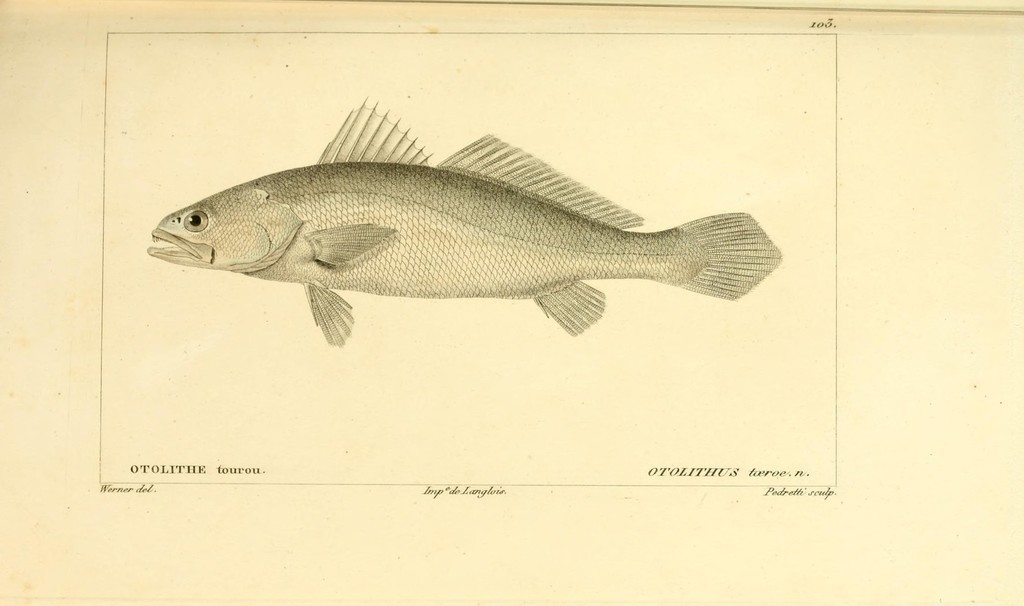
Acoupa weakfish
- Family
- Sciaenidae
- Depth
- 1–20 m
- Season
- Jan, Feb, Mar, Apr, May, Jun, Jul, Aug, Sep, Oct, Nov, Dec
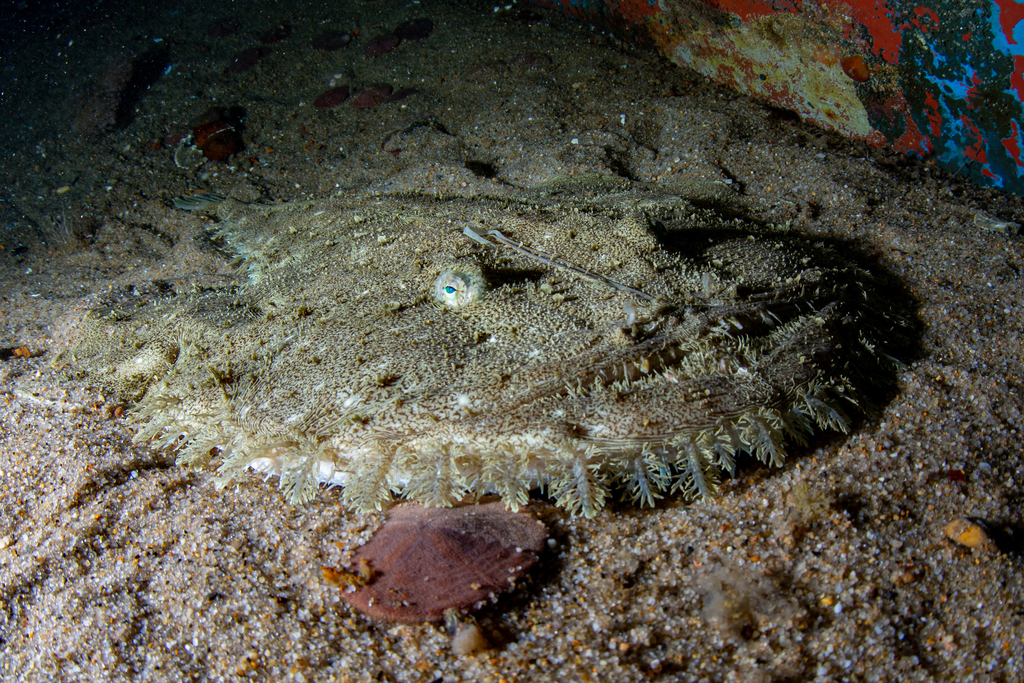
American angler
- Family
- Lophiidae
- Depth
- 0–800 m
- Season
- Mar, Apr, May, Jun

American eel
- Family
- Anguillidae
- Depth
- 0–464 m
- Season
- Jan, Feb, Mar, May, Jun, Jul
Guides for this water
Technique, gear and safety guides that fit Japanese sandfish.