
Greater argentine
Greater argentine is a small, silvery deep-water fish of the eastern and western Atlantic, from Svalbard and the Scottish and Irish slopes across the Wyville Thomson Ridge to the Denmark Strait. It is caught between 55 and 1,440 m, reaches 70 cm, feeds on fish, zooplankton and worms, and can live 35 years. The season runs March to June.
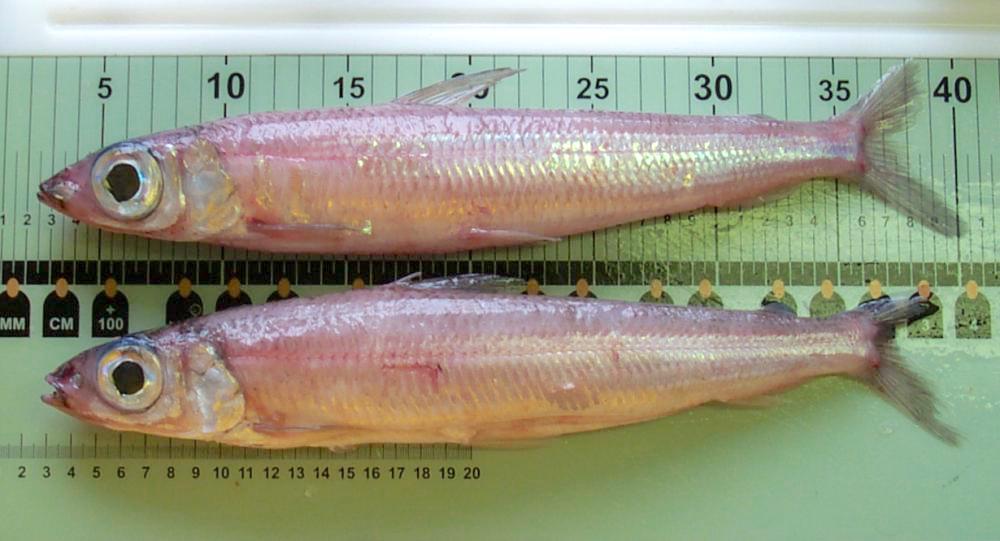
Greater argentine (Argentina silus) is a fish of the family Argentinidae. FishBase gives its range as: Eastern Atlantic: Svalbard to west coasts of Scotland and Ireland, deeper parts of North Sea and across the Wyville Thomson ridge to Denmark Strait. Western Atlantic: Davis Strait to George's Bank in Canada. Arctic Ocean: east to Finnmark, Norway, Barents Sea. The body is described as elongated and laterally compressed, with 11 to 13 dorsal soft rays and 11 to 17 anal soft rays; there are no dorsal or anal spines. It is recorded from 55 to 1440 m, in deep water. The recorded maxima are 70 cm SL, 35 years. Diet includes fishes, zooplankton and worms. IUCN status: Not Evaluated (NE). Chinese name: .
Identification
Argentina silus is an argentine, family Argentinidae, order Argentiniformes. The body is described as elongated and laterally compressed, with 11 to 13 dorsal soft rays and 11 to 17 anal soft rays; there are no dorsal or anal spines. It is a small, silvery, deep-water fish, not a herring and not a smelt, two labels that follow it around.
The size record is mostly holes. Maximum length is 70 cm SL, first maturity is recorded at 26 cm, and the age record stands at 35 years. Common length is absent, maximum weight is absent, and the maturity range is printed as ? - ? cm. A reader looking for the usual size, the usual weight or a spread around maturity finds nothing; what is left is a ceiling and a single point.
Names that borrow from other families
The English table gives Atlantic argentine, Great silver smelt, Greater silver smelt, Herring smelt and Smelt, alongside the FAO name Greater argentine. Wikipedia uses the same set and adds that the fish is a "northern Atlantic herring smelt".
Each borrowed word points at a different family. A smelt in the market is usually an osmerid; a herring is a clupeid; this fish is an argentine. The names are not random — silver body, small size, schooling behaviour, edible — but they are not identifiers either. If a record says "smelt", it may describe this species, an osmerid, or something else sold under the same word.
Depth and ground
The environment line reads marine, bathypelagic, oceanodromous, 55 to 1440 m, usually 55 to 550 m, deep-water, between 80°N and 42°N. The usual band is the operative number. The 1440 m figure is the deepest record on the page, and a trip planned for that tail is a different proposition from one planned inside 550 m.
Wikipedia gives the depth as 140 to 1440 m, which sets a shallower floor than FishBase's 55 m. The two records agree on the deep end and disagree near the surface. The diet is fishes, zooplankton and worms, and nothing on the page ties the fish to the bottom. Small prey in open water means small hooks, a rig that drifts with the boat rather than one anchored over a mark, and no structure to hold a bait in place.
Seasonal window
Spawning is recorded from March to June. Two rows carry that window: the Norwegian shelf and slope deeper than 300 m, sampled in 1980-83, with March, April, May and June; and the north-eastern North Sea and Skagerrak, the Norwegian Deep, sampled in 1984-87, with April and May only. The second row is narrower than the first, which is what a regional subsample should look like.
No spawning temperature is recorded, and no egg or larval stage is described on the page. The season therefore rests on ripe gonads from two surveys in the 1980s, not on a continuous monitoring series.
Gear and approach
At 70 cm maximum and no recorded weight, the tackle question is about depth rather than fish size. Light line is pleasant in 60 m and useless in 500 m; a braid main line, a sinker heavy enough to reach the band, and a reel with the capacity for the descent are the practical minimum. Small hooks matter, because the mouth is small and the diet is zooplankton and small fish.
The 26 cm maturity length is the one release figure worth carrying, and the 35-year maximum age argues for restraint with the larger fish. There is no common length on the page, so there is no routine size to quote at the cleaning table.
Edibility and regulations
The only human use listed is commercial fishing; sport, farming and aquarium display are all absent. Wikipedia calls it commercially important and says it is used as seafood. It is a food fish, not a sport fish.
A greater argentine has no species-specific rule behind it in the north-east Atlantic, so the answer has to be assembled locally. Keeping a fish turns on the size limit and the bag limit, which Norway, Denmark and the other coastal states set alongside the European Union. Fishing on a given day turns on closures, written by the same authorities as a different document. FishBase reproduces neither, so both must be read at the source.
Where to look
The distribution text is a north Atlantic arc. Eastern Atlantic from Svalbard to the west coasts of Scotland and Ireland, through the deeper parts of the North Sea and across the Wyville Thomson ridge to the Denmark Strait; western Atlantic from Davis Strait to George's Bank; Arctic Ocean east to Finnmark and the Barents Sea. The country table runs from Canada and Greenland through Iceland, the Faroes, Norway, Denmark, Sweden, the UK, Ireland, France and Spain to the contiguous United States, with separate rows for Scotland, Northern Ireland, Saint Pierre and Miquelon and Svalbard.
GBIF returns ten rows. Two of them are duplicates — one row for the Gulf of Saint Lawrence, one for the Gulf of Maine — so the ten describe fewer than ten places; the rest are the North West Atlantic, European Marine Waters and the Swedish exclusive economic zone, plus national checklist rows for Denmark and Sweden.
iNaturalist holds 28 observations. They fall along the north Atlantic slope, from the Barents Sea and Iceland through the Norwegian Deep and the Faroe-Shetland channel to the Canadian banks, in open water inside the usual 55 to 550 m band.
Where these facts come from
Check these pages before you rely on a size, range or protection status.
- FishBase — Argentina silus — FishBase · T2
- GBIF — Argentina silus occurrence records — GBIF · T2
- IUCN Red List — Argentina silus — IUCN · T1
- Photo record — iNaturalist — iNaturalist · T3
Fish in the same water
These fish live in the same place.
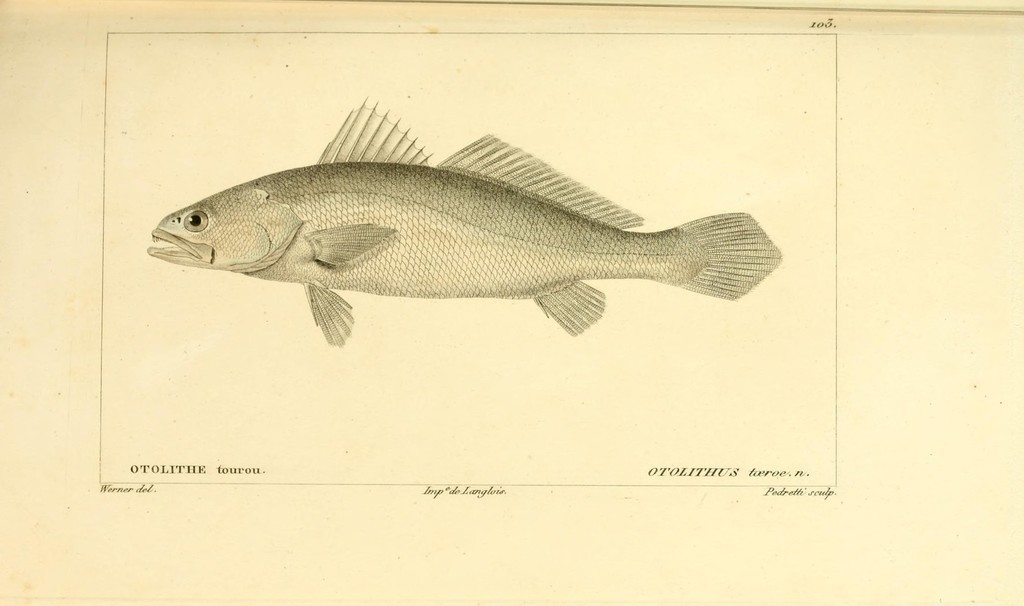
Acoupa weakfish
- Family
- Sciaenidae
- Depth
- 1–20 m
- Season
- Jan, Feb, Mar, Apr, May, Jun, Jul, Aug, Sep, Oct, Nov, Dec
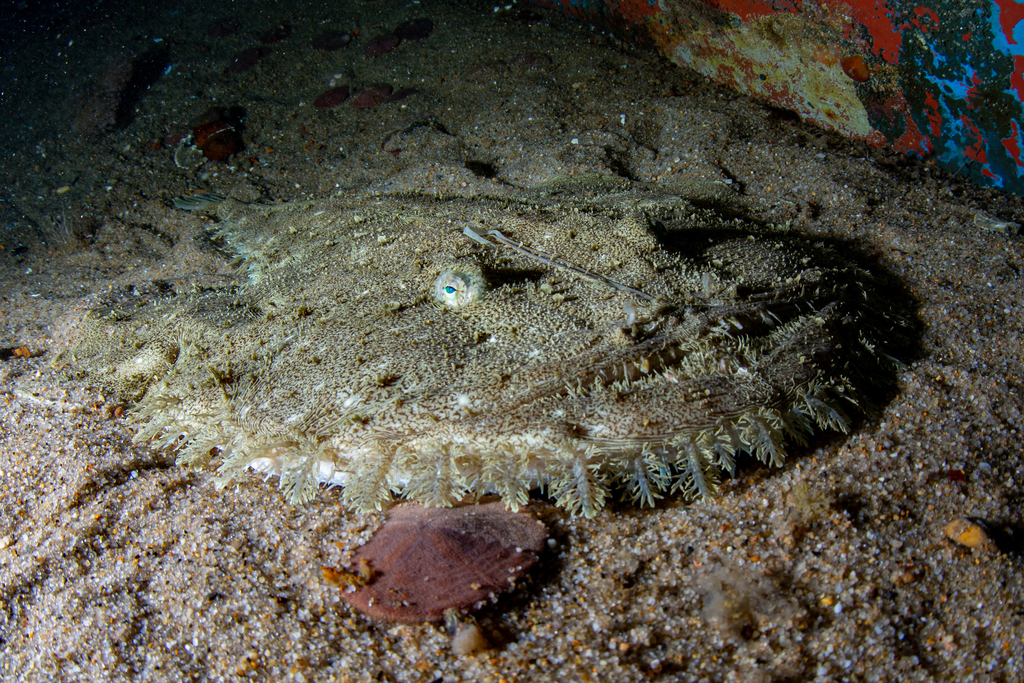
American angler
- Family
- Lophiidae
- Depth
- 0–800 m
- Season
- Mar, Apr, May, Jun

American eel
- Family
- Anguillidae
- Depth
- 0–464 m
- Season
- Jan, Feb, Mar, May, Jun, Jul
Guides for this water
Technique, gear and safety guides that fit Greater argentine.