
King soldier bream
King soldier bream is an Indian Ocean sparid, from the Red Sea and Persian Gulf eastward. It is a deep, compressed fish, uniform pink with a red head and two rudimentary forward dorsal spines, and it is recorded from 1 to 450 m, usually between 5 and 100. It reaches 80 cm TL with a common length near 30 cm and maturity at about 31 cm. Boat bottom fishing, drifting and jigging are the methods listed for it.
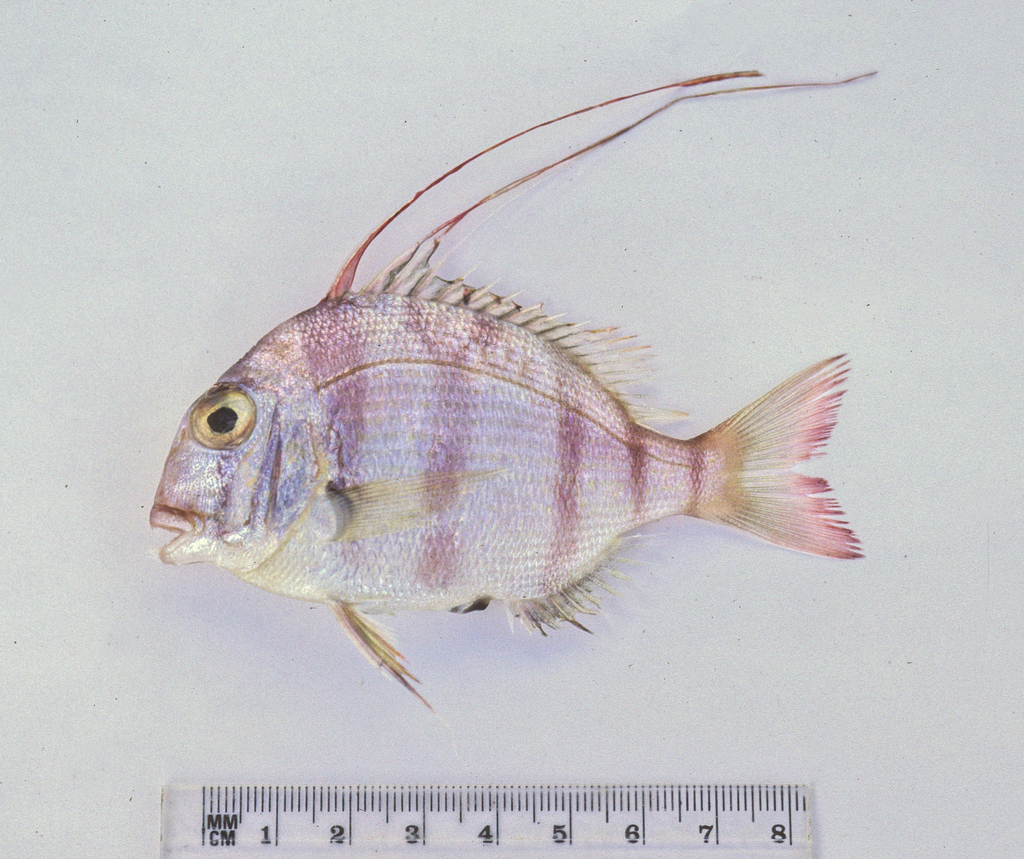
Argyrops spinifer is a Sparidae seabream recorded across the Indian Ocean, including the Red Sea and Persian Gulf, from 1 to 450 m although usually 5 to 100 m. It has a deep, compressed body, a uniform pink colour with a red head, and two rudimentary forward dorsal spines. FishBase gives a maximum of 80 cm total length, a common length of 30 cm and maturity at 30.9 cm. Juveniles use shallow sheltered bays and larger fish move deeper; the diet is mainly benthic molluscs.
Identification
A deep-bodied sparid that becomes less deep and more compressed with growth. The first two dorsal spines are rudimentary and sit on the first pterygiophore, which is the quickest field check; the dorsal count is XI to XIII spines with 9 to 10 soft rays, and the anal fin is III, 7 to 8.
Colour is uniform pink with a silvery belly and lower jaw, a red head and pink or pale pink fins. The orbit diameter is clearly less than the suborbital depth, a proportion that separates it from similar pink sparids.
FishBase gives a maximum of 80 cm total length, a common length of 30 cm and first maturity at 30.9 cm. No maximum weight or age is listed on the summary page.
Distribution and Habitat
Indian Ocean, including the Red Sea and Persian Gulf, east to Singapore and the southern end of the Malay Peninsula. FishBase lists 33 territories, with Saudi Arabia, Iran, Oman, the United Arab Emirates, Qatar, Bahrain, Kuwait, Iraq, India, Pakistan, Mozambique and South Africa among them.
The depth range is unusually wide, 1 to 450 m, but the usual range is 5 to 100 m. Juveniles occur in very shallow water in sheltered bays; larger fish move deeper.
That split matters for planning: the shallow bay is a nursery, not the big-fish ground. Serious fish come from the 30 to 100 m slope and shelf edge.
Habits and Diet
FishBase describes the species as found on a wide range of bottoms and feeding on benthic invertebrates, mainly molluscs. It is an important food fish and is taken commercially throughout its range.
The shallow-bay nursery and deeper adult habitat mean that a big catch is usually a deeper-water fish. Fish the upper slope with baits that stay on the hook, and expect mollusc feeders to pick rather than slam.
Fishing Methods
Bottom bait fishing with squid, shrimp, clam or fish strip is the standard approach. The mouth is small relative to the body, so a compact bait and a moderate hook outperform a large grouper rig.
Drifting over a slope covers water and keeps the bait moving; slow-pitch jigging in the 60 to 100 g class works on open sand and mixed ground. On reef edges, lift the bait a metre off the bottom to avoid constant snagging.
Gear and Approach
A 7 ft medium boat rod, a 4000 to 5000 reel, 1.5 to 2.0 PE and a 30 lb leader cover most of the range. Big fish to 80 cm are possible, so set the drag above what the common 30 cm fish requires.
Use a running sinker on open bottom and a short leader on mixed ground. The strike should be a steady lift; the jaw is not heavy and a hard hook-set tears bait and hook hold.
Seasonal Window
FishBase records spawning off Abu Dhabi from January to April, off Qatar in April and off Oman in January and September to December. The combined picture is a long, split season rather than a single short peak.
The fish is catchable year-round, with the cooler months and the periods of good water clarity the most comfortable. In the hottest weeks the shallow bays are nursery ground and the better fish are deeper.
Tide is a secondary factor on open bottom, but a moderate current helps the scent line and keeps the bait working.
Edibility and Handling
An important food fish, sold fresh in Gulf markets. The flesh is white and firm, and the large frame yields good fillets.
Bleed and ice promptly, especially fish from warm shallow water. Gut and cool a big specimen before the run home; the body holds heat in the thick shoulder.
Regulations and Conservation
United Arab Emirates: MD 580/2015 lists koufer (Argyrops spinifer) at a minimum total length of 24 cm, and a ministerial decision imposed a nationwide 1 to 28 February ban on catching and trading the species for the 2021 to 2023 spawning seasons; continuation beyond those seasons is not confirmed.
Oman: MD 67/2020 lists koufer at a minimum total length of 26 cm. Saudi Arabia: no species-specific size or bag limit was located, so treat the Saudi rule as unverified. IUCN global status is Least Concern, assessed in 2009.
How to catch it
Boat bottom fishing
Drift fishing
20–60
Jigging
60–100
Where these facts come from
Check these pages before you rely on a size, range or protection status.
- GBIF — Argyrops spinifer occurrence records — GBIF · T2
- IUCN Red List — Argyrops spinifer — IUCN · T1
- Photo record — iNaturalist — iNaturalist · T3
Fish in the same water
These fish live in the same place.
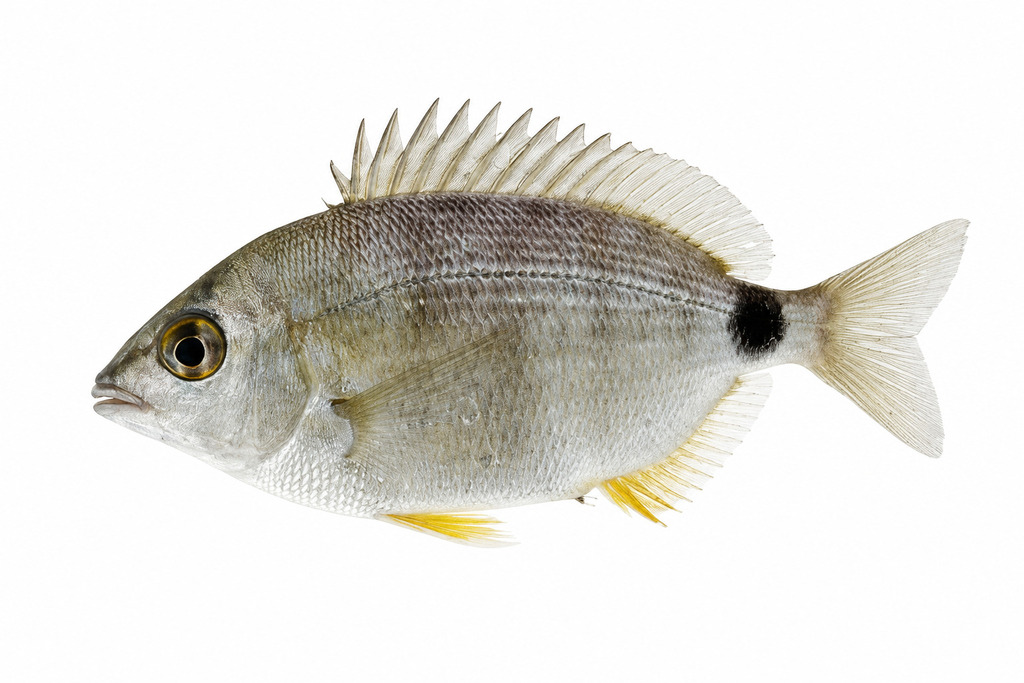
Annular seabream
- Family
- Sparidae
- Depth
- 0–90 m
- Season
- Jan, Feb, Mar, Apr, May, Jun, Jul, Aug, Sep
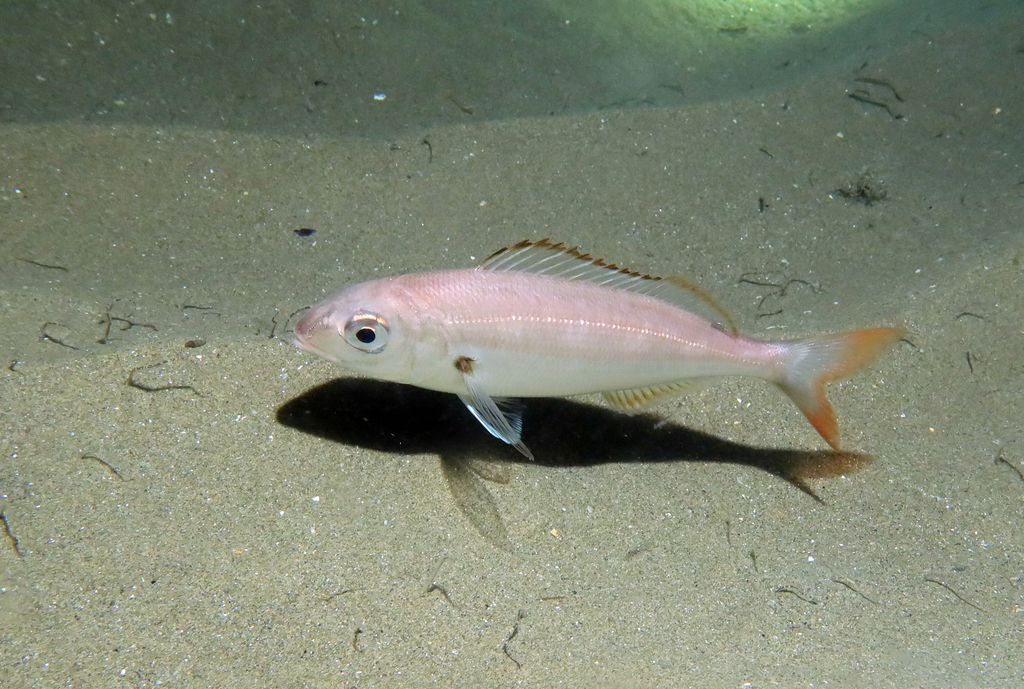
Axillary seabream
- Family
- Sparidae
- Depth
- 0–500 m
- Season
- Jan, Feb, Mar, Apr, May, Jun, Jul, Aug, Sep, Oct, Nov, Dec
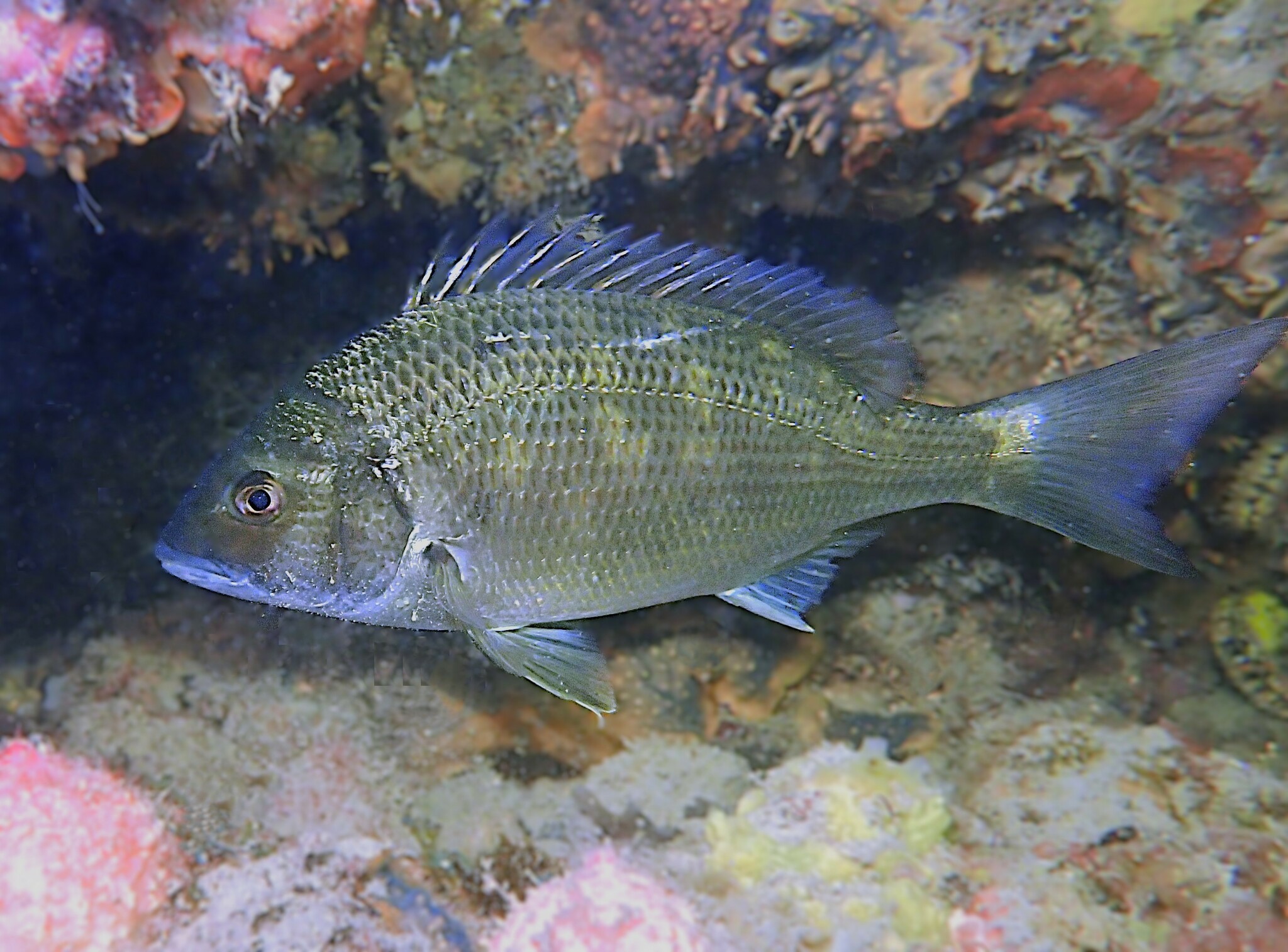
Black bream
- Family
- Sparidae
- Season
- Jan, Feb, Jul, Aug, Sep, Oct, Nov, Dec
Guides for this water
Technique, gear and safety guides that fit King soldier bream.