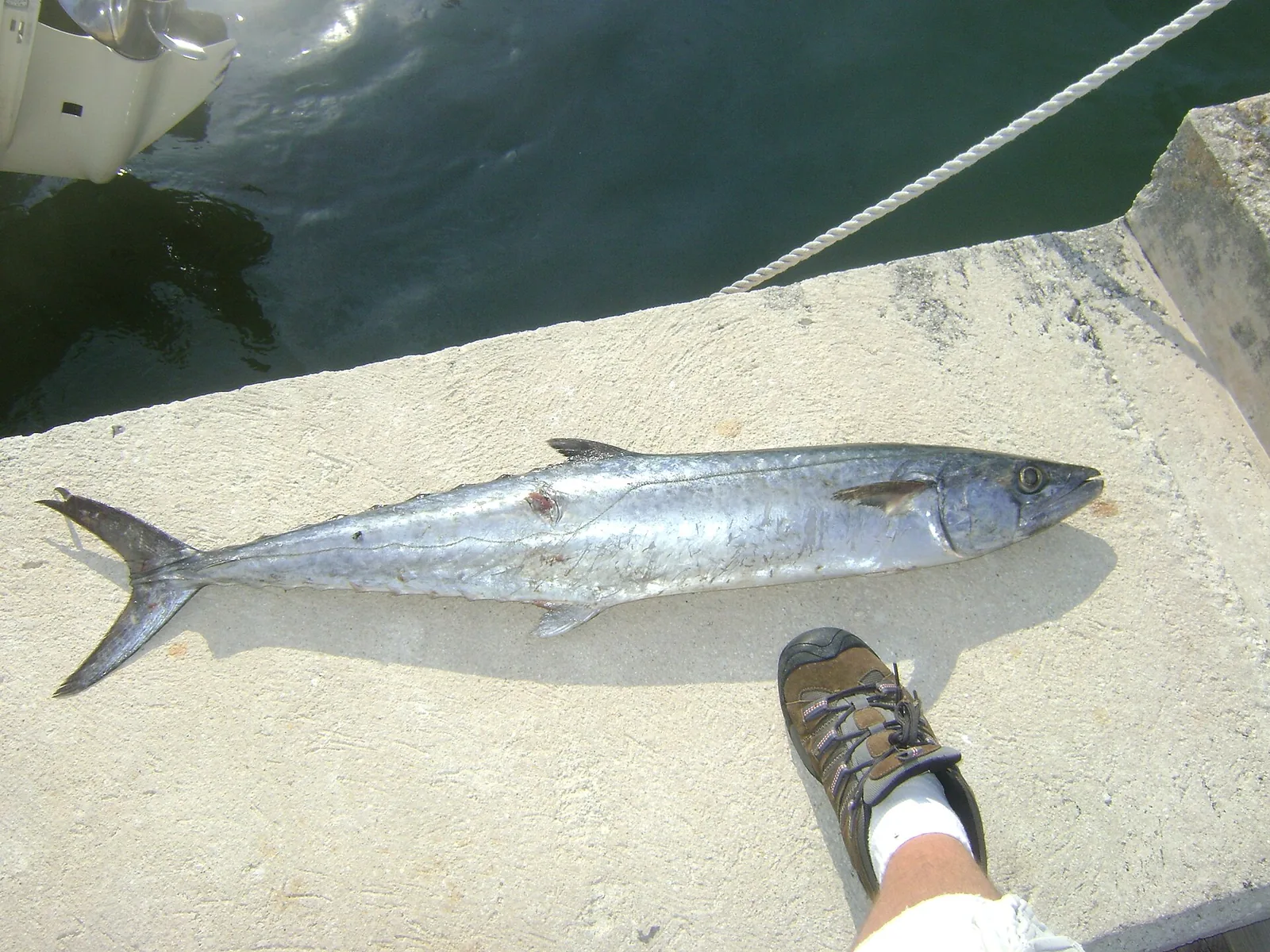
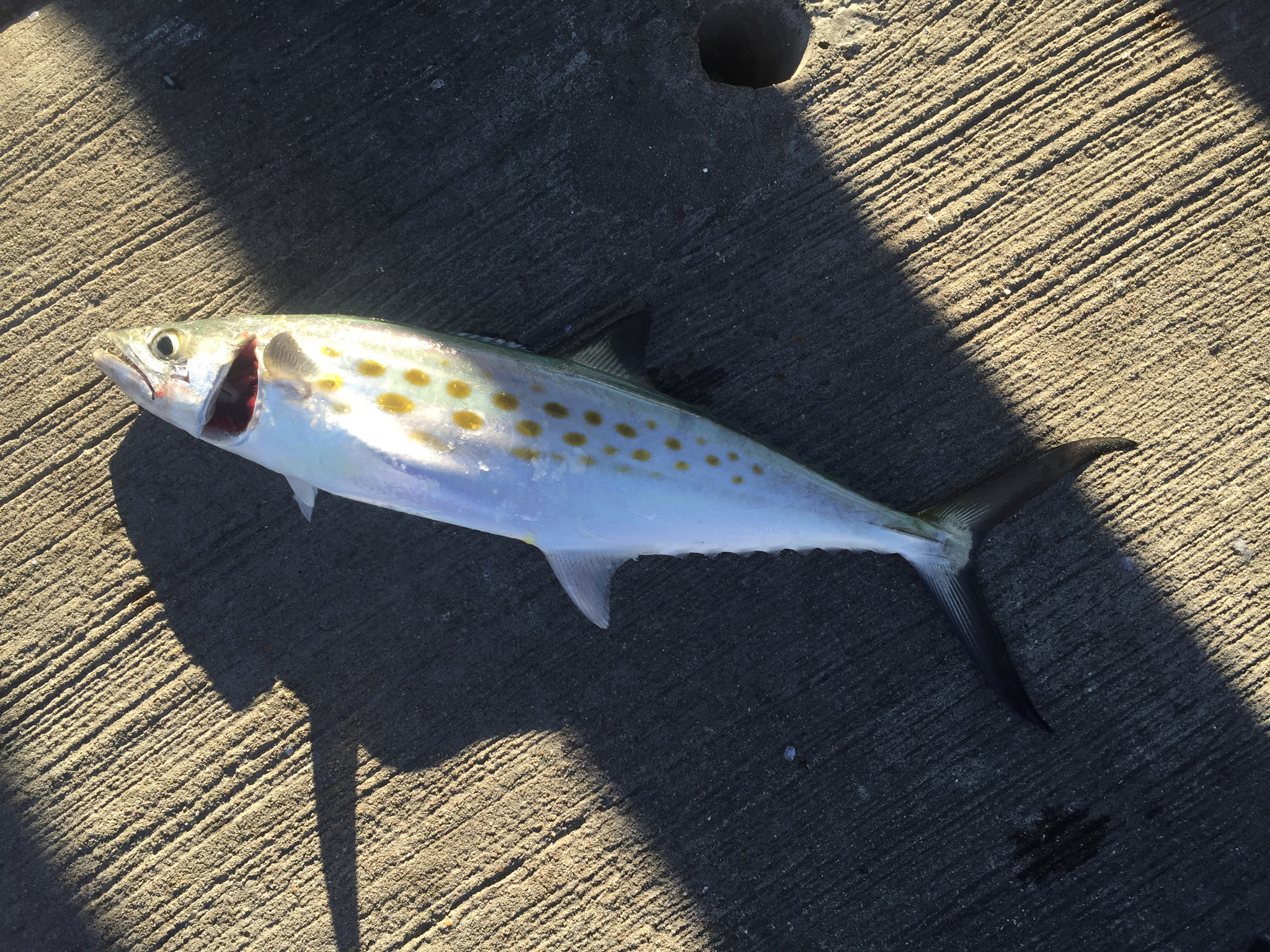
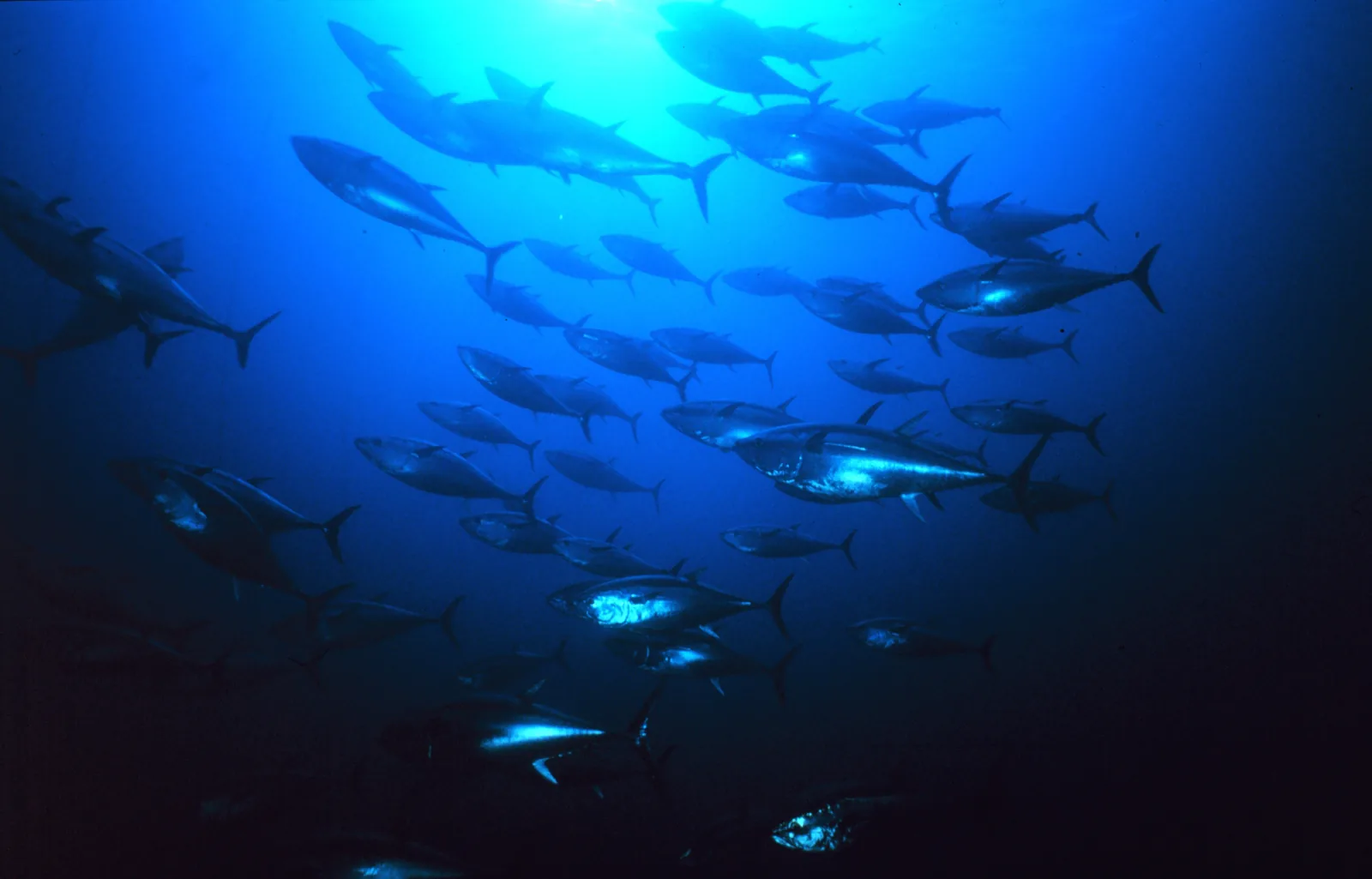
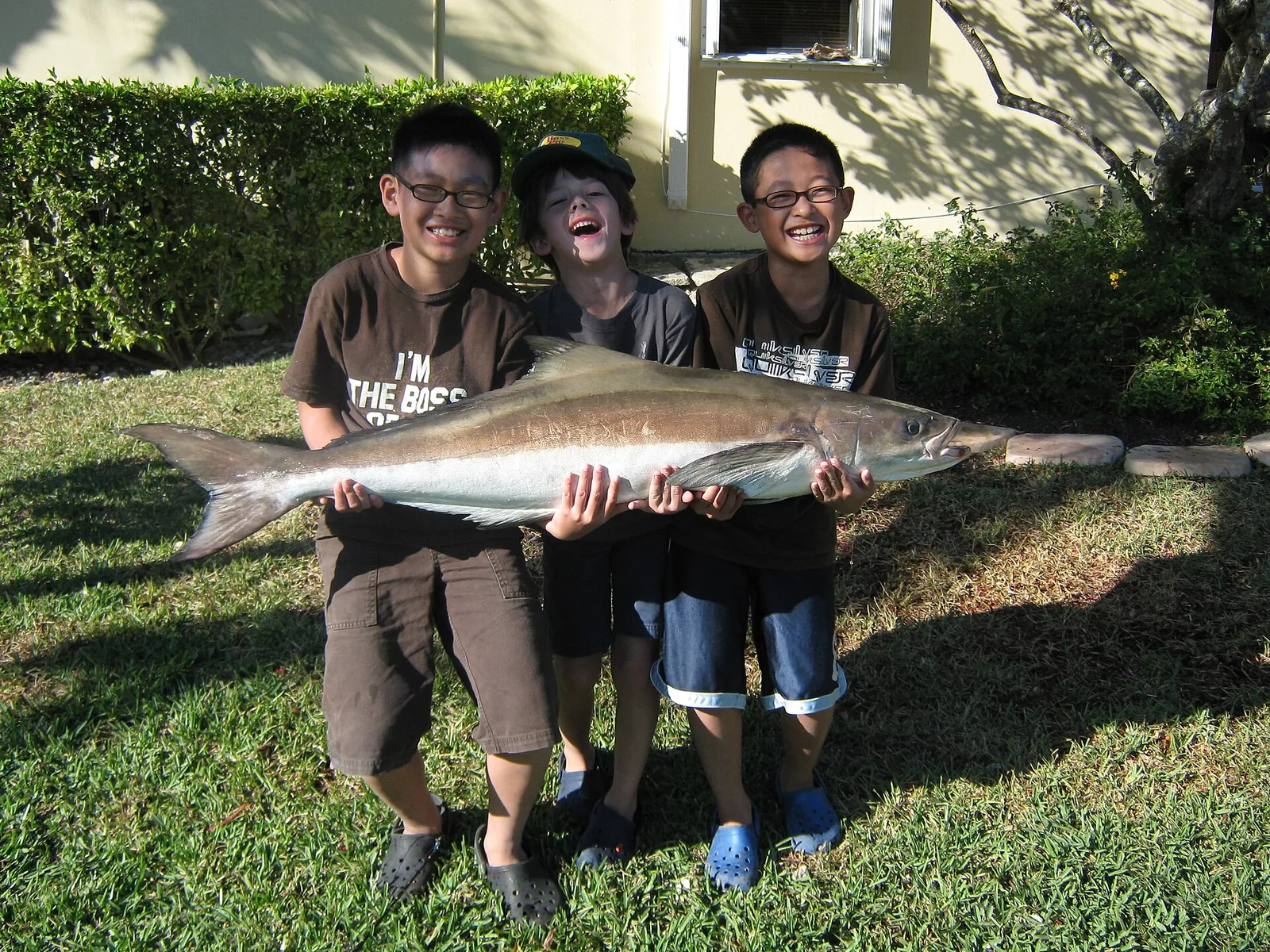
King mackerel is filed in the catalogue as pelagic-neritic, and its habitat keywords are reef and coastal. Those two descriptions disagree in a way that matters, because a pelagic-neritic fish is not a reef fish: it lives in the water column above the shelf, and the reef is something it swims past rather than something it lives on. The depth field settles the argument — 5 to 140 m, usually 5 to 15 m. King mackerel is a surface fish over structure, not a resident of it.
A mackerel labelled reef fish
The habitat keywords in a record are drawn from a fixed vocabulary, and "reef" is applied to any fish that is regularly caught over reef structure. For a species like this one, that catches the fishing method rather than the biology. King mackerel are caught over reefs because that is where bait concentrates and where boats can anchor or drift, not because the fish needs the reef.
The distinction changes how you read a chart. A reef mark with no bait and no current is a dead mark for king mackerel, however good the structure looks. A featureless stretch of shelf with a temperature break and a bait school can be excellent. The fish follows food and warm water, and the bottom is largely irrelevant except as a place where bait gathers.
Pelagic-neritic: what the term means for a 5–15 m fish
The usual depth band of 5–15 m is the operational fact. King mackerel feed in the upper part of the water column, often within a few metres of the surface, and a trolled bait or a live bait drifted on a float fishes that band directly.
The 140 m figure at the bottom of the recorded range comes from deep-set gear and occasional deep fish; it is not a depth to target. If a sounder shows king mackerel at 100 m, the fish is either a stray or the mark is something else.
This surface concentration makes the species weather-sensitive in a specific way. Wind that mixes the top 15 m scatters the bait and the fish with it; a stable, warm surface layer with a visible colour change holds both. Watching the surface temperature break is more useful than watching the bottom.
184 cm and 45 kg, with a 70 cm common length
The maximum is 184 cm total length and 45 kg, the common length is 70 cm, and the maximum age is 26 years. A 70 cm king mackerel weighs 3–5 kg; a 184 cm fish is a rare animal, and the 45 kg top weight belongs to the same rare class.
The gap between common and maximum is why king mackerel fishing has two distinct tackle worlds. Most trips fish for 60–90 cm fish with light trolling gear. A few fish for the big ones with heavy rods and live bait, and the two methods rarely overlap on the same day.
Maturity at 64.8 cm, and the 45–114 cm range
Length at first maturity is given as 64.8 cm, with a reported range of 45–114 cm. The upper end of that range is extraordinary and reflects either a different stock, a different method, or a data problem in the original study; either way, a management measure built on a single number is on thin ice.
For an angler the practical point is that a 65 cm king mackerel is roughly at maturity, and the 45–60 cm fish that are common inshore are juveniles. If the local rule allows a small fish, that rule is a policy choice rather than a biological one.
Spawning in every month somewhere
The spawning table has entries in January and February in Ceará, Brazil; every month in Ceará across a 1969–1971 series; January, February, March and October to December in Ceará in 1975; May to September in Louisiana and Mississippi; and May to October in North and South Carolina. Every month of the year appears at least once.
That is a latitudinal spread rather than a year-round spawn in one place. In the Gulf the spawn is spring to autumn; in equatorial Brazil it runs across the year. For a trip, the local window is the only one that matters, and the fish move north along the US coast as the water warms.
Trolling, drifting, and the wire leader question
King mackerel have small, sharp teeth and will cut light mono. A short wire trace or a heavy fluorocarbon leader of 60–80 lb is the standard defence, and the choice between them is a fishing decision: wire costs bites in clear water, fluoro costs fish to bite-offs.
Trolling a 15–20 cm minnow or a spoon at 5–7 knots along a temperature break covers water and finds fish. Drifting a live bait on a float over structure is better when fish are holding rather than travelling. Both methods rely on the same thing: keeping the bait in the top 15 m where the fish are feeding.
LC 2022 and the two-stock split
The catalogue records Least Concern, assessed 18 October 2022, and lists the species as commercial and a gamefish. The assessment is recent and the species is not currently considered threatened, but king mackerel in US waters is managed as two stocks — Gulf and Atlantic — with separate quotas and different size limits.
That split is the operational reality. A fish caught off Texas and a fish caught off North Carolina are the same species and are governed by different numbers. The Gulf stock has a minimum size and a bag limit that differ from the Atlantic stock, and the seasons are set separately.
2,128 records: a thin dataset for a famous fish
The GBIF index holds only 2,128 king mackerel records: the United States at 1,057, an unassigned category at 457, Mexico at 139, Brazil at 82 and Colombia at 36. For a fish this well known, that is thin, and the reason is that recreational catches are rarely accessioned into museum collections.
iNaturalist's 348 observations are similarly sparse. Neither dataset is a distribution map in any useful sense; both are a record of who happened to submit a specimen or a photograph. The species runs from Canada to São Paulo and across to St. Paul's Rocks, and the absence of records from most of that range says more about recording than about fish.
What the data does support is the temperature and depth reading: a warm-water surface fish of the western Atlantic and Gulf, concentrated where the shelf is shallow and the current is warm. Fish that, not the dots on the map.
Where and when it feeds
Tide. Current edges and bait schools matter more than tide height.
Weather. Warm, stable water. A strong current with a light wind is ideal for slow trolling.
How to catch it
Trolling
Trolled from a moving boat; suits roaming or pelagic species.
Boat fishing
Fished from a boat, with the approach adjusted to the recorded depth.
Bait and lures
Live cigar fishWhole squidMackerelHeavy jig
Regulations before you keep it
These are the published regulations for this fish. Read the number first. The notice below it is the actual regulation.
Bag limit3
24 in fork length · 3 fish per person per day
United States — North Carolina · US-NC
North Carolina requires king mackerel to measure at least 24 inches fork length and allows three fish per person per day.
King Mackerel (H) | 24" FL | 3/Day
23 in · 3 fish per person per day · all year
United States — New York · US-NY
New York allows 3 king mackerel per person per day at a 23-inch minimum.
King mackerel 23" 3 All year
27 in · 3 fish per person per day
United States — Virginia · US-VA
Virginia allows 3 king mackerel per person per day at a 27-inch minimum.
KING MACKEREL
Minimum Size Limit: 27 IN.
Possession Limit: 3 per person
Every record above names its source and the date it was retrieved. See the regulation register for the full list, or how to read these regulations.
Where these facts come from
Check these pages before you rely on a size, range or protection status.
-
FishBase — Scomberomorus cavalla
— FishBase · T2
-
GBIF — Scomberomorus cavalla occurrence records
— GBIF · T2
-
IUCN Red List — Scomberomorus cavalla
— IUCN · T1
-
Photo record — iNaturalist
— iNaturalist · T3