
White tilefish
White tilefish is a deep-water branchiostegid of the Northwest Pacific, from southern Japan to the East China Sea, with records from Taiwan region, Hong Kong SAR, mainland China and Korea. It lives on sandy and muddy ground at 30–100 m and is taken by bottom trawl and deep-water boat fishing. FishBase gives a maximum of 45 cm total length.
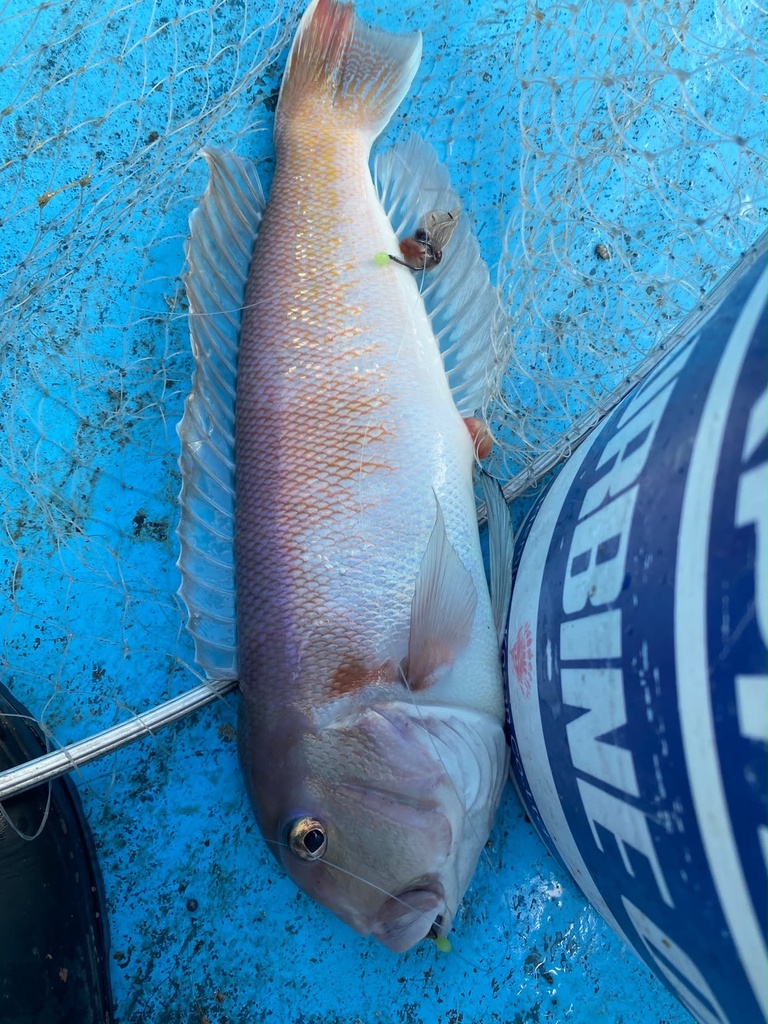
White tilefish is a deep-water branchiostegid of the Northwest Pacific, from southern Japan to the East China Sea, with records from Taiwan region, Hong Kong SAR, mainland China and Korea. It lives on sandy and muddy ground at 30–100 m and is taken by bottom trawl and deep-water boat fishing. FishBase gives a maximum of 45 cm total length. IUCN lists it as Near Threatened (A2d), assessed in 2024, with fishing as the pressure. That rating deserves more attention than a “common” label.
Reading the spines
FishBase's morphological entry is brief: the body is elongate, the head is squarish and the colour is pale, which is where the English “white horsehead” and the Chinese come from. The genus name Branchiostegus combines the Greek brangchia (gills) with stego (to cover), a reference to the operculum; the Chinese names point at the head shape instead, so the two namings describe different parts of the fish. Tilefishes share a squarish head, small cycloid scales, a complete lateral line and long dorsal and anal fins; this species is separated from darker congeners by its pale head and body and the absence of strong yellow or blue markings. In hand, check the head shape, the pale body and the truncate or slightly concave tail, then use origin and depth, because the Japanese and red tilefishes are darker.
A soft-bottom fish
FishBase gives the range as the Northwest Pacific: southern Japan and the East China Sea. The country table lists mainland China, Hong Kong SAR, Japan, Korea and Taiwan region. GBIF's 177 records run mainland China 42, Japan 34, Vietnam 28, Korea 25, Taiwan region 24 and Hong Kong SAR 1. The 28 Vietnamese entries are specimen records, and FishBase's country table does not list Vietnam, so this page reads them as collection records with unconfirmed origin rather than as a range country. The species inhabits sandy and muddy areas, benthopelagic, at 30–100 m. Fish the shelf's sand and mud flats, gentle slopes and the edges of gullies; tilefish sit close to the bottom and often show as a single mark just above the seabed.
No diet is recorded; tilefish generally take small bottom fish, prawns and crabs over soft ground, and fish strips, prawn and squid are the usual boat baits.
The blanks are information
FishBase publishes no spawning months and no temperature window. It is recorded as a temperate species, so bottom temperature matters. In southern Japan, the East China Sea, Taiwan region and Korean waters, deep-water trips concentrate in the warmer half of the year, while winter wind reduces the practical window. Dawn, dusk and slack water are reasonable, but there is no species-specific clock. Follow the local boat season and wait for stable bottom temperature.
Where to start looking
This is another sounder fishery. Find the soft-bottom hump, the gully and the single fish mark, then place the bait slightly ahead of the mark. The source gives no coordinates and only a broad habitat note, so local electronics and experience do the locating. The GBIF pattern is a narrow Northwest Pacific cluster, not a wide Indo-Pacific range; a trip outside Japan, Korea, China or Taiwan region is unlikely to produce this species.
Tackle for deep water
At 45 cm total length, a medium-heavy boat rod with a 4000–6000 size reel is enough. For 30–100 m, 1–2 PE mainline, a 20–40 lb fluorocarbon leader and 80–200 g of lead, adjusted to current, are a sensible range. Soft mud swallows lead, so a flat or winged sinker gives better feel. Deep boat fishing should also log the depth and the sinker weight that actually holds bottom: on the same sand-and-mud flat, 80 m and 120 m differ in current, lead and line out, and only the trip record captures those two numbers, which no species page can supply. Small hooks and soft baits suit the small mouth: prawn, squid strip, fish chunk and sandworm. Slow-pitch jigs can work, but a bait held just off the bottom is the safer default.
Eating, handling and the rules
White tilefish is a commercial food fish with white, fine flesh, good steamed, braised or in soup; tilefish are also served as sashimi in Japan, but deep-water fish need prompt bleeding, gilling and icing. Ciguatera is mainly a reef-predator risk, so this soft-bottom species is lower risk, though organs should not be eaten in quantity. Rules vary: Taiwan region manages inshore fishing through closed areas, seasons and gear restrictions; Hong Kong SAR's Fisheries Protection Ordinance regulates methods, with no angling or collecting in marine parks and reserves; Japan, Korea and mainland China each manage trawling and minimum sizes; Southeast Asian states differ. The Near Threatened rating is a reason to keep only what you will eat.
What the record leaves open
The page is built from FishBase taxonomy, distribution, environment, size, use and IUCN entries, with the country table for range and GBIF/iNaturalist for occurrence. FishBase's morphology and biology entries are thin, so fin formulae and spawning detail are not stated. The regulatory section is a regional framework; check the current local notice before keeping a fish.
How to catch it
Bottom fishing
Fished with the listed approach, matched to the recorded depth and size.
Where these facts come from
Check these pages before you rely on a size, range or protection status.
- FishBase — Branchiostegus albus — FishBase · T2
- GBIF — Branchiostegus albus occurrence records — GBIF · T2
- IUCN Red List — Branchiostegus albus — IUCN · T1
- Photo record — iNaturalist — iNaturalist · T3
Fish in the same water
These fish live in the same place.

Golden tilefish
- Family
- Latilidae
- Depth
- 80–540 m
- Season
- Jan, Feb, Mar, Apr, May, Jun, Jul, Aug, Sep, Oct, Nov
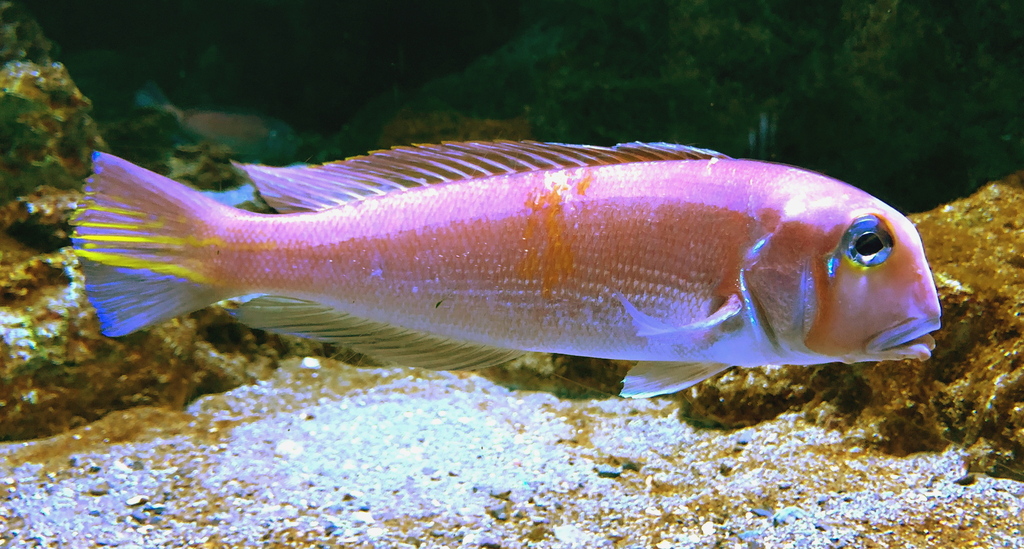
Horsehead tilefish
- Family
- Latilidae
- Depth
- 30–200 m
- Season
- May, Jun
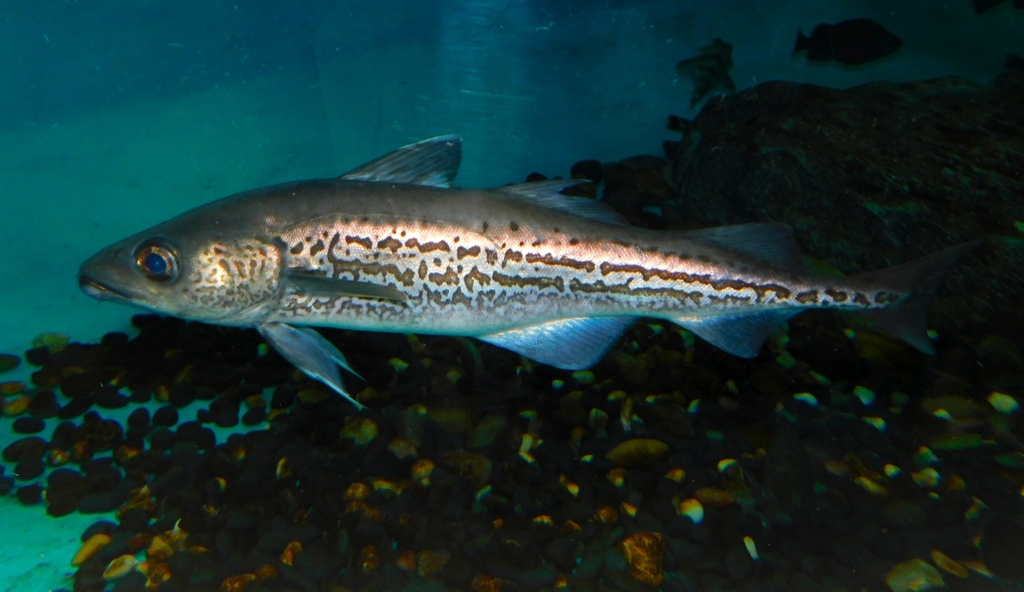
Alaska pollock
- Family
- Gadidae
- Depth
- 0–1280 m
- Season
- Jan, Feb, Mar, Apr, May, Jun, Jul, Aug
Guides for this water
Technique, gear and safety guides that fit White tilefish.