The cusk an angler is most likely to catch is younger than the cusk that has ever spawned. FishBase gives a common length of 50 centimetres for the species and puts the onset of maturity at 53.3. Put those two figures side by side and the ordinary fish on deck sits below the ordinary age of first breeding. That gap is the most useful thing on this page, because it decides what a released cusk is worth and what a kept one costs.
A normal cusk is an immature cusk
Fifty centimetres is not a small specimen. It is the length the database expects a routine adult to be, the number used when someone asks how big a cusk gets in normal fishing. Maturity at 53.3 centimetres sits above it. So "normal" and "mature" point at different animals, and the one most often landed is the one that has not yet spawned.
For a boat angler this converts into a rule that needs no regulation to make sense: a cusk under roughly 53 centimetres goes back unharmed, because nothing is gained by keeping it and breeding stock is lost. Above that line the animal has spawned at least once, and the argument becomes about dinner.
The record is a different animal
The largest cusk on the books is 120 centimetres, 30 kilograms, and 20 years old. That is well over twice the common length and, for a fish growing slowly on cold ground, a very old animal. The ratio explains most of the confusion around this species: photographs and record lists show the upper tail of the size distribution, while the fishery operates on the lower half of it.
Treating the record as a target is a mistake twice over. The fish is rare, and the tackle that lands it is heavier than the fishing justifies. The reasonable expectation for a cusk trip is an animal near the common length — which, as the previous section says, is still short of first maturity.
Fifty-three centimetres
Maturity at 53.3 centimetres means that a length limit set at the common length would legalise exactly the fish that has never bred. A minimum size only protects the spawning stock if it sits above the maturity figure, and for this species the two numbers are close enough that a rule written for market convenience can miss by a few centimetres and still look reasonable.
The angler's version is easier: measure, and release anything close to the line. A cusk handled and returned on rough ground survives better than most people expect, provided the hook is removed and the fish is not held up for a photograph with its gut unsupported.
Rock, not mud
The habitat field for this species is a single word: rocky. That word rules out the soft, featureless plains where a longline can be set anywhere and the bait is the only variable. Cusk live in boulder and crevice ground, the kind of bottom that snags a plain lead and holds a fish in place.
The depth range runs from 18 to 1000 metres, with the usual fishing between 18 and about 550. The shallow end is boat water, not shore water, and it is the only part an angler can reach. The deep end belongs to longliners and trawlers working the same rough slope further out.
For the person choosing a mark, the consequence is direct: sound the bottom for hardness and relief before you sound it for fish. A flat, soft mark produces dogfish and small cod. A mark with boulders and a bit of tide produces cusk, because that is where the animal can wedge itself and wait.
April to July
Spawning is recorded from April through July, in Scottish waters north and west, off Norway, off south-western Iceland, and across the western and eastern Atlantic. A summer spawn at high latitude fits a fish whose whole range is cold water.
The practical reading is seasonal rather than legal. Late spring and early summer is when a kept cusk is most likely to be a spawning one, and it is also the period when the weather offshore is finally workable and the boats are out. Outside that window a release costs the population least.
Two oceans, one name
The distribution records behind this species name the Eastern and Western Atlantic, European marine waters, the North West Atlantic, the Gulf of St Lawrence and the Gulf of Maine, and list Denmark, Ireland, Norway and Sweden among the countries holding entries. FishBase describes the same animal from New Jersey to the Strait of Belle Isle and the Grand Banks in the west, and from Iceland through the northern North Sea to the Murmansk coast and Spitzbergen in the east.
The two descriptions agree, and that agreement is the point: this is one species spread across both sides of a cold ocean, not a northern fish with a southern outlier. There is no warm-water population to absorb pressure when the northern grounds are worked hard.
What Canada concluded
The Committee on the Status of Endangered Wildlife in Canada reassessed cusk as Endangered in November 2012, citing long-term declines that began in the 1970s. The federal research document that followed reports the 2011–2013 geometric mean of cusk catch per unit effort in the halibut industry survey at 17.9 kilograms per 1000 hooks, against a limit reference point of 13.3 and an upper stock reference of 26.6 proposed as the recovery target.
Read those three numbers as a scale. The stock sat above the level that would trigger a formal rebuilding plan and well below the level considered recovered — the cautious zone, in the framework's own language. The same document names groundfish longline and lobster pots as the two greatest threats, and estimates cusk bycatch at 8.6 tonnes in one lobster area in 2012 and 344 tonnes in another in 2006/07.
That last figure is the one an angler should remember. Cusk is not only a directed longline catch; it arrives in traps set for something else. A lobster boat that releases cusk is part of the recovery arithmetic, whether or not it targets the species.
Where to look
iNaturalist carries 113 observations for the species. For a deep, rough-ground fish usually photographed on deck, that is a map of harbours and survey stations rather than a map of abundance.
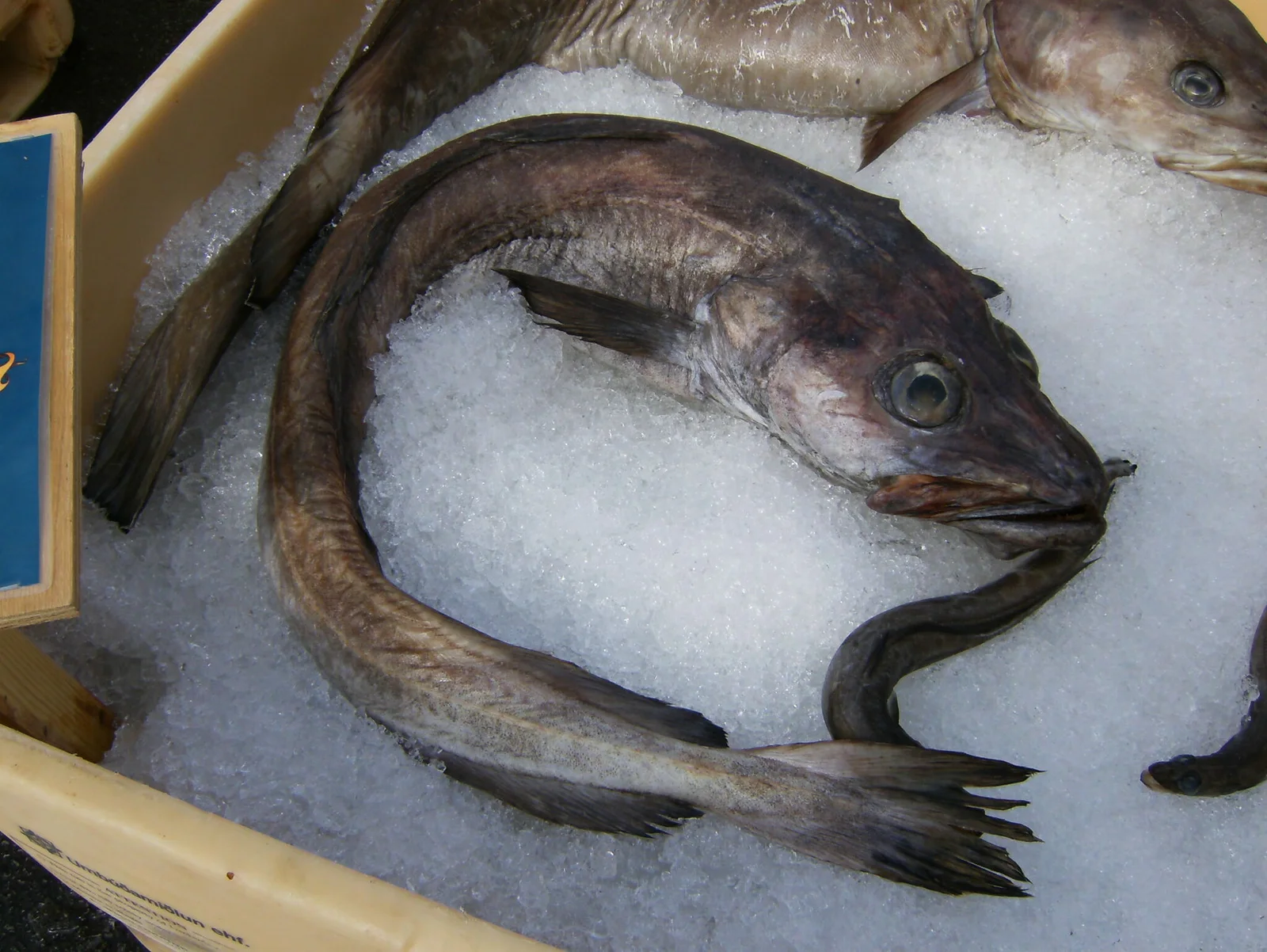
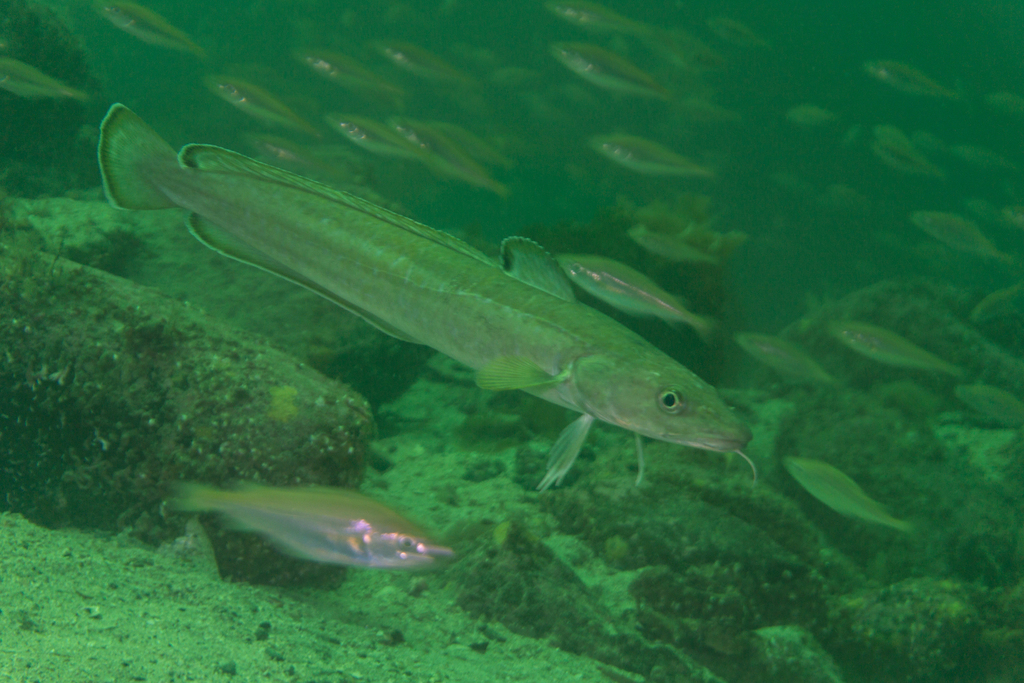
Use it for what it is good at: seeing the animal, its colour and its single long dorsal fin, so a small cusk is not confused with a codling on a busy deck. Use charts and sounders for the fishing, and take the maturity figure with you, because on this species the normal fish and the breeding fish are not the same animal.
Regulations before you keep it
These are the published regulations for this fish. Read the number first. The notice below it is the actual regulation.
Bag limit2
No minimum size · unlimited possession · all year
United States — federal (Atlantic) · US-FED-ATL
Federal Atlantic rules set no size or possession limit for cusk.
Cusk
Open season: All year
Minimum size: None
Possession limit: Unlimited
No minimum size · no bag limit
United States — Maine · US-ME
Maine sets no size or bag limit for cusk.
CUSK (Brosme brosme)
Size: no minimum size
Bag limit: none
Every record above names its source and the date it was retrieved. See the regulation register for the full list, or how to read these regulations.
Where these facts come from
Check these pages before you rely on a size, range or protection status.
-
FishBase — Brosme brosme
— FishBase · T2
-
GBIF — Brosme brosme occurrence records
— GBIF · T2
-
IUCN Red List — Brosme brosme
— IUCN · T1
-
Photo record — iNaturalist
— iNaturalist · T3