
Japanese parrotfish
Japanese parrotfish is a reef-associated scarine of the Northwest Pacific, from southern Japan (at least to Tokyo) to the adjacent Asian mainland, with records from Taiwan region, Korea, the Ogasawara Islands and the Philippines. It lives on rocky coastal ground with seaweeds and is caught by rock anglers and light-lure fishermen. FishBase gives a maximum of 39 cm total length.
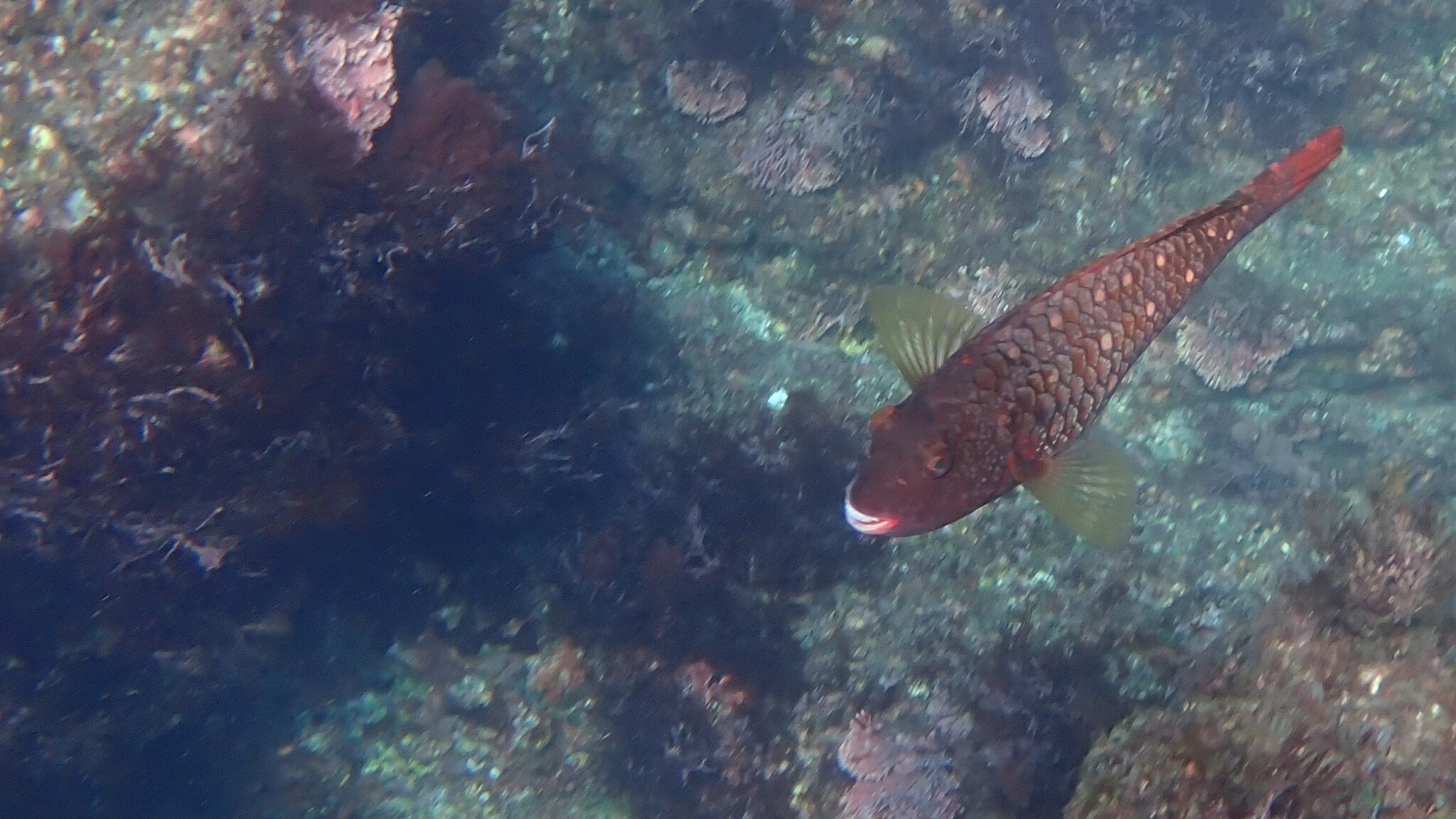
Japanese parrotfish is a reef-associated scarine of the Northwest Pacific, from southern Japan (at least to Tokyo) to the adjacent Asian mainland, with records from Taiwan region, Korea, the Ogasawara Islands and the Philippines. It lives on rocky coastal ground with seaweeds and is caught by rock anglers and light-lure fishermen. FishBase gives a maximum of 39 cm total length. IUCN lists it as Least Concern, assessed in 2009.
Reading the spines
The dorsal fin has 9 spines and 10 soft rays; the anal fin has 3 spines and 9–10 soft rays; there are 25 vertebrae. The genus name Calotomus combines the Greek kalos (beautiful) with tomos (cut). FishBase records the body as short and/or deep, with a compressed cross section; the short, deep outline, round tail and red-brown colour are easier to use than any single spot. The dorsal spines are flexible to semi-pungent, with a dark central blotch on the membrane between the first two spines. The area around the pectoral fin is unspotted. The caudal fin is rounded at all sizes. Fresh fish are reddish brown with white and pale grey scale markings; the pelvic fins are reddish with whitish blotches; the number of upper-jaw teeth increases with size; the iris is yellow with dark brown blotches; the lateral line is interrupted. Round tail, red-brown body, yellow iris and the dorsal-membrane blotch together separate it from the big tropical parrotfishes.
A rock-and-weed fish
FishBase's range is the Northwest Pacific: southern Japan, at least as far as Tokyo, and the adjacent Asian mainland. The country table lists mainland China, Japan, Korea, the Ogasawara/Bonin Islands, the Philippines and Taiwan region. GBIF's 395 records are overwhelmingly Japanese (357), with Taiwan region 8, Seychelles 4, Kenya 3 and the United States 3. That concentration also tracks survey effort: the records describe Japanese rocky coast far better than Taiwan region or the Philippines, and should not be read as abundance. It is reef-associated and subtropical, 40°N–30°N, and the biology entry says it is apparently confined to coastal rocky areas with seaweeds. Fish the weed line, the lower intertidal and the crevices where waves deliver light and algae.
The blanks are information
FishBase gives a Japanese spawning window of July to September. The species is subtropical, so temperature follows the Kuroshio and coastal currents; southern Japan's summer to early autumn is the peak, while Taiwan region's rocky coast can produce fish all year, with winter trips moving to the lee side. No temperature number is published. The conservative rule is to follow the local seaweed season: when algae are lush and temperature is stable, parrotfish come closer inshore. Tide and dawn/dusk are reasonable windows, not fixed rules.
Where to start looking
The Japanese cluster in GBIF is the centre of the recorded range, and the Ogasawara and Philippine records show it can appear on outlying reefs. For a visitor, the practical read is a rocky shore with good algal cover and moderate wave action, not a silted harbour. The source supplies no coordinates; local shore access and wave exposure will decide the mark.
Tackle and baits
Rock fishing with float or light bottom rigs is the standard approach; prawn, seaweed, sandworm and bread are the baits, and because the fish is herbivorous, algae-based bait often outperforms pure prawn on weedy marks. Small soft plastics, algae imitations and micro-minnows can be slow-rolled along rock edges. The mouth crushes hard shells, so sharp hooks with a slightly wide gape help. After the hookset, the fish dives for crevices; a abrasion-resistant leader and a fast, firm lift matter more than rod power.
Eating, handling and the rules
Japanese parrotfish is a commercial and game fish — FishBase's use entry names it a gamefish — with fine flesh good steamed, braised or in soup; bleed, gut and ice it promptly. Because it feeds on algae, ciguatera risk is generally lower than in large reef predators, but large individuals and organs should still not be eaten in quantity. Rules vary: Taiwan region manages inshore fishing and coral-reef species through closed areas, seasons and protected zones, with no-take rules in places such as Kenting; Hong Kong SAR's Fisheries Protection Ordinance regulates methods, and marine parks and reserves prohibit angling and collecting; Japanese local fisheries adjustment rules and dive-fishery management differ by prefecture; Southeast Asian states differ widely. Check the current local notice.
What the record leaves open
The page is built from FishBase taxonomy, morphology, distribution, environment, biology, use and IUCN entries, with the country table for range and GBIF/iNaturalist for occurrence. Water temperature, local spawning months in Taiwan region and local size limits are not standardised, so the text stays conservative. Reef protection rules change quickly; confirm them before fishing.
How to catch it
Bottom fishing
Fished with the listed approach, matched to the recorded depth and size.
Lure fishing
Fished with the listed approach, matched to the recorded depth and size.
Where these facts come from
Check these pages before you rely on a size, range or protection status.
- FishBase — Calotomus japonicus — FishBase · T2
- GBIF — Calotomus japonicus occurrence records — GBIF · T2
- IUCN Red List — Calotomus japonicus — IUCN · T1
- Photo record — iNaturalist — iNaturalist · T3
Fish in the same water
These fish live in the same place.
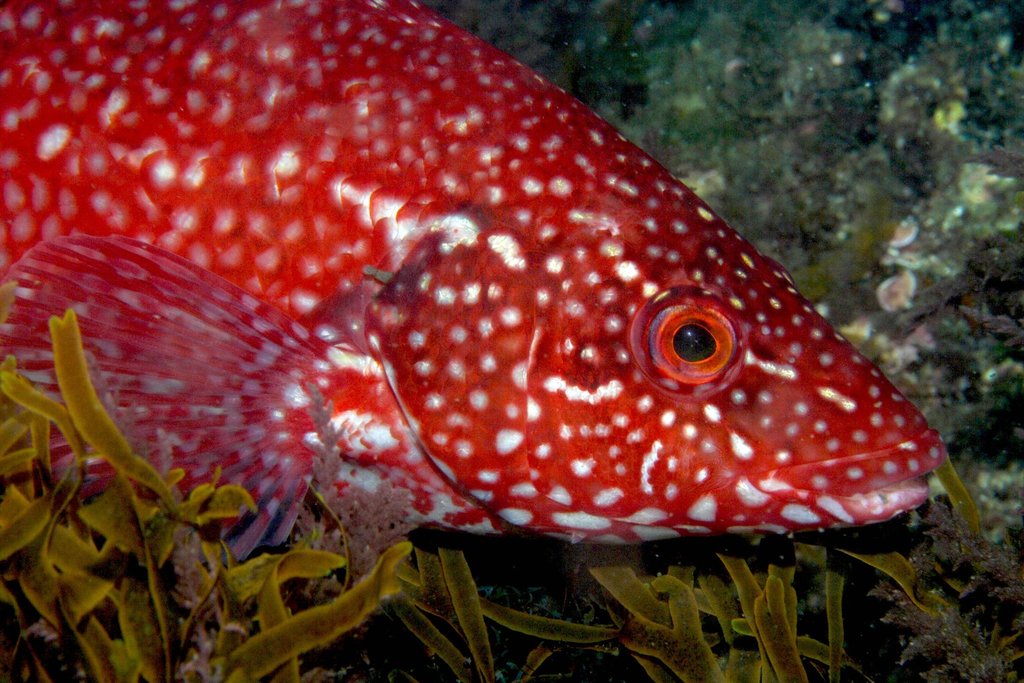
Ballan wrasse
- Family
- Labridae
- Depth
- 1–50 m
- Season
- Apr, May, Jun, Jul, Aug
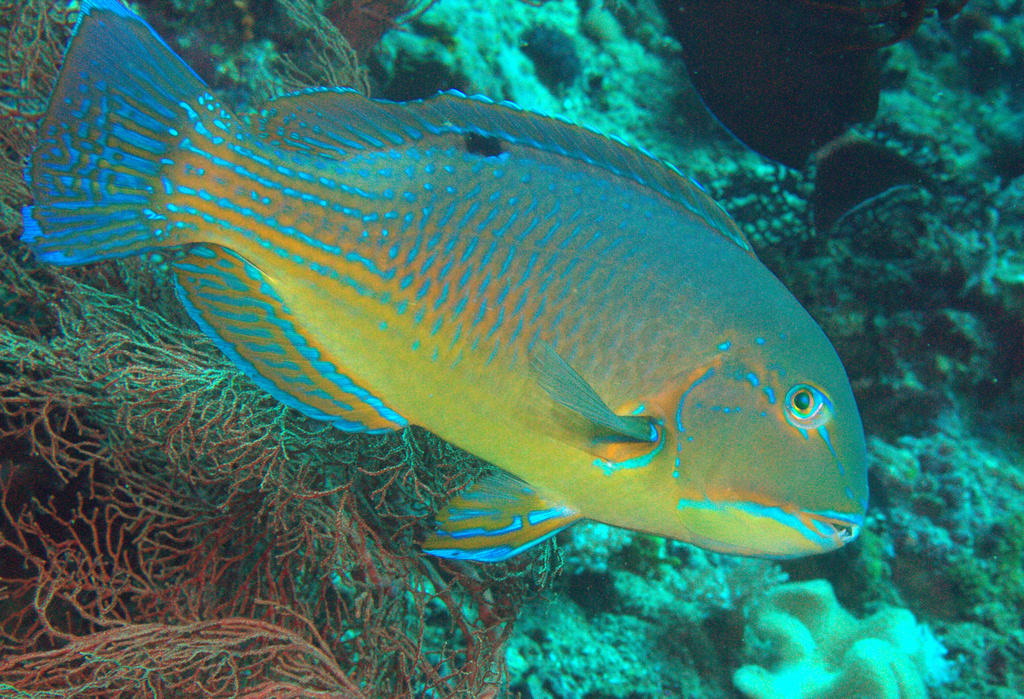
Blackspot tuskfish
- Family
- Labridae
- Depth
- 10–60 m
- Season
- Jan, Feb, Mar, Apr, May, Jun, Jul, Aug, Sep, Oct, Nov, Dec

Blue tuskfish
- Family
- Labridae
Guides for this water
Technique, gear and safety guides that fit Japanese parrotfish.