
Rock cook
The rock cook is a small wrasse of the family Labridae, built for rocky ground in the eastern Atlantic from Norway down to Portugal, with an outpost off eastern Greenland. It lives in a narrow 3–10 m band over temperate reefs, where it picks at fishes and algae.
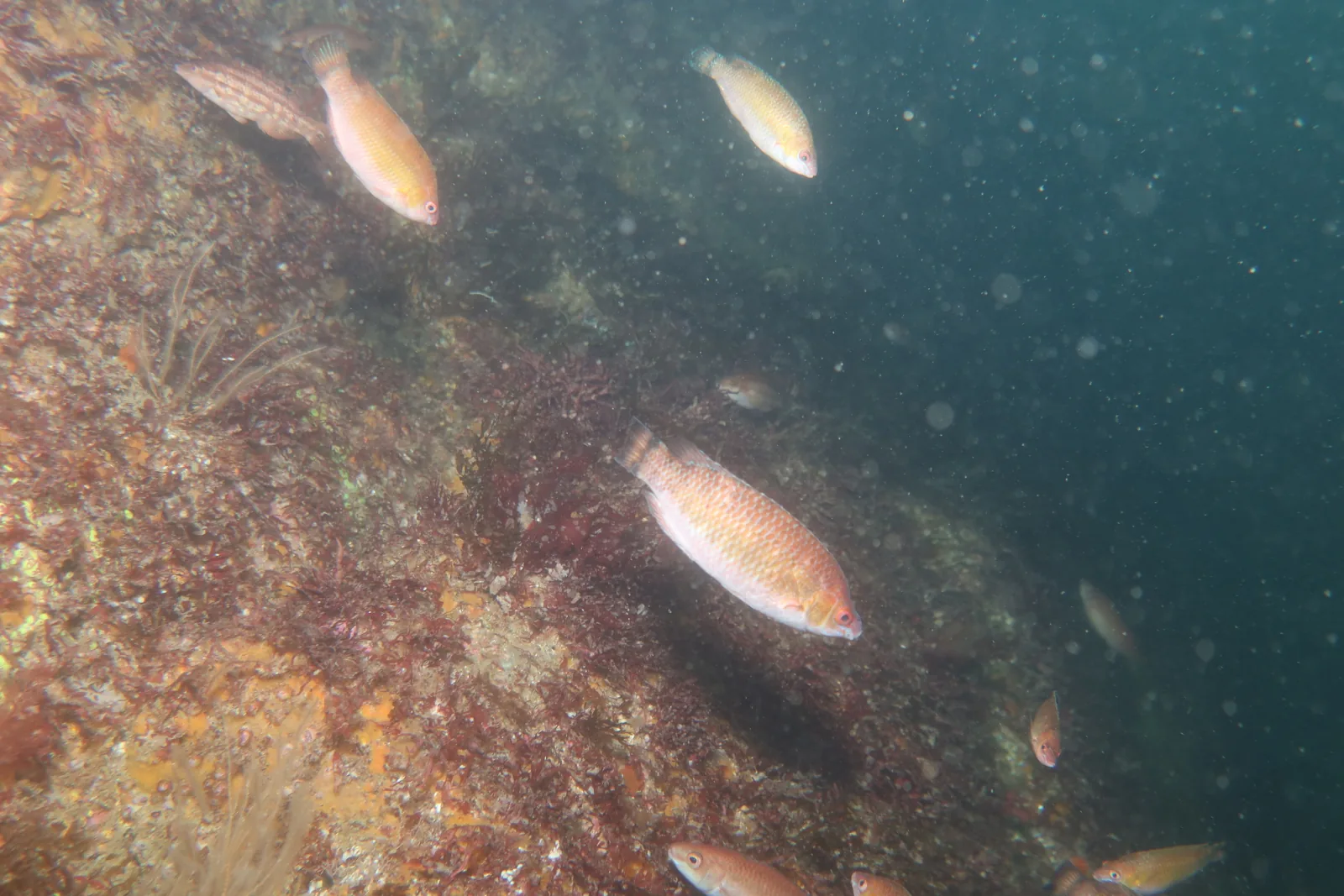
The rock cook is a small wrasse of the family Labridae, built for rocky ground in the eastern Atlantic from Norway down to Portugal, with an outpost off eastern Greenland. It lives in a narrow 3–10 m band over temperate reefs, where it picks at fishes and algae. At a common total length of 12 cm — the maximum standard length is 23.3 cm — it is too small and too scattered to be a recreational target, and FishBase records it as of no interest to fisheries. Spawning runs from May to July, though there is little reason to time a trip around it.
Identification
A maximum of 23.3 cm SL sits beside a common length of 12.0 cm TL, and those are different measurements. Standard length ends at the vertebral column; total length includes the tail. On a wrasse that is a few centimetres and a tail — most of the apparent gap. The honest reading: ordinary fish are around 12 cm, the largest recorded are 23.3 cm by the shorter measure, and neither figure is a size to aim at.
Oldest reported age is six years; maturity is unrecorded. Counts: 18–20 dorsal spines, 5–7 dorsal soft rays, 4–6 anal spines, 6–8 anal soft rays. Because 23.3 cm is a standard length, the same fish measured nose to tail would read longer, so the maximum and the common figure are not comparable at all. The alternative English name on Wikipedia is small-mouthed wrasse, which is also the name iNaturalist prefers.
Habitat and distribution
Reef-associated, rocky, 3–10 m, temperate, 80°N–33°N. A very narrow depth band under a very wide latitude band: the two do not describe the same coast, and the depth is the part you can act on. Diet is fishes and algae.
Distribution is Norway to Portugal plus eastern Greenland, 15 countries and territories in the table. GBIF's 13 rows put five in Great Britain, two in Sweden, one each in Denmark, Spain, Ireland and Norway, two without a country; iNaturalist holds 302 observations. The GBIF list is weighted to Britain while the range runs to Portugal: recording effort, not a second range.
Season and fishing approach
Spawning is May to July in one row labelled Eastern Atlantic — a third of the year, with no local variation in the capture.
The species is recorded as of no interest to fisheries. That removes the usual reason to know its season and leaves public aquariums as the only human use on the page. For an angler the consequence is direct: this is a fish you meet, not one you plan around. A six-year lifespan means the size structure at a mark turns over quickly, so last season's large fish proves nothing about this season's.
Edibility and regulations
Least Concern, assessed 25 September 2013. The date is the useful part: a 2013 category predates a decade of change and is not a survey.
No gamefish entry and no fisheries interest. The whole harvest question for this species is 12 cm common against 23.3 cm maximum, and the page does not say what a recreational rule would do with that.
Where these facts come from
Check these pages before you rely on a size, range or protection status.
- FishBase — Centrolabrus exoletus — FishBase · T2
- GBIF — Centrolabrus exoletus occurrence records — GBIF · T2
- IUCN Red List — Centrolabrus exoletus — IUCN · T1
- Photo record — iNaturalist — iNaturalist · T3
Fish in the same water
These fish live in the same place.
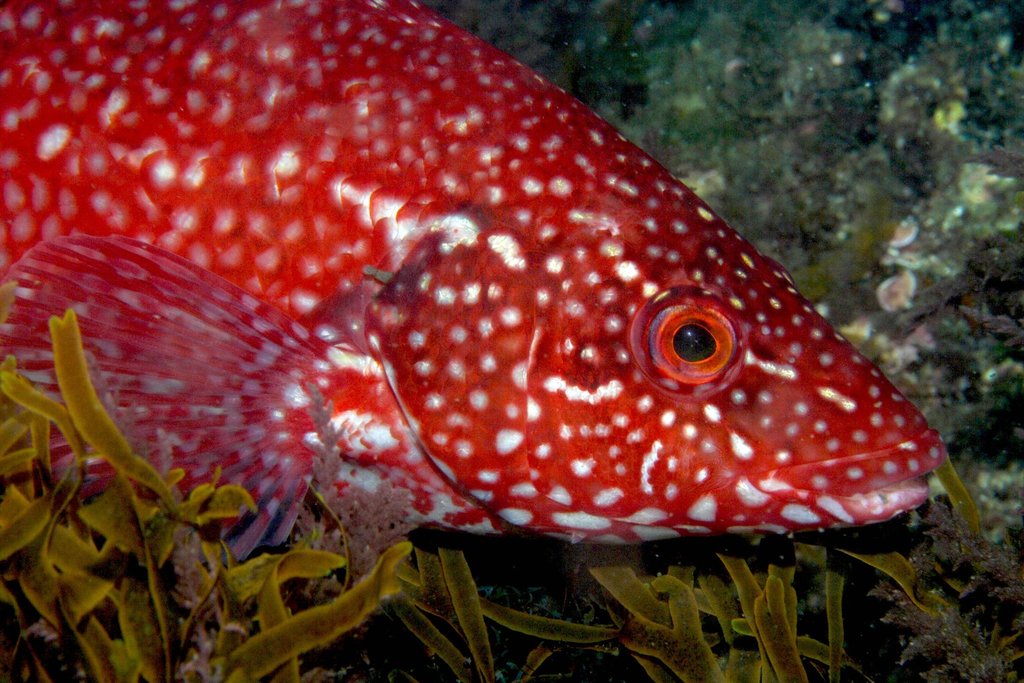
Ballan wrasse
- Family
- Labridae
- Depth
- 1–50 m
- Season
- Apr, May, Jun, Jul, Aug
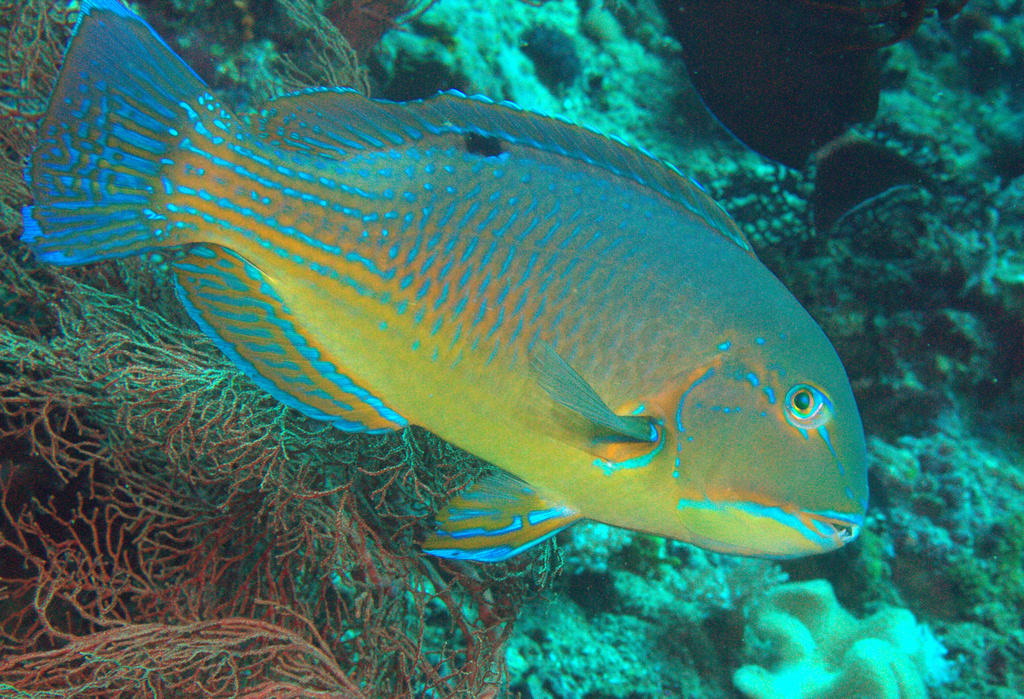
Blackspot tuskfish
- Family
- Labridae
- Depth
- 10–60 m
- Season
- Jan, Feb, Mar, Apr, May, Jun, Jul, Aug, Sep, Oct, Nov, Dec

Blue tuskfish
- Family
- Labridae
Guides for this water
Technique, gear and safety guides that fit Rock cook.