
Cape gurnard
Cape gurnard is a triglid of southern Africa, from Cape Fria in Namibia around the South African coast to Maputo in Mozambique. It lives on sand and mud between 10 and 390 m, feeding on fish and crustaceans. It reaches 75 cm TL with a common length of 35 cm, matures at about 33 cm and can live 16 years. Boat bottom fishing and jigging are the methods listed.
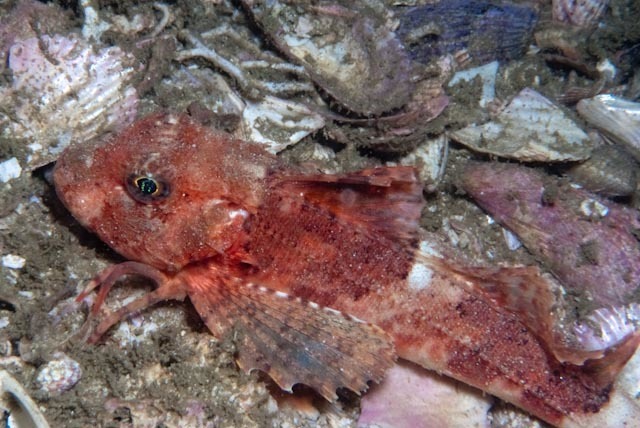
Chelidonichthys capensis is a triglid recorded from Cape Fria in Namibia around the South African coast to Maputo in Mozambique. FishBase gives a maximum of 75 cm total length, a common length of 35 cm, maturity at about 32.8 cm, a maximum age of 16 years and a depth range of 10 to 390 m. It lives on sand and mud, feeds on fishes and crustaceans, and is an excellent food fish. It is taken mainly as by-catch of bottom trawls and by recreational bottom boats.
Identification
A large gurnard with a bony, armoured head, two separate dorsal fins and very large fan-like pectoral fins. The lower three pectoral rays are free and finger-like, a feature shared by the family and used to feel for food on the bottom.
The body is reddish to orange-brown above and pale below, with a large head and a tapering tail. The mouth is inferior and the eye is high on the head.
FishBase gives a maximum of 75 cm total length, a common length of 35 cm and maturity at about 32.8 cm, with a maximum recorded age of 16 years. It is one of the larger gurnards here and is not easily confused with the smaller shallow-water species.
Distribution and Habitat
Southeast Atlantic and western Indian Ocean: from Cape Fria in Namibia, around the South African coast, to Maputo in Mozambique. It is a South African shelf species rather than a tropical one.
Depth range 10 to 390 m, over sand and mud. FishBase records it as a demersal species that is common on the shelf and upper slope.
For anglers, the fishable part of that range is roughly 20 to 120 m, where bottom baits and slow drifts work; the deepest records are trawl ground.
Habits and Diet
FishBase records a diet of fishes and crustaceans. The fish is a bottom feeder that uses its free pectoral rays to probe sand and mud, then sucks up what it finds.
It is usually by-catch rather than targeted, so catch rates depend on how long the bait stays on clean sand; rough ground produces fewer gurnards and more lost tackle.
The species does not school like anchovy or horse mackerel, but can be locally common on the right ground.
Fishing Methods and Gear
Bottom bait on a slow boat drift is the main method: a whole sardine, a squid strip or a prawn on a 2/0 to 4/0 hook, with just enough lead to tick the sand.
From the shore, a long cast over the first sand bank and a slow lift-and-drop retrieve covers the same ground. Gurnards pick up a bait that is moving, not one that sits still.
Small metal jigs of 80 to 120 g worked in short hops also take fish, because the gurnard follows the lead and takes the lure as it lifts.
Seasonal Window
FishBase does not provide monthly spawning data for this species. It is present year-round on the shelf, and catches are more consistent in the cooler months when the fish move into shallower water.
The best time within a day is usually the change of tide, when the bottom current starts to move and the fish begin feeding. Slack water is slow.
Winter and early spring are the most comfortable months for boat work off the Cape, when most recreational gurnards are taken.
Edibility and Handling
An excellent food fish. The flesh is white, firm and sweet, and it holds up well in soup, curry or pan-frying; FishBase records it as highly esteemed.
Bleed and ice promptly. The head is large, so gilling and gutting removes a lot of bulk and helps the fish cool quickly.
Handle the head carefully because of the bony spines and rough plates. A wet cloth over the head makes unhooking easier and safer.
Regulations and Conservation
South Africa: the species is not listed individually in the recreational linefish table, so the unlisted-species default applies — 10 fish per person per day in total, with no species-specific minimum size. A recreational fishing permit is required, and boat-based fishing needs a vessel licence.
Because it is mostly by-catch, the practical management issue is discarding rather than directed harvest. Undersized or unwanted fish should be returned quickly.
IUCN: Least Concern. The species is widespread on the South African shelf and is not currently considered threatened.
How to catch it
Boat bottom fishing
Boat bottom fishing
Jigging
80–120
Where these facts come from
Check these pages before you rely on a size, range or protection status.
- GBIF — Chelidonichthys capensis occurrence records — GBIF · T2
- IUCN Red List — Chelidonichthys capensis — IUCN · T1
- Photo record — iNaturalist — iNaturalist · T3
Fish in the same water
These fish live in the same place.
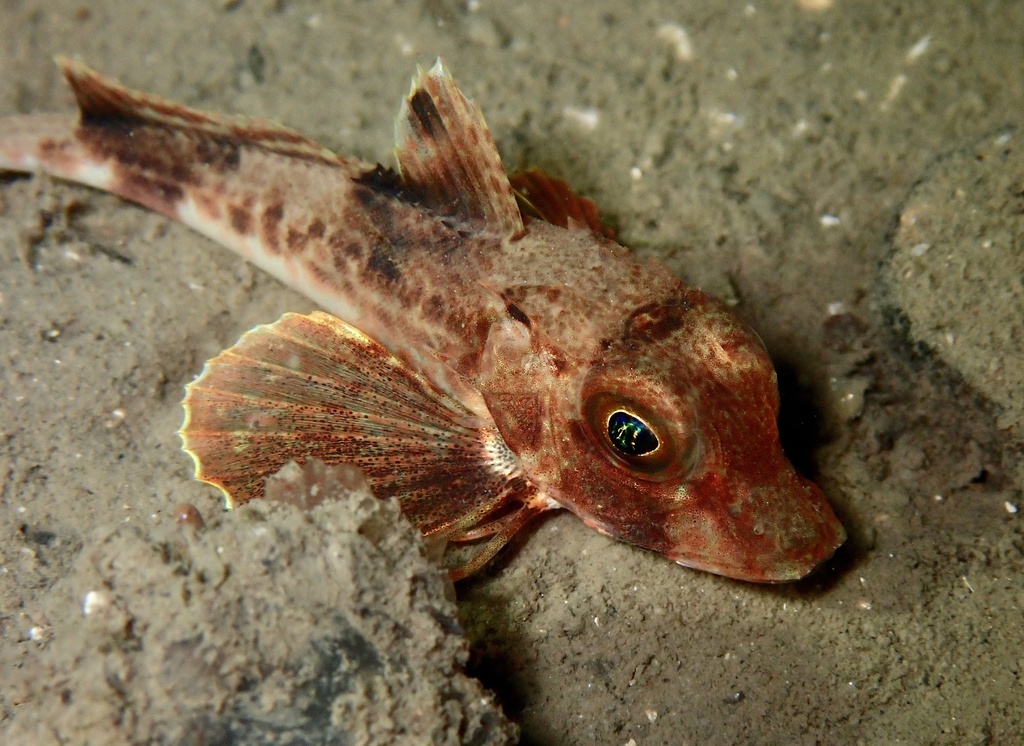
Grey gurnard
- Family
- Triglidae
- Depth
- 10–340 m
- Season
- Feb, Mar, Apr, May, Jun, Jul, Aug
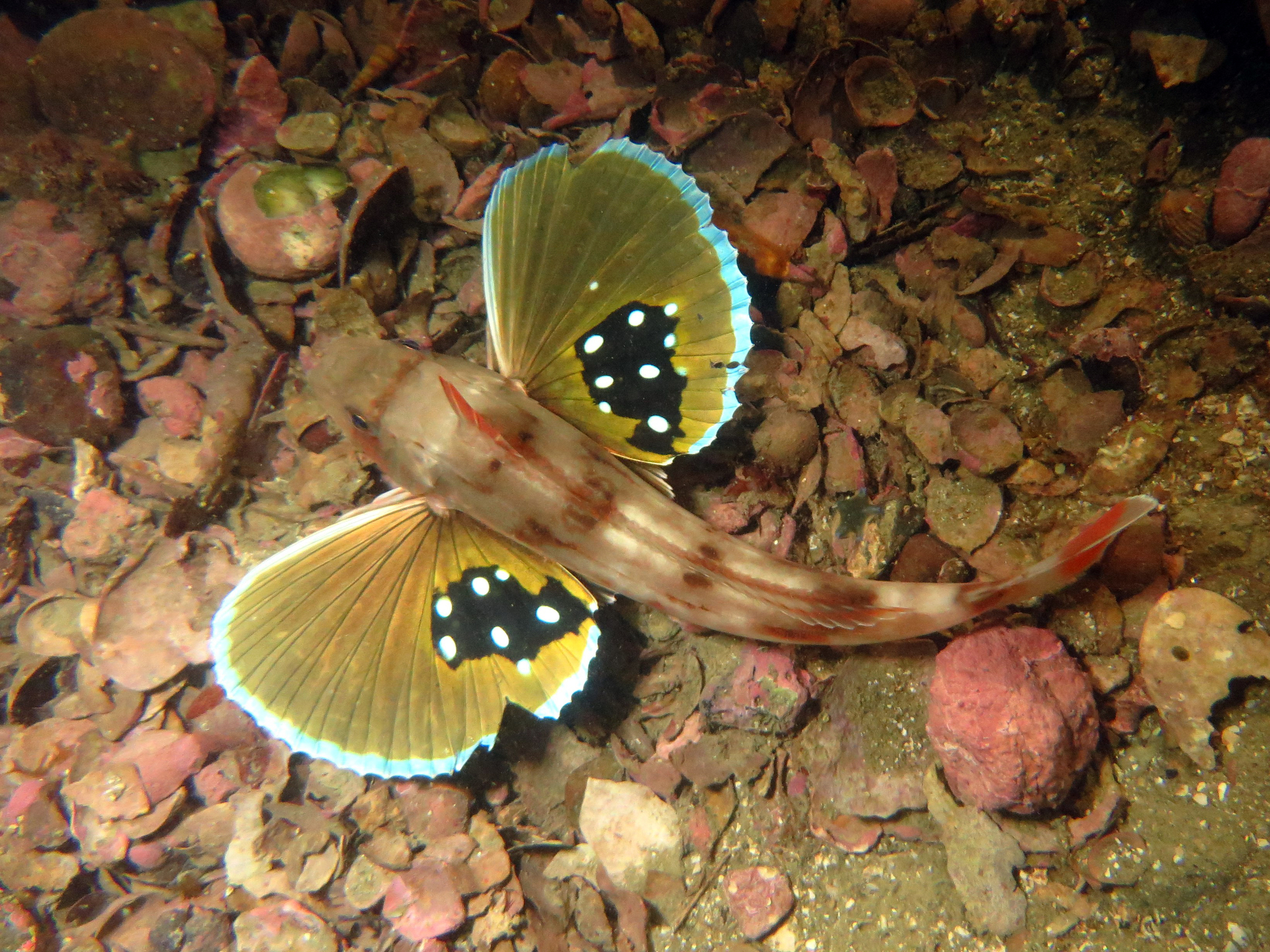
Kumu gurnard
- Family
- Triglidae
- Depth
- 1–200 m
- Season
- Jan, Feb, Mar, Apr, May, Jun, Jul, Aug, Sep, Oct, Nov, Dec
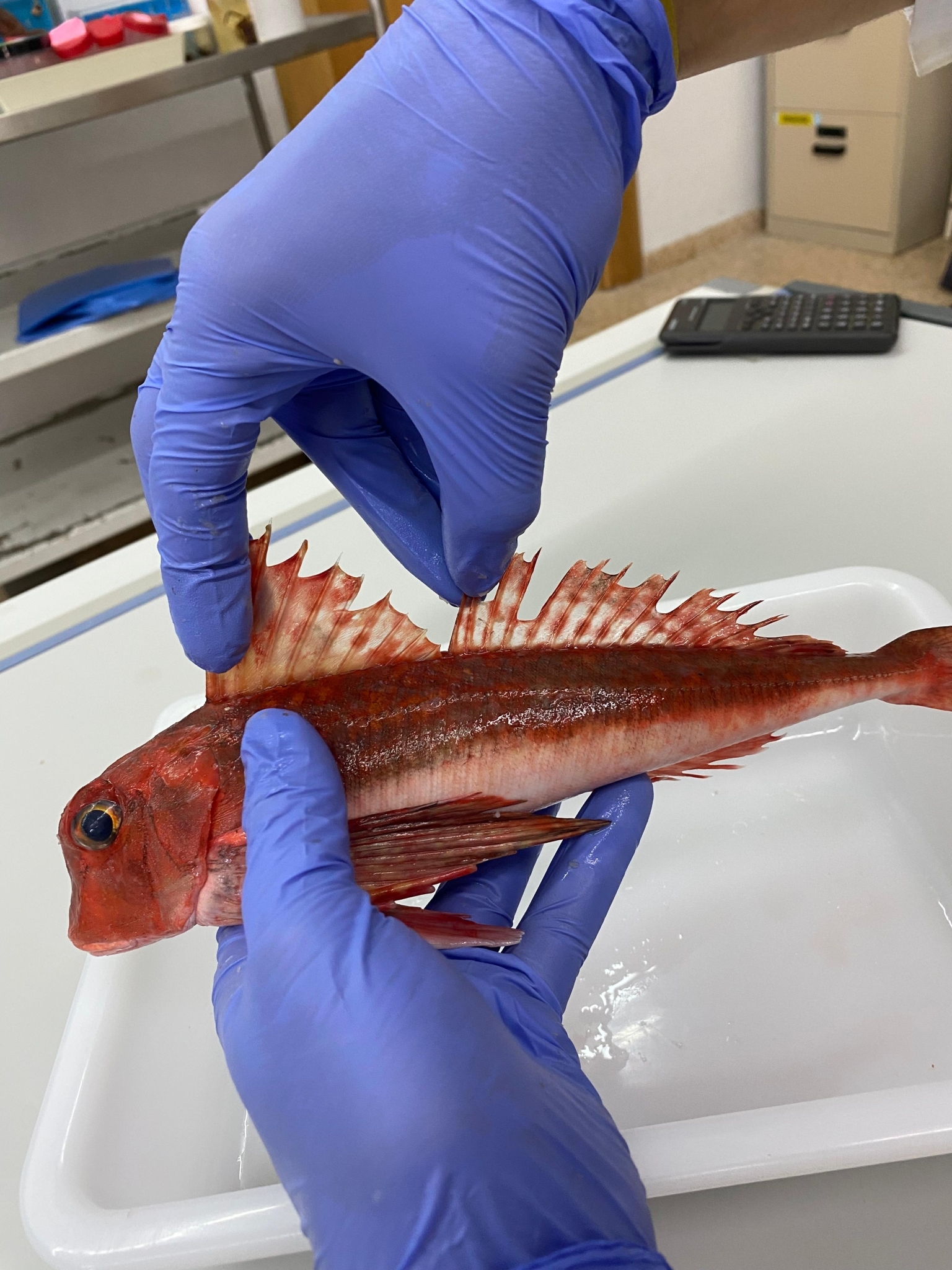
Lyre gurnard
- Family
- Triglidae
- Depth
- 150–400 m
Guides for this water
Technique, gear and safety guides that fit Cape gurnard.