
Red gurnard
Four numbers describe this fish: a 70 cm maximum, a 27.6 cm common length, a 20.4 cm common length for females, and a 26.6 cm maturity point. They are not in the same unit — the maximum is TL, the two common figures are FL, and the maturity row does not say. A fifth number, 21 years, is the maximum reported age.

Four numbers describe this fish: a 70 cm maximum, a 27.6 cm common length, a 20.4 cm common length for females, and a 26.6 cm maturity point. They are not in the same unit — the maximum is TL, the two common figures are FL, and the maturity row does not say. A fifth number, 21 years, is the maximum reported age. The record fish and the fish you meet are not the same animal.
Four numbers, three units
The size row stacks the units without reconciling them. Maximum length is 70.0 cm TL. Common length is 27.6 cm FL for males and unsexed fish, and 20.4 cm FL for females. Maturity is written as 26.6 cm with no unit at all.
That is the page's first warning: a table can look tidy and still mix TL, FL and an unstated measure in adjacent cells. Any comparison across those rows carries an error the source does not quantify.
The 70 cm fish
Seventy centimetres total length is the maximum, from a single reference. No weight is given for that fish, and no age is attached to it.
A 70 cm gurnard belongs in the record book, not on a target list. Nothing in the record says how often that size occurs, and the absence of a weight means the number cannot even be checked against body condition.
The 27.6 cm fish, and the 20.4 cm female
The common length is split by sex: 27.6 cm FL for males and unsexed fish, 20.4 cm FL for females. The "typical" fish is therefore already two different fish, and the female figure is 7.2 cm shorter than the male/unsexed one.
This is the most useful pair in the row. If you are looking at a gurnard in the 20–28 cm fork-length range, the record says you are looking at the ordinary catch, not at a small one. The 70 cm maximum sits far outside that cluster.
26.6 cm with no unit
Maturity is 26.6 cm, unit not stated. Read against the female common length of 20.4 cm FL, the typical female is 6.2 cm below the maturity point. Read against the male common length of 27.6 cm FL, the typical male is 1 cm above it.
Both readings are uncomfortable, and neither can be resolved from this page. Honestly, nothing in the data lets this maturity value be assigned to TL or to FL; the female shortfall could exceed or fall short of 6.2 cm. What survives is the direction: the common female is shorter than the maturity point by a margin the record does not settle.
Twenty-one years
Maximum reported age is 21 years. For a species whose typical fish measures under 30 cm, twenty-one years is a great age, and it alters release arithmetic: a 25 cm specimen need not be young.
No growth curve and no age-at-maturity are given, so the 21 years cannot be turned into a size-at-age table. It is a ceiling, not a schedule. Twenty-one years and 27.6 cm FL sit in the record as two unconnected numbers.
Fifteen to four hundred metres
The depth row reads 15–400 m and adds a usual 30–250 m. The middle of that span is the practical ground: 30 m suits a short run, 250 m means deep bottom work, and 400 m sits beyond the usual range as a tail. The usual band is 220 m wide, and 150 m of the stated maximum lies beyond its upper edge.
GBIF's 10 distribution assertions are all northern: Belgium (2), Denmark, France (2), Norway and Sweden (2), with Wimereux named as a locality. The Mediterranean, Madeira and Azores parts of the range have no assertion in this set, so the distribution record is narrower than the text range.
Soldier, red gurnard
Wikipedia gives red gurnard, East Atlantic red gurnard and soldier. "Soldier" is the older market name and still appears on some fishmonger boards; it does not describe the fish's behaviour.
FishBase has no Chinese name for the species, so the Chinese page title stays at the binomial. The expansion list uses as a reference name, but it is not an approved FishBase Chinese name. iNaturalist carries 46 observations. The naming gap is worth stating plainly: an English fisherman and a Chinese reader may not share a common name for this fish, only the Latin.
Rig for the common fish
Rig for 27.6 cm FL, not for 70 cm TL. That means light rods, small leads and a net sized for a fish under 30 cm; the record-class fish is not the one the gear will meet.
Carry 26.6 cm as a maturity marker with an asterisk, because its unit is missing. Carry 21 years as a reason to release the larger fish, not as a growth rate. And keep the units straight: TL for the maximum, FL for the common lengths, unknown for maturity. The page cannot fix the source's mixed row, but it can stop the mix from reaching the boat.
Where these facts come from
Check these pages before you rely on a size, range or protection status.
- FishBase — Chelidonichthys cuculus — FishBase · T2
- GBIF — Chelidonichthys cuculus occurrence records — GBIF · T2
- IUCN Red List — Chelidonichthys cuculus — IUCN · T1
- Photo record — iNaturalist — iNaturalist · T3
Fish in the same water
These fish live in the same place.
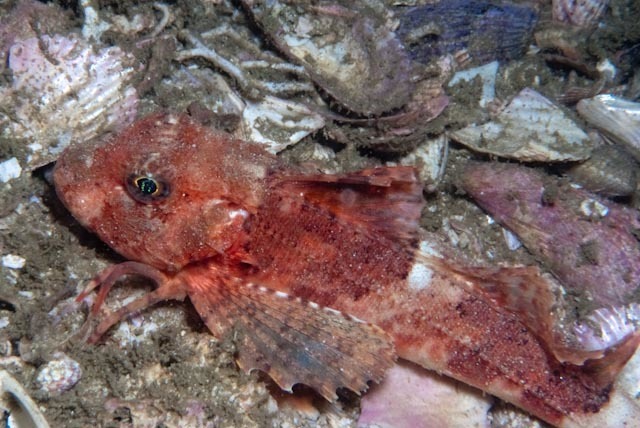
Cape gurnard
- Family
- Triglidae
- Depth
- 10–390 m
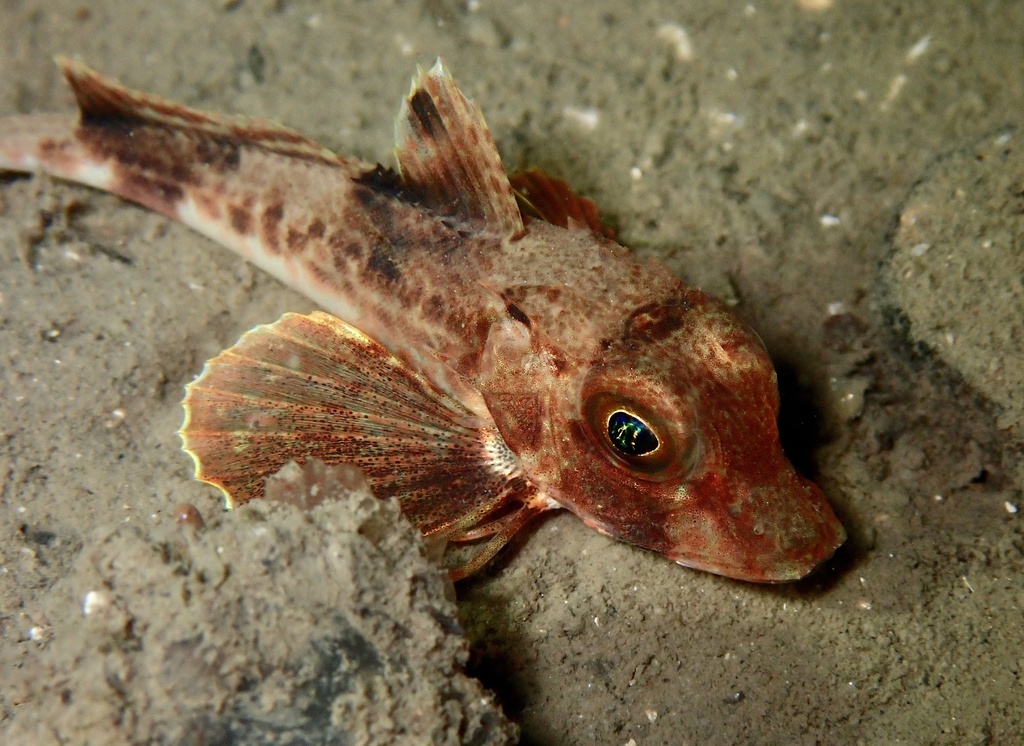
Grey gurnard
- Family
- Triglidae
- Depth
- 10–340 m
- Season
- Feb, Mar, Apr, May, Jun, Jul, Aug
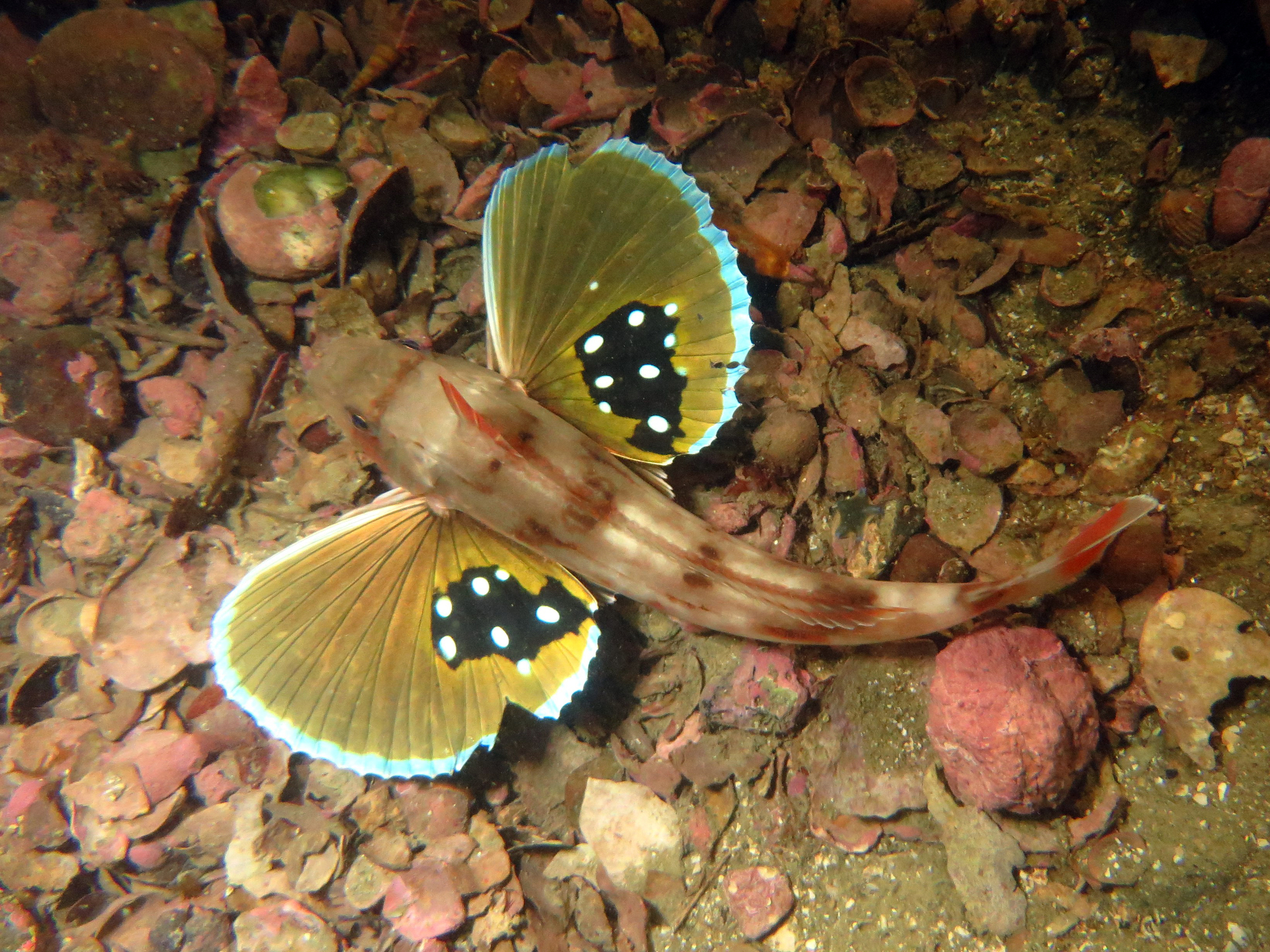
Kumu gurnard
- Family
- Triglidae
- Depth
- 1–200 m
- Season
- Jan, Feb, Mar, Apr, May, Jun, Jul, Aug, Sep, Oct, Nov, Dec
Guides for this water
Technique, gear and safety guides that fit Red gurnard.