
Streaked gurnard
Shallow and deep gurnards get treated as one fish. Put the two side by side at the boat and the separation takes three steps: the depth the fish came from, the length of the snout, and whether the flank carries lengthwise bands. All three point the same way. This species is far commoner than the lyre gurnard, which is exactly why it gets shaken off the hook as by-catch.
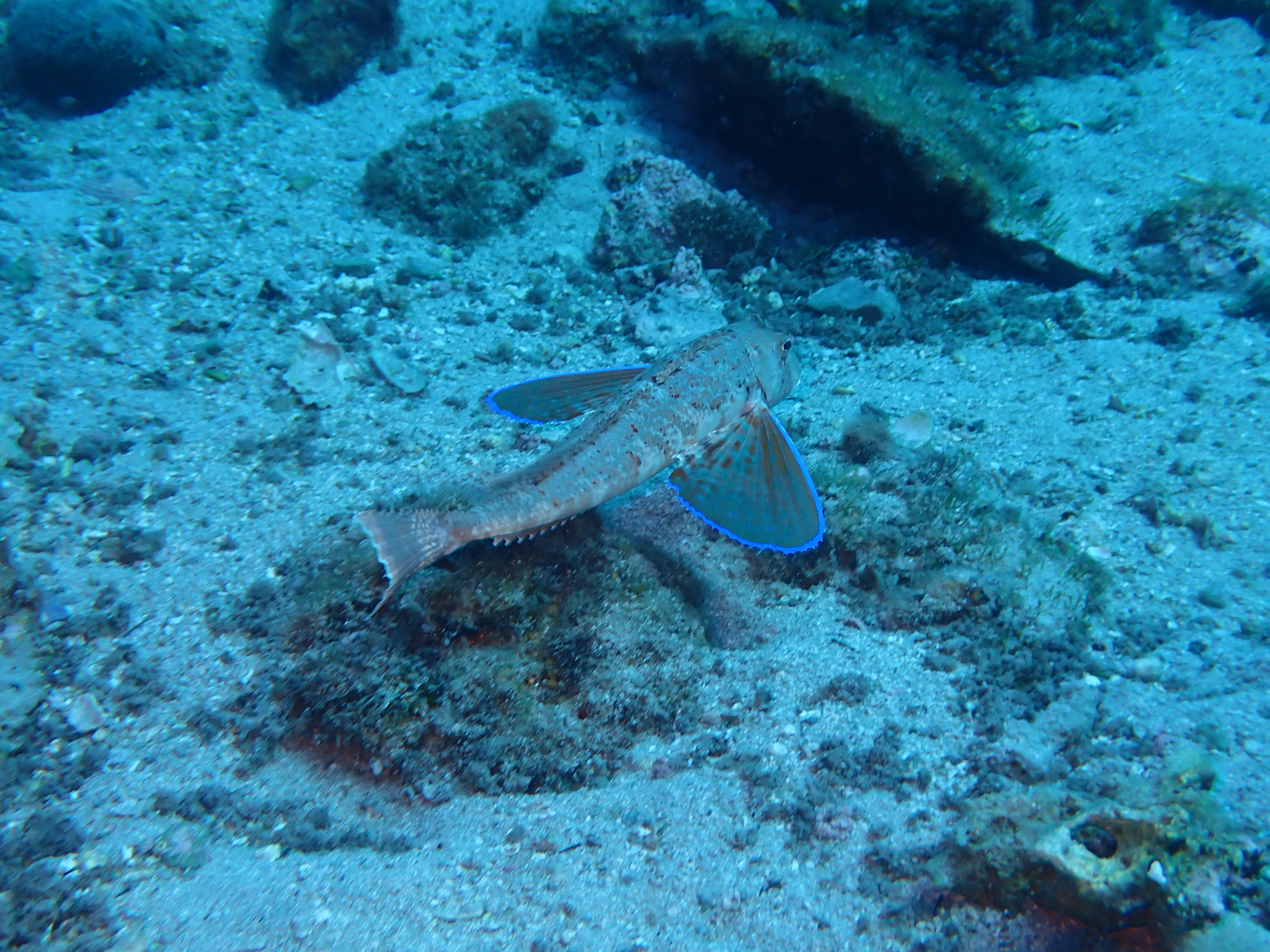
Shallow and deep gurnards get treated as one fish. Put the two side by side at the boat and the separation takes three steps: the depth the fish came from, the length of the snout, and whether the flank carries lengthwise bands. All three point the same way. This species is far commoner than the lyre gurnard, which is exactly why it gets shaken off the hook as by-catch.
Depth, snout length and bands, in that order
Separate the two gurnards in three steps. Depth first: this species is recorded from 10 to 150 m and usually inside 40 m, while the lyre gurnard usually sits between 150 and 400 m, so the two working bands barely overlap. Snout second: this one is shorter-snouted, with less exaggerated head ridges. Colour third: the body is red, the flank carries lengthwise dark bands, and the pectoral fins open wide; the lyre gurnard is redder overall and lacks bands that clear. Size adds a fourth check, with 15 cm common and 40 cm maximum here against 30 cm and 60 cm there. Two out of three is enough.
A shallow rock-and-sand fish along a very long coast
FishBase gives a long range: the eastern Atlantic from Norway south around the Cape of Good Hope to Mozambique. Two subspecies are recognised, C. l. lastoviza reaching Angola and C. l. africana in South Africa. It is a demersal fish over mixed rock and sand from the shoreline down to about 150 m. What matters for angling is how shallow it is: most catches come from a few tens of metres, within reach of deep shore marks and the rock-sand edge near the coast. The South African and East African populations carry no operational meaning for a Mediterranean angler, beyond showing how wide a temperature range the species tolerates.
A slow-growing fish with a long life
FishBase gives no month-by-month spawning table and no spawning temperature for this species. The maximum recorded age is 18 years, and maturity is stated as 15 cm with a range starting at 20 cm, two figures on the same page that do not agree, so any citation has to name its source. The usable pattern is that a shallow species moves its band up and down with the season, more active over shallow rock and sand in spring and summer and dropping a little deeper in autumn and winter. An 18 year life with slow growth means a large individual took a long time to build.
Working the bottom for a crustacean feeder
Crustaceans are the diet, so the fishing is built around the bottom. From shore, a light lead and a short snood on the rock-sand slope, dragged slowly enough that the bait scrapes rather than hops. From a boat, a slow drifted bottom rig is better: the boat slides over fresh ground and the bait trails behind, and the take often comes in the instant the bait stops. A third option is a light iron hopped along the bottom, though this is not a chasing predator and a solid bait outperforms it. The fish waits on the bottom, so a bait suspended mid-water is wasted effort.
Light tackle and a hand that stays away from the gill spines
From shore, a 7 to 8 foot medium-action rod with a 3000 reel, 0.8 to 1.0 braid and a 10 to 15 lb fluorocarbon leader. From a boat, a 6.6 foot rod rated 30 to 80 g with a 3000 or 4000 reel. Use a 1/0 to 2/0 wide-gap single hook; the wire need not be heavy. Head spines and gill-cover spines are rigid, so pin the head with a wet cloth before unhooking, or the hand gets opened. Keep the snood short, because a long one tangles on rock and sand, and use a breakaway lead so a snag costs the weight rather than the rig.
No EU size, and a slow life that argues for restraint
The flesh is white and thin, better fried whole or used for soup, and cleaner once skinned; the fish are usually too small to justify filleting. EU: Regulation (EU) 2019/1241 Annex IX Part A does not list the Triglidae, so there is no EU minimum conservation reference size. No size does not mean no rules: recreational catch may not be sold and the gear restrictions still apply. Spain: RD 560/1995 Annex II has no entry, and its Gallo line refers to Lepidorhombus, not gurnards; a regional licence is required from shore and boat. France: no entry in the Mediterranean section of the 26 October 2012 arrêté; no permit, registration under RecFishing from age 16, no sale of catch. Croatia: no national entry; licence required, 5 kg per day plus one fish over 5 kg. Italy: no separate national recreational table, the EU MCRS applies and this species is not on it; annual MASAF declaration required. Greece: no recreational licence, 5 kg daily. With an 18 year lifespan, take what you need. Check the current year's official notice.
The evidence behind the three-field separation
Distribution, the 10 to 150 m depth band, the 40 cm maximum total length, the 15 cm common length, the 18 year maximum age, the crustacean diet and IUCN LC (2014) all come from FishBase, as does the two-subspecies split. Chinese Wikipedia gives the same 10 to 150 m and a rock-and-sand bottom. The maturity figure on FishBase contradicts itself, stating a length at maturity of 15 cm while giving a range that starts at 20 cm, so no single number is used in the main text. Month-by-month strength follows shallow boat experience and has no survey behind it.
How to catch it
Shore casting
Fished with the listed approach, matched to the recorded depth and size.
Boat bottom fishing
Fished with the listed approach, matched to the recorded depth and size.
Bottom fishing
Fished with the listed approach, matched to the recorded depth and size.
Where these facts come from
Check these pages before you rely on a size, range or protection status.
- FishBase — Chelidonichthys lastoviza — FishBase · T2
- GBIF — Chelidonichthys lastoviza occurrence records — GBIF · T2
- IUCN Red List — Chelidonichthys lastoviza — IUCN · T1
- Photo record — iNaturalist — iNaturalist · T3
Fish in the same water
These fish live in the same place.
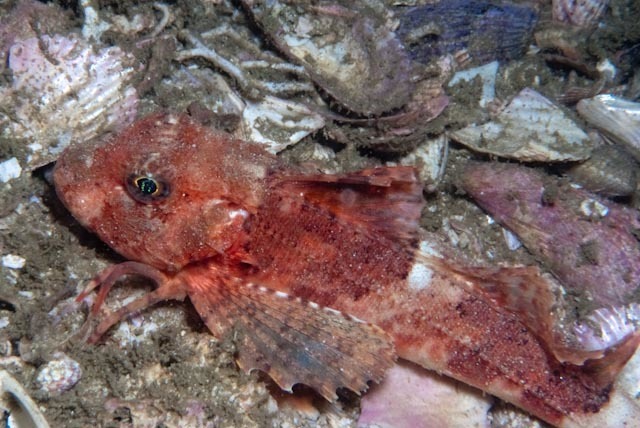
Cape gurnard
- Family
- Triglidae
- Depth
- 10–390 m
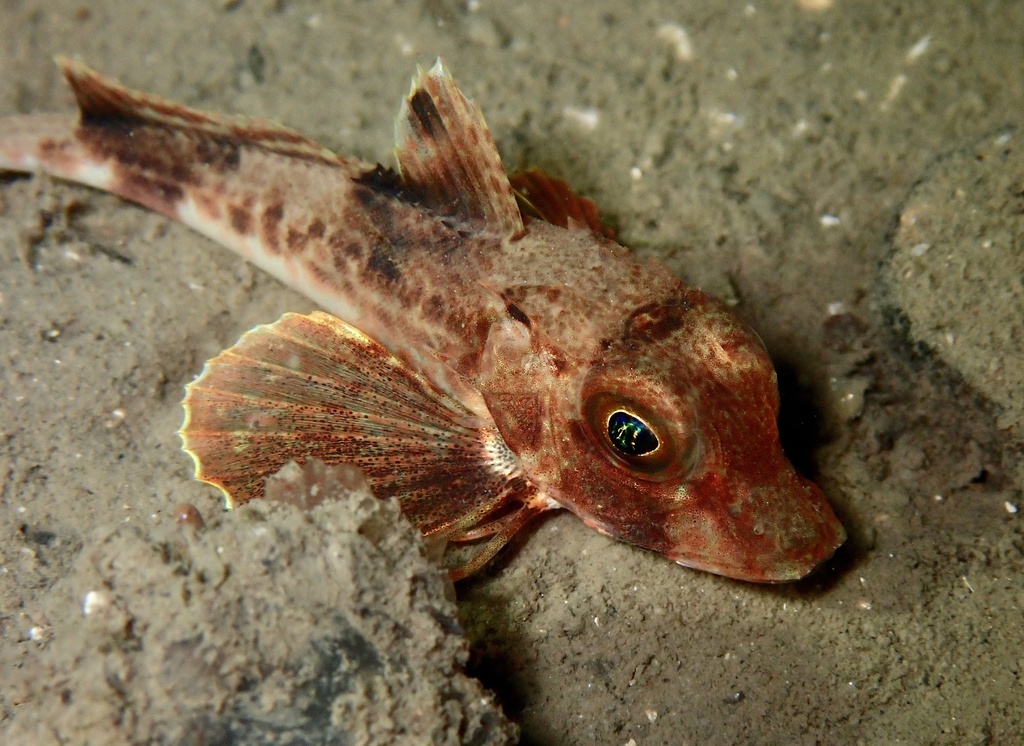
Grey gurnard
- Family
- Triglidae
- Depth
- 10–340 m
- Season
- Feb, Mar, Apr, May, Jun, Jul, Aug
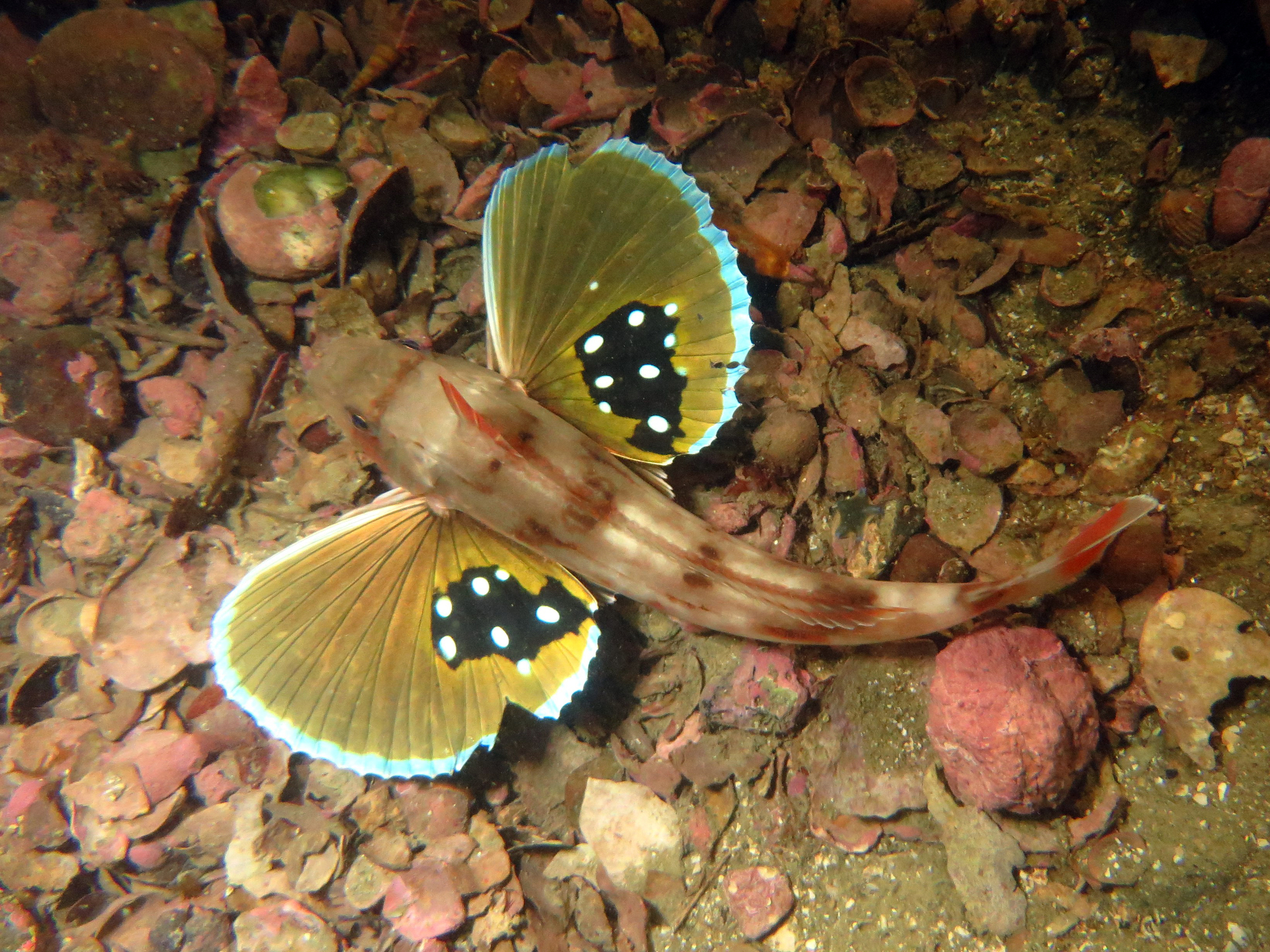
Kumu gurnard
- Family
- Triglidae
- Depth
- 1–200 m
- Season
- Jan, Feb, Mar, Apr, May, Jun, Jul, Aug, Sep, Oct, Nov, Dec
Guides for this water
Technique, gear and safety guides that fit Streaked gurnard.