
Roman
FishBase gives *Chrysoblephus laticeps* a maximum of 50 cm TL, a common length of 32 cm, 4.2 kg as the heaviest published weight, and first maturity at 18.1 cm. Anglers in South Africa and Namibia call it Roman, and the FAO name is Roman seabream. It sits over rocky bottom from 1 m to 100 m and is often taken from the shore.
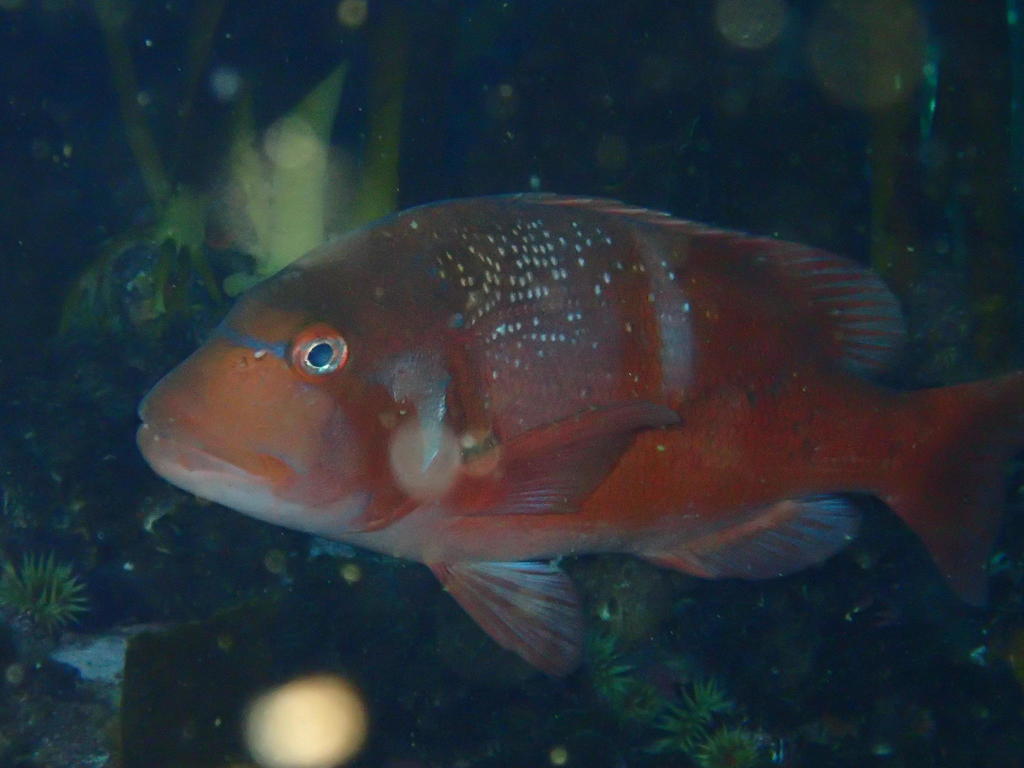
FishBase gives *Chrysoblephus laticeps* a maximum of 50 cm TL, a common length of 32 cm, 4.2 kg as the heaviest published weight, and first maturity at 18.1 cm. Anglers in South Africa and Namibia call it Roman, and the FAO name is Roman seabream. It sits over rocky bottom from 1 m to 100 m and is often taken from the shore. South Africa allows two fish a day at 30 cm TL. This page sets the biology against that rule.
Identification
FishBase counts 11–12 dorsal spines, 10–11 soft dorsal rays, three anal spines and 7–9 soft anal rays on a body it calls short and deep. The usual colour is reddish orange; some fish are blue with a white patch on the side. The French FAO name, Spare à selle blanche, reads as white-saddle bream. Connecting that name to the white patch is inference from two entries, not something either entry states.
The species carries the monogenean Anoplodiscus cirrusspiralis on its fins and body surface. That is an external parasite, so it is visible in the hand and not in the fillet, but a fish sold as Roman is worth looking at rather than assuming.
Range and habitat
FishBase runs the range from northern Namibia to northern Natal, South Africa, and adds Mauritius as a further report. Its country list names exactly three: Mauritius, Namibia and South Africa. The occurrence data is narrower. GBIF returns 1,152 present records, 1,049 of them from South Africa, 74 from Namibia, 11 with no country assigned and 1 from France. iNaturalist holds 539 observations. No GBIF record comes from Mauritius.
So the Mauritian range is textual only, and the iNaturalist species summary goes further, calling the old Madagascar and Mauritius records doubtful. The workable range is the South African and Namibian coast.
The habitat line is specific: rocky bottom in deeper water to 100 m, but often caught from the shore, with the depth range put at 1–100 m. Juveniles live in shallow beds of seaweed and feed on minute crustaceans there. That single sentence separates the nursery from the adult reef, and it is the most useful allocation on the page.
Habits and diet
The diet is molluscs, crustaceans, worms and fish; juveniles take minute crustaceans in seaweed, which fits the shallow nursery.
FishBase calls the fish voracious but sluggish and says it takes any bait. That is one of the few lines on the page that speaks to angling, and it is a feeding observation, not a recommendation.
Females change into territorial males with growth. No length and no age are given for the change, and no age record appears for the species.
Season and time of day
The spawning table has one entry: South Africa, October through January. In the southern hemisphere that is late spring into midsummer, with nothing recorded from February to September.
No time of day and no tide are recorded. The only timing material is indirect: a fish described as sluggish, holding over rock between 1 m and 100 m. Fishing the change of light is an angler habit rather than a documented pattern for this species, and this page does not dress it as one.
South Africa lists no closed season for Roman in the brochure checked. Closures that do apply come from MPA zoning, which is a separate instrument.
Tackle and techniques
The source supplies depth, bottom and size; the method follows from those three.
The fish holds over rock from 1 m to 100 m and is often caught from the shore. Shore angling therefore covers the shallow end, and the deeper marks need a boat. Juveniles are in shallow seaweed, so weedy shallows hold the small fish and the adults are over deeper reef. That split is inference from the habitat and juvenile notes.
Because the fish takes any bait, bait choice is not the binding constraint; presentation over rock is. A rig that keeps the bait just off the bottom follows from the bottom type, not from anything the source says about rigs. The page records no rig, no bait and no method.
Size sets the gear. A common fish is 32 cm and the maximum 50 cm at 4.2 kg, so medium tackle covers the normal range and the record end is a 4 kg fish. With a 30 cm minimum, many legal fish are small; gear should not be scaled to the maximum.
Kitchen and handling
FishBase calls it a good food fish and records that it is sold fresh. It gives no flesh description and no culinary note, so none is added here.
The parasite sits on the fins and body surface. Naming the location is what makes the reading safe: external, visible, not a defect in the flesh.
The species is listed as harmless to humans. The page carries no toxin warning, which is worth saying plainly because another sparid on this site, red steenbras, has a liver that is poisonous.
Regulations and conservation
South Africa requires a recreational angling permit; the catch is for own use and cannot be sold, and the overall daily bag is 10 fish unless a species rule applies. For Roman the species rule is 2 fish per person per day at 30 cm TL.
The 30 cm line sits 11.9 cm above the recorded first maturity of 18.1 cm, so by the page's own figure the limit protects fish that have already spawned. It sits 2 cm below the 32 cm common length, which means a legal fish is often a below-average fish. Both readings are arithmetic on the two sources, not claims either source makes.
Namibia requires a recreational permit. Regulation 8(2) sets a combined ten fish a day across blacktail, galjoen, kob and West Coast steenbras, and Annexure J sets sizes for those four. Roman is not among them, and no separate Namibian size or bag limit for the species was located in the regulation checked. The Namibian part of the range is real, with 74 GBIF records, but its rule is not in the document used here.
Mauritius appears as a report only, and no Mauritian rule was located.
The IUCN entry is Least Concern, assessed 11 July 2024. No trend and no stock estimate are given. Least Concern is one global category from one date. It does not make a two-fish bag conservative, and it does not replace permit conditions or MPA zoning.
How to catch it
Boat bottom fishing
Fished with the listed approach, matched to the recorded depth and size.
Shore fishing
Fished with the listed approach, matched to the recorded depth and size.
Rock fishing
Fished with the listed approach, matched to the recorded depth and size.
Where these facts come from
Check these pages before you rely on a size, range or protection status.
- FishBase — Chrysoblephus laticeps — FishBase · T2
- GBIF — Chrysoblephus laticeps occurrence records — GBIF · T2
- IUCN Red List — Chrysoblephus laticeps — IUCN · T1
- Photo record — iNaturalist — iNaturalist · T3
Fish in the same water
These fish live in the same place.
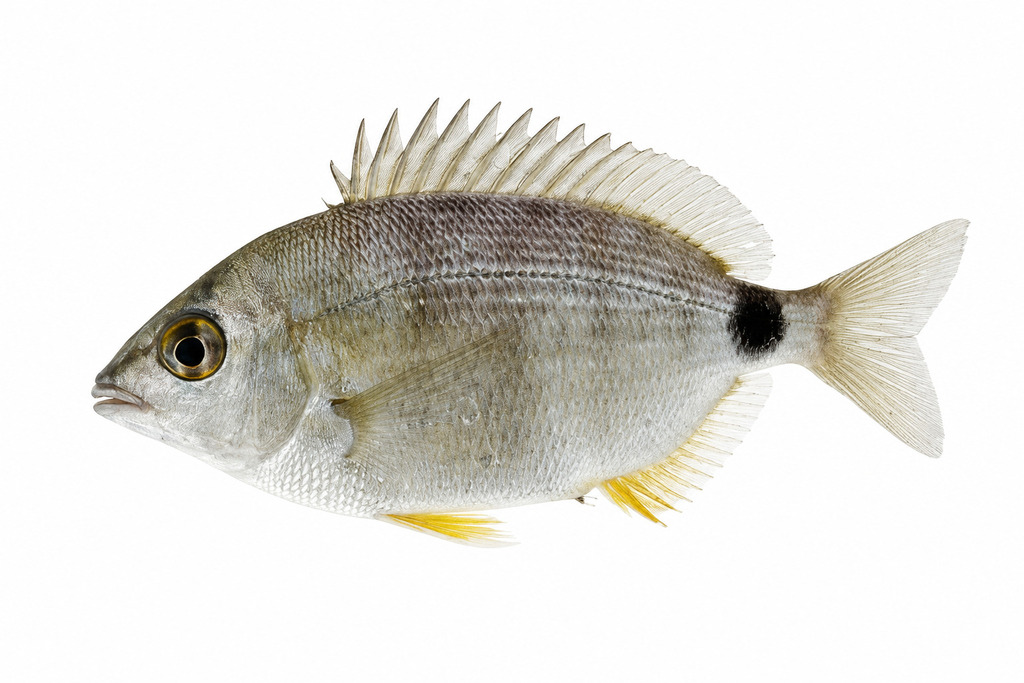
Annular seabream
- Family
- Sparidae
- Depth
- 0–90 m
- Season
- Jan, Feb, Mar, Apr, May, Jun, Jul, Aug, Sep
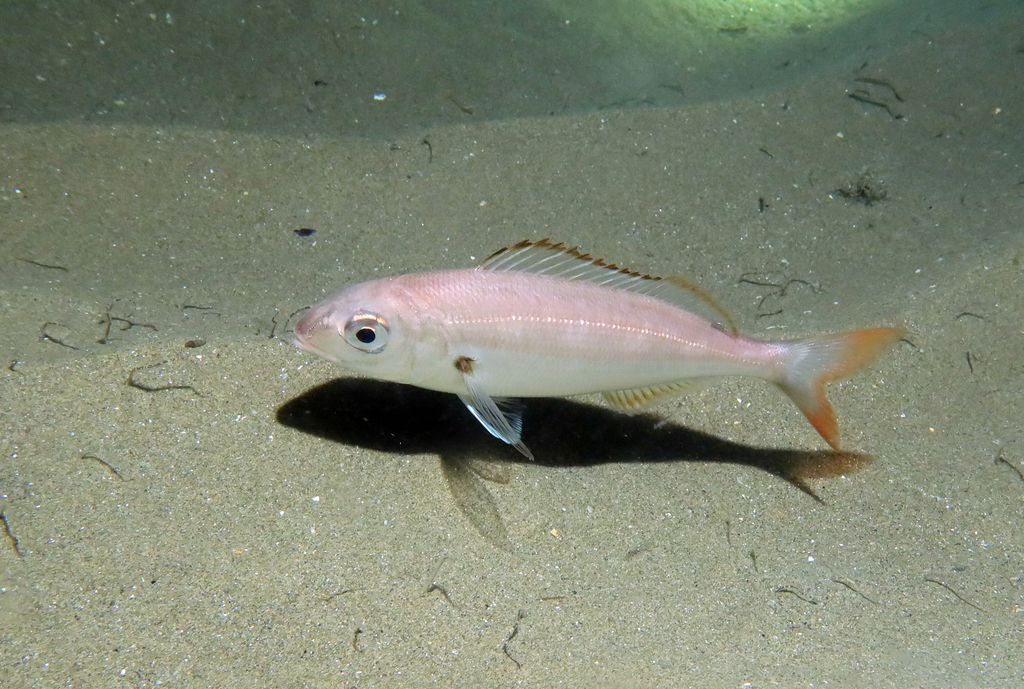
Axillary seabream
- Family
- Sparidae
- Depth
- 0–500 m
- Season
- Jan, Feb, Mar, Apr, May, Jun, Jul, Aug, Sep, Oct, Nov, Dec
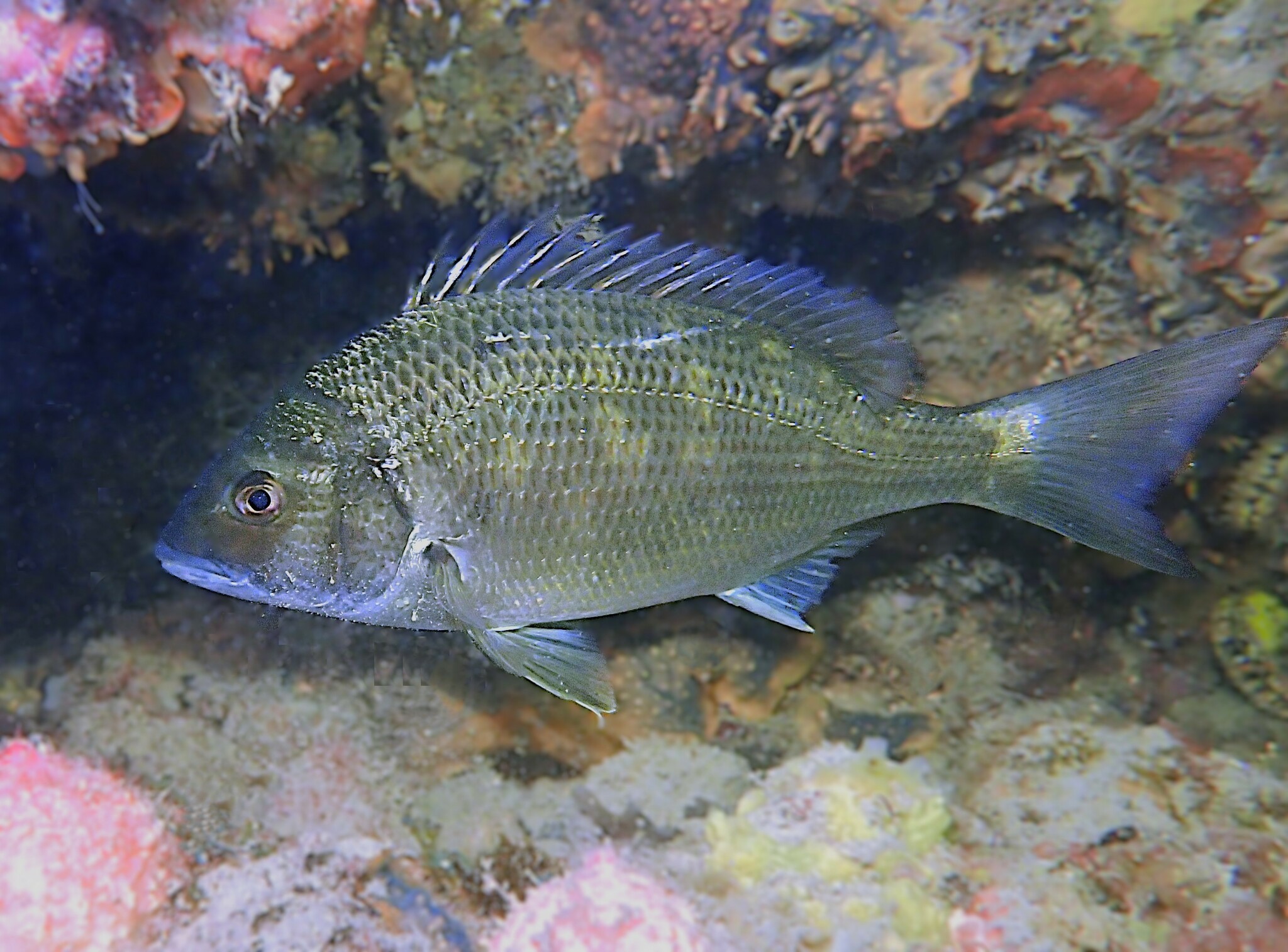
Black bream
- Family
- Sparidae
- Season
- Jan, Feb, Jul, Aug, Sep, Oct, Nov, Dec
Guides for this water
Technique, gear and safety guides that fit Roman.