
Slinger
Slinger is a western Indian Ocean sparid, from Mozambique and Madagascar to South Africa, where anglers know it by that name and Mozambican markets sell it as red stumpnose. It reaches 85 cm TL with a common length of 55 cm and matures at just 23 cm. It lives between 10 and 100 m. South Africa allows five fish a day at 25 cm TL, and boat bottom fishing and shore casting are the methods listed.
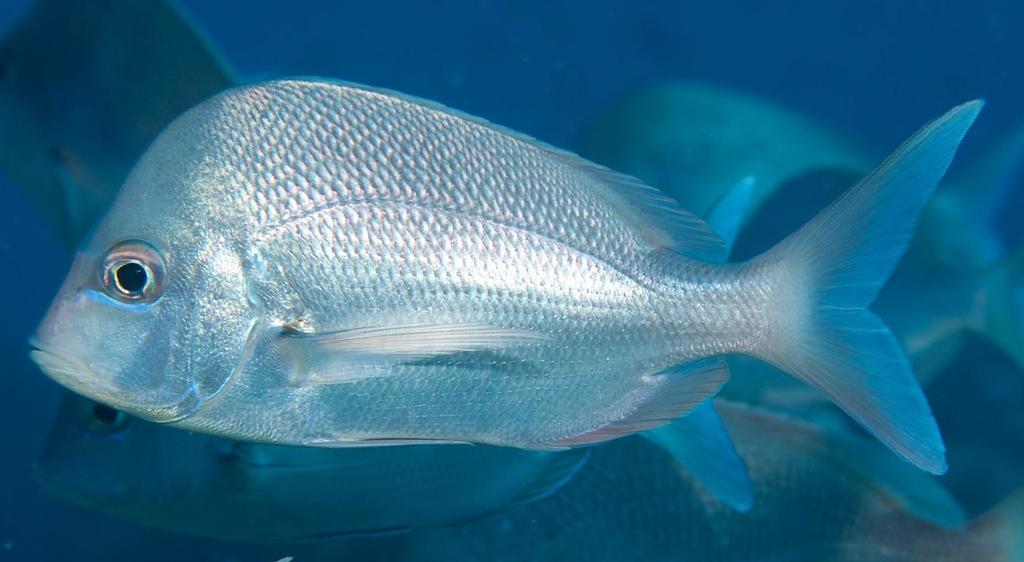
FishBase gives *Chrysoblephus puniceus* a maximum of 85 cm TL, a common length of 55 cm and first maturity at 23.0 cm; weight and age are blank. South African anglers call it slinger, and it reaches Mozambican markets as red stumpnose. The recorded range runs from Mozambique and Madagascar to South Africa. South Africa allows five fish a day at 25 cm TL. The distance between that 25 cm rule and the 38 cm at which the species changes sex is the subject here.
Identification
FishBase gives 12 dorsal spines, 10 soft dorsal rays, three anal spines and 8 soft anal rays, on a body it calls short and deep. It gives no colour description at all; the entry carries fin counts and body shape and stops. The purple in the specific name, puniceus, is not explained on the page either; the iNaturalist summary glosses the binomial as golden-eyed purple.
Against the other sparids on this coast the fin formula is the working check: 8 soft anal rays here, against 7–9 in Roman and 10 in hottentot. The page records no maximum weight for an 85 cm fish, which is unusual for this family on FishBase and leaves the top of the size range unquantified.
Range and habitat
The distribution text is short: western Indian Ocean, Mozambique and Madagascar to South Africa. GBIF returns 1,589 present records, 1,111 from South Africa, 392 from Mozambique, 71 from Namibia and 2 unassigned. iNaturalist holds 66 observations.
The 392 Mozambican records make this the one species in the group where the northern part of the range carries data rather than a line of text. The 71 Namibian records are a different matter: Namibia is not on the FishBase country list for the species, so either the identifications are wrong or the range is wider than the text. That stays unresolved and is a data question, not a fact.
The iNaturalist summary is narrower than FishBase, running from Zavora in Mozambique to Coffee Bay in the Eastern Cape, and puts the depth to 130 m against the 10–100 m in the environment line. Two sources, two northern limits and two depth ceilings.
The habitat statement is one line: coastal water over rocky substrate. The environment field adds demersal, subtropical and 10–100 m.
Habits and diet
The diet is molluscs, crustaceans, worms and small fishes, the only feeding detail on the page.
Reproduction is the part FishBase does not carry. The iNaturalist summary describes the species as a protogynous hermaphrodite, with females turning into males at about five years or 38 cm, and males reaching 55 cm. FishBase records first maturity at 23.0 cm and does not mention sex change. The two can both be true: first maturity as a female at 23 cm, change to male at 38 cm. The five-year figure has no counterpart in the FishBase entry, which gives no age at all.
Read together, the entries describe a fish that spawns as a female through roughly the lower half of its length range and then functions as a male. That structure is what makes the size rule worth examining.
Season and time of day
The spawning table has one entry: Natal, South Africa, June to October. In the southern hemisphere that is winter into early spring, and it is one recorded locality.
No time of day and no tide are recorded. The depth range and the rocky substrate are the only basis for timing advice, and they concern place rather than hour; anything said about dawn or dusk here would be borrowed from other reef fish.
South Africa lists no closed season for slinger in the brochure checked. MPA zoning can still close an area, which is a separate instrument.
Tackle and techniques
Depth first. The species is recorded from 10 m to 100 m over rock. A 10 m minimum puts most of the range beyond casting distance from the shore, so this is predominantly a boat fish. That is inference from the depth range; the page records no shore captures.
Size next. A common fish is 55 cm and the maximum 85 cm. That is a heavier class than the 32 cm Roman, and with no weight on the page the drag setting has to be estimated from length rather than read off a figure.
Diet third. Small fishes are on the list beside molluscs and crustaceans. A fish bait or a lure imitating a small fish follows from that line. The source records no bait, no rig and no method, so the choice is inference.
One release point does come from the data. If females turn into males at about 38 cm, a fish above that length is likely male, while the 25 cm minimum allows the take of fish that are still female. Deciding what size to keep and what to release is a choice the numbers make visible; it is not a recommendation either source makes.
Kitchen and handling
FishBase records that the species is sold fresh in markets. It says nothing about the flesh, the fat content or how it cooks. The species is harmless to humans. There is no toxin warning, no ciguatera note and no parasite record on the page, a contrast with Roman, whose page names a monogenean on the fins and body.
The 55 cm common length is the practical size at a counter; 85 cm is the record end and carries no weight on the page.
Regulations and conservation
South Africa requires a recreational angling permit; catch is for own use only, no sale; the overall daily bag is 10 fish unless a species rule applies. For slinger the species rule is 5 fish per person per day at 25 cm TL.
The 25 cm line sits 2 cm above the recorded first maturity of 23.0 cm, so it is close to the biological floor the page gives. It sits 13 cm below the 38 cm sex-change length, which means a legal catch can be entirely female. Both comparisons are arithmetic across two sources; neither source draws them.
No closed season is listed for the species in the brochure checked. MPA zoning and any provincial rule sit on top of the national rule and have to be checked locally.
Mozambique: the range includes 392 GBIF records from Mozambican waters, so the fishery is documented, but no Mozambican recreational size or bag rule was located in the sources used for this batch. The northern part of the range is described here and not regulated here. Madagascar is on the FishBase country list and has no rule in these sources either.
The IUCN entry is Least Concern, assessed 2 December 2009. That is the oldest assessment in this group of five, and the page gives no trend and no stock estimate. A 2009 category carried into 2026 describes extinction risk at that date, not the present state of either fishery.
How to catch it
Boat bottom fishing
Fished with the listed approach, matched to the recorded depth and size.
Shore casting
Fished with the listed approach, matched to the recorded depth and size.
Where these facts come from
Check these pages before you rely on a size, range or protection status.
- FishBase — Chrysoblephus puniceus — FishBase · T2
- GBIF — Chrysoblephus puniceus occurrence records — GBIF · T2
- IUCN Red List — Chrysoblephus puniceus — IUCN · T1
- Photo record — iNaturalist — iNaturalist · T3
Fish in the same water
These fish live in the same place.
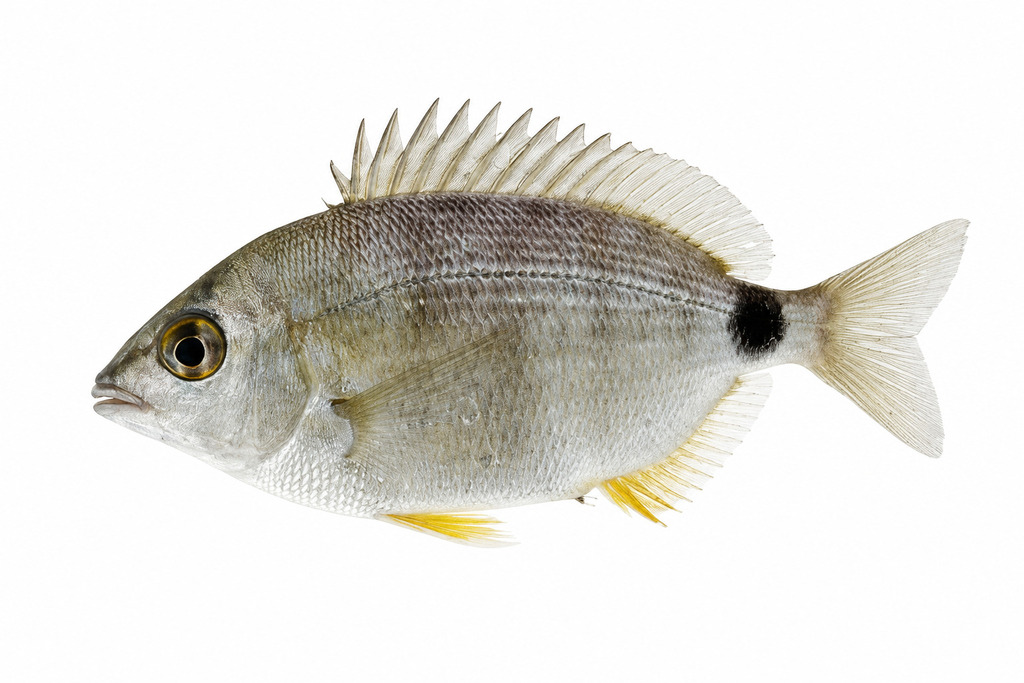
Annular seabream
- Family
- Sparidae
- Depth
- 0–90 m
- Season
- Jan, Feb, Mar, Apr, May, Jun, Jul, Aug, Sep
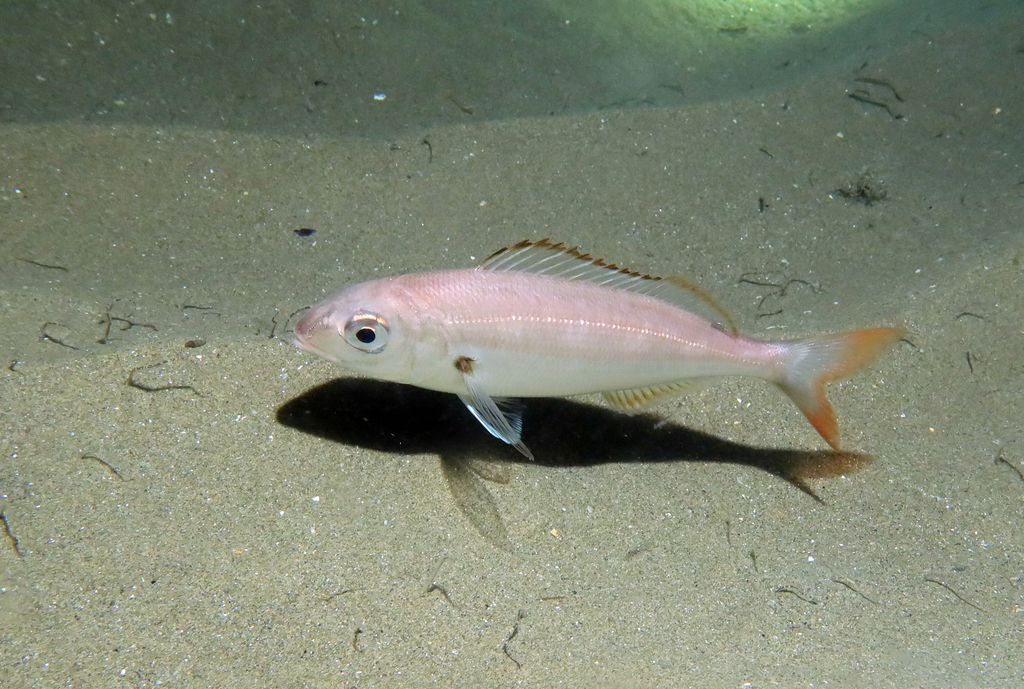
Axillary seabream
- Family
- Sparidae
- Depth
- 0–500 m
- Season
- Jan, Feb, Mar, Apr, May, Jun, Jul, Aug, Sep, Oct, Nov, Dec
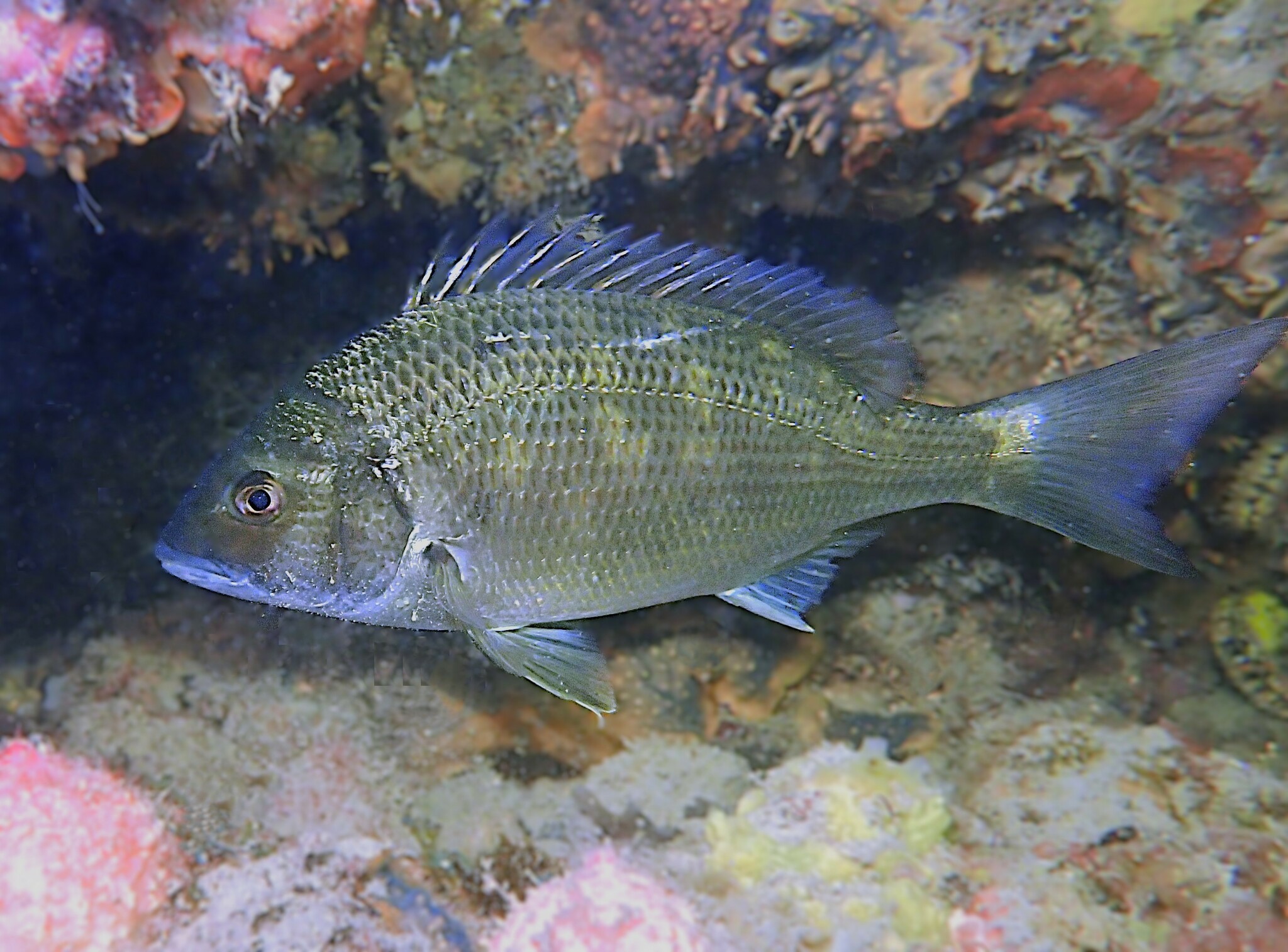
Black bream
- Family
- Sparidae
- Season
- Jan, Feb, Jul, Aug, Sep, Oct, Nov, Dec
Guides for this water
Technique, gear and safety guides that fit Slinger.