
Sôhachi
The habitat line for this flatfish contains two words that are not synonyms: sandy, muddy. Sand drains and mud holds; a bait that rests on one can disappear into the other. Everything else in the record — 50 to 200 metres, a typical length of 31 cm, first maturity at 24.5 cm — only becomes a fishing plan once that pair is read as a boundary instead of a list.
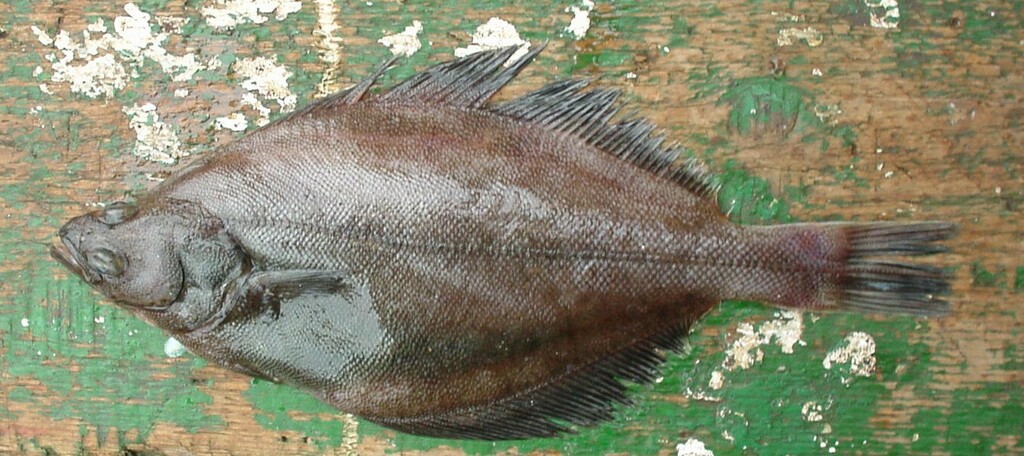
The habitat line for this flatfish contains two words that are not synonyms: sandy, muddy. Sand drains and mud holds; a bait that rests on one can disappear into the other. Everything else in the record — 50 to 200 metres, a typical length of 31 cm, first maturity at 24.5 cm — only becomes a fishing plan once that pair is read as a boundary instead of a list. The fish is documented on both grounds, and the edge between them is the one line the sources actually support.
Sand and mud are two different ambushes
The habitat row puts sandy and muddy together without ranking either, and the diet row is empty. The encyclopaedic summary says the same in a sentence: sublittoral sand and mud bottoms between 50 and 200 metres. Two sources, one pair of words, no preference.
That absence is the useful part. A bottom-dwelling flatfish does not chase a bait across open water; the texture beneath it decides whether the bait is seen, buried, or rolled away by the first swell. Sand keeps a hook sitting proud and lets a sinker run; mud swallows weight and holds scent, but the same sinker can plug and never move again. Since the source names no food for this species, the bottom is the only variable the record gives you permission to work with.
Fifty metres is already a boat depth
The depth range is 50 to 200 metres, with no usual band quoted and no preferred temperature. The geographic envelope runs from 24°N to 44°N and 119°E to 141°E, which is the northwest Pacific margin rather than one bay.
Fifty metres is beyond a normal shore cast, so most of this species' documented range is boat water. The 200 metre ceiling is not a target; with no usual band given, the page is saying that any point in the range is equally consistent with the record. iNaturalist carries only six observations for the taxon, far too few to reveal a depth preference even if every one were depth-tagged.
The 24.5 cm line
First maturity is given as 24.5 cm, spanning 22–26 cm; maximum length is 47 cm total length, the common fish is 31 cm, maximum weight 1.2 kg, and the oldest reported individual is 15 years. All lengths here are total length, so no conversion is needed.
The common length sits 6.5 cm above the midpoint of the maturity range. In plain terms, a fish of 31 cm has probably spawned several times, while one at the lower bound of 22 cm may never have spawned at all. The conservative release point is therefore the bottom of the range, not the midpoint: below 22 cm the source's own numbers leave no argument.
Six months, and no location attached
The spawning table gives March through August as one uninterrupted row. It does not name a sea, a coast, or a latitude for that row, and no location is supplied here either.
A six-month window covering half the year is a weak seasonal signal. It may describe a broad region with a long season, or several populations whose windows were merged into one line. What it does not support is the claim that any particular month is the peak. For planning, the honest reading is that spawning does not narrow the calendar much: the fish is not a two-week event, and there is no closed season stated in the record.
The record lists no food
The diet keywords are empty and the morphology field is missing. There is no prey list to translate into a bait, and no body-shape note to justify a lure choice. That is a hard limit, not a gap to fill with guesswork.
What remains is presentation. On sand, a running sinker keeps contact and lets the bait move with the swell; on mud, a fixed lead holds position but risks burying the hook. Carrying two rigs is cheaper than deciding in advance which bottom the drift will cross. Bait flavour is a choice the sources do not make for you.
Pointhead, Sôhachi, and eight Chinese strings
FishBase's English table gives Pointhead flounder for Japan and as the FAO name, plus Sôhachi as a second FAO entry. iNaturalist prefers Sôhachi. The Chinese table is longer: and , and , and , plus the romanised Cháng bó and Gāo yǎn dié.
That looks like eight names, but half the count is the same name written in traditional and simplified characters. The internal expansion list uses the shorter . No label names a species. Only the binomial survives translation intact, and that is what belongs on a log or a tag.
What two GBIF rows add
GBIF's distribution layer returns two records for this taxon: Indo-West Pacific, sourced from ITIS, and Global, sourced from the IUCN Red List with a Least Concern status. There is no country column in either record.
The coarse answer does not contradict the finer one. FishBase's country table lists China, Japan, South Korea, Russia, the Ryukyu Islands and Taiwan region. GBIF confirms the ocean basin and stops there; it is a ceiling on resolution, not a second range. For a trip, the country table is the usable layer, and the basin-level record is a reminder that "present" can mean a coastline rather than a mark.
Fish the seam, carry two numbers
The defensible plan is a boat trip to the 50–200 metre band, with attention on where sand gives way to mud rather than on the middle of either patch. Take the lower maturity bound of 22 cm as the release line and the 31 cm common length as the fish you should expect.
The 47 cm maximum and the 15-year age are background, not targets: one is a record and the other is a lifespan, and neither tells you what will bite this week. The empty diet list means the first job on the water is to find the bottom change; the second is to let the rig tell you which side of it you are on.
Where these facts come from
Check these pages before you rely on a size, range or protection status.
- FishBase — Cleisthenes pinetorum — FishBase · T2
- GBIF — Cleisthenes pinetorum occurrence records — GBIF · T2
- IUCN Red List — Cleisthenes pinetorum — IUCN · T1
- Photo record — iNaturalist — iNaturalist · T3
Fish in the same water
These fish live in the same place.
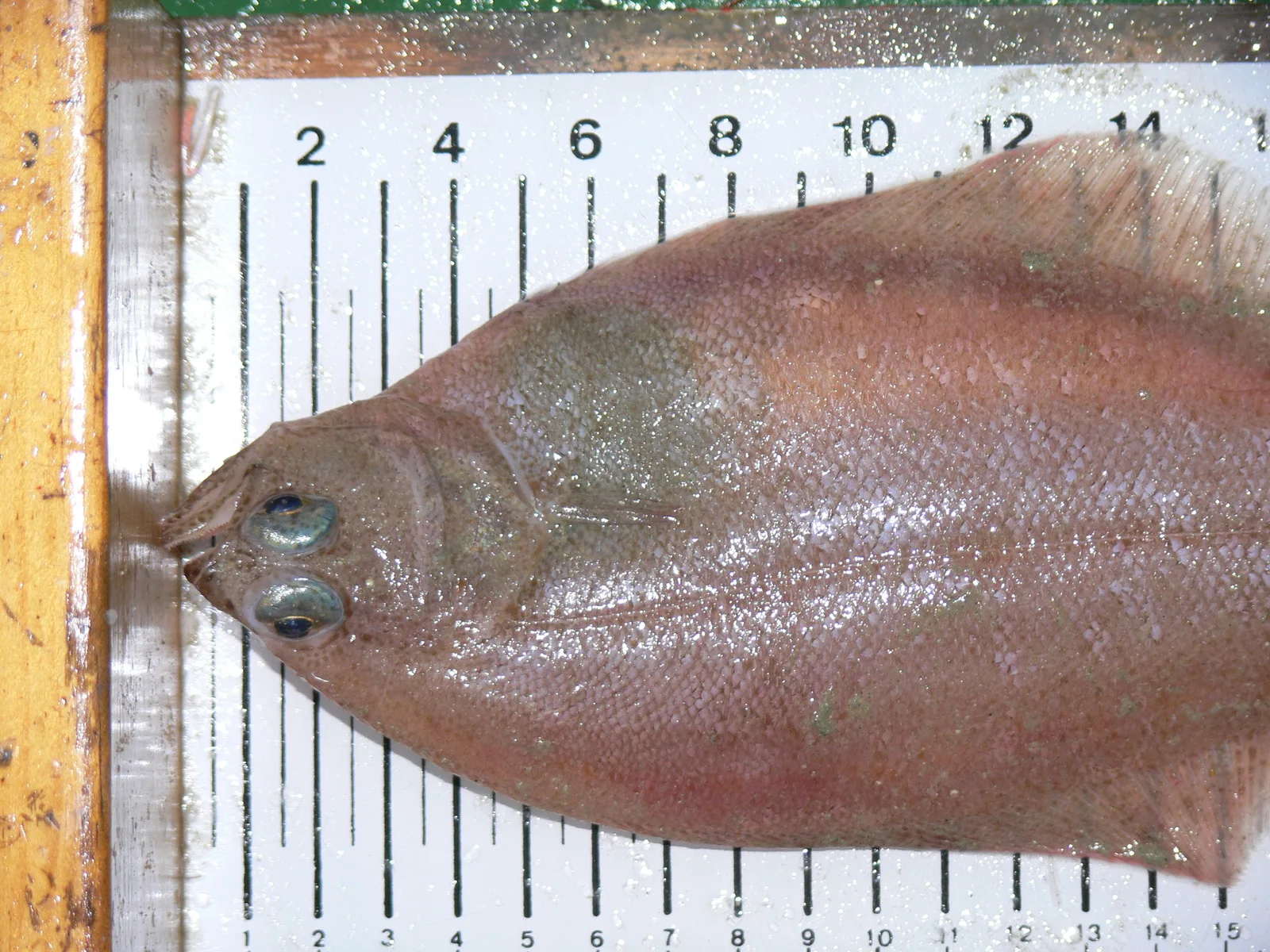
American plaice
- Family
- Pleuronectidae
- Depth
- 10–3000 m
- Season
- Mar, Apr, May
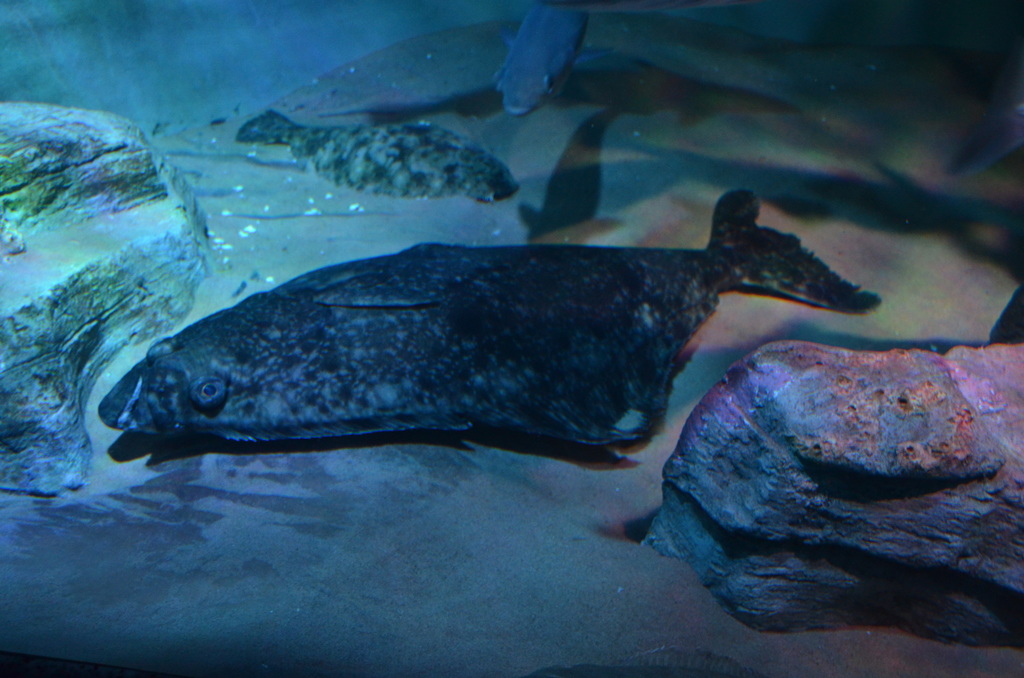
Atlantic halibut
- Family
- Pleuronectidae
- Depth
- 50–2000 m
- Season
- Jan, Feb, Mar, Apr, Dec
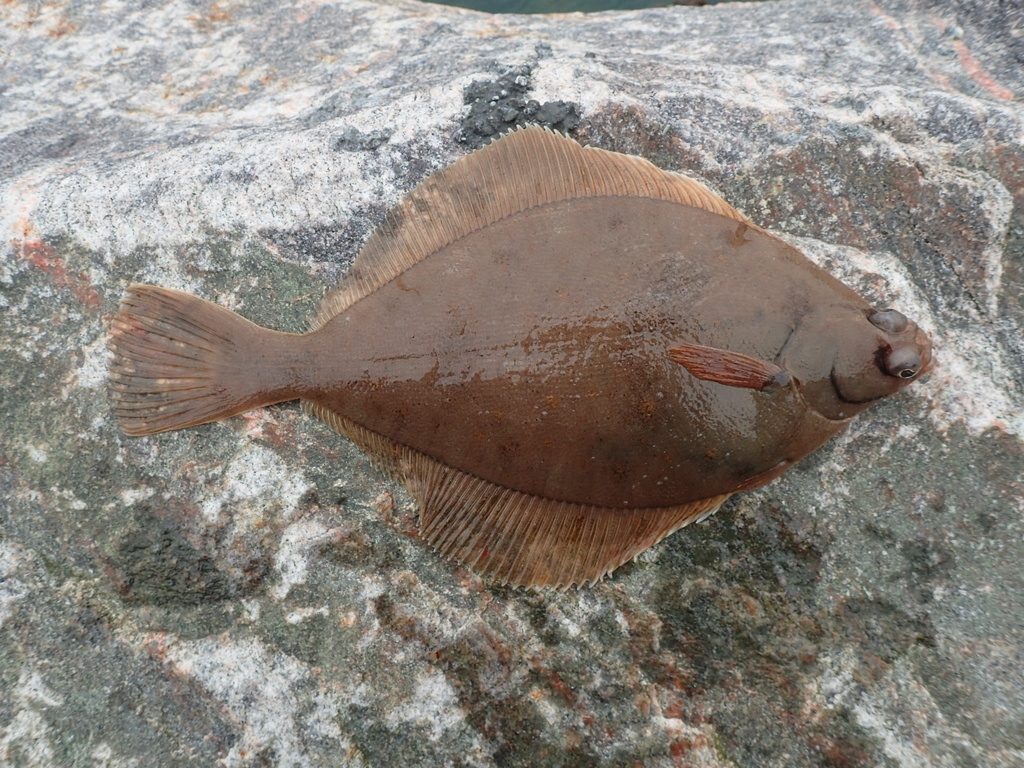
Common dab
- Family
- Pleuronectidae
- Depth
- 20–150 m
- Season
- Jan, Feb, Mar, Apr, May, Jun, Jul, Aug
Guides for this water
Technique, gear and safety guides that fit Sôhachi.