
Pacific herring
Pacific herring is a clupeid of the North Pacific and Arctic, from the White Sea eastward to Queen Maud Gulf in Nunavut. It lives from the surface to 475 m in temperate water, reaches 46 cm TL, can live 19 years, and feeds on crustaceans and fish. It is recorded from December to June and again in September.
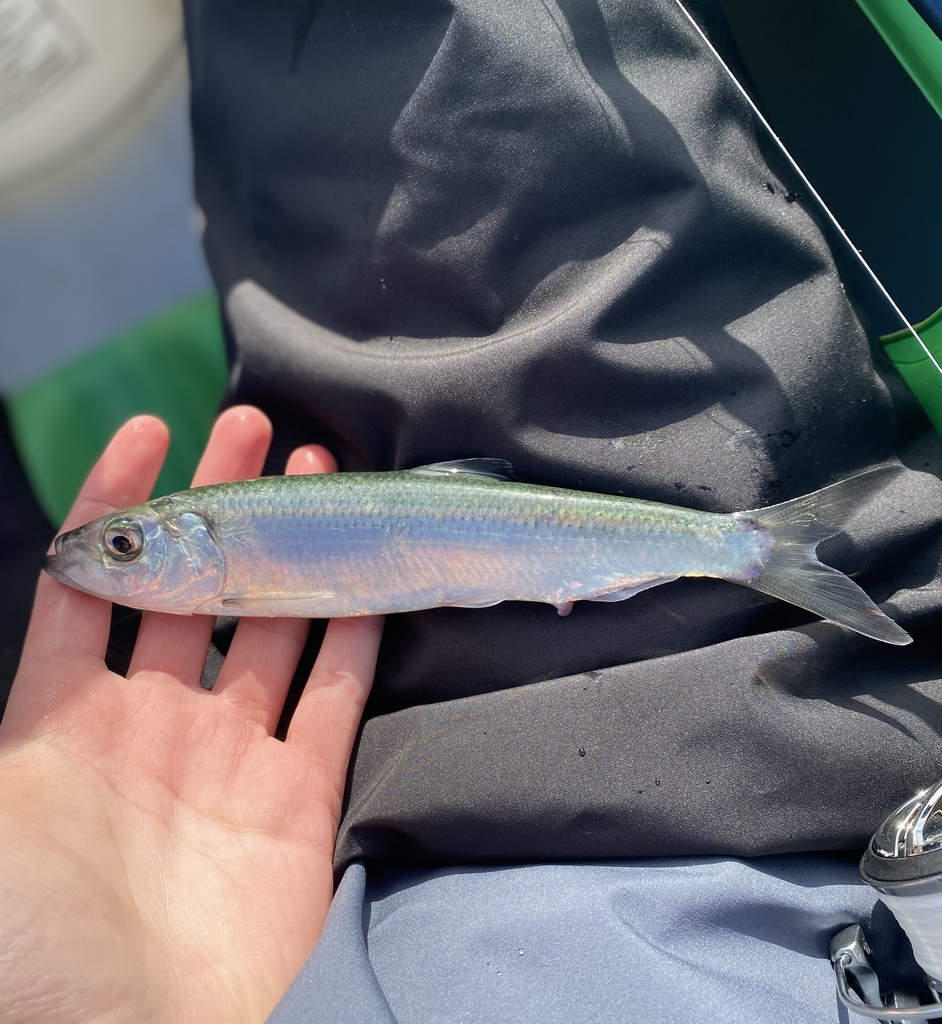
Pacific herring (Clupea pallasii) is a fish of the family Clupeidae. FishBase gives its range as: Arctic: White Sea eastward to Queen Maud Gulf, Nunavut. Eastern Pacific: Kent Peninsula at 107°W and Beaufort Sea southward to northern Baja California, Mexico. The body is laterally compressed, the eye is large, and the scales come away in the hand almost at a touch. It is recorded from 0 to 475 m, in temperate water. The recorded maxima are 46 cm TL, 19 years. Diet includes crustaceans and fishes. IUCN status: Data Deficient (DD). Chinese name: .
Identification
Pacific herring is a slab-sided, silvery clupeid with a blue-green back, large loose scales, a deeply forked tail and no adipose fin. In Alaska a 9-inch fish counts as large, and the species tops out around 18 inches; FishBase gives a maximum of 46 cm total length, a typical standard length near 25 cm and 19 years as the oldest recorded age. The body is laterally compressed, the eye is large, and the scales come away in the hand almost at a touch. Shoals seen from a boat often look like a dark cloud sliding under the surface, with individual fish flashing as they turn. A moving shoal is often heard first, as a soft pattering against the hull, before any fish is seen.
Habitat and behaviour
Adults are coastal pelagic fish, recorded between the surface and 475 m, but their lives are tied to the shore. They feed offshore on crustaceans and small fish and return to nearshore water to spawn, gluing their eggs to intertidal and shallow subtidal vegetation. That detail matters: kelp and eelgrass are not just cover but the surface the eggs need, which is why spawning grounds are mapped and protected separately from feeding areas. FishBase also records the species in estuaries and brackish water, so harbour mouths and river plumes hold fish as well as open coast. A spawning beach can look empty for most of the year and then be crowded for a week.
Stock units and management
DFO manages Pacific herring as five major and two minor stock areas, collecting catch and survey data independently for each of the seven. The 2025–26 management plan sets a limit reference point at 30 percent of the unfished spawning biomass and derives the allowable catch from forecasts of mature biomass, with separate arrangements for the roe and spawn-on-kelp fisheries. That structure is worth knowing before planning a trip: a strong run in one area says nothing about the next, and the rules that apply are those of the area you are fishing rather than a single coastwide number.
Seasonal window
Spawning begins as early as late March in southern Southeast Alaska and continues into mid July in the northern Bering Sea. FishBase records spawning in most months across the species' range, which reflects how many separate stocks exist rather than a single extended season. The roe fishery is built around that timing, and the spawn-on-kelp harvest follows the same window. For an angler the practical signal is the arrival of birds and marine mammals over nearshore kelp, which usually precedes the peak by days.
Gear and approach
A light rod, a float and a string of size 8–12 hooks baited with small strips of fish or shrimp are enough. Add a small spoon or fly above the hooks when fish are feeding actively. Herring are sight feeders in bright water and scent feeders in murk, so change approach with the light. Keep the catch cool and use it within a day; oily fish turn soft quickly. Release surplus fish rather than leaving them in a dry bucket.
Edibility and regulations
Herring is oily and is best pickled, smoked, fried or grilled fresh; the roe is a separate delicacy and drives much of the commercial value. Under the DFO plan, the stock area you fish determines the rules, and each of the seven areas has its own limits and seasons. Whether retention is allowed is a bag-limit question, while the roe and spawn-on-kelp fisheries are managed as separate activities with their own openings. The global Red List status is Data Deficient, which reflects incomplete range-wide data rather than a healthy or threatened verdict. Local closures around spawning beaches are the rule most likely to affect a shore angler.
Where to look
Work kelp beds, eelgrass flats and harbour mouths, especially where current carries plankton past the weed. The species ranges from the White Sea and the Bering Sea through Kamchatka and Japan to Korea, and along the American coast from the Beaufort Sea southward. iNaturalist holds 2,722 observations, many of them of spawning events and beach-cast fish rather than open-water sightings. In Alaska, the kelp shorelines of the southeast panhandle and Prince William Sound are the best-known access points. At low tide, exposed eelgrass and kelp mark the beds that will hold fish on the next flood.
Where these facts come from
Check these pages before you rely on a size, range or protection status.
- FishBase — Clupea pallasii — FishBase · T2
- GBIF — Clupea pallasii occurrence records — GBIF · T2
- IUCN Red List — Clupea pallasii — IUCN · T1
- Photo record — iNaturalist — iNaturalist · T3
Fish in the same water
These fish live in the same place.
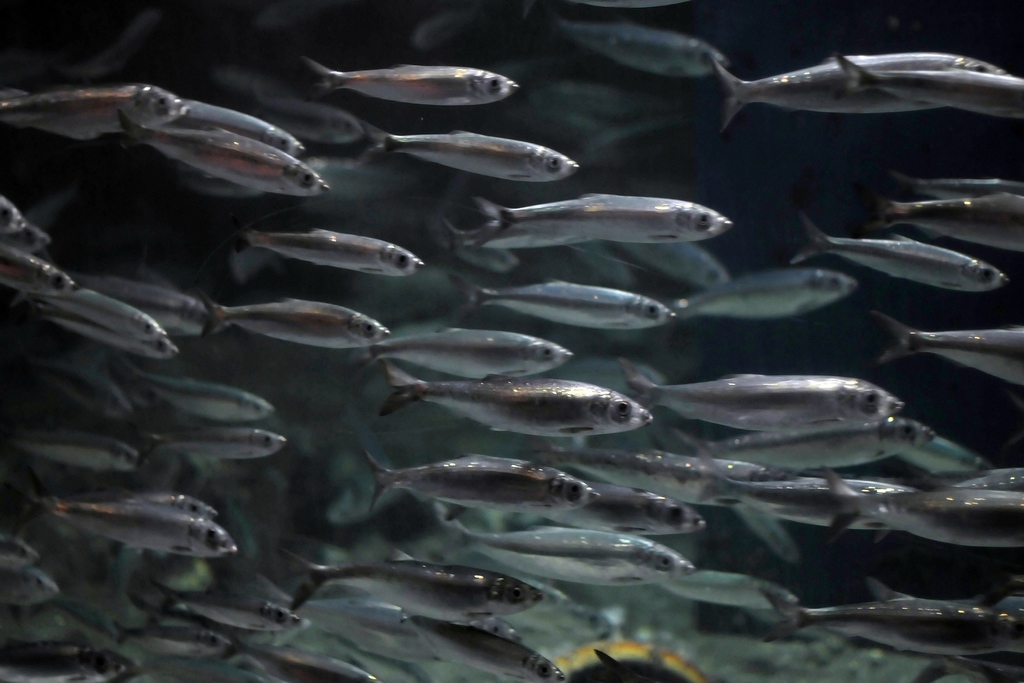
Atlantic herring
- Family
- Clupeidae
- Depth
- 0–364 m
- Season
- Jan, Feb, Mar, Apr, May, Jun, Jul, Aug, Sep, Oct, Nov, Dec

European sprat
- Family
- Clupeidae
- Depth
- 10–150 m
- Season
- Feb, Mar, Apr, May, Jun, Jul, Aug
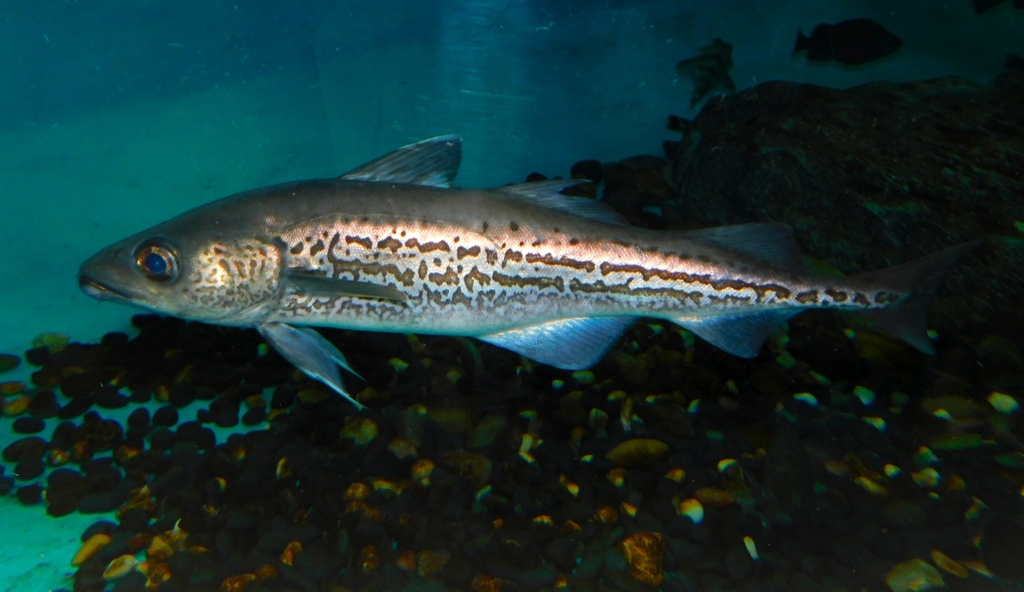
Alaska pollock
- Family
- Gadidae
- Depth
- 0–1280 m
- Season
- Jan, Feb, Mar, Apr, May, Jun, Jul, Aug
Guides for this water
Technique, gear and safety guides that fit Pacific herring.