
Goldsinny-wrasse
The goldsinny-wrasse is a small labrid of the Northeast Atlantic, found from Norway south to Morocco, and also through the Mediterranean and the Black Sea. It stays shallow, normally between 1 and 20 metres over rocky ground, putting it within reach of shore anglers on foot. FishBase tags it as a gamefish and a subsistence catch; adults rarely exceed 18 cm, with 11 cm a more typical length.
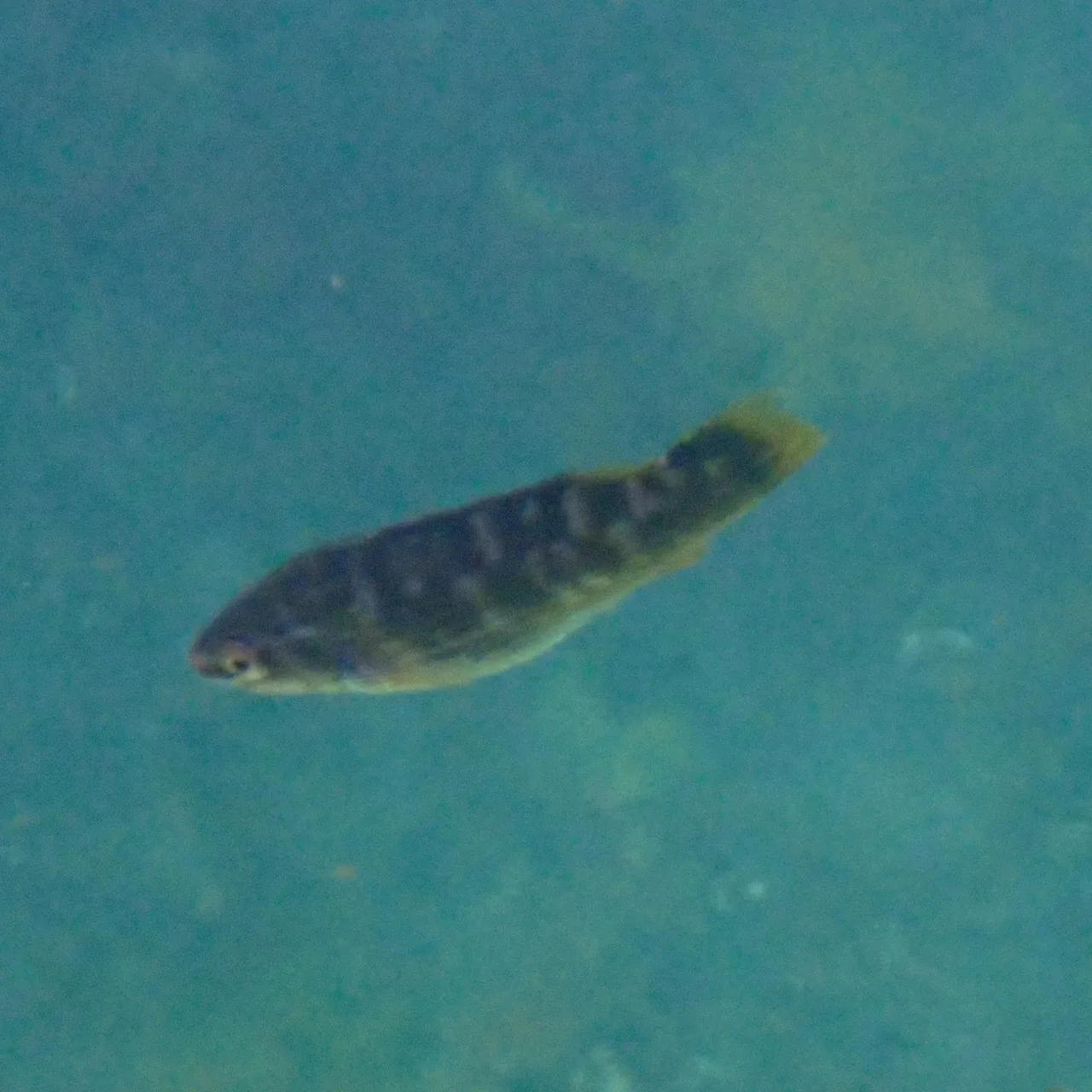
The goldsinny-wrasse is a small labrid of the Northeast Atlantic, found from Norway south to Morocco, and also through the Mediterranean and the Black Sea. It stays shallow, normally between 1 and 20 metres over rocky ground, putting it within reach of shore anglers on foot. FishBase tags it as a gamefish and a subsistence catch; adults rarely exceed 18 cm, with 11 cm a more typical length. It spawns over a long window from January to August.
Identification
Maximum 18.0 cm TL, common 11.0 cm TL, oldest reported age eight years, maturity unrecorded. Both lengths use the same unit here, so there is no measuring error to correct: a typical fish is 11 cm and the largest recorded is 18 cm. No morphology block was captured. Wikipedia adds that the species is the only member of its genus, which is a taxonomic statement rather than a field mark.
That small fish carries a gamefish tag. The human-uses line reads subsistence fisheries, gamefish yes, public aquariums. Tag and size do not fit the usual meaning of gamefish; they fit a fish taken by handline and shore anglers for the table at a size most marks would call a bite.
Habitat and distribution
Reef-associated, rocky, 1–50 m with a usual band of 1–20 m, temperate, 64°N–30°N. The usual band is the operative one: 1–20 m is where rock, weed and open ground meet, and 21–50 m is the tail of the record. Diet is crustaceans and fishes.
Distribution is Norway to Morocco, with the Mediterranean and the Black Sea added; 38 countries and territories in the table. GBIF holds 19 rows — two each in Belgium, France, Norway and Sweden, one each in Denmark, Great Britain, Greece, Ireland and Ukraine, six without a country. iNaturalist holds 897 observations, the densest record in this batch.
Season and fishing approach
Spawning runs January to August across three rows: the Mediterranean January–July, the English Channel and North Sea April–August, and Norway July–August. Three windows that start months apart and overlap at the summer end; the outer bounds are January and August.
The spine here is position, not season. In 1–20 m rocky ground the fish sits at an interface — the edge of a crevice, the foot of a boulder, the line where weed stops. A bait that lands two metres off that interface is in the right depth band and the wrong place. The usual band says how deep; the rocky tag says how close to structure.
Edibility and regulations
Least Concern, assessed 12 June 2008. The oldest assessment in this batch, and it reads like one: a 2008 category is a starting point, not current evidence.
Subsistence fisheries and gamefish yes belong together. Subsistence means a small-scale food fish; gamefish yes means a rod-and-line category exists. Neither is a bag limit, and both make the 11 cm common length more relevant than the 18 cm maximum.
Where these facts come from
Check these pages before you rely on a size, range or protection status.
- FishBase — Ctenolabrus rupestris — FishBase · T2
- GBIF — Ctenolabrus rupestris occurrence records — GBIF · T2
- IUCN Red List — Ctenolabrus rupestris — IUCN · T1
- Photo record — iNaturalist — iNaturalist · T3
Fish in the same water
These fish live in the same place.
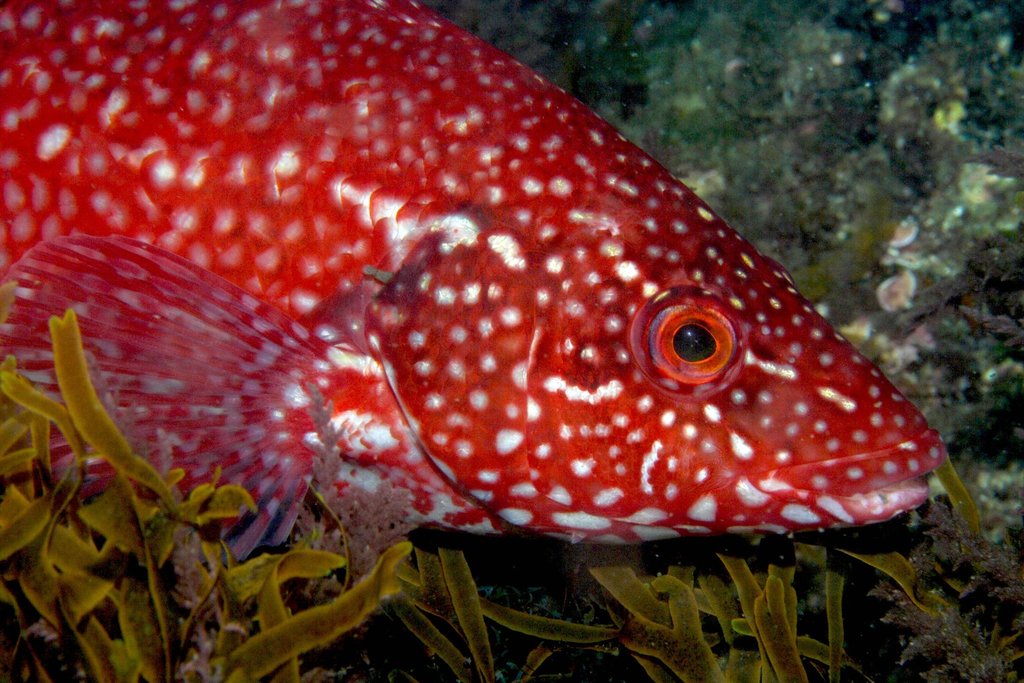
Ballan wrasse
- Family
- Labridae
- Depth
- 1–50 m
- Season
- Apr, May, Jun, Jul, Aug
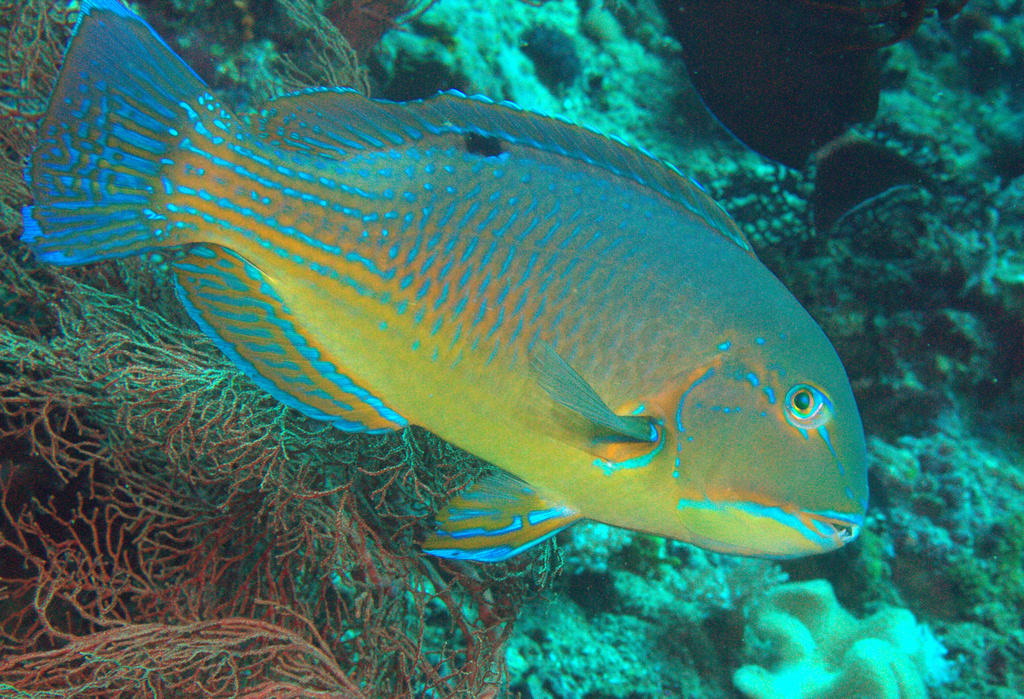
Blackspot tuskfish
- Family
- Labridae
- Depth
- 10–60 m
- Season
- Jan, Feb, Mar, Apr, May, Jun, Jul, Aug, Sep, Oct, Nov, Dec

Blue tuskfish
- Family
- Labridae
Guides for this water
Technique, gear and safety guides that fit Goldsinny-wrasse.