
Tongue sole
Tongue sole, a member of the family Cynoglossidae, is found across Asia, in the China. It lives in subtropical water. It grows to 61.1 cm TL, with a diet of crustaceans and fishes. Anglers target it by boat bottom fishing or shore fishing.
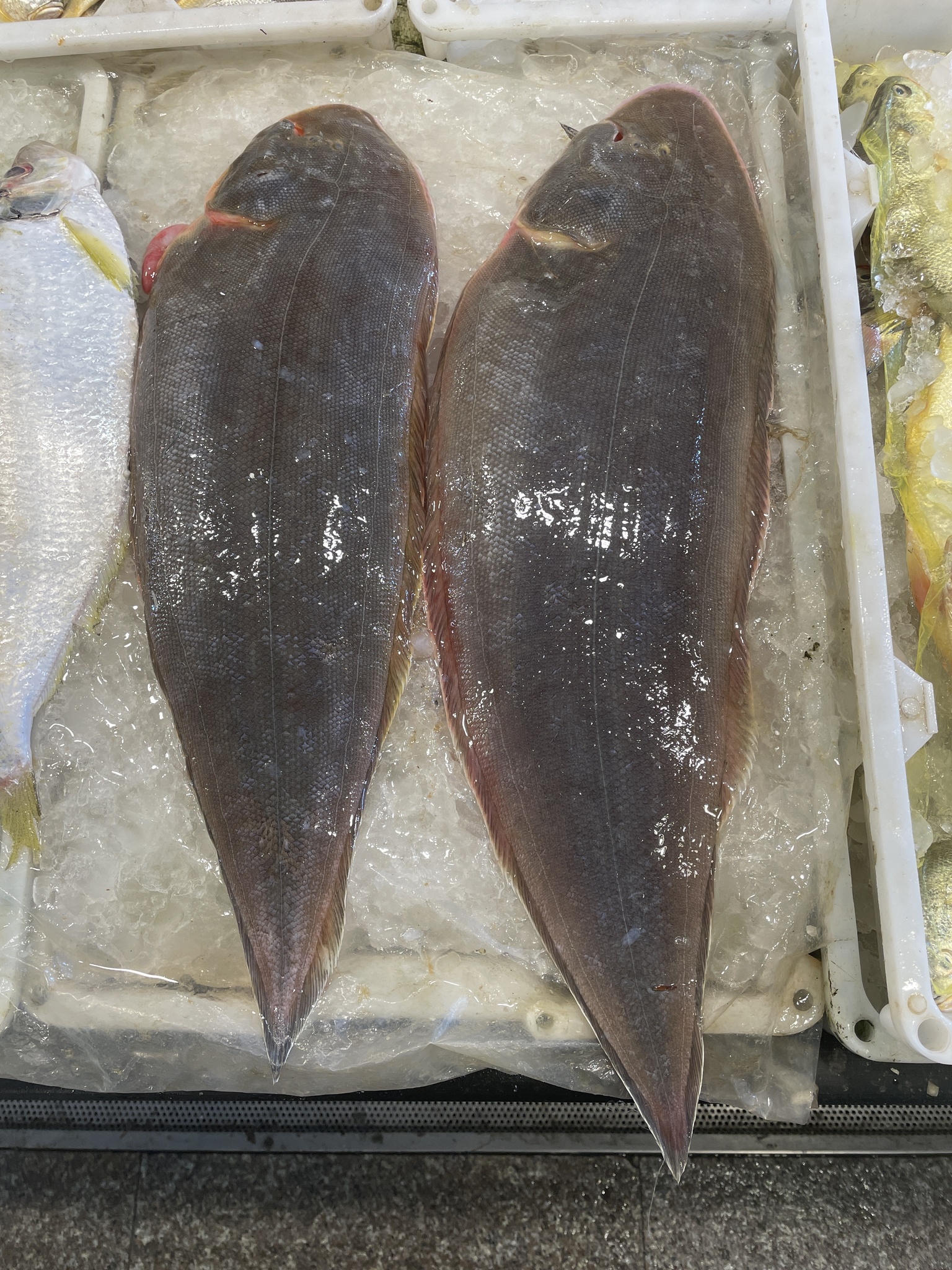
Tongue sole (Cynoglossus semilaevis) is a fish of the family Cynoglossidae. FishBase gives its range as: Asia: China. Occurs in the Yellow Sea and the East China Sea. It is recorded in subtropical water. The recorded maximum is 61.1 cm TL. Diet includes crustaceans and fishes. IUCN status: Data Deficient (DD). Chinese name: .
Three ticks, no number
Marine, freshwater and brackish are three words, not three measurements. A fish that moves across the salinity line can be caught in all three, and the page never names the salinity at which it feeds, spawns or survives best. A single measured profile would replace all three words. That is a gap in the middle of the one biological claim the page makes. The habitat keyword demersal adds a vertical fact but no range, so the only axis left is the horizontal one.
The gradient is a place, not a point
An estuary is a line from fresh water to salt water, and a fish that uses all three labels is using a segment of that line. The question for an angler is not "estuary or sea" but "which part of the transition". The page cannot answer with a number, so the answer has to be read from the land: where a river plume meets the coast, where the tidal flat is brackish at low water, where the current carries fresh water along the shore.
What the record actually holds
Maximum length is 61.1 cm total length. Common length, maximum weight, age, maturity, depth band, temperature, meristic count and spawning table are all absent. The only size number on the page is the maximum.
That is thinner than any other species in this batch. It means the page can identify the fish and place it in a region, and it cannot describe its life. Everything about how it uses the gradient is missing, not merely imprecise.
Wikipedia fills part of that gap. It calls the species a popular aquaculture flatfish, native to China's northern coast, and records overfishing across the past three decades. Tongue-sole farming began in 2003, and the fish has since become an expensive seafood item; growers report pathogen susceptibility and an uneven sex ratio. Those pressures shape what the fishery can supply, and they are the terms a buyer should ask about rather than the length on the page.
Where the gradient is documented
GBIF holds 1,041 preserved records: South Korea 949, China 47, Hong Kong SAR 1, Japan 1, Viet Nam 1. iNaturalist has 27 observations. FishBase lists three territories: China, Hong Kong SAR and South Korea.
The record is Korean by an order of magnitude, and that asymmetry is the page's most useful signal. One side of the sea is sampled; the other side is described. That does not mean the fish is Korean; it means the sampling is. A gradient documented from one side of the Yellow Sea is still the same gradient, but the measured segment sits on the Korean coast.
Text says China, records say Korea
The distribution line reads China, Yellow Sea, East China Sea. The country and territory list is China, Hong Kong SAR and South Korea. The occurrence index is Korean. Three statements, three centres of gravity, none of them contradictory in the strict sense: a species can be described from Chinese waters and sampled mostly in Korean ones.
For a trip, that asymmetry is worth more than the range statement. If you want to fish the documented segment, the Korean coast is where the records are. If you want to fish the Chinese side of the range, you are working from the distribution text and not from the sample.
Fishing the gradient without numbers
The species is demersal and subtropical. Without a depth band, the plan has to come from the transition itself: find where the river plume meets the sea, fish the bottom on the brackish side of the front, and move with the tide as the fresh water pushes out or retreats. That is a method for an unmeasured gradient, not a substitute for data.
The approved methods and the use record are essentially empty; the page lists only publication and database references, not a fishery. So there is no local method to borrow. The fallback is the generic demersal approach, anchored to the salinity front rather than to a depth.
DD is neither rare nor common
IUCN lists Data Deficient, assessed 24 September 2020. Data Deficient means the assessment lacked the information to assign a category. It does not mean the fish is scarce, and it does not mean it is abundant. For a species with no age, no maturity and no spawning data, that category is the honest one.
What would settle it
One salinity transect with catch records would do more than another page of distribution text. Until then, the three ticks remain a direction rather than a measurement. Fish the front, note the salinity at each hook-up, and treat the Korean record as the sampled side of a gradient that the page names but never numbers.
How to catch it
Boat bottom fishing
Anchored or drifting boat, bait or lure worked near the recorded bottom.
Shore fishing
Fished from shore, usually around structure or a depth change.
Where these facts come from
Check these pages before you rely on a size, range or protection status.
- FishBase — Cynoglossus semilaevis — FishBase · T2
- GBIF — Cynoglossus semilaevis occurrence records — GBIF · T2
- IUCN Red List — Cynoglossus semilaevis — IUCN · T1
- Photo record — iNaturalist — iNaturalist · T3
Fish in the same water
These fish live in the same place.

Acoupa weakfish
- Family
- Sciaenidae
- Depth
- 1–20 m
- Season
- Jan, Feb, Mar, Apr, May, Jun, Jul, Aug, Sep, Oct, Nov, Dec

American angler
- Family
- Lophiidae
- Depth
- 0–800 m
- Season
- Mar, Apr, May, Jun

American eel
- Family
- Anguillidae
- Depth
- 0–464 m
- Season
- Jan, Feb, Mar, May, Jun, Jul
Guides for this water
Technique, gear and safety guides that fit Tongue sole.