
Zebra seabream
Zebra seabream is a sparid of the eastern Atlantic and Mediterranean, from the Bay of Biscay and Gibraltar to South Africa, including Madeira and the Canaries but absent from Cape Verde, Senegal and the Gulf of Guinea. It lives from 30 to 300 m in subtropical water, reaches 55 cm TL and 2.7 kg, and feeds on algae. Its season runs January to June.
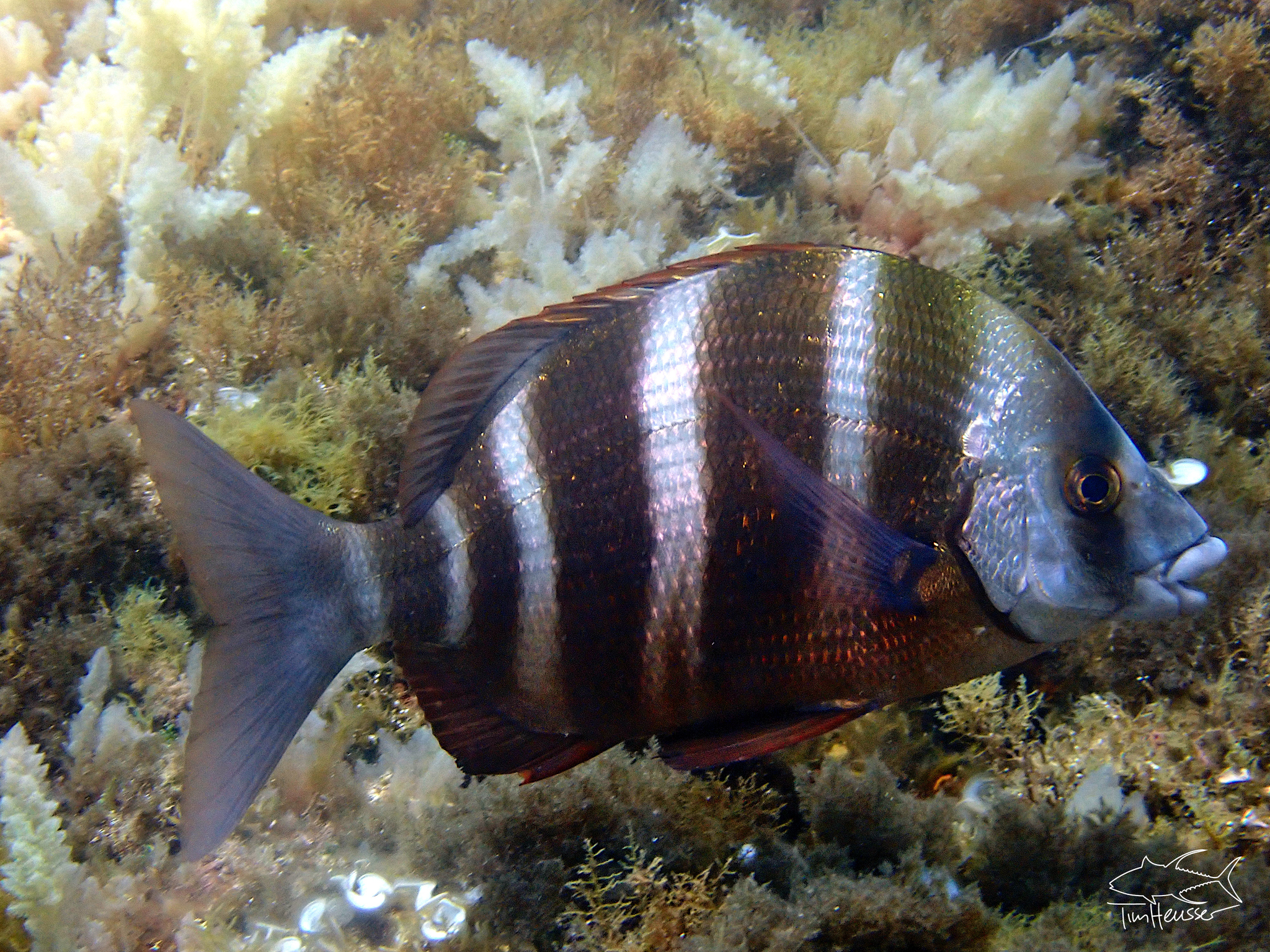
Zebra seabream (Diplodus cervinus) is a fish of the family Sparidae. FishBase gives its range as: Eastern Atlantic: Bay of Biscay and the Mediterranean to the Strait of Gibraltar and South Africa including Madeira and the Canary islands, but absent from Cape Verde, off Senegal and the Gulf of Guinea. It is recorded from 30 to 300 m, in subtropical water. The recorded maxima are 55 cm TL, 2.7 kg. Diet includes algae. IUCN status: Least Concern (LC). Chinese name: .
Two labels that do not cancel
The human-use line reads "Fisheries: minor commercial; gamefish: yes", and it carries nothing else: no aquaculture, no bait use, no aquarium trade. That absence matters more than the two present labels. A sparid with no farmed arm depends on wild capture for every fish that reaches a slab, and a minor-commercial label says the capture is not organised around it. No fleet sets its season by this species.
The gamefish tick is a separate claim with a separate logic: the fish takes a bait or a lure and fights in a way anglers value. It does not say the fish is common, large, or targeted. Read together, the pair describes a by-catch that is also a sport fish — the animal you meet because you were fishing for something else, and the animal that makes the trip when the something else does not show.
The length a buyer sees
The size block gives a 35 cm common length and a 55 cm maximum, both total length, and 2.7 kg as the highest recorded weight. It also gives first maturity at 27.3 cm, with the upper end of the range left as a question mark.
Those figures sit close together. The gap between first maturity and common length is under eight centimetres, so the typical fish on a record has only just passed the point where it can spawn. The 2.7 kg maximum comes from a different reference than the length figures, and the page does not say whether the heaviest fish was also the longest. That is the kind of detail a buyer never sees and a writer should not smooth over: a 55 cm fish and a 2.7 kg fish are two records, not necessarily one specimen.
The depth a buyer never sees
Environment is written as marine, reef-associated and oceanodromous, with a band of 30 to 300 metres and a subtropical envelope from 47°N to 35°S. The market side of this species has no use for any of it; the sea side cannot be planned without it.
Thirty metres is already below the reach of most shore casts. The band therefore describes a boat fish for almost its whole length, and oceanodromous suggests movement rather than a fixed address. The page does not map that movement, and this page will not draw one for it. What the band does say is that a mark at 40 m and a mark at 250 m can be the same species, and that one depth reading is a sample, not a range.
A range that contradicts its own country list
The distribution sentence runs from the Bay of Biscay and the Mediterranean to the Strait of Gibraltar and South Africa, including Madeira and the Canary Islands, and then states that the fish is absent from Cape Verde, off Senegal and in the Gulf of Guinea. The country table on the same source lists Senegal, Mauritania, Angola and Namibia.
Both statements are on the record, and the record does not reconcile them. A coastline can be absent "off Senegal" in one reference and still appear in another reference's table; the two may describe different decades, different depths, or a stock boundary neither text draws. The disagreement stays visible here. For a trip, the safe reading is the negative one: the species is documented north and south of the Gulf of Guinea, and the Gulf itself is the part to treat as uncertain.
GBIF holds five declarations: a global IUCN entry, European marine waters, a 2025 Doñana checklist marking it native and breeding, a Greek EEZ record, and an Israeli Mediterranean record. Wikipedia's revision 1373079283 stops at the temperate north-eastern Atlantic and the Mediterranean. Spain, Greece and Israel are the only country-level anchors; neither source settles the Gulf of Guinea gap.
Six months, two spawning records
The spawning window is January to June, built from two records: January to April for "eastern Atlantic and Mediterranean Sea", and May to June for the Canary Islands off Gran Canaria.
That is a northern-spring window with a southern extension in the Canaries. It does not spawn the year round, and the two records do not overlap — the Canary entry picks up exactly where the broad entry stops. The neatness is worth noticing: it may mean two populations with offset seasons, or two observers who sampled different months. No third record is offered to decide.
What the window does give is a planning rule. If spawning runs to June, the July and August fish are post-spawn and thin; condition returns through autumn and winter. That is a reading of the calendar, not a regulation.
Zebra, horned, and : three handles
FishBase's English table offers Zebra sea-bream from Britain, and Zebra seabream from Syria and as the FAO name. iNaturalist prefers Horned Bream. In Chinese, FishBase lists in both character sets, plus ; the expansion list that put this fish on the site uses .
None of these names is wrong, and none of them is the fish. A horned bream and a zebra bream are descriptions written by different people looking at the same barred body; and count the bands differently. When comparing this fish with a record from another country, the binomial is the only handle that survives the trip.
Rocky, muddy, open water: what the keywords do not settle
The biology keywords are rocky, muddy, open-water and continental-shelf, and the diet keyword is algae. Rocky and muddy are not the same bottom, and open water is not a bottom at all. All three are listed without ranking.
For an angler that is a permission, not an answer. The fish can be met over rock, over mud, and in the water column above either, which is consistent with a 30–300 m band and with an omnivorous diet of small invertebrates and seaweeds that does not tie it to one reef. The practical move is to stop treating the keywords as a target and start treating them as a list of places to eliminate: clean sand with no rock or mud nearby gives no reason to expect this species.
The two numbers to carry
First maturity at 27.3 cm, and 35 cm as the typical fish, are the two figures that change a decision. The first is a release line the source itself supplies; the second is the size a typical record describes, and it sits only just above that line. The source puts the maturity length at 27.3 cm inside a range that starts at 22 cm, so length alone does not make a fish below 27 cm unspawned, whatever the market does with it.
Everything else is background: the 55 cm maximum, the 2.7 kg maximum, the six-month spawning window, the country list with its western African gap. Take the two lengths to the water, and take the depth band as a reminder that this is a boat fish for most of its range.
Where these facts come from
Check these pages before you rely on a size, range or protection status.
- FishBase — Diplodus cervinus — FishBase · T2
- GBIF — Diplodus cervinus occurrence records — GBIF · T2
- IUCN Red List — Diplodus cervinus — IUCN · T1
- Photo record — iNaturalist — iNaturalist · T3
Fish in the same water
These fish live in the same place.
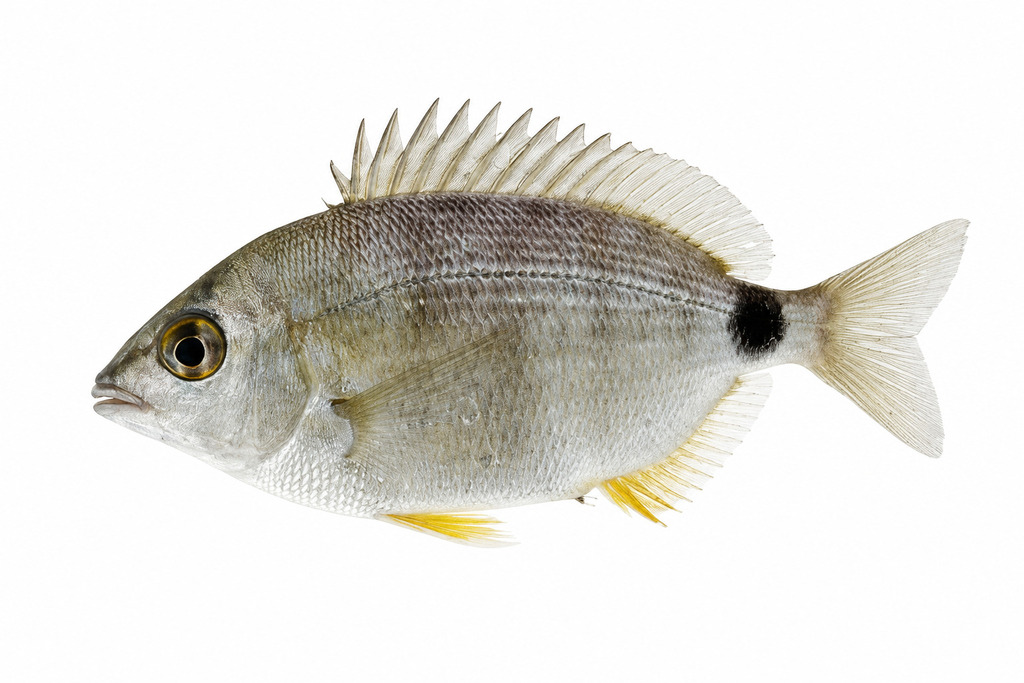
Annular seabream
- Family
- Sparidae
- Depth
- 0–90 m
- Season
- Jan, Feb, Mar, Apr, May, Jun, Jul, Aug, Sep
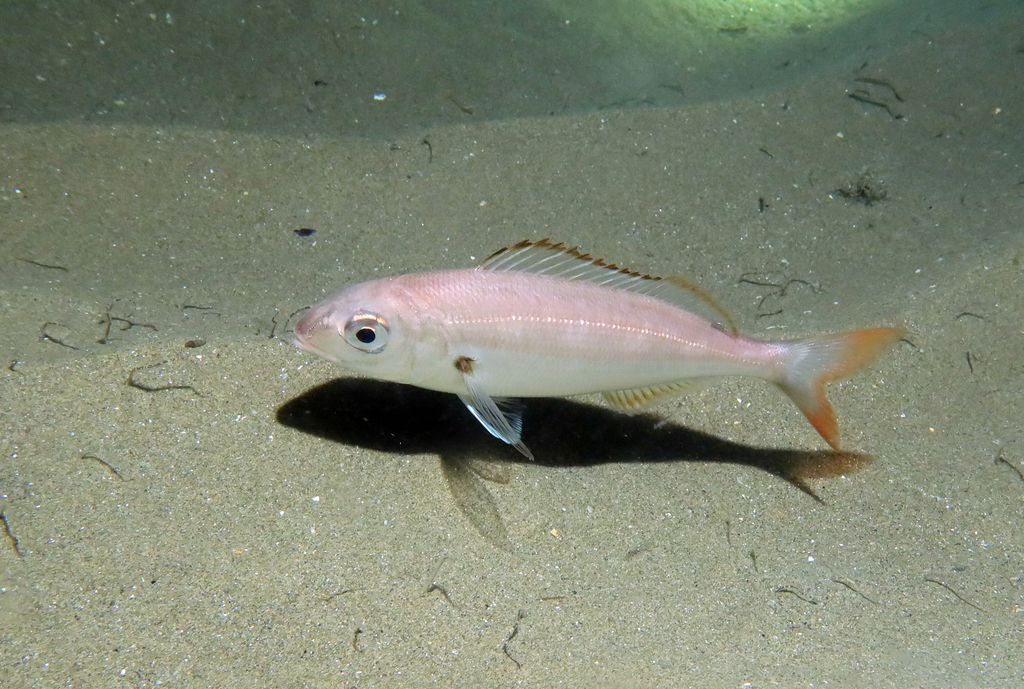
Axillary seabream
- Family
- Sparidae
- Depth
- 0–500 m
- Season
- Jan, Feb, Mar, Apr, May, Jun, Jul, Aug, Sep, Oct, Nov, Dec
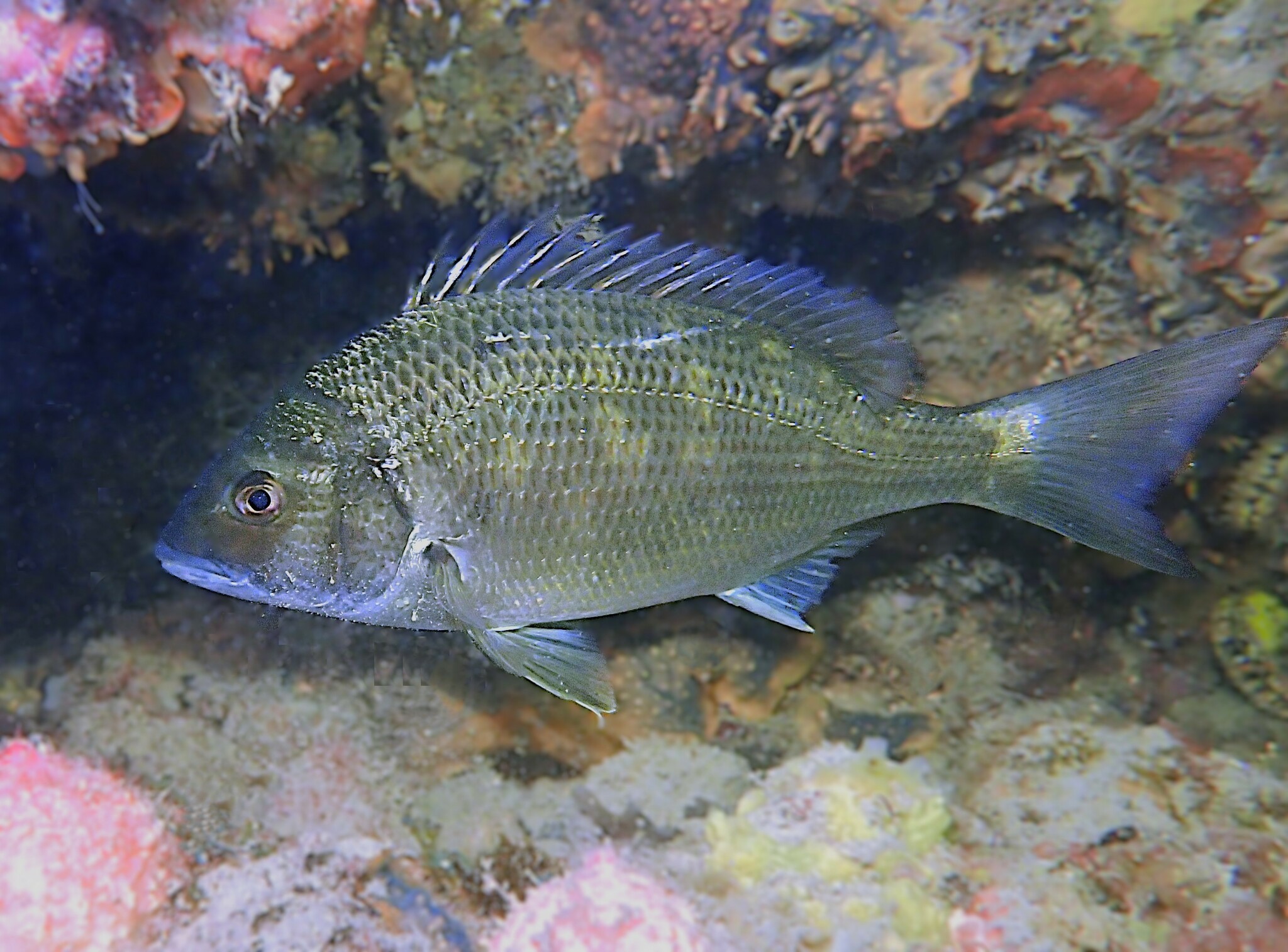
Black bream
- Family
- Sparidae
- Season
- Jan, Feb, Jul, Aug, Sep, Oct, Nov, Dec
Guides for this water
Technique, gear and safety guides that fit Zebra seabream.