
Saffron cod
A small cold-water cod of the family Gadidae, called komai in Japan and fished through Hokkaido ice in winter. It tolerates water below zero with antifreeze compounds in the blood, spawns from January to March in near-freezing coastal water, and is eaten mostly as dried fish and roe because the fresh flesh travels badly.
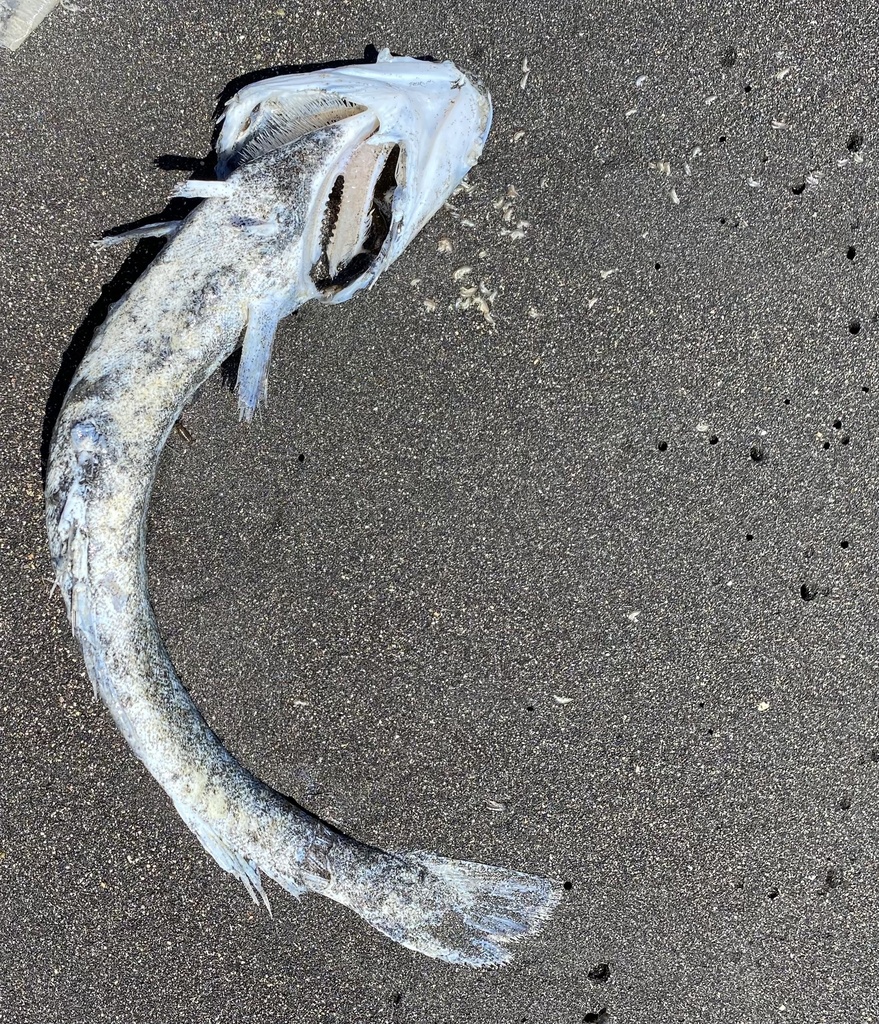
A small cold-water cod of the family Gadidae, called komai in Japan and fished through Hokkaido ice in winter. It tolerates water below zero with antifreeze compounds in the blood, spawns from January to March in near-freezing coastal water, and is eaten mostly as dried fish and roe because the fresh flesh travels badly.
A cod whose chin barbel is shorter than its eye
The body is slender with a slightly deeper belly, and the fin formula is the standard gadine one: three dorsal fins and two anal fins. The back is olive-brown with irregular dark blotches, the belly silvery with a yellow cast. The upper jaw projects slightly and the chin barbel is very short, under half the eye diameter. That last measurement is the fastest separation from Atlantic cod, whose barbel is longer than the eye, and from walleye pollock, whose lower jaw projects.
The Japanese guide gives a maximum of 50 cm and over 1 kg, with 35 cm as the usual size. The FishBase page checked carries no length field at all, so the article uses 35 cm as the working size and does not present 50 cm as normal.
Arctic to the North Pacific, and a Japanese range that stops at Hokkaido
FishBase describes an Arctic to North Pacific range: southwest to Chemulpo on the Korean side of the Yellow Sea, southeast to Sitka in Alaska, and north beyond the Bering Strait to the Chukchi Sea and Dease Strait. The Japanese records are all Hokkaido coasts, the Pacific side from Aomori to Miyagi, and the Sea of Japan side from Aomori to Yamaguchi.
Depth runs from 0 to 300 m, usually 100 to 150 m, and the fish also enters estuaries and brackish lakes. It does not make long migrations, but it shifts between shallow and deep ground with the season, enters brackish lakes to spawn, and some individuals stay in the lakes all year. Winter marks are therefore harbour walls, breakwaters and frozen brackish lakes rather than open coast.
Spawning at the freezing point
Spawning runs from January to March, with the peak in late January, in water at or below zero. The area around the Notsuke Peninsula in the Nemuro Strait is a known large spawning ground. The fish survives below 0 °C on antifreeze compounds in the blood, a trait that is uncommon even within the cod family.
For an angler, December to February is the window in Hokkaido and Tohoku, and both ice fishing and surf casting fall inside it. After spring the schools disperse and shore catches fall. Summer fishing is possible, but neither size nor density matches midwinter.
Harbour walls, frozen lagoons and surf
Almost all of Hokkaido except southern Oshima is fishable. Harbour walls and breakwaters take light surf casting or sabiki rigs, sand beaches take full surf casting, and in hard winter the frozen brackish lakes and tidal channels can be fished through holes cut in the ice, with ice conditions checked first because thin ice and floes are a real hazard.
Surf casting uses a sinker of about size 25 with the lead at the bottom of the rig, which is the standard form here. Nylon main line is the winter choice because PE ices up. Baits are shrimp, sandworm and squid strips; the natural diet is benthic amphipods and small fish.
A small mouth that punishes oversized hooks
A 2.7 to 3.3 m surf rod rated around size 25, a 3000 to 4000 reel, nylon main line of 2 to 3, leader 1.5 to 2, and Maruseigo hooks in 10 to 12 or a bottom-hook rig. Ice fishing uses a short rod and a small sinker, and the line has to run freely through the hole.
The mouth is small and the fish takes deep, so large hooks cost more than they gain. On sand and mud the sinker should be able to drag and find bottom; on rock, switch to a sinker that stands up and cuts snagging.
Dried fish, roe, and a Russian minimum size
Fresh fish do not keep, so outside Hokkaido most of the catch moves as dried fish. Fresh individuals suit salt-grilling, simmering, deep-frying and hotpot. Fat is best from December to February; bleed and ice the fish on the spot. Ruibe, frozen and sliced thin, is the Hokkaido way of eating it. The ovary, komai-ko, is comparable to pollock roe and works simmered or in soup.
Japan sets no nationwide recreational size for this species. Whether Hokkaido lists it in prefectural rules was not checked, and that item is deferred.
On the Russian side, the Far East basin rules set a recreational minimum of 19 cm for navaga, and 17 cm inside the lagoons of Avacha Bay, measured from the snout tip with the mouth closed to the base of the middle caudal rays.
Where the FishBase record runs out
Classification, distribution and depth come from FishBase. The Japanese range, spawning period, ice fishing and food use come from the market guide and the angling encyclopedia. The Russian minimum comes from table 4, item 74 of the Far East basin fishing rules.
FishBase gives no length for this species, so no calculated or converted figure appears in the text. The 35 cm working size is the Japanese guide's usual size, not an average derived from the database, and the 50 cm figure is stated as a maximum rather than a target.
How to catch it
Shore casting
Fished with the listed approach, matched to the recorded depth and size.
Boat bottom fishing
Fished with the listed approach, matched to the recorded depth and size.
Small hook rig
Fished with the listed approach, matched to the recorded depth and size.
Where these facts come from
Check these pages before you rely on a size, range or protection status.
- FishBase — Eleginus gracilis — FishBase · T2
- GBIF — Eleginus gracilis occurrence records — GBIF · T2
- IUCN Red List — Eleginus gracilis — IUCN · T1
- Photo record — iNaturalist — iNaturalist · T3
Fish in the same water
These fish live in the same place.
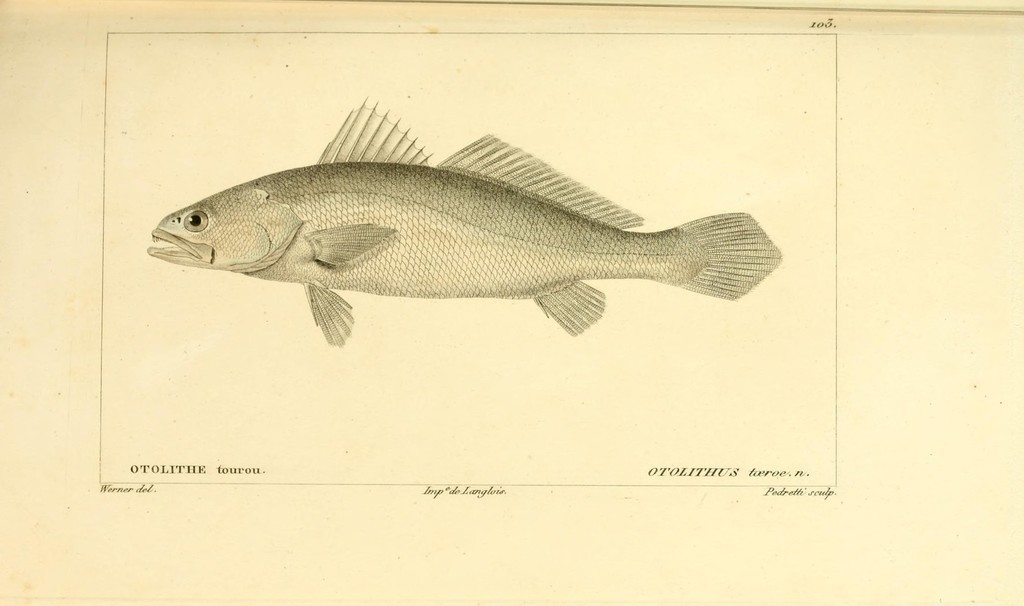
Acoupa weakfish
- Family
- Sciaenidae
- Depth
- 1–20 m
- Season
- Jan, Feb, Mar, Apr, May, Jun, Jul, Aug, Sep, Oct, Nov, Dec
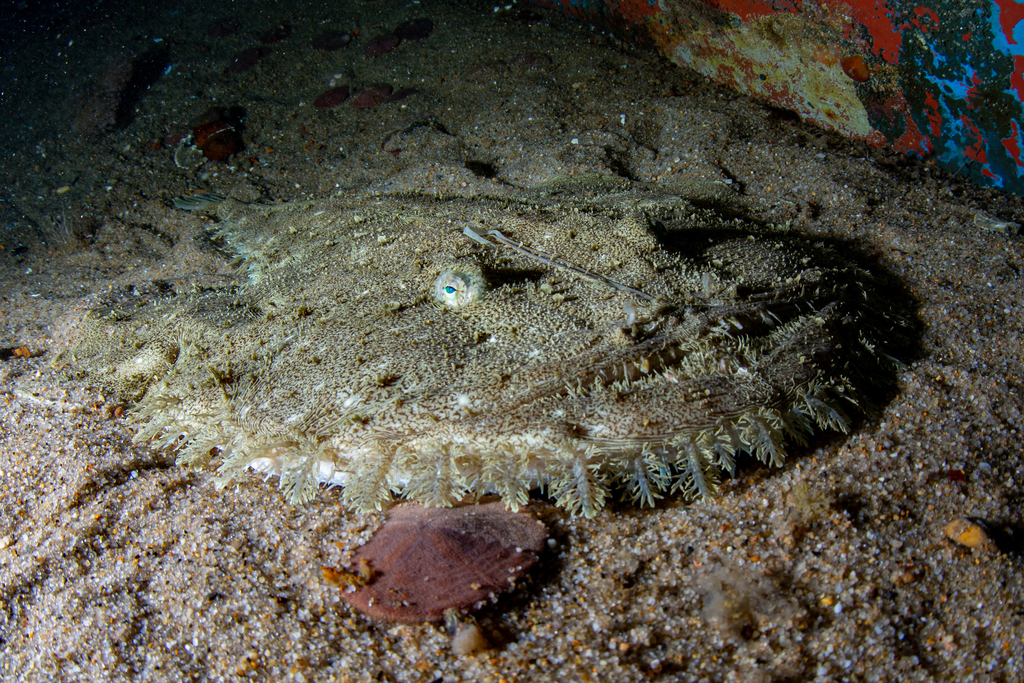
American angler
- Family
- Lophiidae
- Depth
- 0–800 m
- Season
- Mar, Apr, May, Jun

American eel
- Family
- Anguillidae
- Depth
- 0–464 m
- Season
- Jan, Feb, Mar, May, Jun, Jul
Guides for this water
Technique, gear and safety guides that fit Saffron cod.