
Ladyfish
Ladyfish is a slender, silver elopid of the western Atlantic and Gulf of Mexico, often moving in schools through shallow coastal water. It lives from the surface to 50 m in subtropical water, reaches 100 cm TL and 10.1 kg, and is recorded year-round in water of 11 to 34 °C.
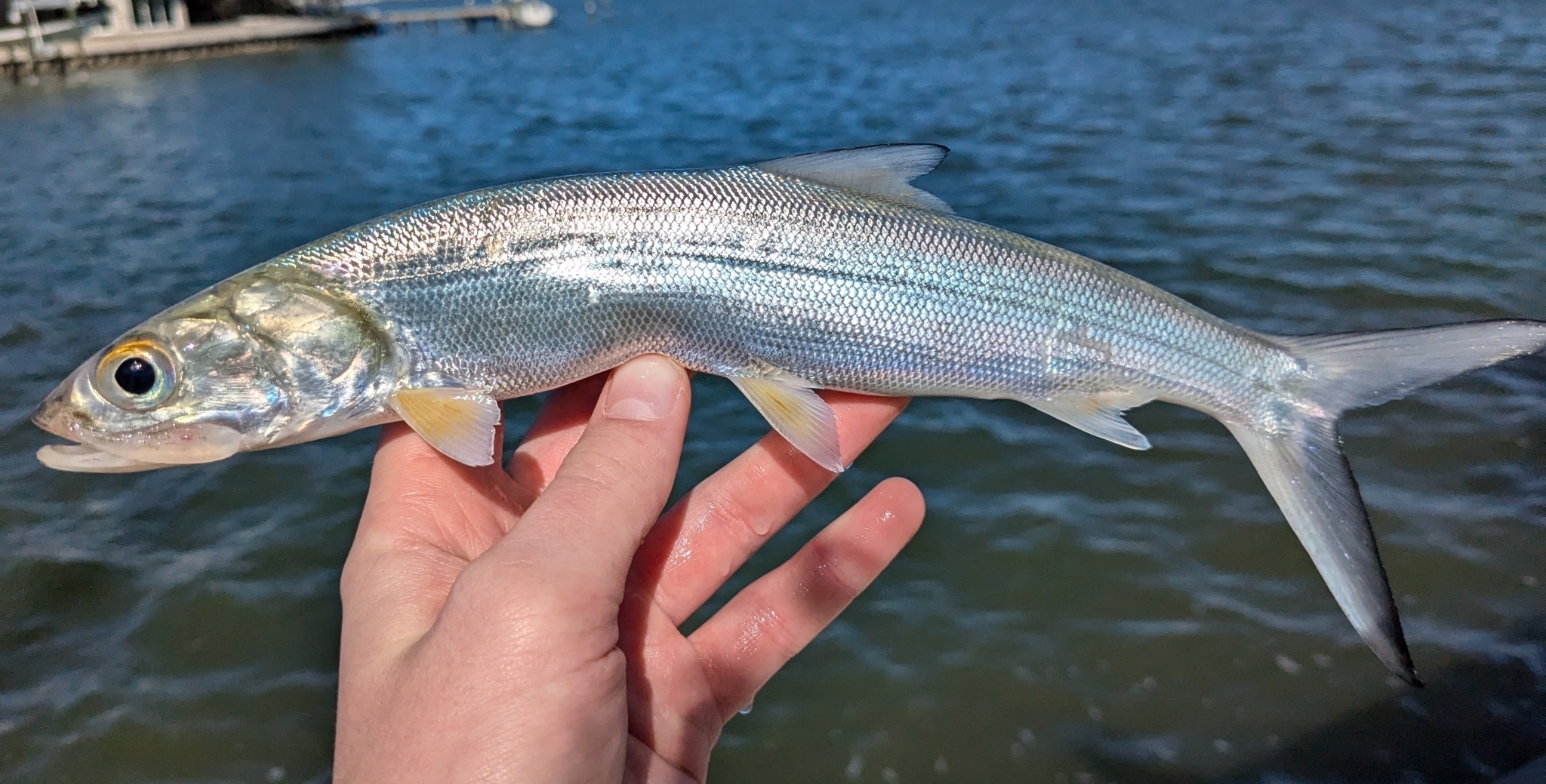
This is a page where the labels fight each other. The names, the geography and one environmental field all disagree with something else on the same record. Reading it well means sorting the labels from the facts instead of picking the version that looks tidiest.
The names on the label
The encyclopedia summary names it "the ladyfish or tenpounder" and places it in Elops, the only genus in the monotypic family Elopidae. The FishBase alias table is much longer: bonefish, bonyfish, fiddler, john, long cudja, long john, mariggle, riverfish, silverfish, skipjack, springer and tenpounder.
That is twelve English labels for one fish, and several of them are words that ordinary speech uses for other animals too. The table records what people have called this fish; it is not a register of unique identifiers. If your logbook says "skipjack", it may be describing this fish or something else entirely.
The pH field that cannot be a habitat
The page records a pH range of 0.0 to 10.4. A pH of 0 is not a habitat; it is an artefact, a unit error or a placeholder. No estuarine fish lives in a solution that acidic, and the page offers no second field to correct it.
The figure is reproduced here only to make a point about reading species pages: not every populated field is a fact. When one value is physically impossible, the right move is to quarantine it, not to average it with the upper bound or to repeat it as a water-quality preference.
Fiji is in the country table but not the range text
The range text runs from Cape Cod and Bermuda along the northern Gulf to southern Brazil, then flags China, Taiwan region and Vietnam as questionable. Fiji is also listed.
Fiji is not in the range text, not in the questionable-records list, and not in the western Atlantic. It is a row in a table. The page never explains it. That is the difference between a range statement and a country list: the statement has a boundary, and the list does not.
Mozambique in the GBIF rows
The GBIF distribution table for the accepted taxon has 22 rows. They are not a western Atlantic table. Two rows are the Mozambican Exclusive Economic Zone and one is the Seychellois Exclusive Economic Zone, both catalogued by WoRMS. The Freshwater Animal Diversity Assessment contributes rows labelled Afrotropical, Australasian, Oriental, Palaearctic and Pacific (Oceania), alongside Nearctic and Neotropical.
A Mozambican record for a western Atlantic fish is the same kind of problem as the Fiji row: a label that has travelled further than the animal. It may be a misidentification, a database propagation, or a genuine stray. The source does not say, so the record stays questionable rather than becoming a range extension. iNaturalist has logged 1,732 observations, yet a count of observations cannot settle which distribution rows are genuine.
100 cm maximum, 60 cm common, no age
At the top of the table sits 100 cm TL, with 60 cm TL as the usual length and 10.1 kg the heaviest recorded weight. Age and maturity length are both absent.
So the record gives you two sizes and a weight, and nothing about how fast the fish grows or when it matures. The weight and the length also come from different records; the page never says one fish carried both. A 60 cm common length is a big "typical" fish; the 100 cm figure is the ceiling. Neither number tells you what a mature individual is.
Anadromous, demersal, muddy estuary
The habitat block lists a demersal, anadromous fish in marine and brackish water, depth 0–50 m, subtropical, 11–34°C. It is recorded over mud in estuaries and brackish water, feeding on crustaceans and fishes.
Anadromous means it moves into fresh water, but the milieu word says demersal and the habitat words say estuary and brackish. None of the three claims matches the others, and no reconciliation is offered. Read the movement term as a life-history label and the habitat words as the places it has been recorded.
Nothing on the page lists a spawning migration, a river distance or a salinity value, so the anadromous label stands alone as a statement about movement. It tells you the fish can enter fresh water; it stops short of saying how far upstream it goes or how long it stays.
Spawning in all twelve months
The spawning table marks every month of the year. Three regional records narrow it: Ceará in Brazil in December, the Gatun Locks in Panama all year, and Florida in April, September and October.
A twelve-month table plus three narrow regional windows is a familiar pattern: the annual figure is the union of local records, not a year-round spawn everywhere. The regional windows are the ones worth planning around.
Which label to trust
Use the scientific name. Elops saurus is the only label on the page that is not shared, translated or locally variable. When you record a catch, write the total length, the weight, the date, the salinity and whether the water was fresh, brackish or salt.
Then keep the questionable labels questionable. The pH 0.0, the Fiji row and the Mozambican distribution rows should be noted as record anomalies, not repeated as facts about the fish. The page is still useful; it is just useful as a record with visible seams.
Where these facts come from
Check these pages before you rely on a size, range or protection status.
- FishBase — Elops saurus — FishBase · T2
- GBIF — Elops saurus occurrence records — GBIF · T2
- IUCN Red List — Elops saurus — IUCN · T1
- Photo record — iNaturalist — iNaturalist · T3
Fish in the same water
These fish live in the same place.
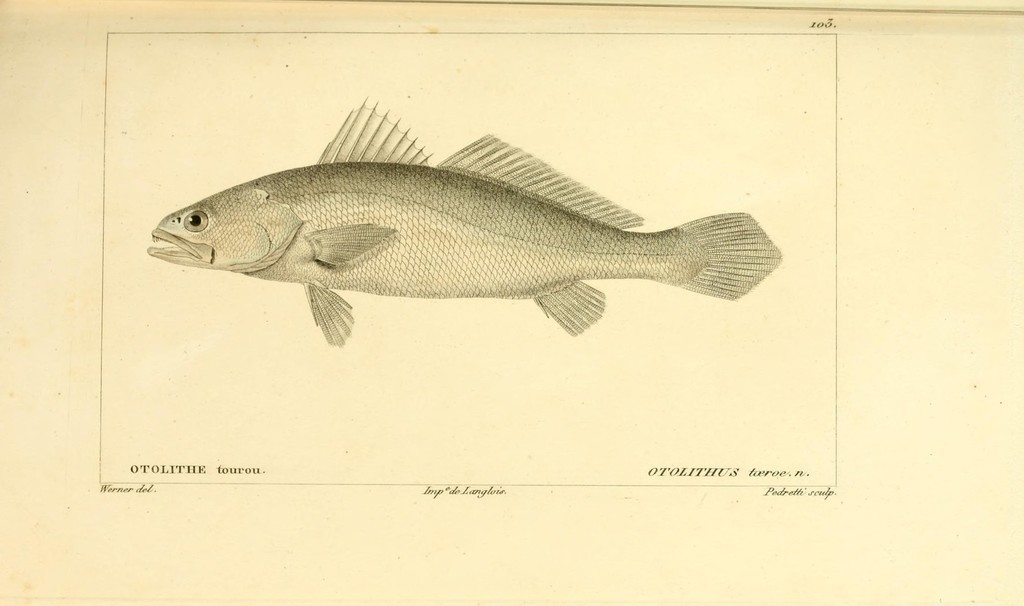
Acoupa weakfish
- Family
- Sciaenidae
- Depth
- 1–20 m
- Season
- Jan, Feb, Mar, Apr, May, Jun, Jul, Aug, Sep, Oct, Nov, Dec
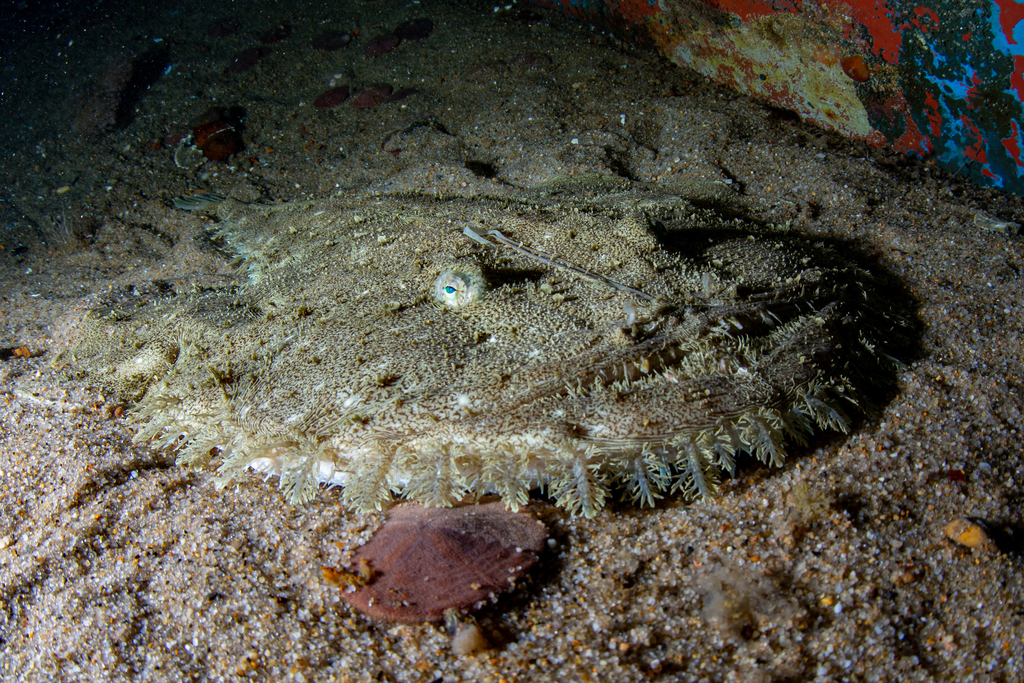
American angler
- Family
- Lophiidae
- Depth
- 0–800 m
- Season
- Mar, Apr, May, Jun

American eel
- Family
- Anguillidae
- Depth
- 0–464 m
- Season
- Jan, Feb, Mar, May, Jun, Jul
Guides for this water
Technique, gear and safety guides that fit Ladyfish.