
Striped surfperch
Blue stripes are the striped surfperch's identity card and the fastest way to separate it from a black surfperch: a blue-silver ground, about fifteen blue horizontal lines along the flank, and copper-red fins. Its centre of abundance sits on colder northern coast, so Southern California is the southern edge, where the fishing depends on water temperature and on kelp more than on the month.
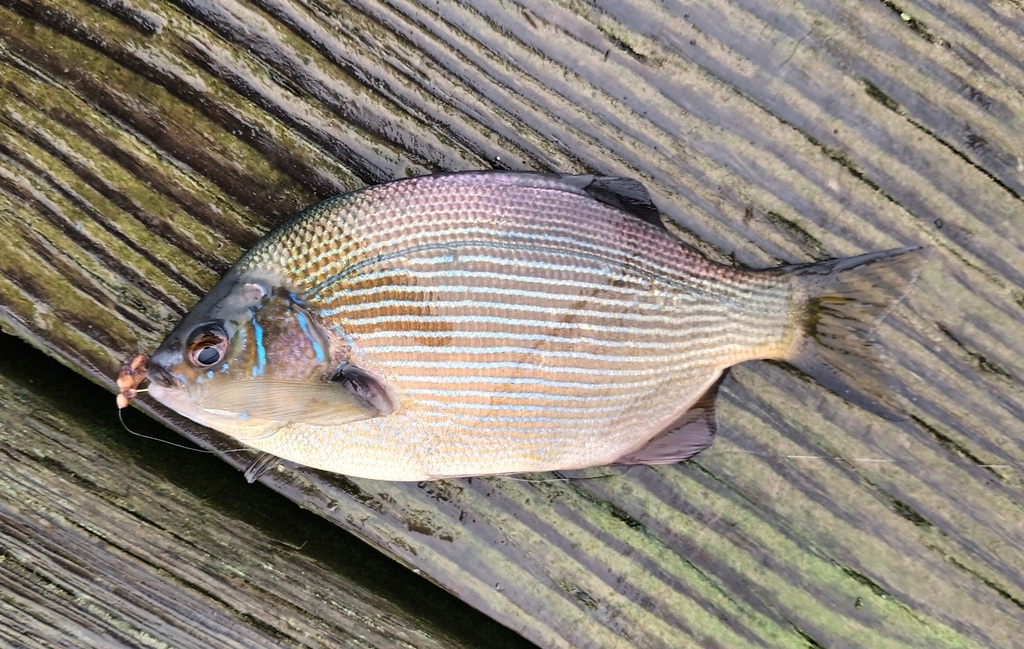
Blue stripes are the striped surfperch's identity card and the fastest way to separate it from a black surfperch: a blue-silver ground, about fifteen blue horizontal lines along the flank, and copper-red fins. Its centre of abundance sits on colder northern coast, so Southern California is the southern edge, where the fishing depends on water temperature and on kelp more than on the month.
About fifteen blue stripes below the lateral line
Copper or blue-silver ground with a dark brown overlay across the back, about fifteen blue horizontal stripes below the lateral line, and further blue spots and short lines on the head, all as described by FishBase. The fins are coppery, with dark areas on the front of the soft dorsal, the base of the caudal fin, the front of the anal and the outer half of the pelvic fins. Against a black surfperch the stripes are the stable difference: this fish has them, the black one does not, and the black one reads deep olive to near-black overall. Against a pile perch it is flatter and more oval; the pile perch is deeper and more silver. Colour fades on ice, so count stripes while the fish is wet.
A cold-water fish at the southern edge
FishBase runs the range from Wrangell in southeastern Alaska to Point Cabras in northern Baja California. That is a cool-water band, and Southern California sits near its southern end. The species lives on rocky coast and in kelp beds, occasionally on sandy surf next to rock, and is recorded to 21 m. Local catches come mostly from kelp and reef along the central and northern part of the Southern California coast; cold years push fish south, warm years send them deeper or north. The habitat in the sources is rock and kelp, and bays and pilings show up far less often. Work the weed line first and the open reef second.
Cold water helps, warm water does not
FishBase gives no spawning or birth month, only that the species is viviparous and that the female carries the young. Local timing tracks temperature more tightly than it does for the black surfperch: in warm spells fish move deeper into the kelp or north, and when upwelling drops the temperature they are easier to find on shallow rock. Spring and late autumn are usually the steadier windows, while midsummer shallow water thins out. No preferred temperature is published, so read the surface temperature and the state of the kelp instead. A green, cold week often beats a warm, clear one.
Drifting the kelp edge with small baits
Fishing a float over rock is the main approach: a shrimp or a worm on a size 1 hook, the float set about a metre off the bottom, drifting with the swell along the outer edge of the weed. Inside the kelp, a small soft plastic crawled along the blades takes fish that intercept it between stems. On the sand beside rock, a light bottom rig works if the cast lands on the rock-sand junction rather than on clean sand. The diet is small crustaceans, worms and mussels, with herring eggs taken when available; keep the bait small and the hook gap open. Big baits catch bigger fish but cut the count.
Fine leaders in the weed, heavier at the rock
A 7 to 7.5 foot medium-action spinning rod, a 2500 to 3000 size reel, 15 to 20 lb braid, an 8 to 12 lb fluorocarbon leader, and a size 1 to 2 hook. Because the fish lives among kelp, a finer leader cuts the chance of hanging a blade, but keep an abrasion section where the line crosses rock. Do not let a hooked fish get back into the weed; turn its head away from structure on the first move. The lips are thick, so set the hook firmly and leave the drag some line. Support the belly on release instead of gripping the flank. A short fight also keeps the fish from burying itself.
The same surfperch limit as the black
White, fine flesh on a medium frame; cook it whole, steamed, pan-fried or in soup, and ice it fast because the belly fat turns quickly. California regulates surfperch as a group: 20 fish in total and no more than 10 of any single species (14 CCR § 28.59). San Francisco Bay and San Pablo Bay carry a 5-fish aggregate limit, and shiner perch count separately at 20. The striped surfperch has no size limit; surfperch are closed in San Francisco Bay and San Pablo Bay from April 1 to July 31, shiner perch excepted, so Southern California has no closed season. State and federal water can differ, much of the Southern California kelp and reef sits inside MPAs, and the current CDFW notice decides. A licence is required from 16.
Evidence, and the southern-edge question
Range from Wrangell to Point Cabras, the 21 m depth ceiling, the 38 cm total length, 10 years, the viviparous habit, the fifteen blue stripes and the dark fin patches all come from FishBase; family placement follows GBIF's Embiotocidae. The surfperch bag limit comes from 14 CCR § 28.59. Birth month, juvenile habitat and the stability of the southern-edge population are missing and listed as gaps. Monthly strength is regional angling experience. The Chinese name follows the master plan, with the FishBase name kept as an alias.
How to catch it
Float fishing
A float set a metre off the bottom, drifting a shrimp or worm along the outer weed line where fish intercept between blades.
Slow pitch jigging
A 2 inch plastic on a light head, crawled along the blades and paused at each ridge before starting again.
Boat bottom fishing
Cast to the junction, then drag the bait across the transition where fish wait for food to roll off the rock.
Where these facts come from
Check these pages before you rely on a size, range or protection status.
- FishBase — Embiotoca lateralis — FishBase · T2
- GBIF — Embiotoca lateralis occurrence records — GBIF · T2
- IUCN Red List — Embiotoca lateralis — IUCN · T1
- Photo record — iNaturalist — iNaturalist · T3
Fish in the same water
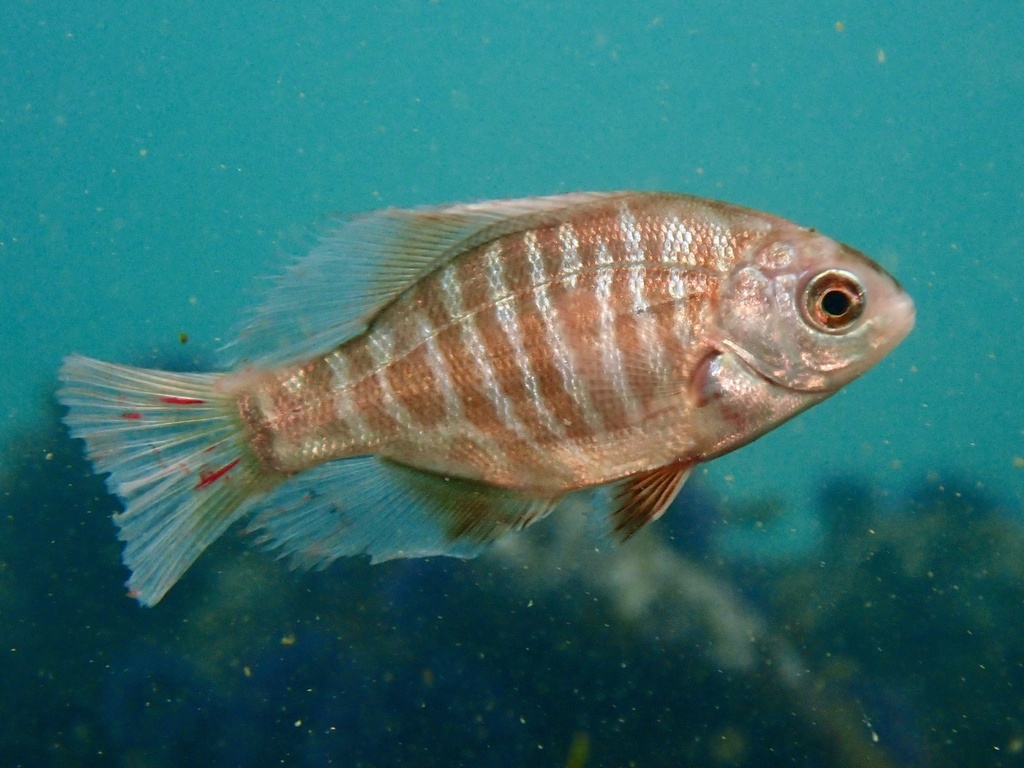
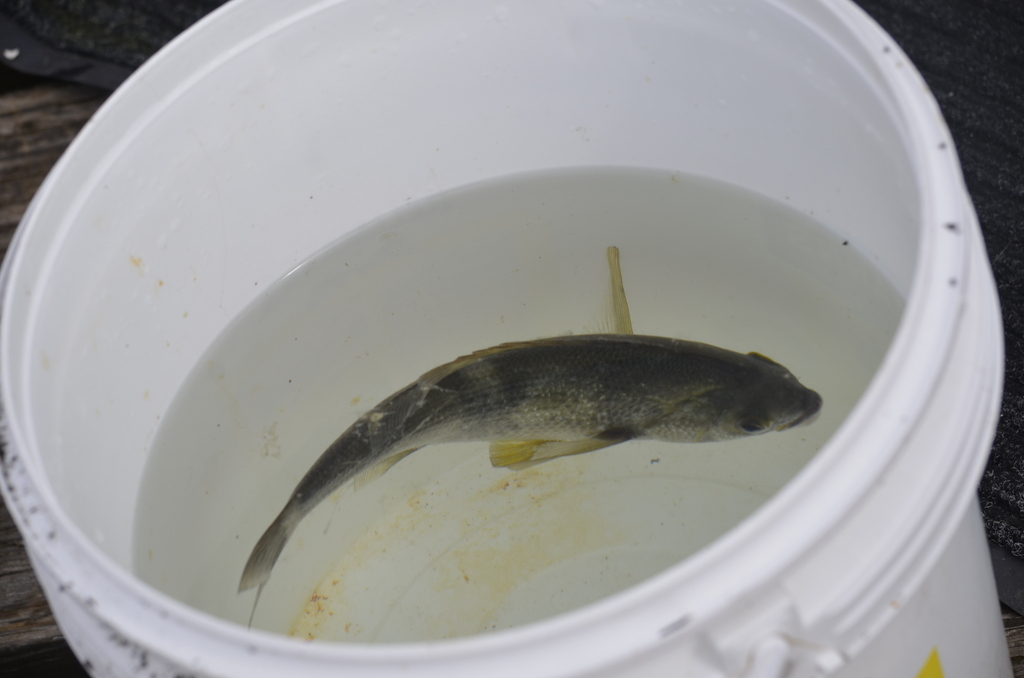
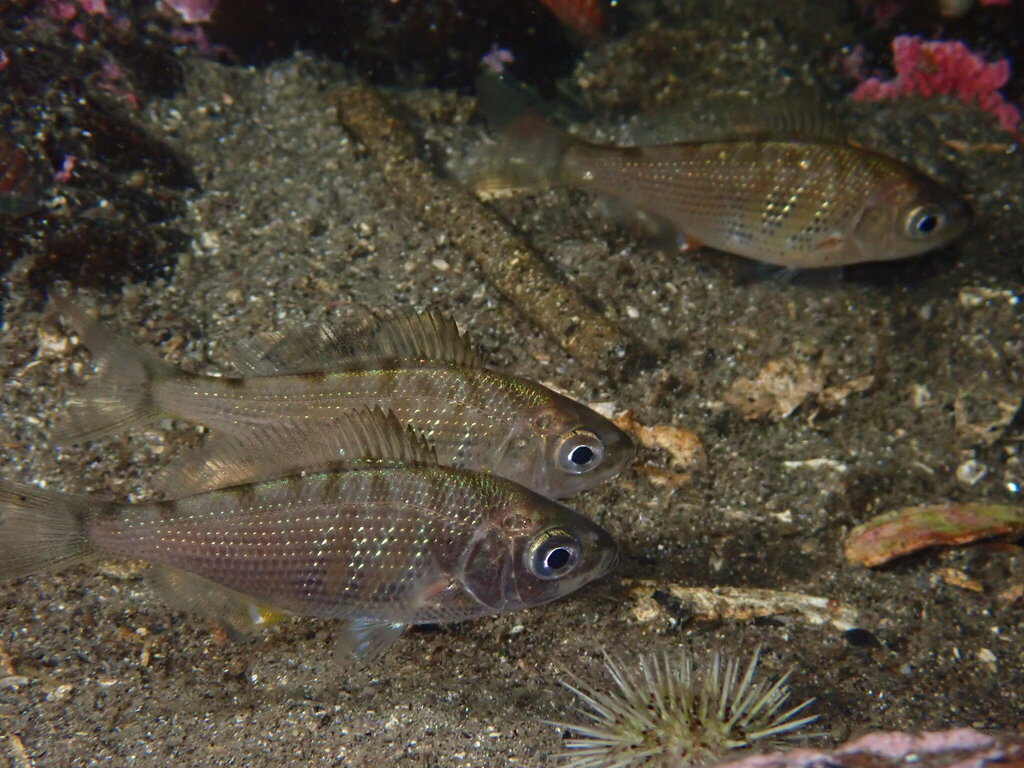
These fish live in the same place.
Guides for this water
Technique, gear and safety guides that fit Striped surfperch.