≥38 cm
Australia — Queensland · AU-QLD
Queensland sets a 38 cm minimum size for flame snapper.
Flame snapper | Min: 38cm | Limit: 5

Deepwater longtail red snapper is a large lutjanid of the Indo-Pacific, from East Africa across to Hawaii, north to the Sea of Japan and south through Queensland, New South Wales and Lord Howe Island. It lives deep, between 45 and 400 m, grows to 120 cm TL and feeds on crustaceans and fish. A maximum recorded age of 20 years underlines how long-lived this deep-water snapper is.
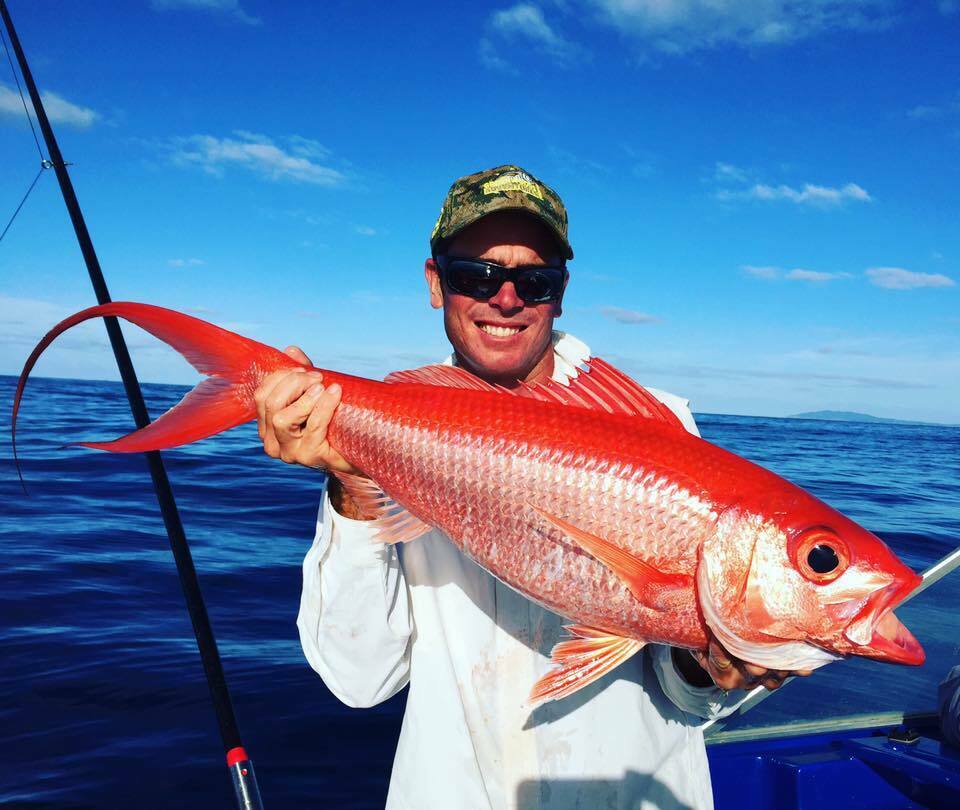
Deepwater longtail red snapper (Etelis coruscans) is a fish of the family Lutjanidae. FishBase gives its range as: Indo-Pacific: East Africa eastward to the Hawaiian Islands, north to Sea of Japan, south to Australia (Queensland and New South Wales) and Lord Howe Island; off Kermadec Islands, northeast of New Zealand. Reported from the Marquesas. The name Etelis carbunculus has been misapplied to this species by some previous authors. Body fusiform, oval in cross-section; the anal fin has three spines and eight soft rays. It is recorded from 45 to 400 m, in deep water. The recorded maxima are 120 cm TL, 20 years. Diet includes crustaceans and fishes. IUCN status: Least Concern (LC). Chinese name: .
A buyer in Honolulu and a fisherman in Palau can be talking about the same fish under different names. FishBase's global FAO entry reads "Deepwater longtail red snapper", the old FAO entry and the vernacular entries for Australia, Malaysia and Hawaii read "Flame snapper", Hawaii also carries "Longtailed red snapper", and the Northern Marianas and Palau entries read "Onaga". The American Fisheries Society entry for the United States adds "Yellowstripe snapper". Wikipedia's lead names onaga as the Hawaiian name and describes pale pink flesh with a mild flavour. Each label belongs to a different market; choosing one for the title hides the others.
The maximum is 120 cm TL and the common 50 cm SL, both male/unsexed, from different references. They use different measures and are not interchangeable. Maturity is set at 66.3 cm, above the common length and below the maximum. Maximum reported age is 20 years. Body fusiform, oval in cross-section; the anal fin has three spines and eight soft rays.
The depth range is 45–400 m, with 90–400 m given as usual, in deep water and labelled reef-associated. The coordinates run 38°N–32°S and 29°E–139°W. The written range runs from East Africa to the Hawaiian Islands, north to the Sea of Japan, south to Queensland, New South Wales and Lord Howe Island, plus the Kermadec Islands and a Marquesas report. The country table carries 79 territories.
Depth is where the sources part. FishBase gives 45–400 m overall and 90–400 m usual; Wikipedia's lead says typically 90–400 m; the iNaturalist summary says 210–300 m. Read them as an envelope, a usual band and a narrower observational band.
OBIS holds 257 records in 35 datasets dated 1862 to 2026. Nothing but the scientific name goes into the query, and no country field comes back, so the total proves deep-water sampling without locating it.
No spawning month is recorded. With no month on the record, nothing fixes a season; what it gives is the bottom. The habitat keywords are rocky, slope, open-water and continental shelf; the diet list is crustaceans and fishes. That is a slope list, not a reef-crest list, and the usual band begins at 90 m — boat water across the range.
The rig follows from that. A bait or a slow-pitch jig has to reach 90 m before the usual band starts, so braid capacity and sinker weight matter more than casting distance. At 400 m a hand-hauled rig is out of range, so the usable part is the top of the usual band, where a sounder can hold a slope edge. The record carries no temperature or current note, so those stay observations made on the day.
Wikipedia describes mild flavour and pale pink flesh, the market claim behind the onaga name. FishBase records the species as highly commercial, a gamefish, and occasionally used as bait. IUCN lists it as Least Concern, in an assessment dated 4 March 2015. Neither CITES nor CMS has an appendix entry for it, so the LC assessment is the sole conservation statement on the record.
All 79 country rows are presence only: no bag number, no closure date and no minimum length is attached, and no agency is named. Any recreational rule lives in the law of the place where the fish is landed; this database does not carry it. The one regulatory number a fisherman can take from the record itself is 66.3 cm at maturity.
These are the published regulations for this fish. Read the number first. The notice below it is the actual regulation.
Queensland sets a 38 cm minimum size for flame snapper.
Flame snapper | Min: 38cm | Limit: 5
Queensland sets a possession limit of 5 Deepwater longtail red snapper.
A possession limit is the total number of fish you may keep at any time, including fish at home or in the freezer; it is not a daily take limit.
Flame snapper | Min: 38cm | Limit: 5
Every record above names its source and the date it was retrieved. See the regulation register for the full list, or how to read these regulations.
Check these pages before you rely on a size, range or protection status.
These fish live in the same place.
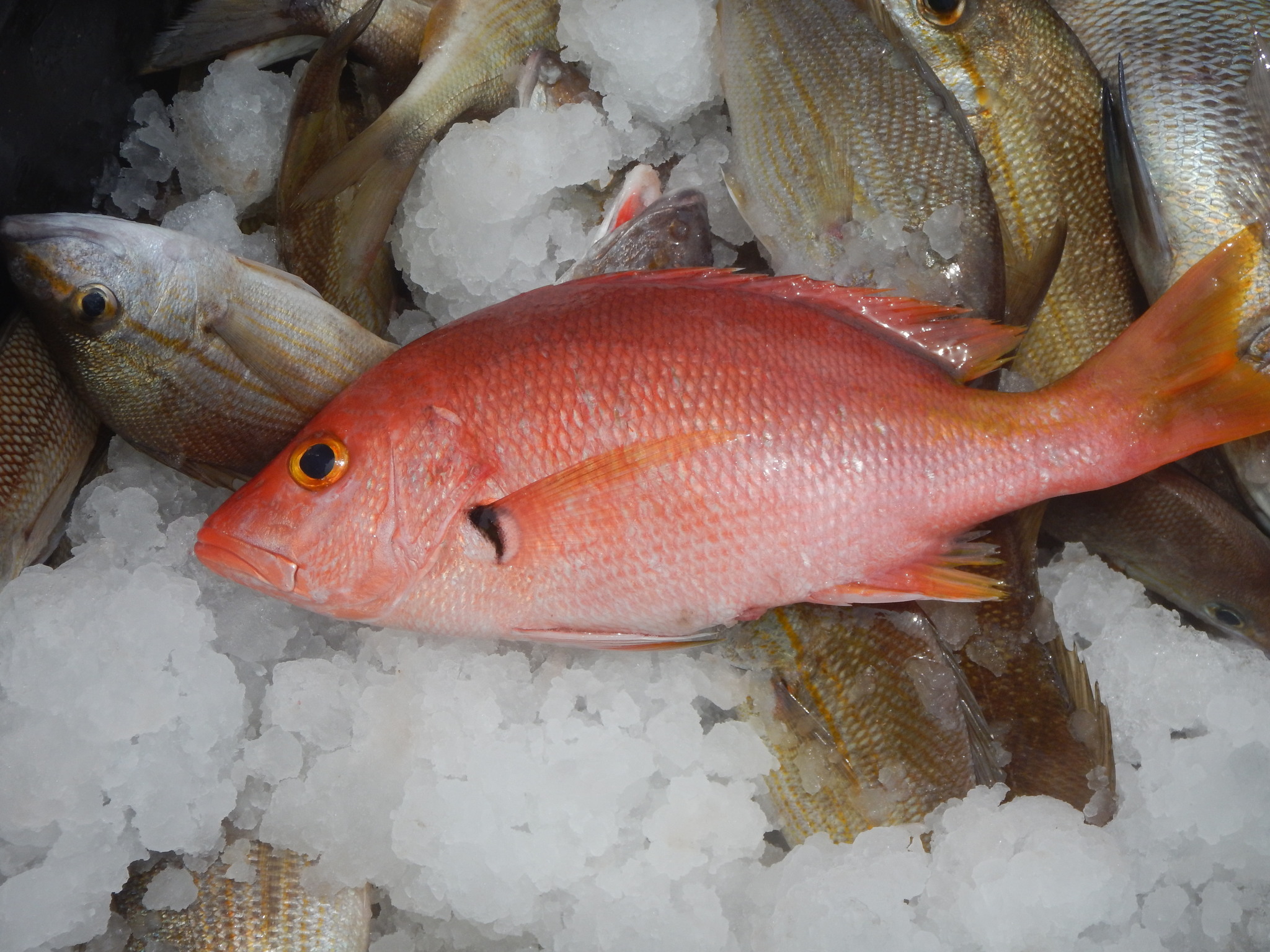
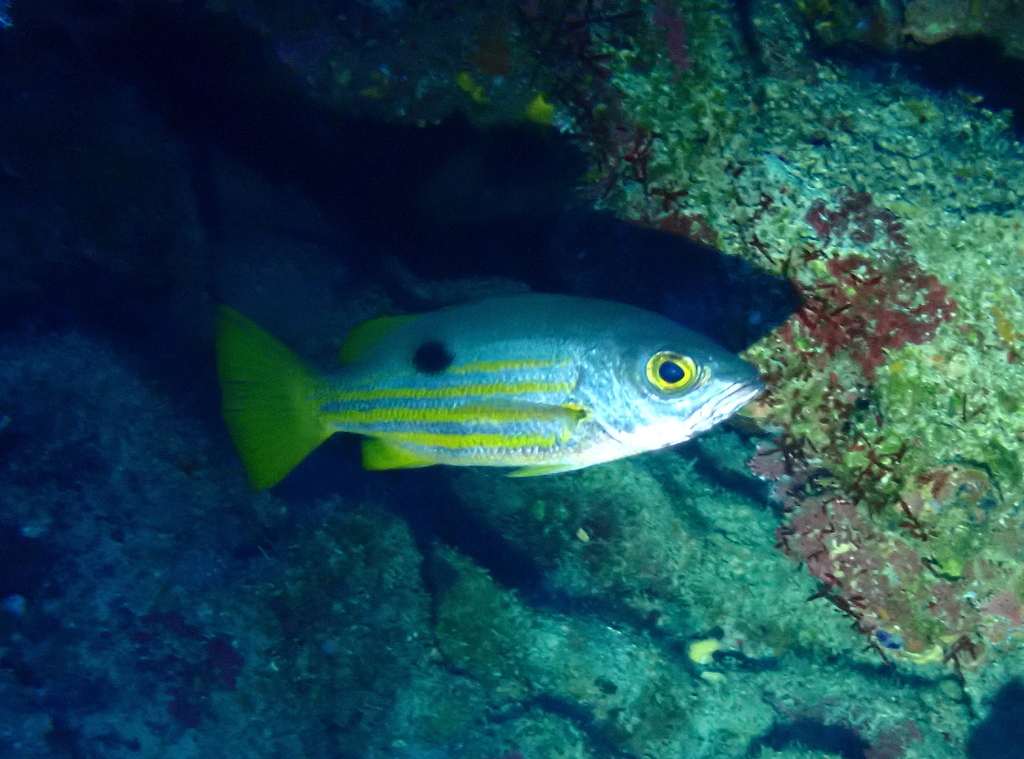
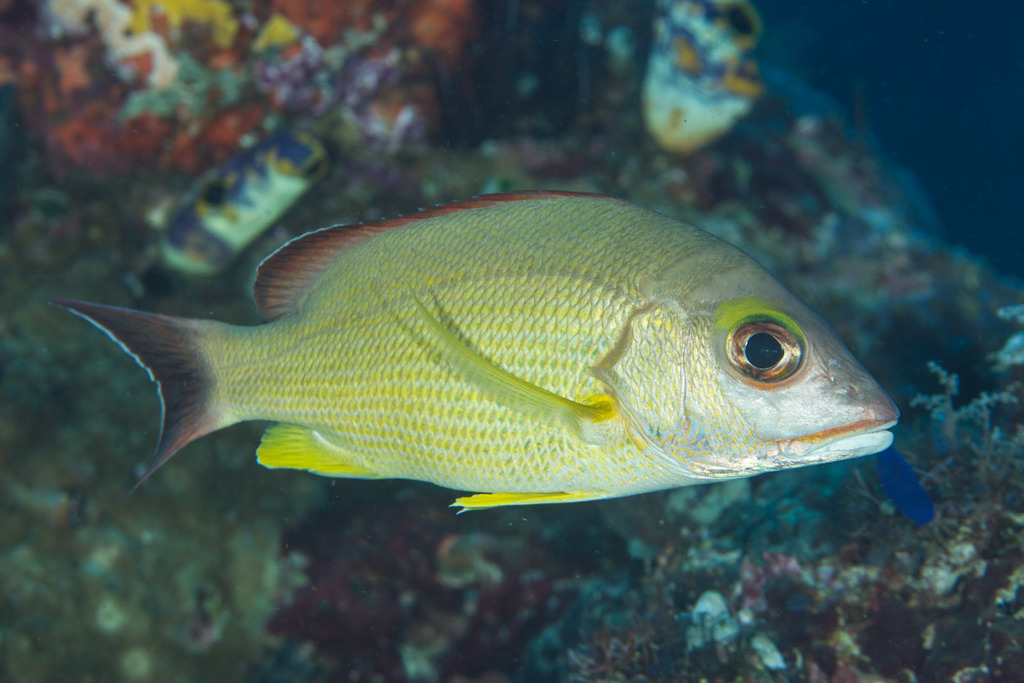
Technique, gear and safety guides that fit Deepwater longtail red snapper.