
Blackfin snapper
Blackfin snapper is a Lutjanidae snapper of the 80–150 m slope, recorded from North Carolina and Bermuda through the Gulf and Caribbean to Brazil. It is red with a black pectoral blotch, reaches 75 cm and 14 kg, and is taken on cut bait fished tight to the bottom.
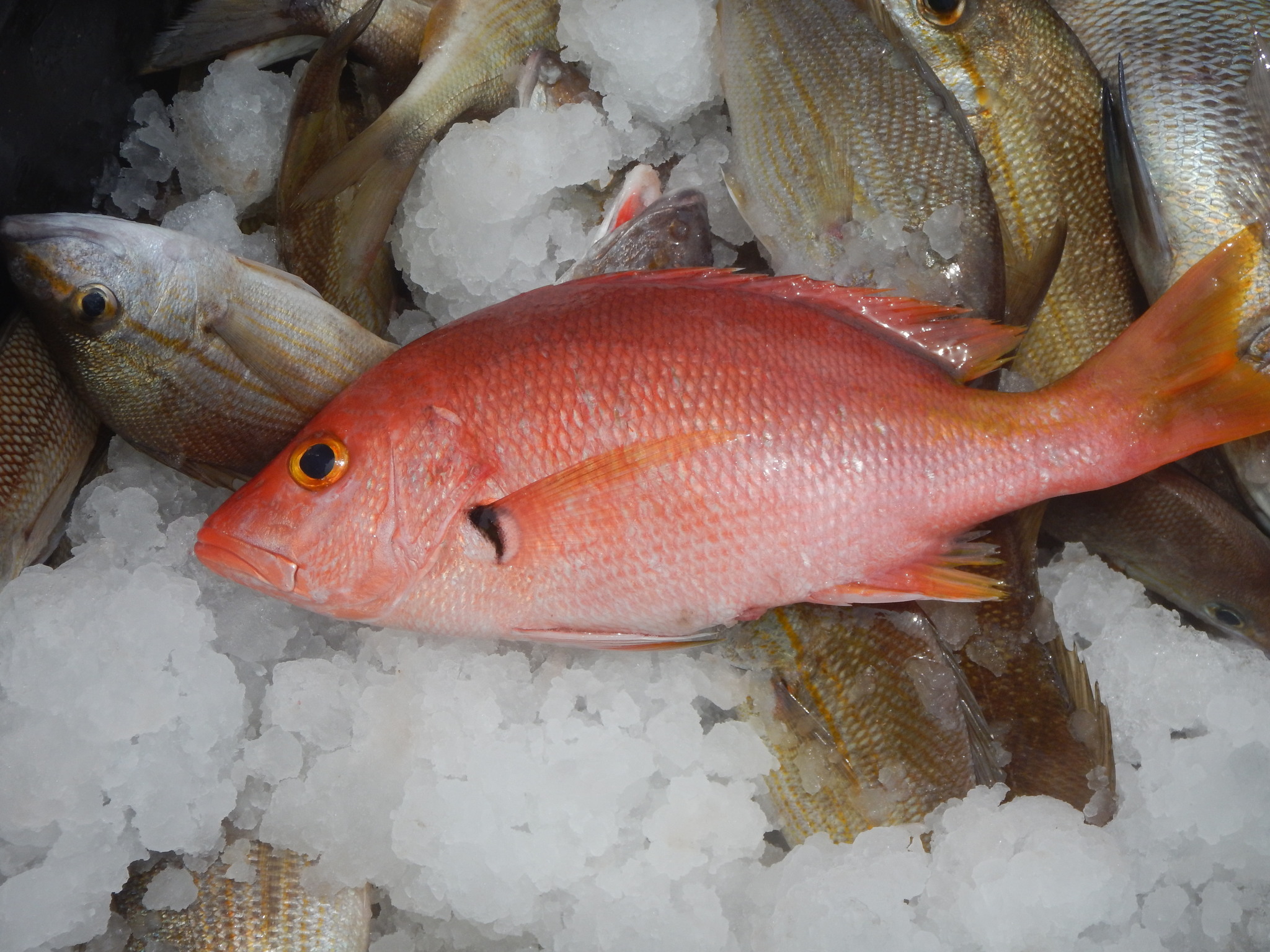
Blackfin snapper is a Lutjanidae snapper of the 80–150 m slope, recorded from North Carolina and Bermuda through the Gulf and Caribbean to Brazil. It is red with a black pectoral blotch, reaches 75 cm and 14 kg, and is taken on cut bait fished tight to the bottom.
Identification
Blackfin snapper is a red snapper with a deeper red back and a pinker belly, a pointed snout and one diagnostic mark: a black blotch at the base of the pectoral fin. The blotch stays visible after the red fades, which makes it the fastest check on deck.
FishBase gives 75 cm total length, a common length of 50 cm, 14 kg maximum weight and maturity at about 28.7 cm. Queen snapper has a much larger eye and a slimmer body; silk snapper has a yellow eye and no black pectoral blotch.
Distribution and Habitat
FishBase records the species from North Carolina and Bermuda through the Gulf of Mexico and the Caribbean to Trinidad and northern Brazil, and describes it as very common in the Caribbean, particularly the Antilles.
Depth is 20 to 200 m, usually 80 to 150 m, over sandy and rocky bottom near drop-offs and ledges. Juveniles sit shallower, often between about 35 and 50 m, so Gulf adults are a shelf-edge target rather than a bay fish.
Habits and Diet
Adults ambush prey along the slope and feed mainly on fishes. They do not school like shallow-water snappers, and sounder marks are usually singles or small groups rather than a solid block.
At 80 to 150 m scent and sink rate matter more than colour, so a fresh cut fish or squid strip is as good as a live bait. Find one productive section of slope and several fish usually come from the same short drift.
Fishing Methods
Deep bottom fishing is the standard approach: heavy lead takes cut bait to the foot of the slope while the boat drifts and the bait works along the contour.
Keep contact with bottom. The bite is a few taps followed by steady weight, and waiting for a screaming drag usually means the fish has reached the rocks. Past 80 m an electric reel earns its place.
Gear and Approach
Thirty to fifty pound braid, a 40 to 60 lb fluorocarbon leader, a 5/0 to 7/0 circle hook and 8 to 16 oz of lead cover most Gulf days. A rod with a strong mid-section and a forgiving tip beats a broomstick on soft mouths.
Carry a descending device. A snapper released from 100 m without help rarely survives, so the release gear matters as much as the bag limit.
Seasonal Window
Fish are caught all year. Warm months bring more running days; winter fish stay deep and the forecast decides whether the trip happens.
Spawning records are scattered: March to October in Cuba, and mature fish in every month in Jamaica and Puerto Rico. Offshore, moving current is the daily switch, and slack water usually brings pickers.
Edibility and Handling
The flesh is white and firm, marketed mostly fresh, and ranks among the better deep-water snappers.
Bleed, gut and ice at once, because deep-water fish cool slowly. FishBase notes ciguatera reports for the species, so large fish and known outbreak areas deserve caution and the offal should not go into soup.
Regulations and Conservation
In the federal Gulf EEZ, snappers are managed under an aggregate of 10 per person per day, excluding red, lane and vermilion snapper, with mutton snapper capped at 5. Blackfin snapper has no federal minimum size and no species-specific seasonal closure.
Florida applies a 10 fish snapper aggregate and sets no state minimum for blackfin. Louisiana also uses 10 per day with no state minimum, but keeping or transporting these snappers requires a Recreational Offshore Landing Permit.
Mississippi uses 10 per day with no state minimum. Alabama does not list blackfin separately and applies its 20 fish reef-fish aggregate. Texas does not list the species in state water, so federal rules apply beyond 9 nautical miles. The IUCN Red List lists blackfin snapper as Data Deficient, assessed 10 October 2015, with deep-water bycatch and poor release survival as the main concerns. Rules change yearly, so confirm the current notice before you go.
How to catch it
Boat bottom fishing
Drift fishing
Electric reel
80
Where these facts come from
Check these pages before you rely on a size, range or protection status.
- FishBase — Lutjanus buccanella — FishBase · T2
- GBIF — Lutjanus buccanella occurrence records — GBIF · T2
- IUCN Red List — Lutjanus buccanella — IUCN · T1
- Photo record — iNaturalist — iNaturalist · T3
Fish in the same water
These fish live in the same place.
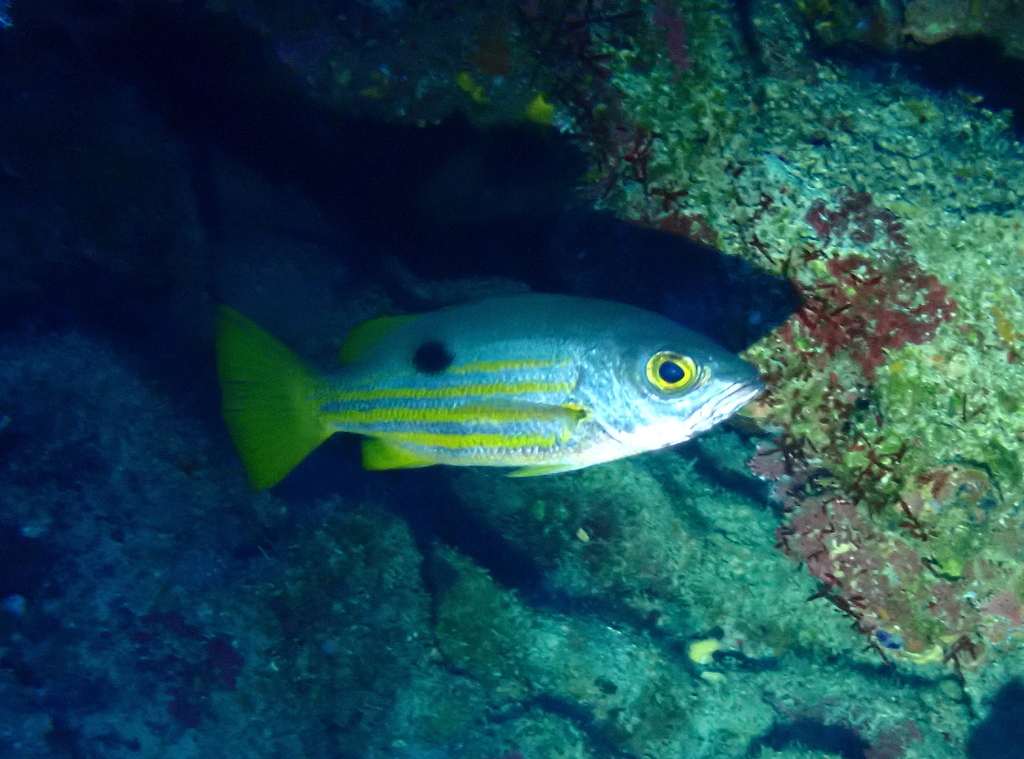
Blackspot snapper
- Family
- Lutjanidae
- Depth
- 5–20 m
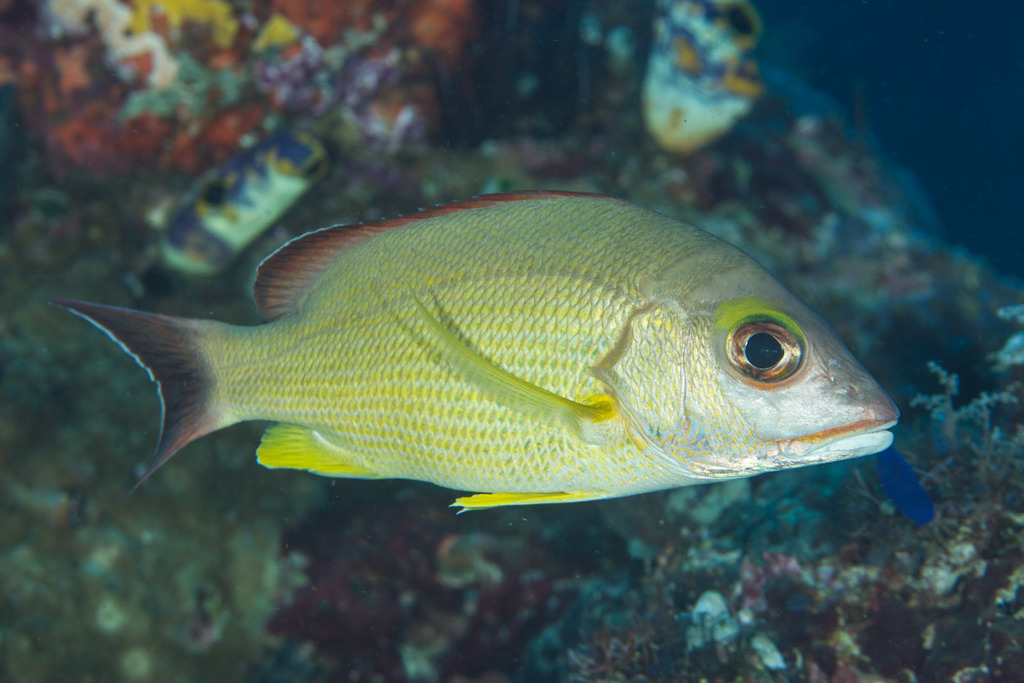
Blacktail snapper
- Family
- Lutjanidae
- Depth
- 1–80 m
- Season
- Jan, Feb, Mar, Apr, May, Jun, Jul, Aug, Sep, Oct, Nov, Dec

Blubberlip snapper
- Family
- Lutjanidae
- Depth
- 3–150 m
Guides for this water
Technique, gear and safety guides that fit Blackfin snapper.