
Queen snapper
Queen snapper is a Lutjanidae snapper of bathydemersal rocky bottom from 100 to 450 m, reaching 100 cm and 6.3 kg with a common length near 64 cm. It feeds on small fish, is taken on deep-drop rigs, and is managed inside the Gulf snapper aggregate.
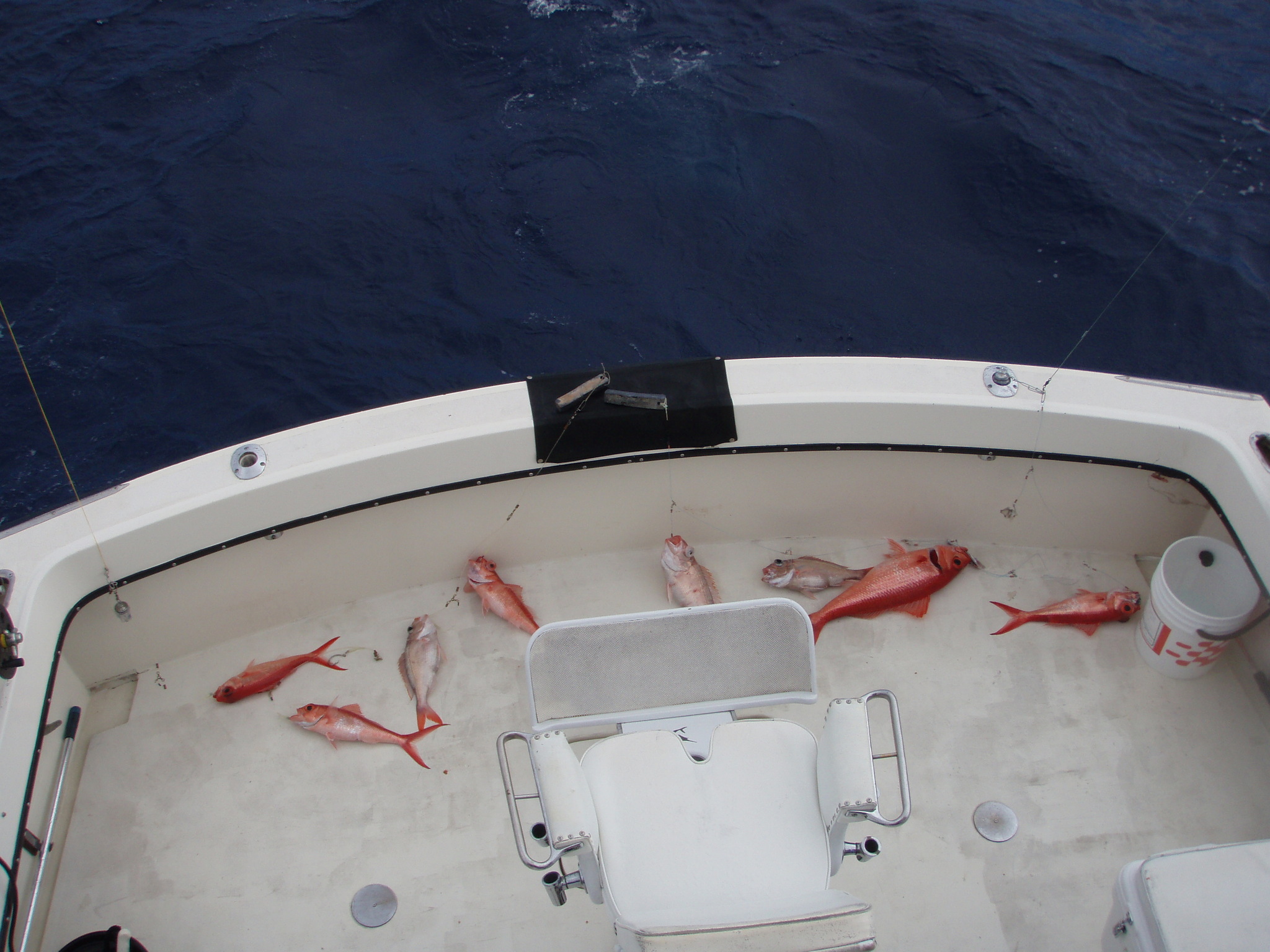
Queen snapper is a Lutjanidae snapper of bathydemersal rocky bottom from 100 to 450 m, reaching 100 cm and 6.3 kg with a common length near 64 cm. It feeds on small fish, is taken on deep-drop rigs, and is managed inside the Gulf snapper aggregate.
Identification
Queen snapper is a slender, fusiform snapper with a deep red to pink-red body, a pointed head and a noticeably large eye.
The anal fin has three spines and 8 soft rays. Maximum length is 100 cm, common length 64 cm, weight 6.3 kg and maturity about 31 cm, so a 64 cm fish is a solid adult.
On deck it is redder and larger-eyed than blackfin and silk snapper; blackfin has a dark mark at the pectoral base, silk is more orange-red, and queen is the most uniformly red and largest-eyed of the three.
Distribution and Habitat
FishBase records it from Bermuda and North Carolina through the Gulf and Caribbean to São Paulo, Brazil, including Fernando de Noronha and Atol das Rocas. It is most abundant around oceanic islands.
Depth is 100 to 450 m on rocky bottom: cold, dark water far below the thermocline, where rock relief and current edges matter more than surface conditions.
Habits and Diet
Adults live on rocky bottom and feed mainly on small fishes. It is not a shallow reef fish that occasionally goes deep; the fishable population sits in deep water.
Spawning records are sparse, only March and August at St Lucia, not enough to define a Gulf season. The IUCN assessment is Data Deficient, so stock status is genuinely uncertain.
It is a commercial and game fish, usually taken with silk and blackfin snapper on the same deep drop.
Fishing Methods
Deep dropping is the method. Fish 2 to 4 lb of lead on braid with a multi-hook rig baited with squid or cut fish, and hold bottom on a marked rock edge or pinnacle. The bite is usually a light load, not a run.
Drifting over pinnacles covers more ground than anchoring, and sounder marks matter more than the lure. A glow bead above the hook helps where little daylight reaches.
Wind the fish up steadily. Stopping halfway worsens barotrauma, so a steady electric retrieve is kinder than a jerky one.
Gear and Approach
Use 65 to 80 lb braid, an 80 to 100 lb leader, a 9/0 circle hook and a heavy deep-drop rod with an electric reel. Manual gear works to 150 m and becomes work beyond that.
Carry a descending device and a venting needle. A queen snapper from 200 m or more is unlikely to survive a plain release, and the device decides whether it floats.
Keep the rod in the holder until the load is solid, then lift smoothly. Deep hooks are common, so have a long-handled dehooker ready.
Seasonal Window
Deep water changes little with the seasons, so sea state and current matter more than the calendar. Spawning records are too sparse to set a peak month.
The practical window is any calm day when the boat can hold position over a pinnacle. Long-period swell makes deep dropping unsafe, and a strong current at 300 m may need more lead than the rod can handle.
Edibility and Handling
Queen snapper is a good food fish with white, moist flesh, marketed mostly fresh. It is excellent seared, fried or in soup, and the head makes a strong broth.
Bleed it at the rail and put it in ice slurry at once. Deep-water fish come up cold but spoil quickly on a warm deck, and the flesh softens if it sits.
FishBase lists no ciguatera reports and no human threat, so the main concern is quality and barotrauma rather than toxicity.
Regulations and Conservation
In the federal Gulf EEZ, snapper are managed under an aggregate of 10 per person per day, excluding red, lane and vermilion snapper, with mutton snapper limited to 5. Queen snapper has no federal minimum size and no species-specific seasonal closure. Federal rules now say Gulf of America; measures unchanged.
Florida uses the same 10 fish aggregate with no state minimum. Louisiana uses 10 with no state minimum and requires a Recreational Offshore Landing Permit to possess or transport them. Mississippi uses 10 with no state minimum.
Alabama does not list queen, blackfin, silk or wenchman separately, so the 20 fish reef-fish aggregate applies. Texas does not list queen snapper; beyond 9 nautical miles the federal 10 fish aggregate governs.
The IUCN Red List lists queen snapper as Data Deficient, assessed 10 October 2015. Deep-water release mortality is the main concern, which is why a descending device belongs in the kit. Rules change yearly.
How to catch it
Deep dropping
2 4
Drift fishing
Glow bead rig
Where these facts come from
Check these pages before you rely on a size, range or protection status.
- FishBase — Etelis oculatus — FishBase · T2
- GBIF — Etelis oculatus occurrence records — GBIF · T2
- IUCN Red List — Etelis oculatus — IUCN · T1
- Photo record — iNaturalist — iNaturalist · T3
Fish in the same water
These fish live in the same place.
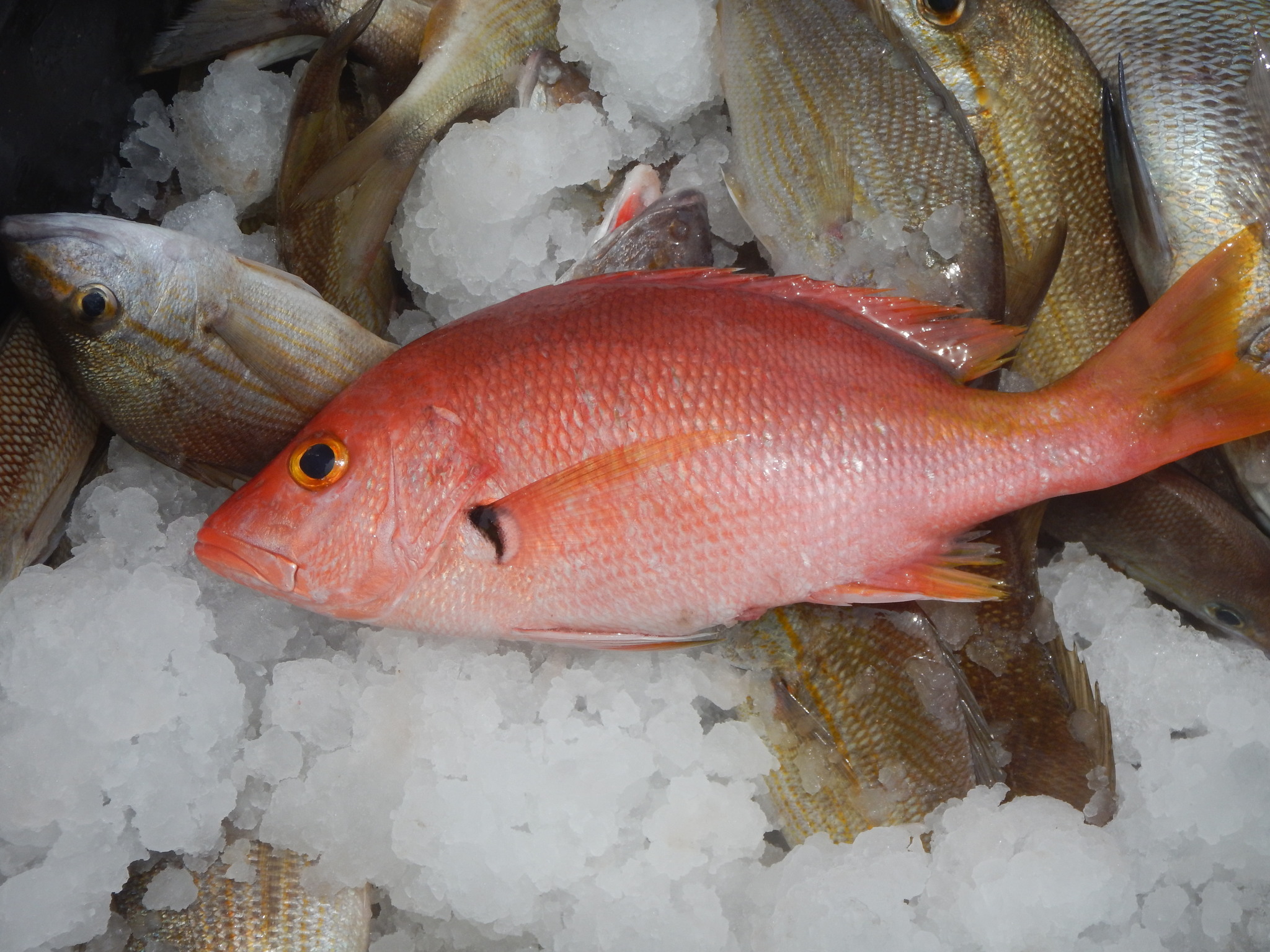
Blackfin snapper
- Family
- Lutjanidae
- Depth
- 20–200 m
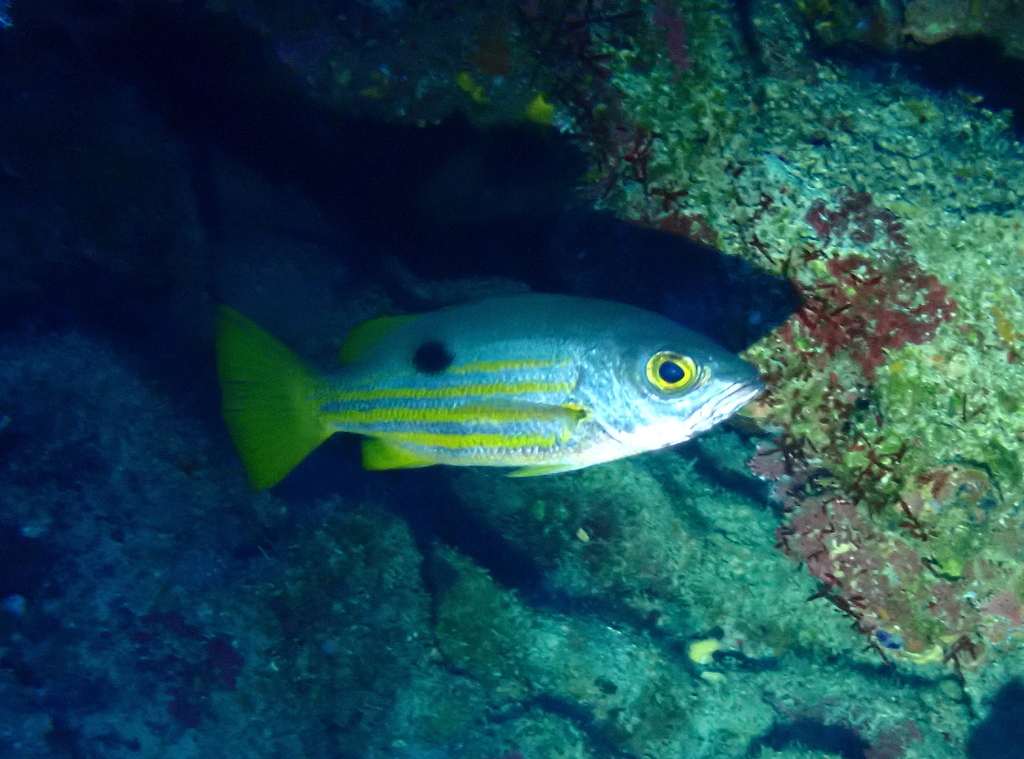
Blackspot snapper
- Family
- Lutjanidae
- Depth
- 5–20 m
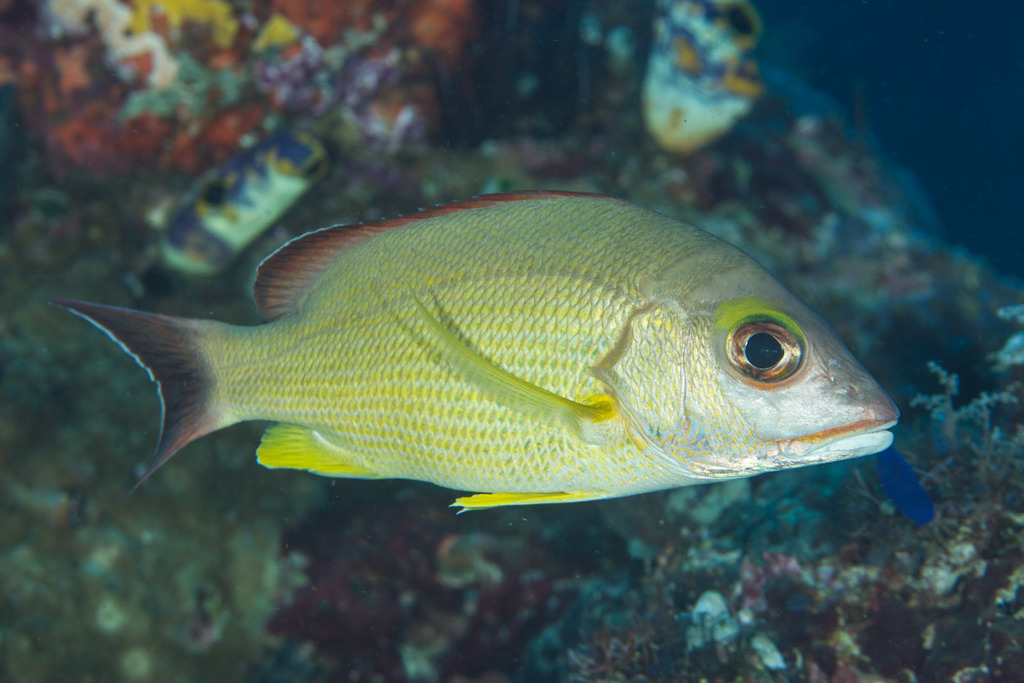
Blacktail snapper
- Family
- Lutjanidae
- Depth
- 1–80 m
- Season
- Jan, Feb, Mar, Apr, May, Jun, Jul, Aug, Sep, Oct, Nov, Dec
Guides for this water
Technique, gear and safety guides that fit Queen snapper.