
Cardinal seabream
Cardinal seabream is a western Pacific sparid of the East China Sea, South China Sea and northern Philippines, with records from Taiwan region, Hong Kong SAR, Japan, Korea and Vietnam. It lives from the surface to 100 m, more often near reefs and rough bottom; small fish are common in shallow sheltered bays and larger fish occur deeper. FishBase gives a maximum of 40 cm total length, a common length of 20 cm and maturity at about 11.7 cm.
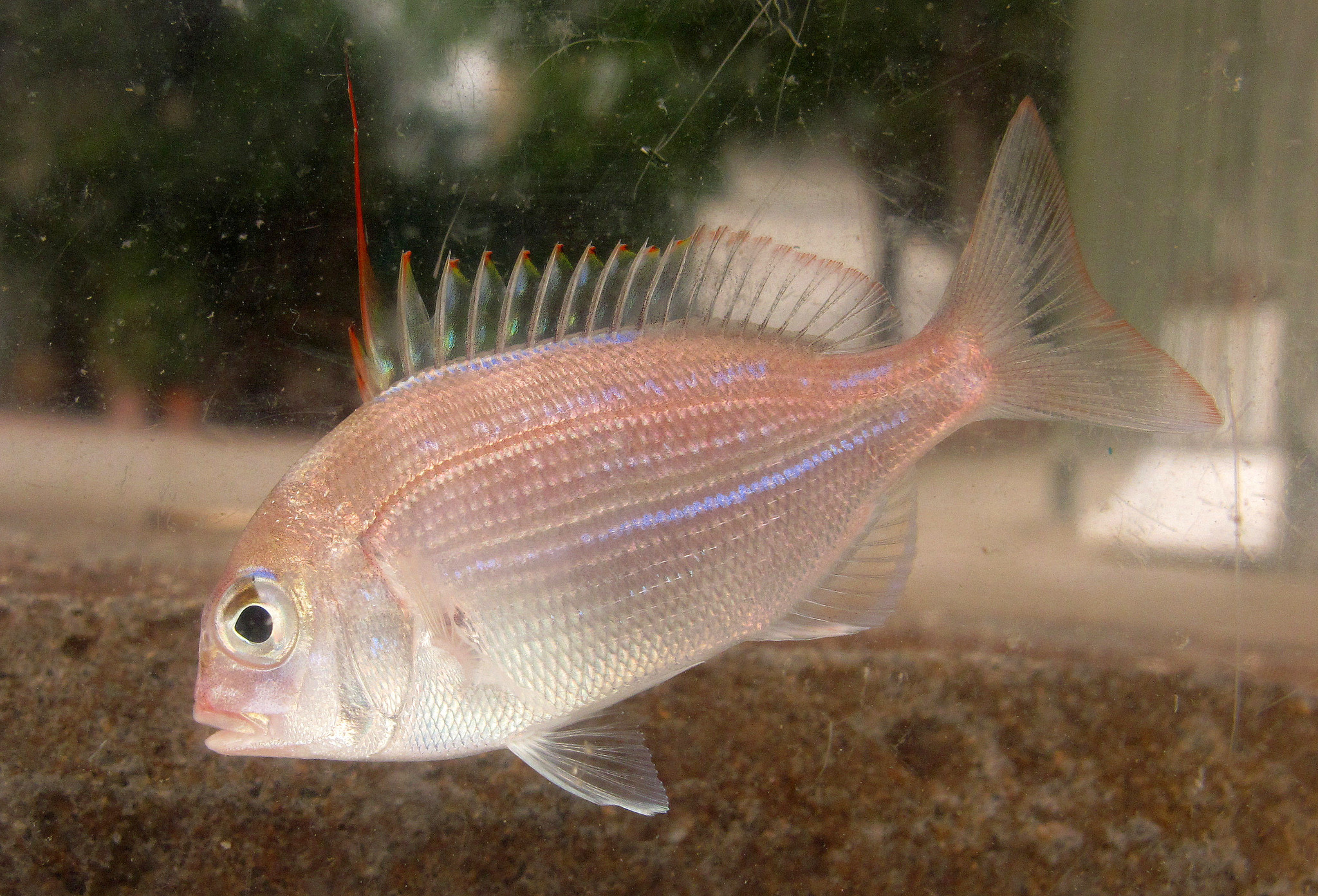
Cardinal seabream is a western Pacific sparid of the East China Sea, South China Sea and northern Philippines, with records from Taiwan region, Hong Kong SAR, Japan, Korea and Vietnam. It lives from the surface to 100 m, more often near reefs and rough bottom; small fish are common in shallow sheltered bays and larger fish occur deeper. FishBase gives a maximum of 40 cm total length, a common length of 20 cm and maturity at about 11.7 cm. IUCN lists it as Endangered (A2bd), assessed in 2009. This is one of the batch's most conservation-sensitive species.
Reading the spines
FishBase's morphological entry is brief and gives no complete fin formula. The genus name Evynnis combines the Greek eu (good) with ynnis (ploughshare), a separate naming path from the Chinese one. The species is a sparid with a compressed body and a continuous dorsal fin with spines anteriorly; the colour is reddish with silvery highlights on the back and sides and pale red fins. The English name threadfin porgy refers to the filamentous fin rays, whose tips trail like fine thread and show better on a live fish than on ice. Separation from congeners relies on dorsal- and anal-fin proportions, body depth and scale rows rather than colour alone; is an older literature name for this same species, not a formal name. The Chinese colloquial names and are used in Taiwan and Fujian, and 𩶘 is Hong Kong Cantonese; all are aliases, not formal names. In hand, check body shape, red tone, fin rays and origin, because colour alone can confuse it with yellowfin seabream or young red seabream.
A bay-and-reef sparid
FishBase's range is the western Pacific: the East China Sea, South China Sea and northern Philippines. The country table lists mainland China, Hong Kong SAR, Japan, Korea, Macao, the Philippines, Taiwan region and Vietnam. GBIF's 807 records are led by Taiwan region (243), mainland China (233), Japan (100), Korea (30), Vietnam (30) and Hong Kong SAR (14). It occurs over a wide range of bottom types from the surface to 100 m but is more common near reefs or rough ground; small individuals are very common in shallow sheltered bays, while larger fish often occur deeper. Fish bay-side reef edges, coarse sand and rubble, and artificial reefs where current delivers plankton. Because small fish crowd sheltered bays while larger ones sit deeper, a bay mark and a deeper reef edge can be worked on the same trip with the same bait.
Diet is not listed separately; like other reef porgies it should take small crustaceans, shellfish and worms, with plankton an opportunistic supplement when the current concentrates it.
The blanks are information
FishBase publishes no spawning months and no temperature window. It is tropical, 35°N–10°N and 105°E–135°E; in Taiwan region, Fujian and Hong Kong SAR, late spring to autumn is the practical window, with winter fish deeper. No temperature number is published, so follow local coastal temperature. Tide and slack water concentrate plankton and small crustaceans along reef edges; dawn and dusk also work. This is a schooling sparid, so finding the school matters more than guarding one spot.
Where to start looking
The GBIF cluster is Taiwan region and mainland China first, with Japan, Korea and Vietnam secondary. The source gives no coordinates beyond depth and bottom type. Look for bay-mouth reef, coarse rubble and artificial structure; a mark that holds small crustaceans and plankton will hold this fish. The Endangered rating is a warning not to treat a school as unlimited.
Tackle and baits
Rock fishing, shore casting and boat fishing all produce fish; float rigs, light bottom rigs and dropper rigs work, with prawn, sandworm, crab meat and shrimp as bait. The mouth is small, so use small hooks and fine leaders; when a school is present, berley to hold it in the upper layer, then let a light bait sink slowly. Small minnows, soft plastics and micro-jigs can be slow-rolled along reef edges. In shallow bays, a light sinker and natural presentation beat a heavy rig.
Eating, handling and the rules
Cardinal seabream is an important food fish — FishBase uses that phrase — with white, fine flesh, good steamed, braised or in soup; bleed, gut and ice it promptly. Ciguatera is mainly a reef-predator issue, so small sparids are lower risk, but organs should not be eaten in quantity. Rules vary: Taiwan region manages inshore fishing through closed areas, seasons and gear restrictions, and recreational fishing must follow Fisheries Agency and local government notices; Hong Kong SAR's Fisheries Protection Ordinance regulates methods, with no angling or collecting in marine parks and reserves; Japan, Korea and mainland China each set minimum sizes and gear rules; Southeast Asian states differ widely. The Endangered rating argues for release; check the current local notice.
What the record leaves open
The page is built from FishBase taxonomy, distribution, environment, size, biology, use and IUCN entries, with the country table for range and GBIF/iNaturalist for occurrence. FishBase's morphology and reproduction entries are thin, so fin formulae and spawning detail are not stated. and 𩶘 are local colloquial aliases; the formal name remains .
How to catch it
Bottom fishing
Fished with the listed approach, matched to the recorded depth and size.
Lure fishing
Fished with the listed approach, matched to the recorded depth and size.
Where these facts come from
Check these pages before you rely on a size, range or protection status.
- FishBase — Evynnis cardinalis — FishBase · T2
- GBIF — Evynnis cardinalis occurrence records — GBIF · T2
- IUCN Red List — Evynnis cardinalis — IUCN · T1
- Photo record — iNaturalist — iNaturalist · T3
Fish in the same water
These fish live in the same place.
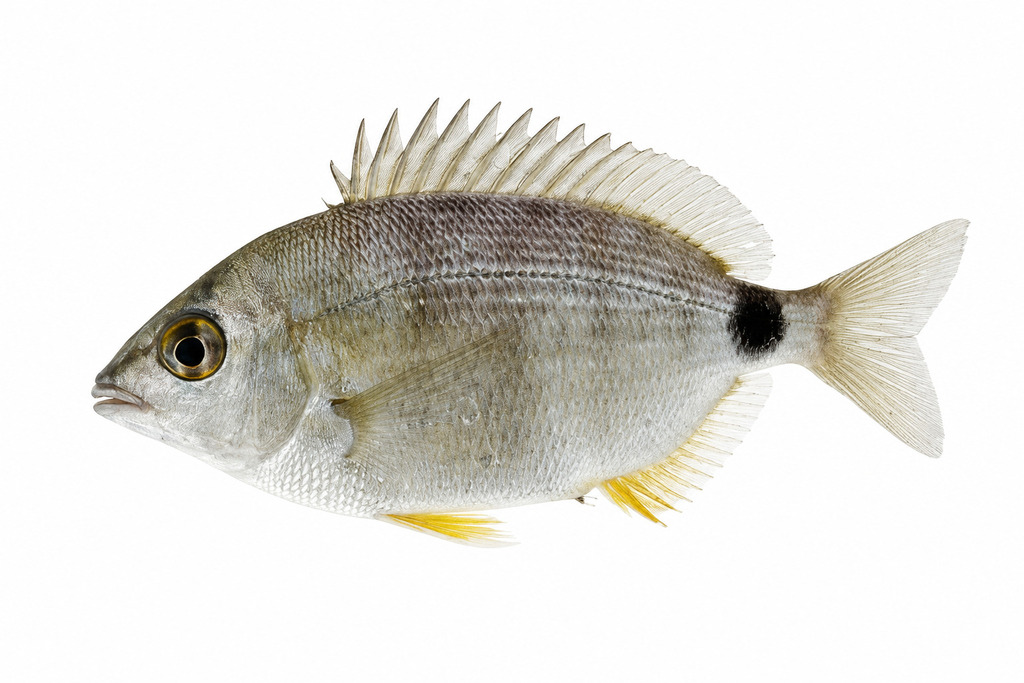
Annular seabream
- Family
- Sparidae
- Depth
- 0–90 m
- Season
- Jan, Feb, Mar, Apr, May, Jun, Jul, Aug, Sep
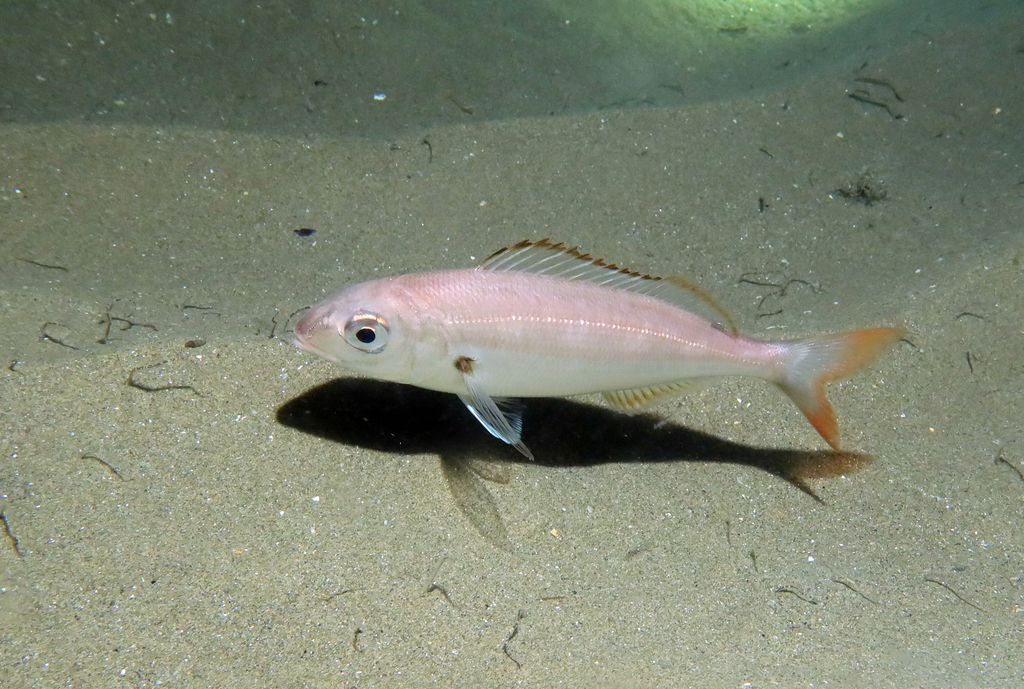
Axillary seabream
- Family
- Sparidae
- Depth
- 0–500 m
- Season
- Jan, Feb, Mar, Apr, May, Jun, Jul, Aug, Sep, Oct, Nov, Dec
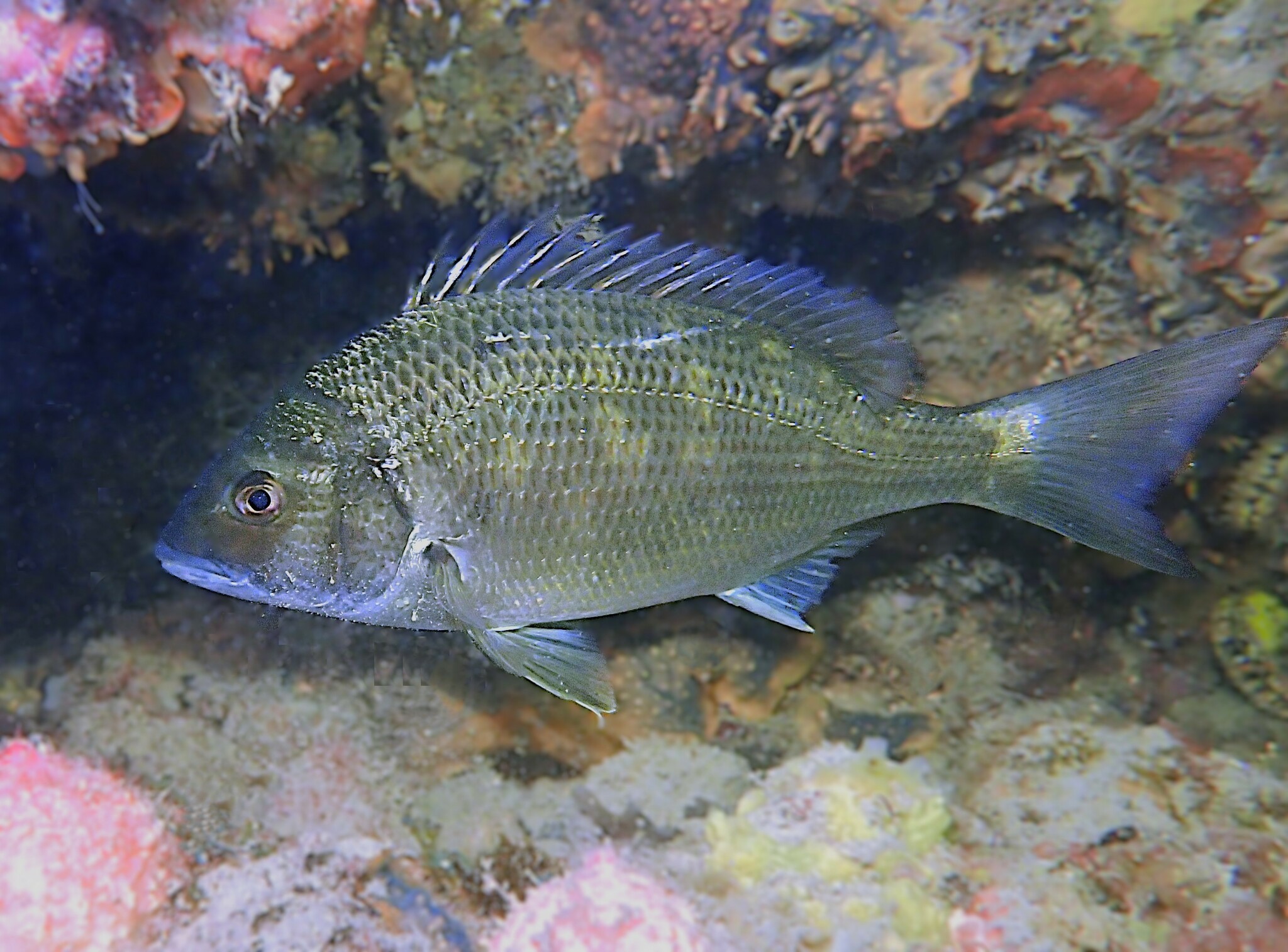
Black bream
- Family
- Sparidae
- Season
- Jan, Feb, Jul, Aug, Sep, Oct, Nov, Dec
Guides for this water
Technique, gear and safety guides that fit Cardinal seabream.