
Opaleye
The opaleye grazes algae off rock, yet almost every one is caught on shrimp. That mismatch is the way into the species: it explains where the fish sits in the kelp, why a small natural bait works, and why winter fish are still catchable but rarely worth targeting. A deep body, a high eye and a blunt snout separate it from the halfmoon on the same reef.
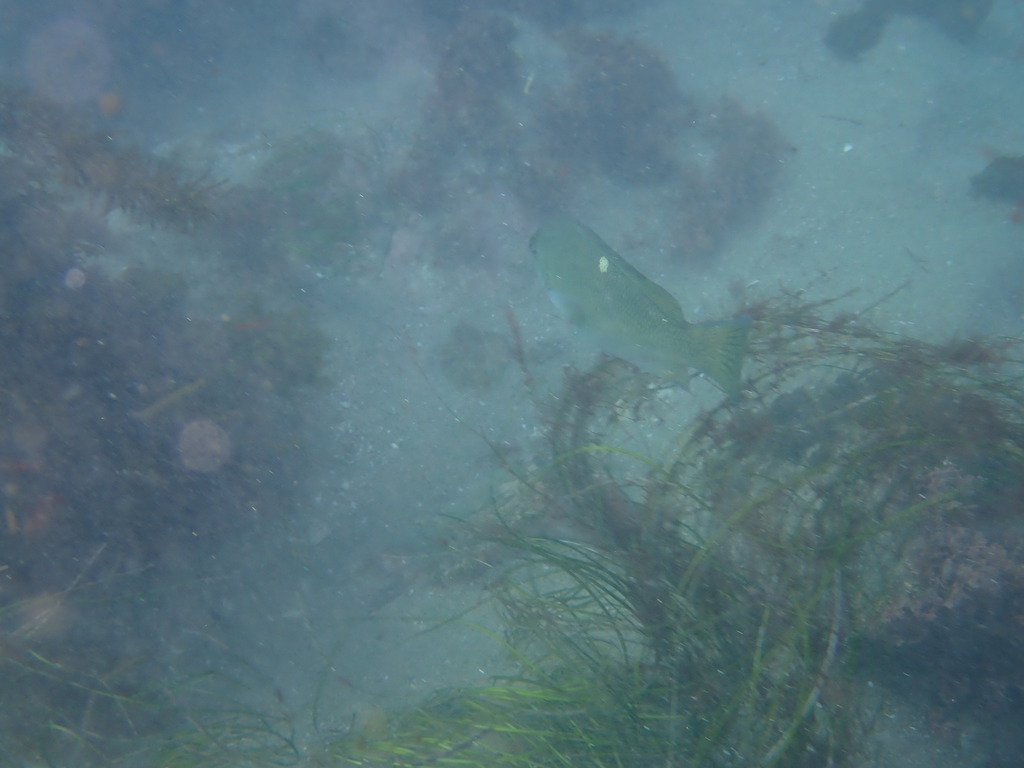
The opaleye grazes algae off rock, yet almost every one is caught on shrimp. That mismatch is the way into the species: it explains where the fish sits in the kelp, why a small natural bait works, and why winter fish are still catchable but rarely worth targeting. A deep body, a high eye and a blunt snout separate it from the halfmoon on the same reef.
A high eye and a blunt snout rule out the halfmoon
Start with the outline. The body is deep and compressed, the snout short and blunt, the eye set high on the head, and adults run dark olive to almost black with a slightly paler belly. Yellow on the tail is never as clear as on a halfmoon, and large adults show it least. The halfmoon, which shares the same rock, is blue-grey, carries a sharper snout, sits the eye lower and reads yellow at the tail at a glance. In poor light, compare snout shape and eye position before colour: those two features survive when the fish is only a silhouette.
A resident of the intertidal edge, not the open reef
FishBase runs the range from San Francisco to southern Baja California. The species is a resident of the intertidal zone with homing behaviour; it can leave a tide pool when the water turns bad and move into neighbouring habitat. It also sits over rock and at the edge of kelp beds, recorded from 2 to 30 m but usually between 2 and 6 m. In Southern California the working water is the outside edge of a breakwater, pier pilings, shallow rock and the kelp margin. The deeper records on the range map mean little to a shore angler. Kelp is the marker to work from: find the weed line, and the rock underneath it holds fish.
Spring schools in the kelp, then a summer spread
FishBase records dense spring schools in kelp beds and calls the species a pelagic spawner, but gives no month-by-month spawning table. Local catches rise with water temperature in late spring, hold through summer and early autumn, and thin in winter when fish fall back to shallow rock and the intertidal edge. That same page gives a tolerance of 0 to 33°C, wide enough to explain winter sightings without making winter a season to plan around. No source here names a preferred feeding temperature, so read water colour and swell instead of a number.
Shrimp bait works on a fish that eats weed
From a breakwater or rock, a float rig with a whole or half shrimp, set to sink slowly along the structure, takes fish that hit as the bait first leaves the rock face. From a boat or kayak, work the kelp margin with a small iron or a soft plastic crawled along the weed line; the fish answers a bait that looks like it is escaping, not one that smells right. Algae is the main food and invertebrates are occasional. Shrimp works because the fish is an opportunist, not because shrimp is its diet. Size the bait to skip the smallest fish, and open the hook gap.
Light spinning gear for a small, thick-lipped mouth
A 7 to 8 foot medium-heavy spinning rod with a 3000 or 4000 size reel covers most of it. Run 20 to 30 lb braid to a 15 to 20 lb fluorocarbon leader, with a 1/0 to 2/0 circle hook or a wide-gap single. Around rock, lengthen the leader past an arm's length so the braid never touches structure. The mouth is small and the lips are thick, so the hookset has to be firm; a locked drag tears the hook through that lip. Release the fish without lifting it clear of the water where the bank allows. It tolerates air, but there is no reason to test the limit. Expect the first run to go down and into the rock, so keep the rod tip free to follow it.
No size limit, but the MPA map still applies
FishBase records the species as marketed fresh and as an important game fish, then stops; it offers no eating quality. With an algae-eating fish, bleeding and icing early does more for the flavour than any recipe, and large fish are better skinned and trimmed of fat. California's general marine bag is 20 fish in total with no more than 10 of any one species, and the opaleye carries no size limit and no closed season (14 CCR § 27.60). Much of the inshore rock and kelp in Southern California lies inside marine protected areas, so check the CDFW MPA map and that year's regulations before keeping anything. A licence is required from age 16, plus the Ocean Enhancement Validation south of Point Arguello.
What FishBase covers and what the catch reports add
Classification, distribution, the 66 cm maximum, the 10 year maximum age, the 2 to 30 m depth band and the 0 to 33°C tolerance all come from FishBase; the family follows GBIF's Kyphosidae. The spring schooling note is FishBase biology, while the month-by-month strength is arranged from Southern California sportfishing reports rather than a survey. Spawning months, juvenile habitat and local population trend are missing, and are listed as pending. The Chinese name follows the project convention of for the genus Girella, with kept as an alias.
How to catch it
Float fishing
A half shrimp on a 1/0 circle hook under a float set a metre or two off the rock, drifting down the structure with the swell; the take usually comes as the bait clears the face.
Slow pitch jigging
A 3 to 4 inch swimbait on a 1/4 to 3/8 oz head, crawled just outside the weed line, paused at structure and started again.
Jigging
A short rod and a bait dropped straight down the piling, lifted and settled through the shadow line where fish hold.
Where these facts come from
Check these pages before you rely on a size, range or protection status.
- FishBase — Girella nigricans — FishBase · T2
- GBIF — Girella nigricans occurrence records — GBIF · T2
- IUCN Red List — Girella nigricans — IUCN · T1
- Photo record — iNaturalist — iNaturalist · T3
Fish in the same water
These fish live in the same place.
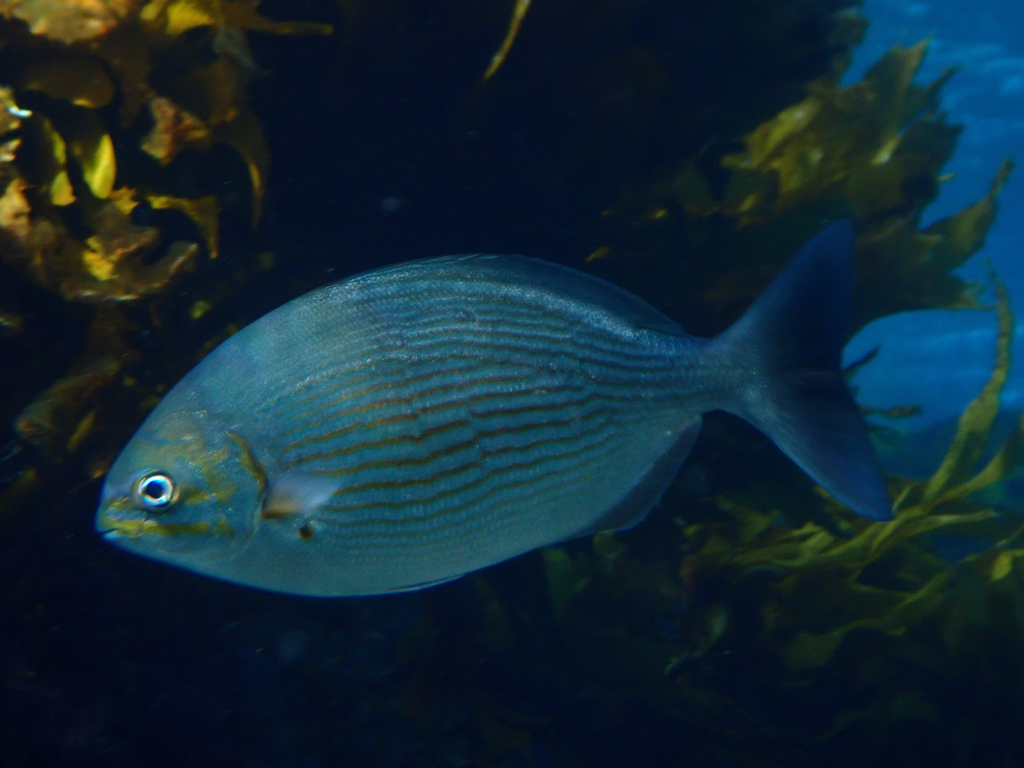
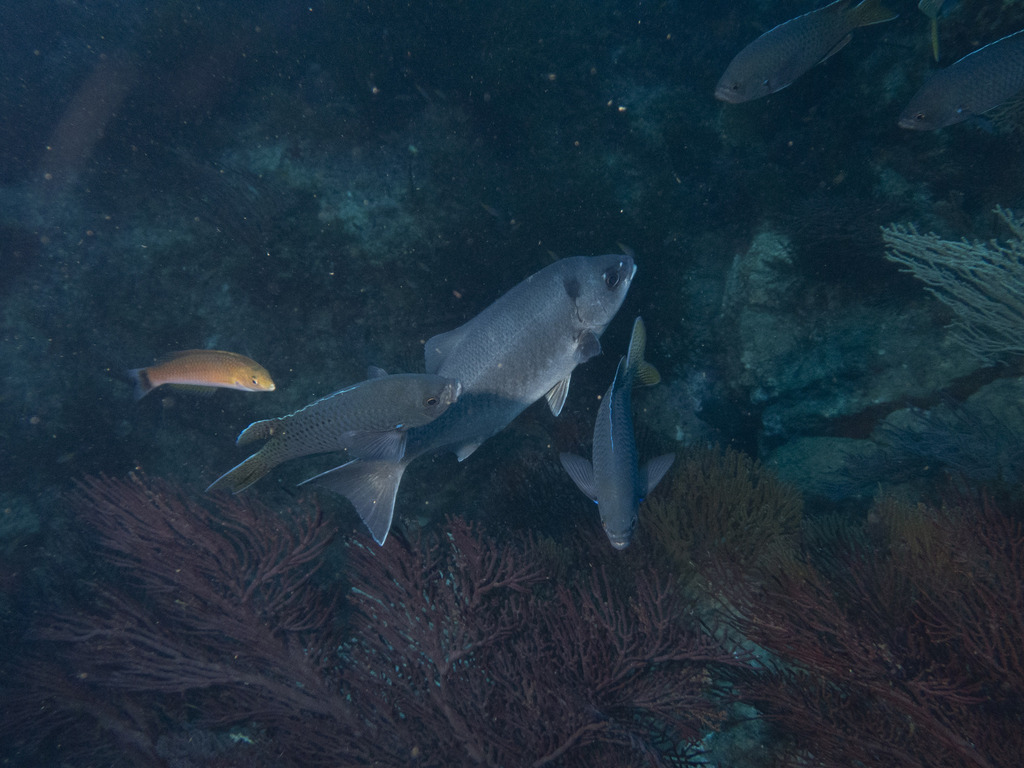
Guides for this water
Technique, gear and safety guides that fit Opaleye.