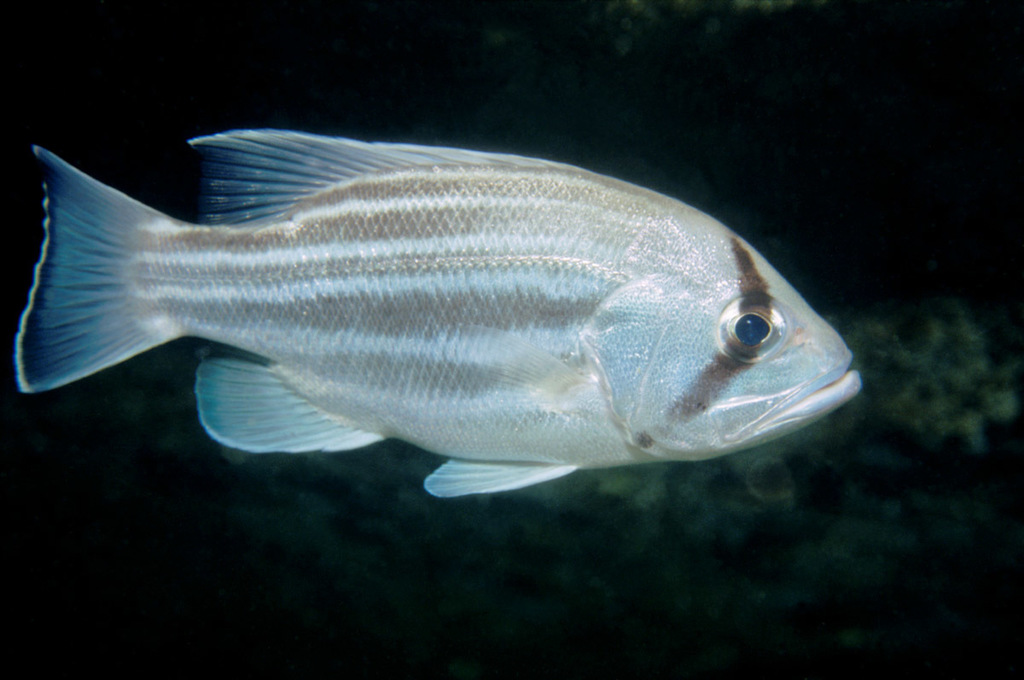
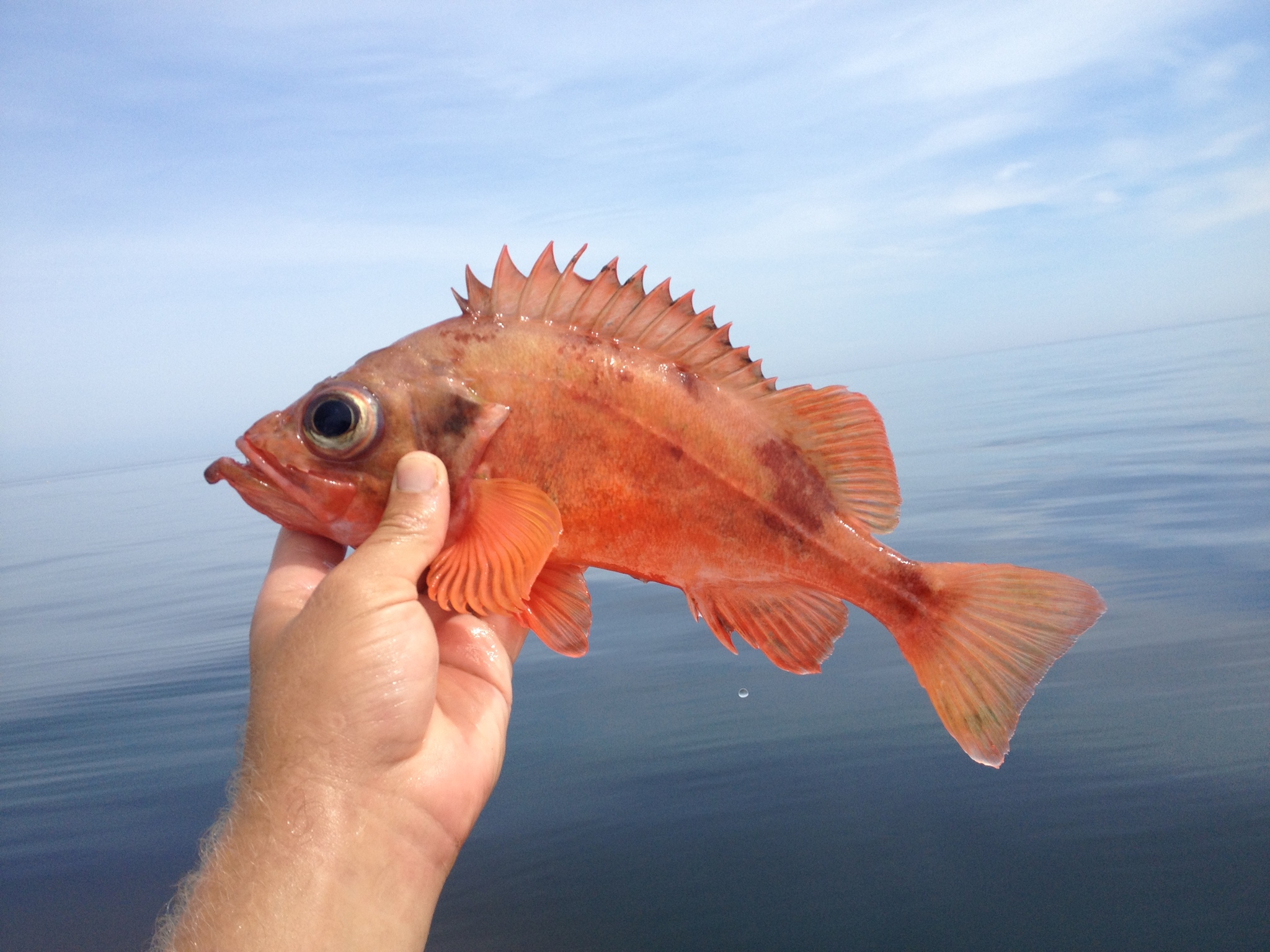
West Australian dhufish (Glaucosoma hebraicum) is a fish of the family Glaucosomatidae. FishBase gives its range as: Eastern Indian Ocean: endemic to Australian waters. Distributed from the Recherche Archipelago off Esperance, to Beagle Island, although they are rare north of Shark Bay. Records from Japan and Taiwan are Glaucosoma buergeri. It is recorded from 1 to 200 m, in subtropical water. The recorded maxima are 122 cm TL, 26 kg. Diet includes fishes. IUCN status: Not Evaluated (NE). Chinese name: .
Identification
Glaucosoma hebraicum sits in the pearl perch family, Glaucosomatidae. FishBase assigns it to Acropomatiformes, while other classifications still place the same family under Perciformes, so the two systems disagree above family level while agreeing on the family itself. Wikipedia credits the 1845 description to Richardson and lists Glaucosoma burger and Glaucosoma lineata among the synonyms attached to the name.
On the water it is simply the dhufish. The English table adds Dhuie, Jewie and the FAO label Westralian jewfish, which are local handles rather than separate names. Chinese and Japanese entries exist under their own characters and romanisation. For regulations, quote the scientific name, because the handles change from state to state.
The size line is where the record stops being straightforward. Maximum length is 122 cm TL, common length 80 cm TL, maximum published weight 26 kg. The maturity field gives a single figure, 30.1 cm, and the range printed beside it begins at 59 cm. A point estimate that sits outside its own interval cannot describe the same population, and with no age figure there is no growth curve to adjudicate between them. Take the 80 cm common length as the description of the stock, and do not use 30.1 cm as a release threshold, because nothing on the page supports that use.
Depth and ground
The environment line reads marine, reef-associated, non-migratory, 1 to 200 m, subtropical between 16°S and 36°S. There is no usual-depth band, which is a real gap: the species is recorded across that whole vertical band, and the page will not say where most of the records sit within it.
The ground terms on the page describe rock, coast, shelf and depth, while the milieu tag says reef. For a boat those are the same instruction: fish structure that will hold a sinker, expect to lose gear, and keep the rod tip high over the ledge instead of fishing open sand.
Diet and home range
Diet is entered as fishes, with no crustacean or cephalopod prey on the page. That is a narrow entry for a fish that reaches 26 kg, and it more likely reflects how few stomachs have been examined than a refusal to take crabs. The non-migratory tag is the more useful line: this is a fish with a home range, so a mark that produced one fish is worth revisiting, and a reef that has been emptied stays empty for a long time.
Seasonal window
The spawning table gives January to April and November to December. Two rows support it. The first, from the west coast between 32°32'S and 28°35'S in 1996-99, names January, February, March, April, November and December; the second, a Western Australia row, names January, February, March, November and December, without April. No winter month appears in either row, which in the southern hemisphere puts the window in austral spring through autumn.
Wikipedia adds that the species is heavily targeted while it aggregates to spawn, and that recreational anglers make up a large part of that pressure. The aggregation is the useful detail: spawning fish concentrate on particular ground, which is exactly why the season attracts boats. The page records no egg or larval season and no temperature trigger, so those months describe when ripe fish were sampled, not a water-temperature rule you can carry to another coast.
Gear and approach
A fish that reaches 122 cm and 26 kg calls for tackle that can stop it before it reaches the cave. A 30-50 lb braid main line, a 60-80 lb leader and a reel with a locked drag are the working range; a light outfit will handle the 80 cm common fish but has no answer for the top end.
That 80 cm common length is the most defensible number on the page, because the Wikipedia summary agrees with it and no other field contradicts it. The maturity figure is not usable in the same way, for the reason given above. If you intend to release, decide before the fish comes aboard: at 100 m it arrives with an expanded swim bladder, and a fish that cannot get back down will not survive the release even if it swims away.
Edibility and regulations
FishBase records commercial and gamefish use. Wikipedia calls it the "Jewel of the Crown" and credits its reputation to eating quality as much as to size. That reputation is the reason the species is under pressure, and the same page notes aggregation fishing during the spawn.
The conservation fields give an angler nothing to work with. There is no IUCN assessment for the species, so no external benchmark can be cited for a keep limit, and the only rule that binds is the one written by the state of Western Australia, which sets minimum length, daily bag and any closure. Read the state instrument, not this page.
Where to look
The distribution text is unusually precise. The species is endemic to Australian waters, running from the Recherche Archipelago off Esperance to Beagle Island, and it is described as rare north of Shark Bay. That is a southern Western Australian range, not an Australian one.
The country table is less reliable than that sentence. It lists Australia and Japan, but the same page states that records from Japan and Taiwan region are Glaucosoma buergeri, not this species. The Japan row is therefore a historical misidentification carried forward by the country table, and the fish should be treated as Australian.
GBIF adds nothing here. The usage key 2374651 returns no distribution rows at all, and this page does not infer a range from an empty table. OBIS is the independent check that does return data: 400 records from 17 datasets, spanning 1954 to 2026, with sampled rows overwhelmingly Australian and a small number tagged Japan. iNaturalist holds 188 observations. Put the two together and the search area is the southern coast of Western Australia, on reef, between Esperance and Shark Bay.
Regulations before you keep it
These are the published regulations for this fish. Read the number first. The notice below it is the actual regulation.
Bag limit1
1 WA dhufish per fisher per day · 2 demersal scalefish mixed bag · 4 per boat
Australia — Western Australia · AU-WA
In Western Australia's West Coast bioregion, the daily bag is 1 WA dhufish per fisher within a 2-fish mixed demersal bag, with a 4-fish boat limit; size limits for WA dhufish have been removed.
Boat fishing for demersal scalefish is closed 1 February–31 March, 1 August–15 September and 15 October–15 December. Land-based fishing is open all year.
A boat limit of 4 demersal scalefish per vessel. A mixed-species daily bag limit of 2 demersal scalefish, including WA dhufish... Removal of size limits for West Australian dhufish...
Season / closure1
Boat-based demersal fishing closed until spring 2027
Australia — Western Australia · AU-WA
Western Australia: recreational boat-based fishing for demersal scalefish in the West Coast bioregion (Kalbarri to Augusta) is closed until spring 2027. Land-based line and spear fishing continues year-round outside existing spawning closures; spearfishing for West Australian dhufish is not permitted.
It is prohibited to have demersal scalefish on a boat during the closure, even if the fish were caught elsewhere.
Recreational fishing for demersal scalefish by boat is closed until Spring 2027. The closure does not apply to land-based recreational fishers who can continue to fish for demersal scalefish year round, outside of existing spawning closures. This includes land-based fishing by line or spear. Note: Spearfishing for West Australian dhufish is not permitted.
Gear / method1
Shore-based spearfishing for WA dhufish prohibited
Australia — Western Australia · AU-WA
In the West Coast bioregion, shore-based spearfishers may not fish for WA dhufish.
Note that shore-based spearfishers are not permitted to fish for WA dhufish.
Every record above names its source and the date it was retrieved. See the regulation register for the full list, or how to read these regulations.
Where these facts come from
Check these pages before you rely on a size, range or protection status.
-
FishBase — Glaucosoma hebraicum
— FishBase · T2
-
GBIF — Glaucosoma hebraicum occurrence records
— GBIF · T2
-
IUCN Red List — Glaucosoma hebraicum
— IUCN · T1
-
Photo record — iNaturalist
— iNaturalist · T3