
Mexican barred snapper
The body is deep and compressed, with a head profile that slopes and is slightly convex, and a prominent snout. The anterior nostril is long and tubular, while the posterior nostril sits in a deep furrow, a combination that is easy to see on a fresh fish. The preopercle is deeply notched, and the post-opercular notch and knob are strong. Teeth on the vomer and along the sides of the jaws are molariform, built for crushing rather than slicing.
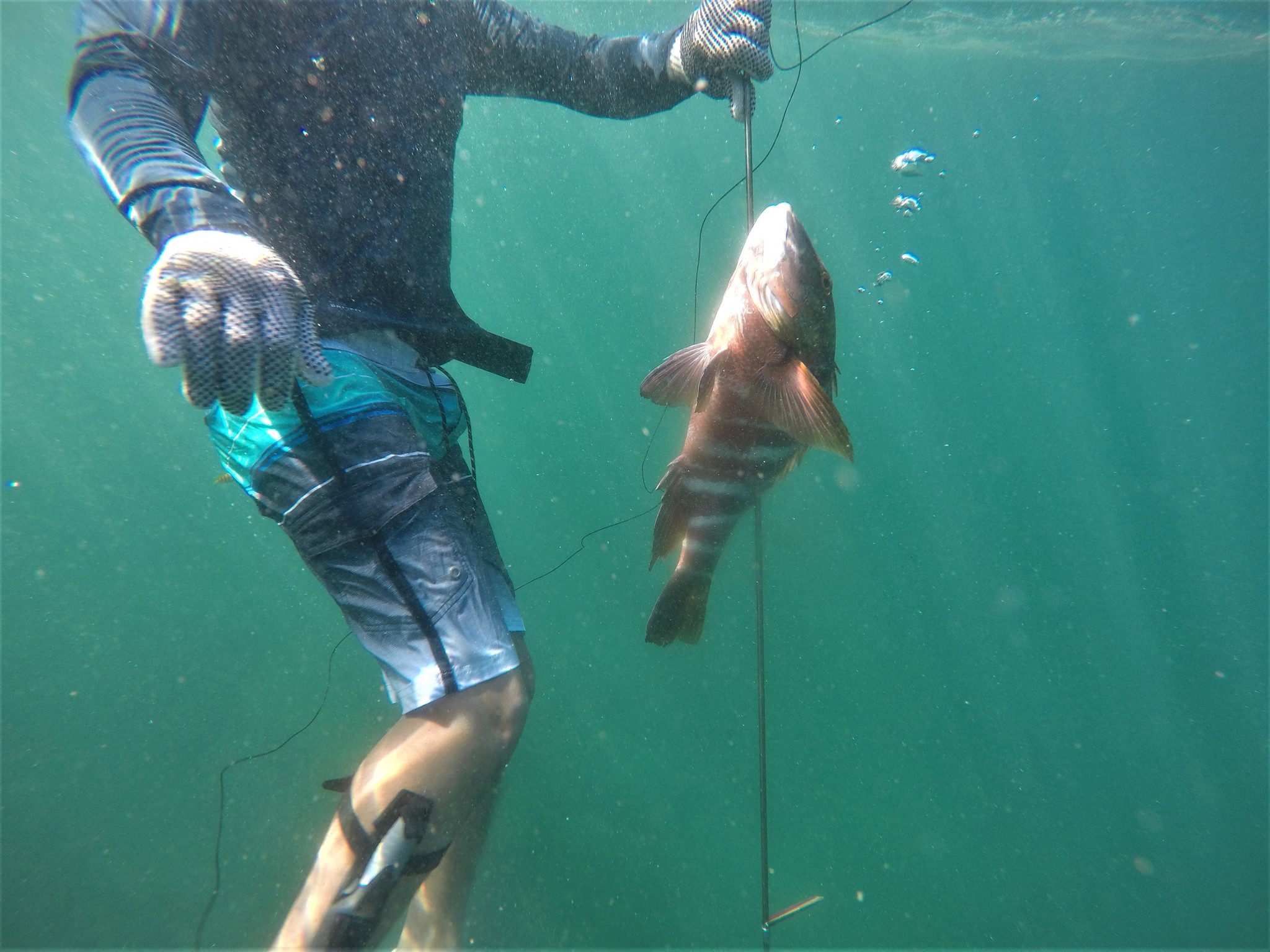
The body is deep and compressed, with a head profile that slopes and is slightly convex, and a prominent snout. The anterior nostril is long and tubular, while the posterior nostril sits in a deep furrow, a combination that is easy to see on a fresh fish. The preopercle is deeply notched, and the post-opercular notch and knob are strong. Teeth on the vomer and along the sides of the jaws are molariform, built for crushing rather than slicing. The lower branch of the first gill arch carries 11–15 rakers. Colour is greenish brown on the back with a pink belly, and the flanks carry about eight brownish blue vertical bars. Scale rows on the back run parallel to the lateral line, which is a quieter detail but a useful one when the bars have faded on deck.
Mexico to Colombia, shallow rock
The range text is short: eastern Pacific, Mexico to Colombia. The coordinates run 35°N to 5°S and 120°W to 76°W, and the country table adds Costa Rica, Ecuador, El Salvador, Guatemala, Honduras, Nicaragua, Panama and the Galápagos. Adults are generally found over rocky bottoms near coral reefs, down to at least 40 or 50 m, and juveniles may enter rocky littoral pools. That last detail explains why small fish turn up in places that look too shallow for a snapper.
GBIF holds 969 records, with Mexico at 493, Colombia at 211, Panama at 109, Ecuador at 89 and Costa Rica at 45. The centre of gravity is Mexican, which matches the range and the fishing pressure. iNaturalist has 419 observations, a large number for a regional species and a sign that it is encountered by divers and anglers alike.
Wind at nine
No spawning month is given. With a 0–50 m range, water temperature does matter here, unlike the deep-water snappers, and the shallow band responds to seasonal warming. The practical window, though, is daily rather than annual: on the Mexican Pacific coast the wind comes up quickly in the morning, and the usable hours often run from first light to about nine. After that, move to the lee side rather than fight it.
Structures fish best around the change of tide, when fish holding on rock move along the edge. At slack water, place the bait just off the outer edge and wait, rather than dropping it into the rock.
A bite that feels like weight
Boat fishing over rocky structure is the main approach, with cut fish or squid on a single hook. A small heavy jig bounced along the rock edge and around isolated pinnacles is the second method, and casting bait from rocky points into deeper water at dawn and dusk is the third.
The bite is often dull: weight arrives before any tap, so lift when the line loads rather than striking at the first tremor. Baits are cut fish, squid and whole shrimp, matching a diet of fishes and bottom invertebrates. Fish the outside edge of the reef, not the top, because that is where a fish holding on structure can see a bait and still reach it.
Stop it before the rock
The record reaches 92 cm and 9.6 kg, with a common length of 50 cm, so the average fish is manageable and the big one is not. Use braid for contact, a fluorocarbon leader for abrasion, and a drag set to turn a fish on the first run rather than after it has reached a crevice. A single hook is easier to remove and less likely to catch the rock than a treble.
From shore, a longer rod helps keep the line above the rocks at the margin. The first seconds decide the fight: apply side pressure early and walk the fish away from the edge instead of pumping straight up.
Ten fish, five of one kind
FishBase records subsistence fishing, gamefishing and public aquariums as uses, and notes the fish is caught with handlines and marketed fresh. Mexico's federal rule, NOM-017-PESC-1994 as revised in 2013, allows ten fish per angler per day with no more than five of a single species. A personal recreational permit is required for everyone aboard over twelve, shore fishing needs no permit under the NOM but the limits still apply, permits are not transferable and must be carried, and recreational catch cannot be sold.
Baja California sells state permits online, with 2024 reference prices of 188 pesos for a day and 941 for a year; Baja California Sur uses the FONMAR system. Any boat carrying tackle in Mexican waters needs a permit for each person aboard, and national parks or reserves require an additional pass. Some species have local spawning closures, so check CONAPESCA and state notices before travelling.
Notes on a thin record
The entry draws on FishBase for taxonomy, range, meristics, depth, diet and use, GBIF for national records, iNaturalist for the taxon link and 419 observations, and FAOLEX and the two Baja permit portals for the rules. No maximum age and no spawning month are recorded, so neither is quoted. The packet's region list includes the United States, while the FishBase country table begins at Mexico; the profile here follows the country table and flags the difference. Permit prices are 2024 references and should be checked before purchase.
How to catch it
Bottom fishing
Fished with the listed approach, matched to the recorded depth and size.
Jigging
Fished with the listed approach, matched to the recorded depth and size.
Shore fishing
Fished with the listed approach, matched to the recorded depth and size.
Where these facts come from
Check these pages before you rely on a size, range or protection status.
- FishBase — Hoplopagrus guentherii — FishBase · T2
- GBIF — Hoplopagrus guentherii occurrence records — GBIF · T2
- IUCN Red List — Hoplopagrus guentherii — IUCN · T1
- Photo record — iNaturalist — iNaturalist · T3
Fish in the same water
These fish live in the same place.
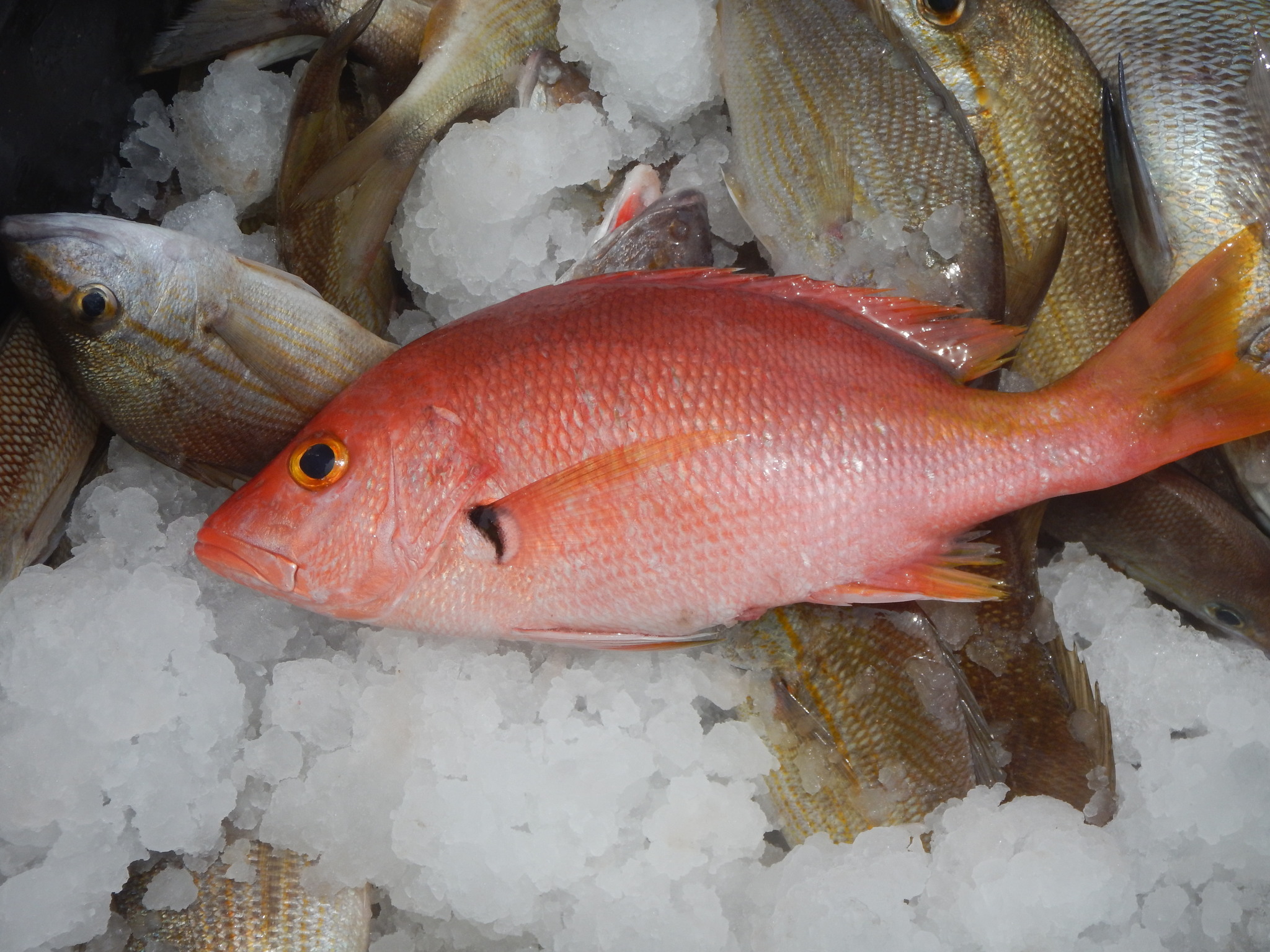
Blackfin snapper
- Family
- Lutjanidae
- Depth
- 20–200 m
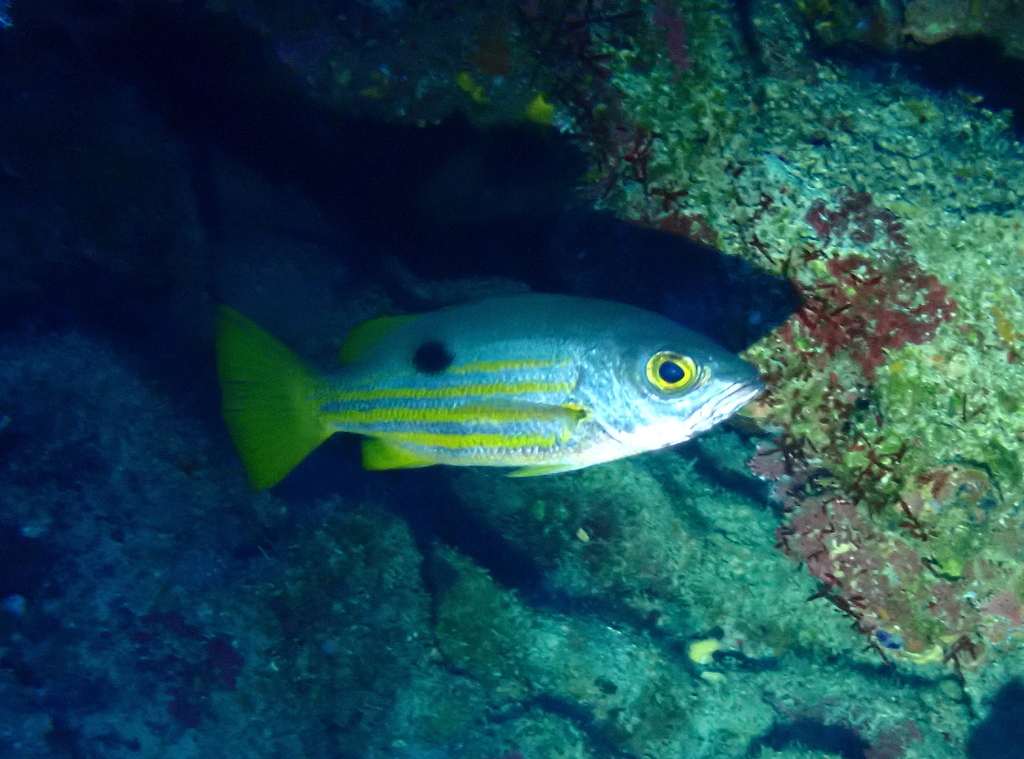
Blackspot snapper
- Family
- Lutjanidae
- Depth
- 5–20 m
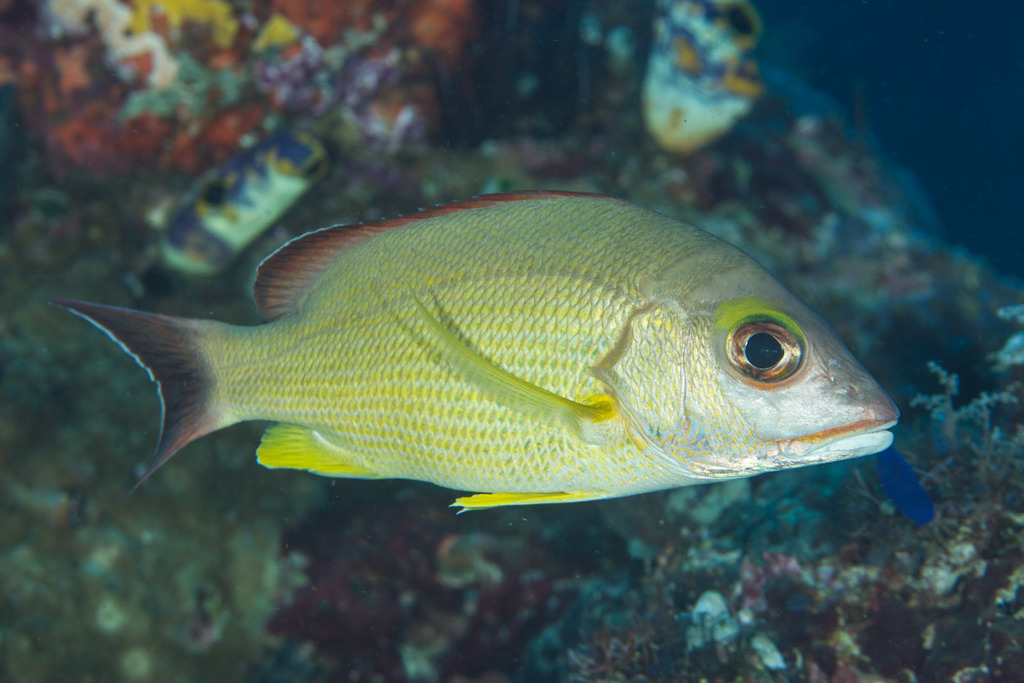
Blacktail snapper
- Family
- Lutjanidae
- Depth
- 1–80 m
- Season
- Jan, Feb, Mar, Apr, May, Jun, Jul, Aug, Sep, Oct, Nov, Dec
Guides for this water
Technique, gear and safety guides that fit Mexican barred snapper.