
Walleye surfperch
The walleye surfperch is close to unmistakable in the wash: an eye too large for its head, a silver body, and a mouth small enough that it can only pick. It is the common small surfperch along Southern California beach slopes, and the one most often slipped into the bag under the surfperch aggregate of 20 with a 10-fish single-species cap.
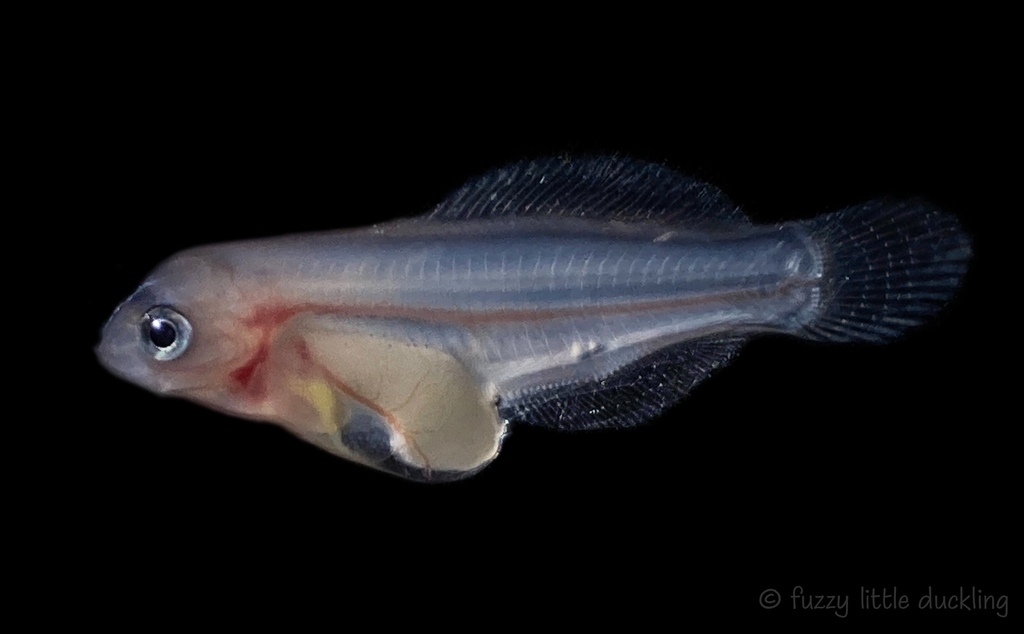
The walleye surfperch is close to unmistakable in the wash: an eye too large for its head, a silver body, and a mouth small enough that it can only pick. It is the common small surfperch along Southern California beach slopes, and the one most often slipped into the bag under the surfperch aggregate of 20 with a 10-fish single-species cap.
An eye out of proportion, and black pelvic tips
Start with the eye. Its diameter takes up more of the head than in any other local surfperch, which is where the name comes from and the fastest check at the rail. The body is bright silver with a deep blue back and a pale belly. The tips of the pelvic fins are black and the rear edge of the tail is dusky, two small marks that read better against pale sand than overall colour does. The mouth is small and the snout short. Young fish carry narrow golden vertical bars; adults do not. Next to a shiner perch it is the larger fish, 30 cm against 20, and it has no yellow bands.
Sand in the wash, and the piers behind it
FishBase runs the range from Vancouver Island to central Baja California, including Guadalupe Island. The fish sits close to sand, recorded down to 18 m with no lower figure given, in the surf of sand beaches, over sand near rocks, and around piers, often in dense schools. In Southern California the catch comes from the beach slope, sand outside a river mouth, and the inside of a pier, and the fish follow small shrimp into patches where swell lifts the sand. The Guadalupe Island record is an offshore note, not a regular destination. Depth matters less than the presence of sand and moving water.
Spring start, autumn peak, no spawning table
FishBase gives no month-by-month spawning table; the species is viviparous and usually bears five to twelve young. In Southern California the fishing starts as the water warms in spring, holds through summer and autumn, and continues in winter with scattered fish rather than schools. In the surf they gather tightly, and on a day with the right swell the bites come one after another. When the water muddies or the swell gets too big, the fish move a little deeper. No preferred temperature is listed, so read colour and swell, because the difference between a rising and a falling tide on one beach often beats the difference between two months.
Carolina rigs in the surf, small plastics close
Surf fishing is the main approach: a Carolina rig with a one to two-ounce flat sinker holds the bait just above the sand and lets the wash move it. Baits are sand crabs, bloodworms or a short piece of shrimp, and the hook stays small because the mouth is small. Light lures work too, a one to two-inch soft plastic on an eighth-ounce head dragged slowly along the bottom, imitating the small crustaceans it eats. Inside a pier or breakwater, a float holds the bait just off the bottom and keeps it out of the rocks. When one fish comes, stay put: the school is usually still there.
Eight feet of light rod and a short leader
An eight to nine-foot light surf rod with a 2500 to 3000 reel, 10 to 15-pound braid and a 6 to 8-pound fluorocarbon leader. Hooks run from size 4 to 1, on a Carolina rig or a small drop-shot. The light leader is there to keep the bait behaving naturally over clean sand, and because the mouth is small and the suction weak. Use flat sinkers and go heavier when the current builds, so the rig stops being pushed along by the wash. Sand does not cut line, but the wash buries it; twitch the rod tip before reeling to check the line is still free.
Twenty surfperch, ten of them this one
The flesh is white and sweet, the fish is small, and scaled and fried whole or pan-fried it is at its best; the bones are fine, so pick them out for children. California allows a 20-fish aggregate across the surfperch family with no more than 10 of any one species (14 CCR § 28.59); San Francisco Bay and San Pablo Bay carry a separate five-fish aggregate. There is no size limit; surfperch are closed in San Francisco Bay and San Pablo Bay from April 1 to July 31, shiner perch excepted, so Southern California has no closed season. State waters, generally out to 3 nautical miles, and federal waters from 3 to 200 can differ, and much of the Southern California beach and reef lies inside marine protected areas. A licence is required from 16, plus the Ocean Enhancement Validation south of Point Arguello.
What FishBase measures and what it does not
The 30 cm maximum, the six-year lifespan, the 18 m depth ceiling, the Vancouver Island to Baja range, the surf and sand habitat and the five to twelve young per brood all come from FishBase; no maximum weight and no lower depth limit are given. IUCN has not assessed the species, and FishBase lists no rating, so this entry records NE. The 20-fish aggregate with a 10-fish cap comes from 14 CCR § 28.59. The month-by-month pattern is Southern California surf experience rather than survey data, and the eye-size comparison is relative description with no measurement behind it.
How to catch it
Carolina rig in the wash
A one to two-ounce flat sinker with half a metre of leader, letting the bait swing above the sand.
Boat bottom fishing
A one to two-inch soft plastic on an eighth-ounce head, retrieved slowly across the flat.
Float fishing
A float set just off the bottom keeps the bait clear of barnacled pilings.
Where these facts come from
Check these pages before you rely on a size, range or protection status.
- FishBase — Hyperprosopon argenteum — FishBase · T2
- GBIF — Hyperprosopon argenteum occurrence records — GBIF · T2
- IUCN Red List — Hyperprosopon argenteum — IUCN · T1
- Photo record — iNaturalist — iNaturalist · T3
Fish in the same water
These fish live in the same place.
Guides for this water
Technique, gear and safety guides that fit Walleye surfperch.