
Blackfin seabass
How deep this species sits, how big a typical fish is, and when it spawns are three separate questions, and the answers sit in different places. This page follows each one back to the source that actually measured it instead of borrowing a number from a summary. That is the first thing to understand about the blackfin seabass — it is a fish you have to look up in more than one book.
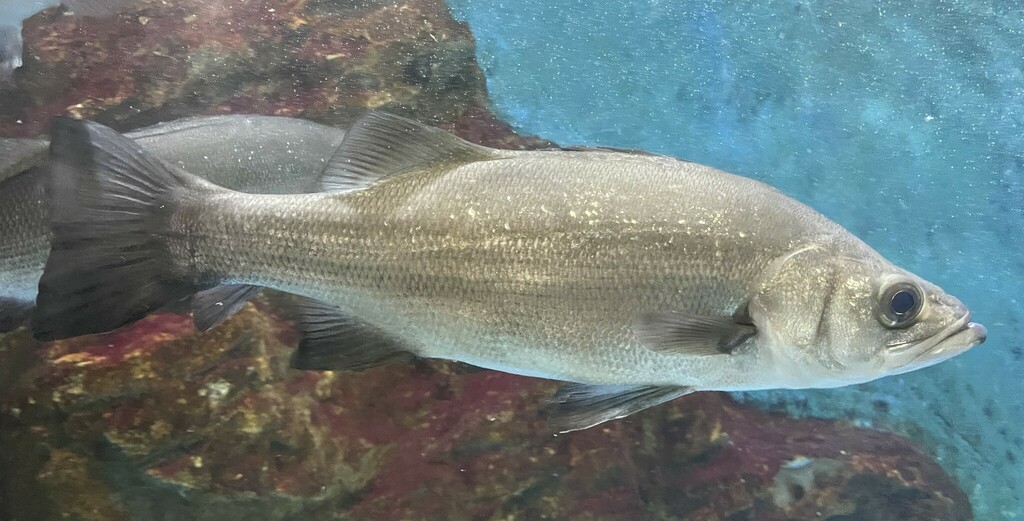
How deep this species sits, how big a typical fish is, and when it spawns are three separate questions, and the answers sit in different places. This page follows each one back to the source that actually measured it instead of borrowing a number from a summary. That is the first thing to understand about the blackfin seabass — it is a fish you have to look up in more than one book.
Depth by the coast, size by the study
The depth question is settled by the coast, not by a table. This is a shore-caught fish, taken from the wash and the drop-off at the base of the rock, and that is where any statement about its depth has to start. A figure pulled from a general database would be worse than the absence of one, because it would invite you to fish water the animal does not use.
The size question is settled by a study of 373 fish collected over eight years in south-western Japan, which is the only source here that measured individual animals rather than repeating a catalogue entry. The season question is settled by the same study, and that is the honest limitation: it describes one stretch of coast. Take the season locally, with a stated place, rather than globally with a guess.
Rock is the only structural word
The habitat field for this species is short: rocky. That single word does more work than a list would. Rock on a coast means exposure — waves breaking on a hard shore, white water, and very little boat access. It is the kind of ground where anglers stand on ledges and cast into the wash rather than drift over a mark.
It also explains why the fish is not encountered in muddy bays or over sand flats. The animal is tied to hard, oxygen-rich coastline where current and surge deliver prey. Fish the outside edge of the wash, where the rock face drops into deeper water, and the fish is there for the same reason the bait is.
Two years, thirty-eight centimetres
The study behind these figures is based on 373 fish collected over eight years in south-western Japan. It found that both sexes mature at two years of age, at a standard length of 379 millimetres for females and 362 for males. That is the first number worth carrying: a fish of about 38 centimetres has already spawned, and anything much below it has not.
For a shore angler the practical line is therefore simple. Below roughly 38 centimetres, release costs the population nothing and buys it something. Above that, the fish has reproduced at least once and the decision is about dinner. The legal rule, where one exists, may sit at a different number; the biological one is the one that decides whether keeping a fish takes anything from next year.
January to March
The same study fixes the main spawning period at January through March in that region. This is a winter spawn on exposed coast, which matches the season when the rock is at its most dangerous and the fish are at their most concentrated. In practice, January to March is the window when a captured fish is most likely to be a spawning one, and the window when the weather keeps most people ashore anyway.
Outside that window the fish are feeding and recovering, and a release does the least harm. The season is not a closed season in law; it is the season when releasing matters most.
Eleven years, fast growth
The oldest fish in the study were eleven years old, and both sexes grew quickly, with females reaching larger sizes than males of the same age. A fast-growing fish that lives a decade is a different proposition from a slow-growing one: it can absorb some fishing pressure and recover reasonably quickly, which is why this species has supported both commercial and recreational fisheries without the collapse that slower species suffer.
The maximum recorded length is 94 centimetres. A fish of that size is rare and old, and it is the one most worth photographing and releasing rather than keeping.
Where the dots are
GBIF's occurrence records for this species are overwhelmingly Japanese: of 443 records, 421 are from Japan, nine from South Korea and two from Taiwan, China. That is not a statement about the fish's true range so much as about who submits records; the species is a Japanese fish in the data even where it occurs elsewhere.
iNaturalist adds a thin layer of photographs, useful for seeing what the fish looks like in the water rather than for estimating how many there are. For a shore species on exposed coast, the observation base is also biased toward the places people can safely stand.
The practical reading is that this is a central-Japan fish first and a Korean one second. If you are looking for it elsewhere, the records will not help you much.
A lure for a predator
The study describes the species as a major predator in rocky coastal ecosystems, and that is the whole tactical brief. A predator on an exposed shore is looking for wounded baitfish in the wash, so the lures that work are the ones that can be held in broken water: minnows, slim metal jigs and surface lures that can be worked without snagging.
Light gear is not a preference here, it is a necessity. The fish fights in the surge, and a heavy rod cannot be held steady on a wet ledge. A long rod, a reel that survives salt, and a landing plan that does not involve a net swinging in the wash — those are the practical requirements, not the brand names.
On the plate, and in the name
This is a fish that both commercial and recreational fisheries target, and its flesh is well regarded in Japan. It is usually sold as a whole fish or as fillets, and the cooking that suits it is the cooking that suits sea bass generally.
The naming is where a buyer gets lost. English calls it the blackfin seabass, and the same two words are used loosely for the other Lateolabrax species, including the one that dominates Japanese aquaculture. In Japanese the two have separate names, and only those names distinguish the wild rocky-coast fish from the farmed one. A menu in English will not make the distinction for you.
Where these facts come from
Check these pages before you rely on a size, range or protection status.
- FishBase — Lateolabrax latus — FishBase · T2
- GBIF — Lateolabrax latus occurrence records — GBIF · T2
- IUCN Red List — Lateolabrax latus — IUCN · T1
- Photo record — iNaturalist — iNaturalist · T3
Fish in the same water
These fish live in the same place.
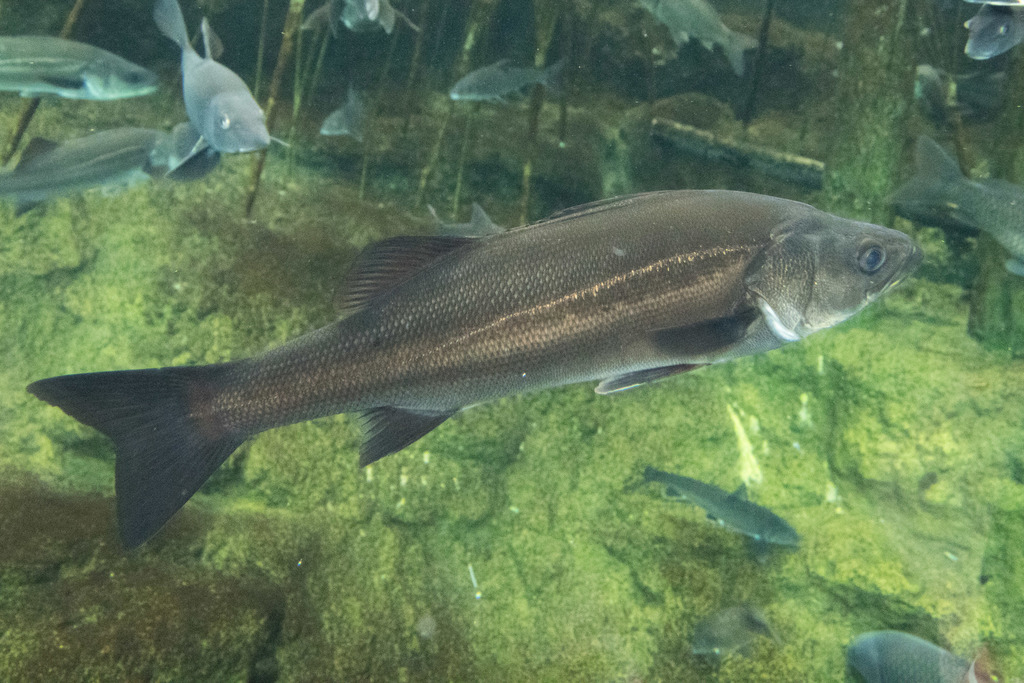
Japanese seabass
- Family
- Lateolabracidae
- Depth
- ≥ 5 m
- Season
- Jan, Feb, Mar, Apr, May, Jun, Jul, Aug, Sep, Oct, Nov, Dec

Acoupa weakfish
- Family
- Sciaenidae
- Depth
- 1–20 m
- Season
- Jan, Feb, Mar, Apr, May, Jun, Jul, Aug, Sep, Oct, Nov, Dec

American angler
- Family
- Lophiidae
- Depth
- 0–800 m
- Season
- Mar, Apr, May, Jun
Guides for this water
Technique, gear and safety guides that fit Blackfin seabass.