
Rock sole
Rock sole has no dorsal spines and 65–82 dorsal soft rays, 50–65 anal soft rays and 39–42 vertebrae. The dorsal origin sits over the forward part of the eye, the caudal fin has a broad V-shaped rear margin, the pectorals are small and may be asymmetrical, and the blind side is white with glossy highlights along the myotome margins.

Rock sole has no dorsal spines and 65–82 dorsal soft rays, 50–65 anal soft rays and 39–42 vertebrae. The dorsal origin sits over the forward part of the eye, the caudal fin has a broad V-shaped rear margin, the pectorals are small and may be asymmetrical, and the blind side is white with glossy highlights along the myotome margins. There are 3–9 supraorbital pores, 5–7 preopercular pores and 70–91 lateral-line pores. Maximum length is 58 cm TL, maximum weight 1.8 kg, maximum age 26 years and maturity 34.7 cm. The V-shaped tail and the lateral line are the quickest field marks.
Habitat and behaviour
The range runs from Baja California to the eastern Aleutian Islands and the extreme southeastern Bering Sea. The country table lists Alaska, Canada, Japan, both Koreas, Russia and the contiguous United States. It is demersal from the surface to 575 m, usually 0–183 m, from the shallow subtidal to the outer slope. Sand, gravel and soft mud are the main bottom types, and the fish lies on the surface by day, relying on colour to hide. GBIF holds 89443 records, 82213 from Canada, 7073 from the United States, 18 from Russia, 12 from Japan and 4 from South Korea; iNaturalist has 851 observations.
Seasonal window
Spawning is recorded from February to June, with the Bering Sea record from March to June and Puget Sound from February to April. Southeast Alaska does not list rock sole separately, and unlisted species have no daily limit. British Columbia allows 8 flatfish and sole a day. Washington's coastal bottomfish season runs from the second Saturday in March to the third Saturday in October, with 5 flatfish allowed on top of the bottomfish bag. The California recreational limit is not verified in the public summary and is marked deferred. Spawning is in spring, and shallow sand is easier to reach in spring and summer, so the window follows the open season.
Gear and approach
At 58 cm and 1.8 kg, an ordinary medium-light boat rod or a shore rod is enough, with a tip that reads the change from sand to gravel. Braid with a clear leader is fine, since sand abrades less than rock. Circle or wide-gap hooks make it easy to release small fish. Lead is set by current and depth: too little and the bait lifts, too much and it drags dead. Keep a net ready, because a flatfish turns broadside at the surface and can come off at the boat.
Edibility and regulations
The flesh is white and fine, good steamed, pan-fried or in soup; bleed, gill and ice the fish quickly, as the fillets are thin. Southeast Alaska does not list rock sole, and unlisted species have no daily limit. British Columbia: 8 flatfish and sole a day. Washington: 5 flatfish may be added during the coastal bottomfish season, but the current text was not retrieved, so check the announcement. California: the rock sole limit is not verified in the public summary and is marked deferred. IUCN lists it as Least Concern, assessed on 13 August 2020; CITES and CMS Not Evaluated.
Where to look
FishBase supplies taxonomy, morphology, distribution, spawning, IUCN status and use; GBIF supplies occurrences; iNaturalist supplies observations and images. Regulations come from the four agencies' public summaries, and the Washington and California entries are unverified. The Canadian share of GBIF records follows trawl survey coverage and does not mean the United States has few fish. The seasonality curve is an editorial judgement, not catch data.
How to catch it
Boat drift fishing
Fished with the listed approach, matched to the recorded depth and size.
Jigging
Fished with the listed approach, matched to the recorded depth and size.
Surf fishing
Fished with the listed approach, matched to the recorded depth and size.
Where these facts come from
Check these pages before you rely on a size, range or protection status.
- FishBase — Lepidopsetta bilineata — FishBase · T2
- GBIF — Lepidopsetta bilineata occurrence records — GBIF · T2
- IUCN Red List — Lepidopsetta bilineata — IUCN · T1
- Photo record — iNaturalist — iNaturalist · T3
Fish in the same water
These fish live in the same place.
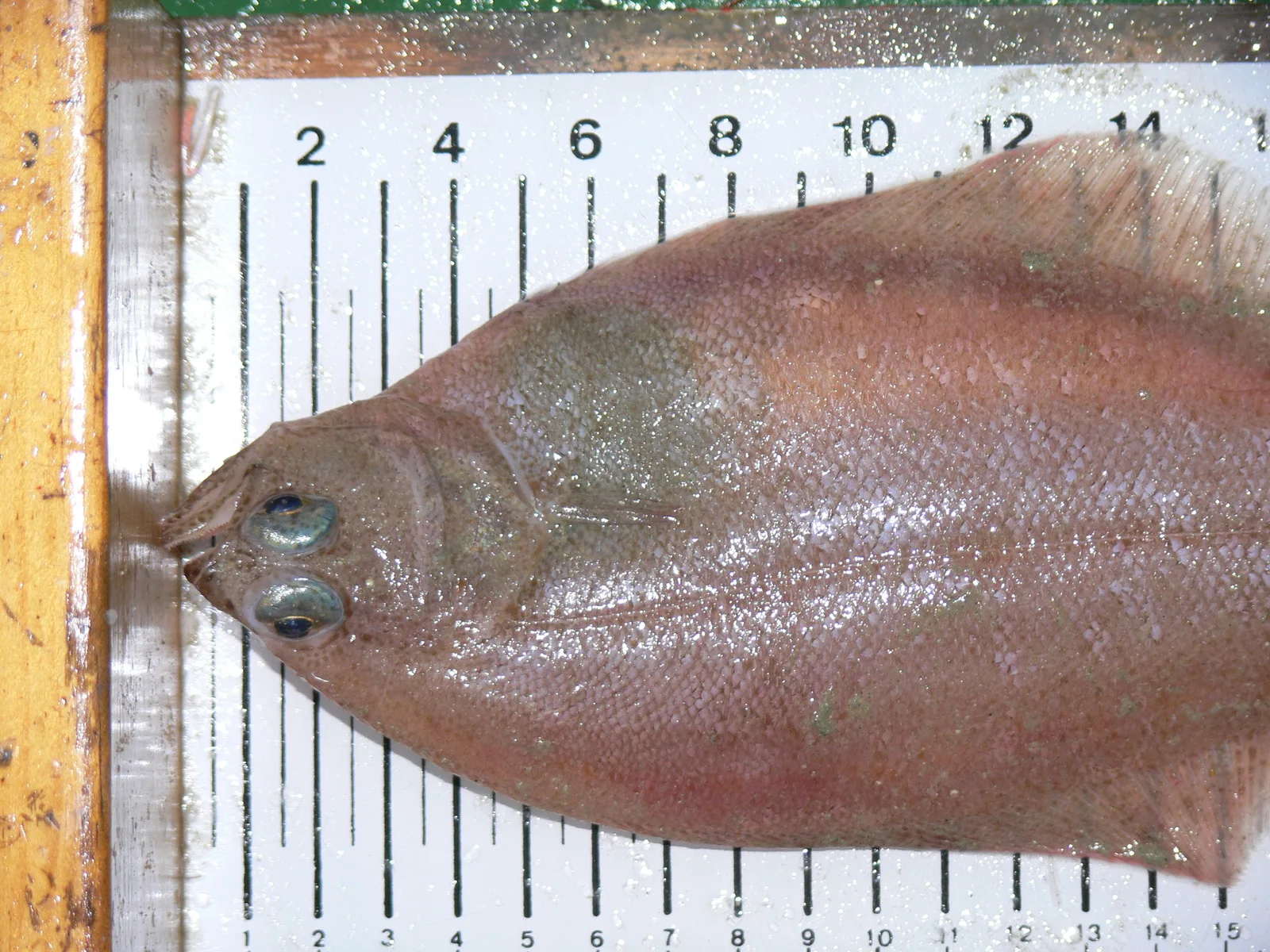
American plaice
- Family
- Pleuronectidae
- Depth
- 10–3000 m
- Season
- Mar, Apr, May
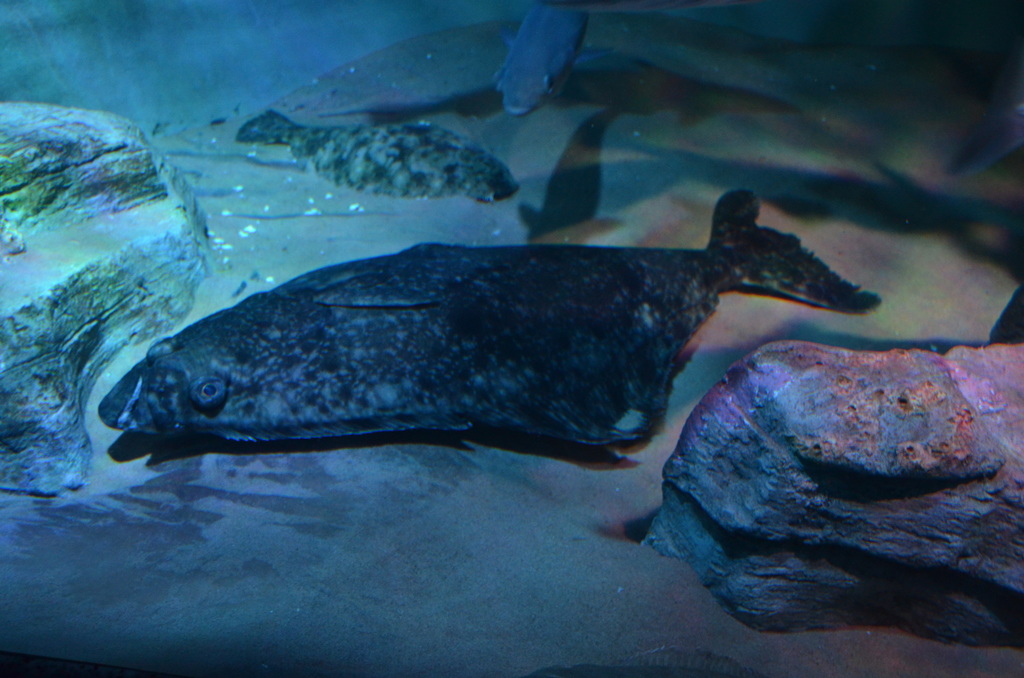
Atlantic halibut
- Family
- Pleuronectidae
- Depth
- 50–2000 m
- Season
- Jan, Feb, Mar, Apr, Dec
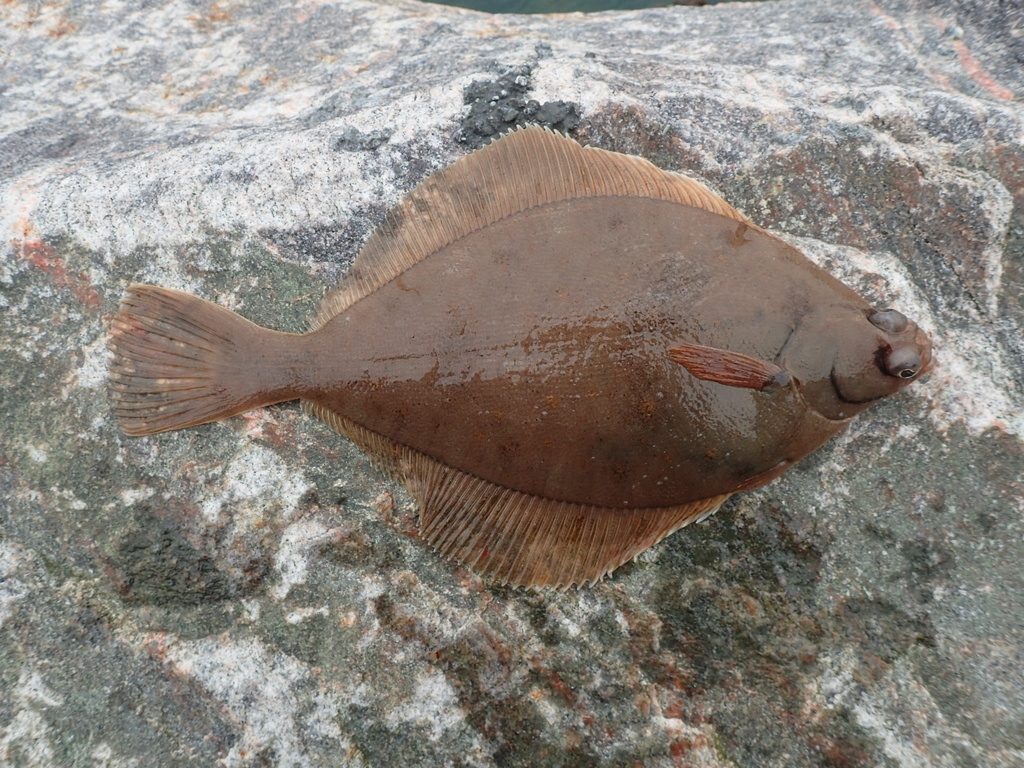
Common dab
- Family
- Pleuronectidae
- Depth
- 20–150 m
- Season
- Jan, Feb, Mar, Apr, May, Jun, Jul, Aug
Guides for this water
Technique, gear and safety guides that fit Rock sole.