
West Coast steenbras
West Coast steenbras is a southeast Atlantic sparid, from Angola to South Africa. It is a big, slow-lived fish: 100 cm TL, 19.3 kg, a maximum age of 50 years and first maturity at 46.4 cm. IUCN assessed it as Endangered in July 2024. Shore fishing and boat bottom fishing are the methods listed, and the depth given is only 1 m or deeper.

FishBase gives *Lithognathus aureti* 100 cm TL maximum, 19.3 kg published weight, a maximum reported age of 50 years and first maturity at 46.4 cm, with no common length listed. It is a Southeast Atlantic sparid, Angola to South Africa, and the IUCN assessed it as Endangered on 11 July 2024. The 50-year age and the 46.4 cm maturity point shape everything else on this page.
Identification
Eleven dorsal spines, 9–10 dorsal soft rays, 3 anal spines and 8–9 anal soft rays, on a fusiform body. The page gives no colour description, no head meristics and no photograph key, so the counts and the family are what a reader has to work with.
The genus name is Greek: lithos, stone, plus gnathos, jaw. It is a sparid, and steenbras is a southern African word applied to more than one sparid. This one is the West Coast steenbras; the red steenbras is a different fish with its own rule and its own closed season. It is not a kob, and the kob limits do not apply to it.
FishBase carries West coast seabream as the FAO name, Westcoast steenbras in Namibia and South Africa, and in Chinese.
Range and habitat
Southeast Atlantic: Angola to South Africa. GBIF holds only 53 present records, 48 Namibian and 4 South African, and iNaturalist holds 8 observations. For a fish that is both a popular angling target and an important food fish, that is a very thin occurrence set, and it sits mostly in Namibia.
Environment: marine, benthopelagic, tropical, 13°S–28°S, depth from 1 m to an unspecified maximum. The 1 m shallow end is the important part; the open end means the source says nothing about how deep the species goes.
Habits and diet
The habitat is inshore over sandy bottoms, and the recorded diet is sand mussels, worms and crabs. That is a soft-bottom, shellfish-and-crustacean diet, specific enough to be useful: sand mussels and crabs point at sand and at the sand-rock transition rather than at reef.
The reproduction is unusual. The species is protandrous, and some specimens have both male and female gonads well developed at the same time. A protandrous fish starts male and changes to female; the recorded simultaneous condition means the change is not always a clean one.
The page also states that it is commonly fished between October and March, and that it is a popular angling fish and an important food fish. That is one of the few catch-month records in this group, and it is a fishing statement rather than a spawning one.
Season and time of day
Spawning is recorded for September, October, November and December, for the southern Namibian population only. One record, one population, four months; the table does not cover Angola or South Africa, and does not describe a second Namibian population.
The angling season is October to March, overlapping the recorded spawning window from October to December. No time of day is recorded anywhere on the page.
The overlap is worth stating plainly: the source's own fishing months include three of the four recorded spawning months for the southern Namibian stock. Neither statement says the other is a problem; the reader can see the coincidence without being told what to do about it.
Tackle and techniques
A depth range that starts at 1 m and a sandy inshore habitat put this fish within reach of shore casting as a matter of record, not inference. The diet says bottom: sand mussels, worms and crabs are not taken at the surface.
The size and age figures change the calculation. First maturity at 46.4 cm, a 100 cm maximum, 19.3 kg, and a maximum reported age of 50 years describe a long-lived, slow-to-mature fish.
Line class, bait and rig are not given. Bottom bait on sand, sized for a fish that matures near 46 cm, is the plan the source supports.
Kitchen and handling
FishBase records it as a popular angling fish and an important food fish, with commercial and gamefish listings. There is no flesh description, no fat content, no market form and no price.
The age figure is the handling argument: a maximum reported age of 50 years means a large fish is old, and the gap between a 46 cm fish and a 90 cm fish is measured in decades.
Regulations and conservation
South Africa sets West Coast steenbras at 1 fish per person per day with a 60 cm minimum. Red steenbras carries the same 1 per day and 60 cm but a closed season from 1 September to 30 November; the two are different species with different closures, so a steenbras identification is a regulatory question, not only a taxonomic one. The general conditions apply: permit, own use, no sale, general bag 10 where no species rule exists.
Namibia sets West Coast steenbras at 40 cm inside the combined bag of 10 fish per day across blacktail, galjoen, kob and West Coast steenbras, with no more than 2 steenbras over 65 cm per day; a permit is required.
Against the 46.4 cm maturity point, the South African 60 cm sits 13.6 cm above it, which carries the fish past maturity. The Namibian 40 cm sits 6.4 cm below it, so a legal Namibian fish can be immature. The 2-over-65 cm cap is a separate instrument: it limits how many large, old fish leave the water rather than how small a fish may be.
The IUCN entry is Endangered, assessed 11 July 2024, with no trend or stock estimate on the page. The iNaturalist summary text still calls the species near threatened, which is stale wording against the current Endangered listing.
How to catch it
Shore fishing
Fished with the listed approach, matched to the recorded depth and size.
Boat bottom fishing
Fished with the listed approach, matched to the recorded depth and size.
Where these facts come from
Check these pages before you rely on a size, range or protection status.
- FishBase — Lithognathus aureti — FishBase · T2
- GBIF — Lithognathus aureti occurrence records — GBIF · T2
- IUCN Red List — Lithognathus aureti — IUCN · T1
- Photo record — iNaturalist — iNaturalist · T3
Fish in the same water
These fish live in the same place.
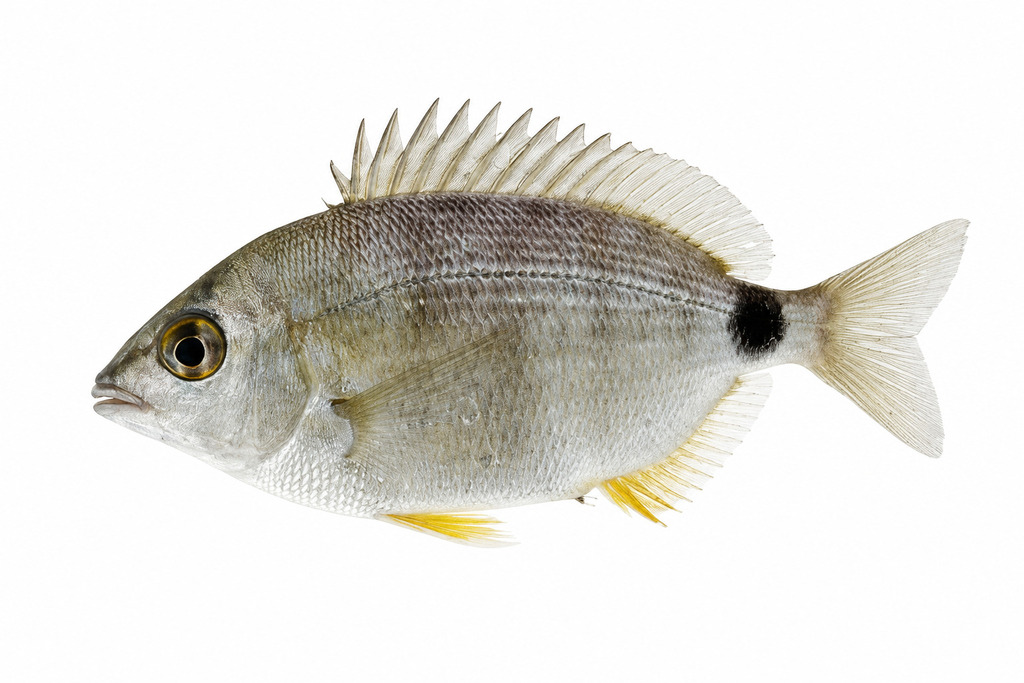
Annular seabream
- Family
- Sparidae
- Depth
- 0–90 m
- Season
- Jan, Feb, Mar, Apr, May, Jun, Jul, Aug, Sep
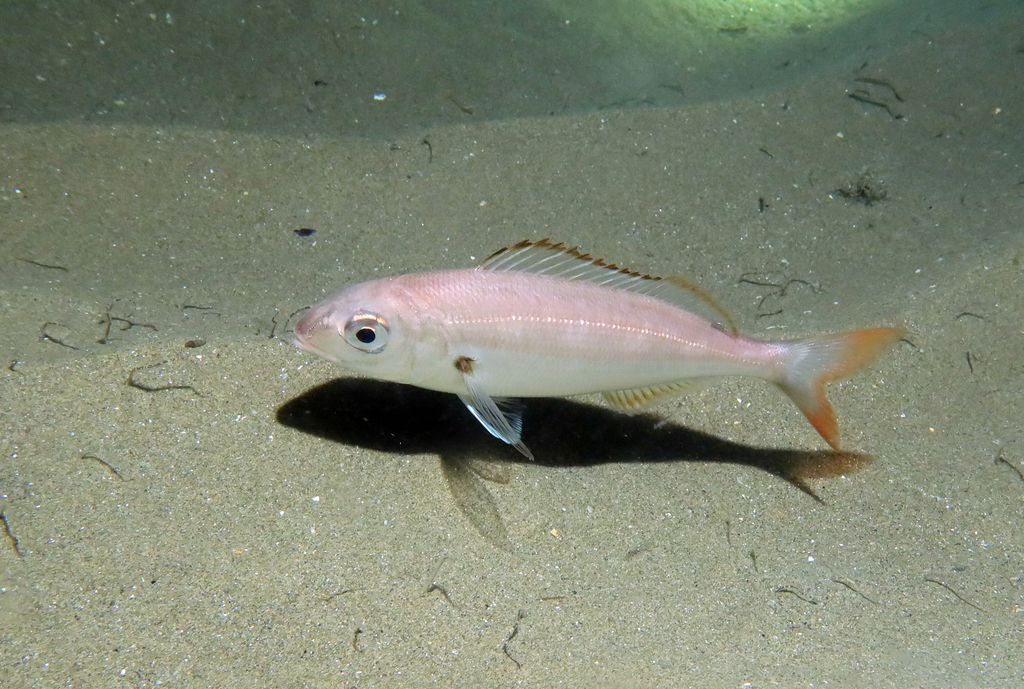
Axillary seabream
- Family
- Sparidae
- Depth
- 0–500 m
- Season
- Jan, Feb, Mar, Apr, May, Jun, Jul, Aug, Sep, Oct, Nov, Dec
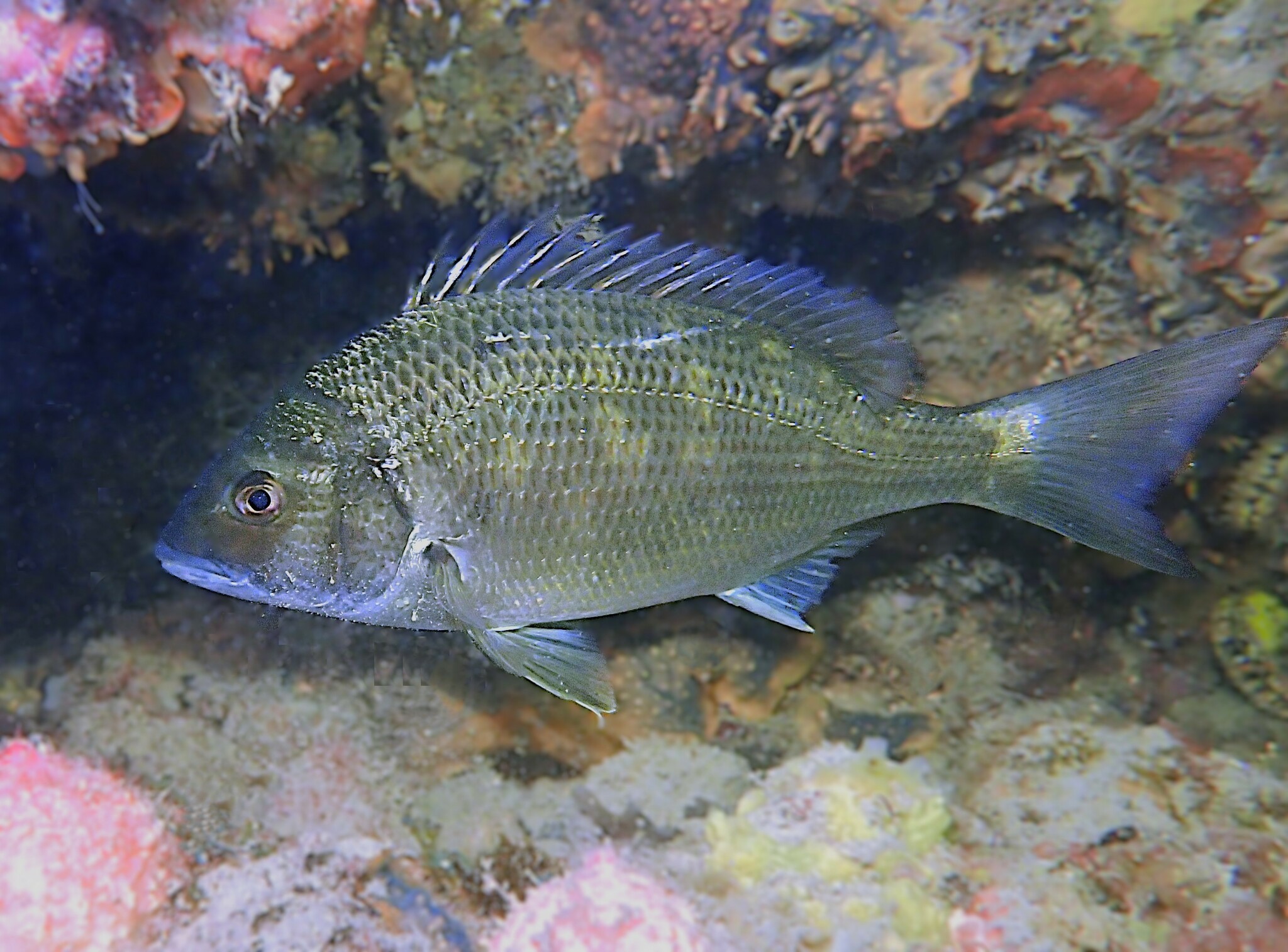
Black bream
- Family
- Sparidae
- Season
- Jan, Feb, Jul, Aug, Sep, Oct, Nov, Dec
Guides for this water
Technique, gear and safety guides that fit West Coast steenbras.