
White steenbras
White steenbras is a sparid of the southeast Atlantic, known only from the Orange River mouth to Natal in South Africa. It lives shallower than 150 m in subtropical water, reaches 200 cm TL, and feeds on fish and worms. Its season runs June to August.
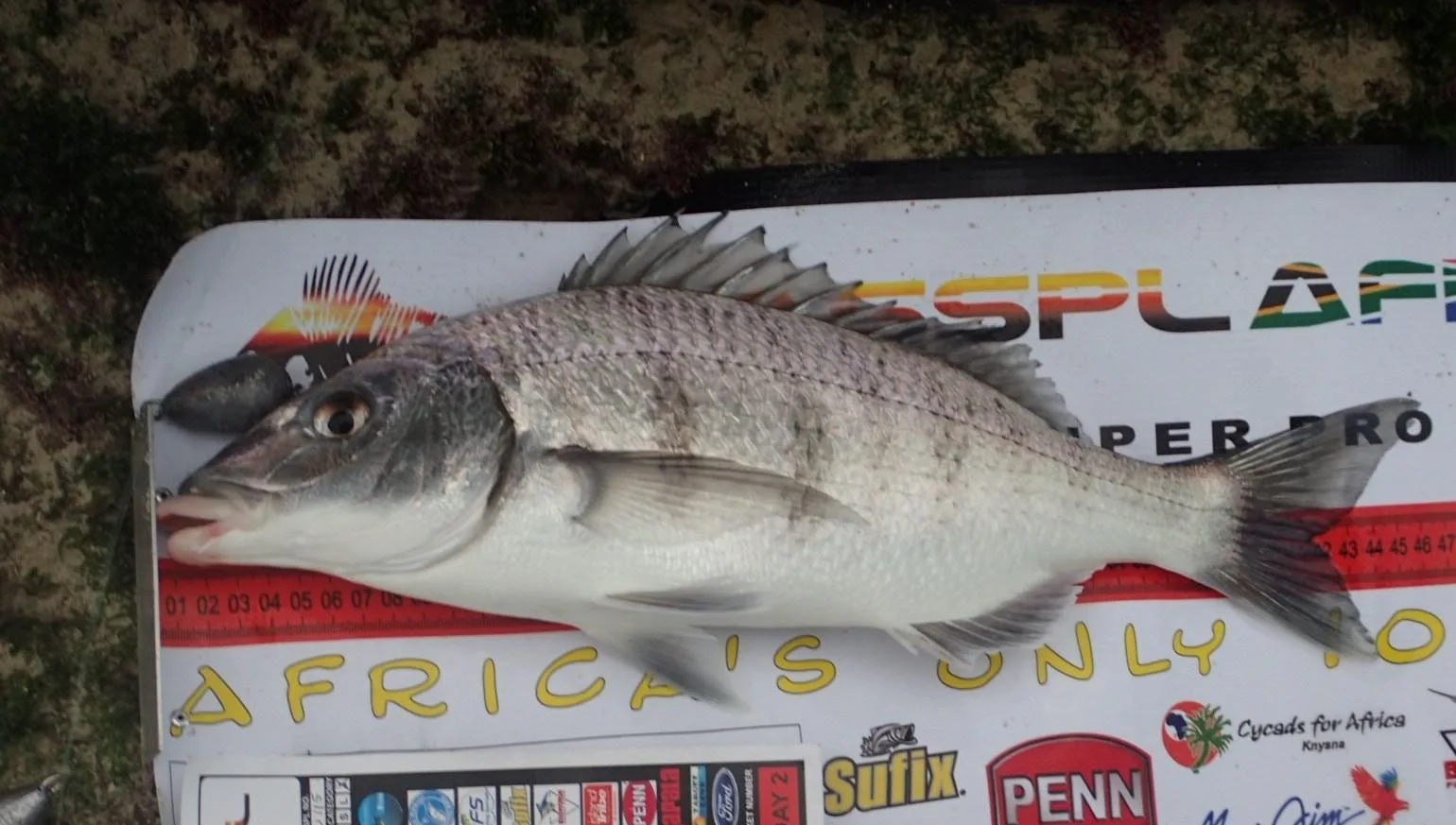
White steenbras (Lithognathus lithognathus) is a fish of the family Sparidae. FishBase gives its range as: Southeast Atlantic: known only from the Orange River mouth to Natal, South Africa. It is recorded shallower than 150 m, in subtropical water. The recorded maximum is 200 cm TL. Diet includes fishes and worms. IUCN status: Endangered (EN). Chinese name: .
The blanks come first
Four fields are missing or partial. The depth range has no shallow end. Maturity is given as 54.0 cm with a range of "? - ?". Weight and age maxima are both absent. The summary page also carries no spawning-month table. What remains is three hard numbers — 54 cm at maturity, 65 cm common, 200 cm maximum — and a set of names: White steenbras is the main English entry, with Pignose grunter and Whitefish also listed. None of the blanks is filled below with a plausible-looking default.
A depth range with no shallow end
The known end is 150 m. The unknown end is the shallow one, and that is the end a shore or estuary angler would actually fish. The habitat sentence gives sand, estuaries and oceanic water, and says the fish enters lagoons, so the shallow end is presumably where sand and estuary meet — but the source does not put a number on it. The method that follows is simple: sound the ground instead of assuming a beach range, and treat the 150 m figure as the only confirmed boundary.
Maturity has one number and no range
Maturity is written as Lm 54.0 with the range field left as "? - ?". A single midpoint with no lower or upper bound is not enough to derive a minimum keep size, and this page will not manufacture one. The only usable comparison sets 54 cm against the 65 cm common size: the typical fish is already above the only maturity figure the record provides. That makes the common fish a breeding fish, which is a release argument rather than a harvest argument.
No weight, no age
Neither a maximum published weight nor a maximum reported age is given. Without either, the 200 cm maximum cannot be converted into a believable weight, and no growth curve can be inferred. This is not a gap to be papered over with a formula: a length-weight estimate would produce a number the source never published. The absence is itself information — the species has not been compiled to the same depth as the sparids whose pages carry both fields.
Two hundred and sixty-five
The maximum is 200 cm TL; the common size is 65 cm TL. The gap is more than threefold, so the maximum describes an exceptional fish and the common figure describes the fish most rods will encounter. The assessment is Endangered (A2bcd), dated 11 July 2024 — much more recent than the 2009 assessments carried by several other sparids. The same page lists minor commercial fishing and gamefish use. An endangered rating and a prime angling reputation can sit together; the practical consequence is that release handling matters more here than on a Least Concern page.
Sand, estuary, sea
The biology is explicit about ground: sandy substrate, estuaries and oceanic water, with lagoons entered as well. The environment line adds amphidromous, which is a movement between fresh, brackish and marine water rather than a reef residency. GBIF holds 1,572 records, led by South Africa with 1,363 and Namibia with 85; Angola contributes 4 and an unresolved "ZZ" entry contributes 1. The FishBase territory table lists only two territories, while the text range runs from the Orange River mouth to Natal. The Angolan records therefore sit outside the written range, and they are reported here as they stand rather than used to widen it.
Here the GBIF distribution endpoint is nearly as blank as the rest of the record: four declarations only, South Africa and Mozambique from WoRMS plus two FADA ecoregion entries. The WoRMS record, AphiaID 218604, also carries Cuvier, 1829, with brackish ticked; the estuary use described above is covered by that flag.
Spawn in the sea, nursery in the estuary
The record says the fish spawns in the sea but uses estuaries as nursery grounds. That single sentence separates the size classes by water type: adults on the open sandy coast, young fish in estuaries and lagoons. iNaturalist holds 198 observations, a thin sample that matches a species with a narrow South African range and a relatively low profile outside it. For the angler, the estuary is a nursery mark rather than a big-fish mark, and the open coast is where the 65 cm common fish is more likely.
Planning around the blanks
Start with the shallow end the record omitted: sound the estuary mouth and the sandy shore until the bottom profile shows where the fish can sit, then fish that edge rather than a remembered depth. Use 54 cm as the only maturity anchor and 65 cm as the working size, and release the larger fish that the Endangered assessment makes valuable. The blanks are not an invitation to guess; they are the reason the first hour on the water should be spent measuring the ground.
Where these facts come from
Check these pages before you rely on a size, range or protection status.
- FishBase — Lithognathus lithognathus — FishBase · T2
- GBIF — Lithognathus lithognathus occurrence records — GBIF · T2
- IUCN Red List — Lithognathus lithognathus — IUCN · T1
- Photo record — iNaturalist — iNaturalist · T3
Fish in the same water
These fish live in the same place.
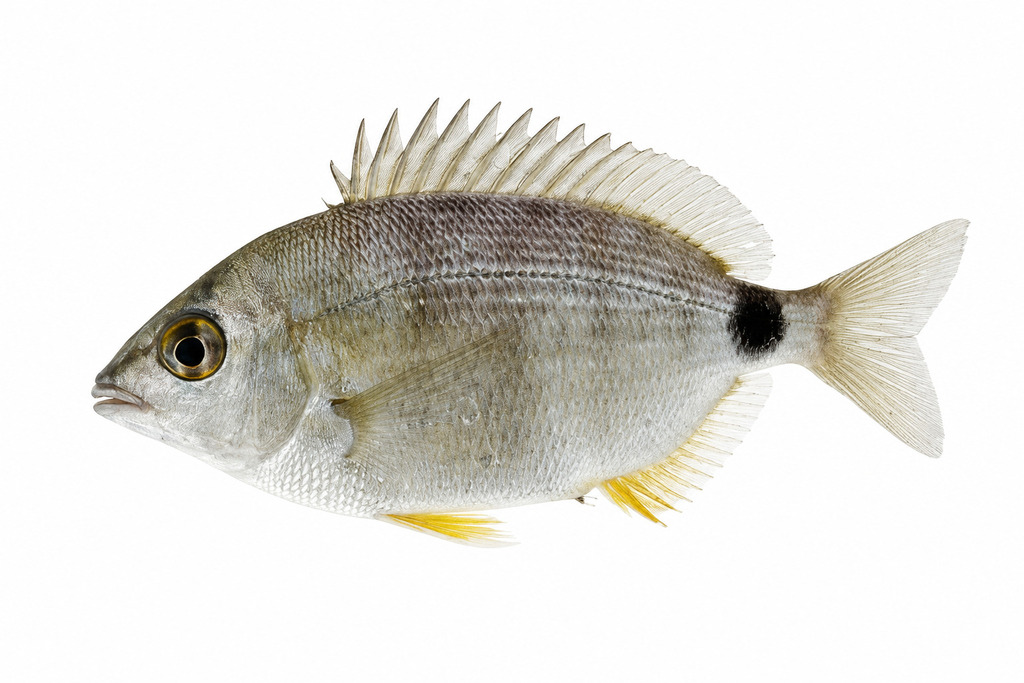
Annular seabream
- Family
- Sparidae
- Depth
- 0–90 m
- Season
- Jan, Feb, Mar, Apr, May, Jun, Jul, Aug, Sep
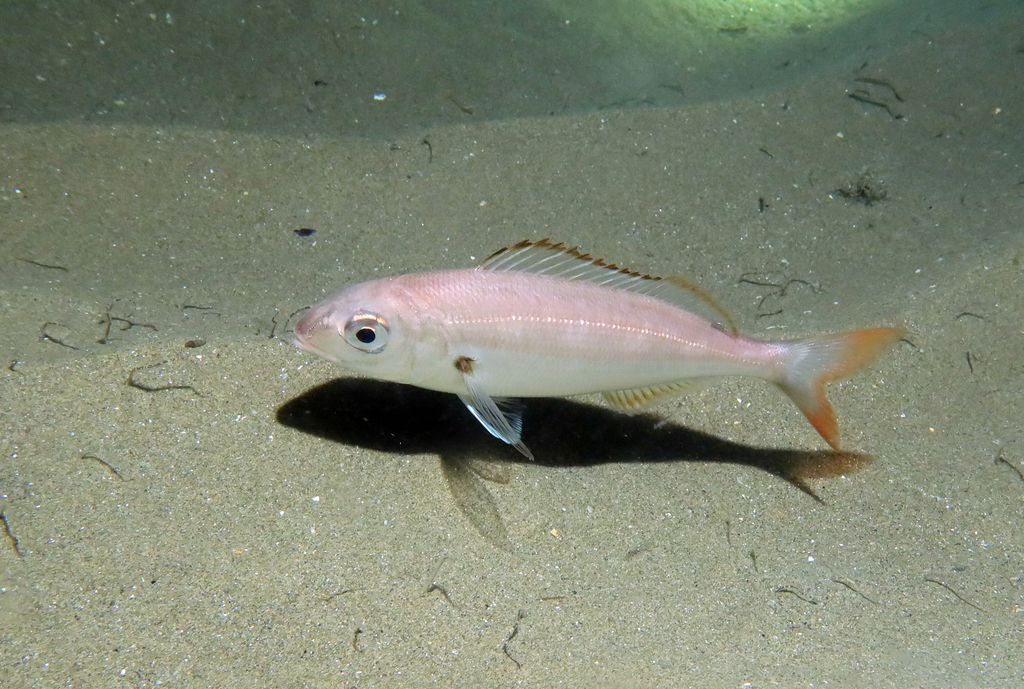
Axillary seabream
- Family
- Sparidae
- Depth
- 0–500 m
- Season
- Jan, Feb, Mar, Apr, May, Jun, Jul, Aug, Sep, Oct, Nov, Dec
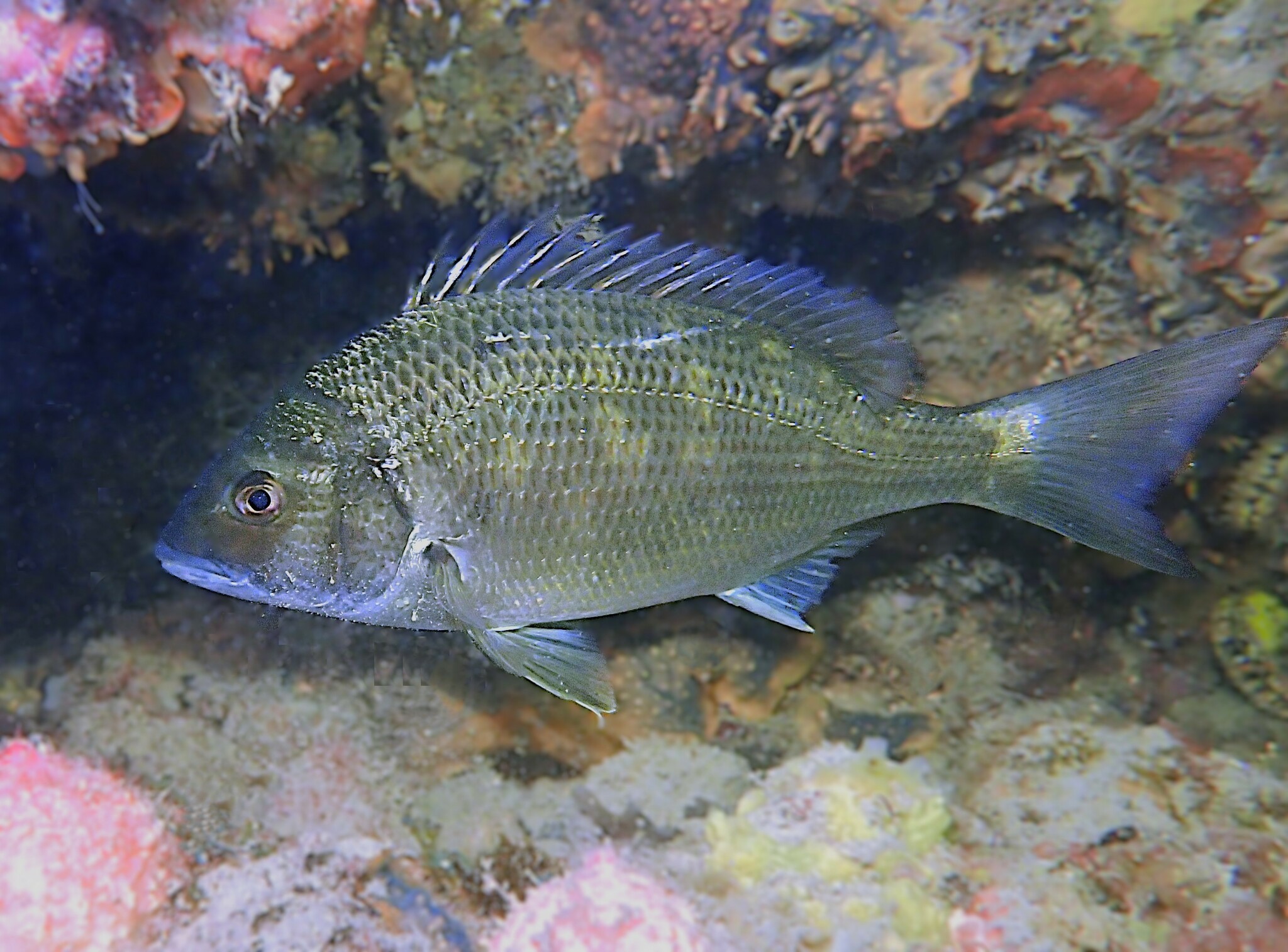
Black bream
- Family
- Sparidae
- Season
- Jan, Feb, Jul, Aug, Sep, Oct, Nov, Dec
Guides for this water
Technique, gear and safety guides that fit White steenbras.