
Schoolmaster snapper
The fin count is ten dorsal spines and fourteen soft rays, with three anal spines and eight rays — a routine lutjanid formula that only narrows the genus. The useful characters sit in the face. The snout is long and pointed, the mouth is large, and one pair of upper canines is enlarged enough to show while the jaws are closed. A blue line runs beneath the eye, solid or broken.
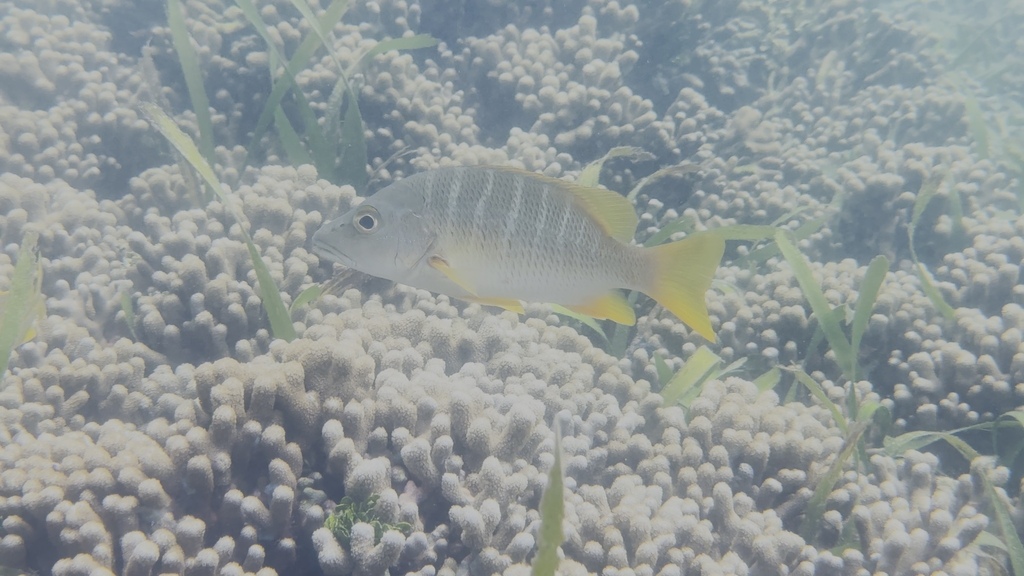
The fin count is ten dorsal spines and fourteen soft rays, with three anal spines and eight rays — a routine lutjanid formula that only narrows the genus. The useful characters sit in the face. The snout is long and pointed, the mouth is large, and one pair of upper canines is enlarged enough to show while the jaws are closed. A blue line runs beneath the eye, solid or broken. The back is olive grey to brown, crossed by eight narrow pale bars that may be faint or entirely absent in big adults. The preopercular notch and knob are weak, and the pectoral fin reaches back to the level of the anus. Read the bars and the teeth together; colour alone will not separate this fish from its relatives.
Reef for adults, mud for juveniles
FishBase places the northern limit at Massachusetts, notes that the species is rare in Florida, and runs the range south to Trinidad and northern Brazil. The coordinate box, 42°N to 19°S and 98°W to 31°W, covers the Gulf of Mexico and the whole Caribbean. Adults hold in shallow, clear, warm coastal water over coral, often beside the shelter of elkhorn coral and gorgonians. Juveniles are somewhere else entirely: sand, sand with Thalassia seagrass, or the muddy floor of lagoons and mangroves, and the youngest fish will enter brackish water. Mexico appears in the country table, and the Yucatán and Campeche coast carries both halves of that habitat. Hunt adults on structure; expect juveniles wherever the bottom softens.
Read the clock before the calendar
No spawning months are recorded, so the calendar has to be built from water temperature. The range spans subtropical and tropical latitudes, and the same month is a different season at the two ends. A more reliable cue is daily: these fish form resting aggregations in reef shade during the day and disperse to feed at night. That makes dawn, dusk and the first hours of darkness more useful than any month. Around the Gulf of Mexico and the Caribbean the fishing stays open all year, but at the northern edge winter pushes fish deeper into the reef and the shallow tops go quiet.
Fishing the shadow line
Put the bait at the edge of structure, never on top of the coral. Adults sit against elkhorn and gorgonian cover, so the cast belongs on the outer rim, the seam where reef meets sand, or the shade line under mangrove roots. Shrimp, cut fish and small crab are all on the record. Because they group up, one fish is rarely the only one — work the same head before moving. From a boat, a single hook with a bait slightly larger than the hook gap, fished on the bottom; from shore, cast from rock or pier onto deeper coral patches. Small jigs and soft plastics bounced down the reef face pick off the fish that rise off the bottom. Keep the tempo slow; in daylight these fish are not in a hurry, and a bait that sits still longer than feels natural is usually the one taken.
Gear sized to the common fish
The ceiling is 79.1 cm and 10.8 kg, the common length is 35 cm, and the oldest recorded fish is 42 years. Read that as: most fish are modest, and a few are very old and very thick. Rig for the common fish. A carbon leader for abrasion matters more than breaking strain, and hook size should follow the bait rather than the record. Start the drag low and let the rod load before adding pressure, because the first move of a hooked schoolmaster is into coral. Keep cutters within reach. A net opening measured for 79 cm is cheap insurance when the fish is not 35.
Good eating, one warning, several rules
The record calls it a good food fish, sold fresh or frozen, and in the same breath notes reports of ciguatera poisoning. That combination argues for releasing the largest fish from the top of the reef. Mexican federal rules cap the recreational take at ten fish per angler per day, with five of any single species; each person of 12 or over aboard a boat must hold a personal licence, and although shore anglers are exempt from the licence, they are not exempt from the bag or from the ban on selling the catch. In the Yucatán and Campeche, all mero species are closed from 15 February to 15 March, which shapes any trip planned for that window. Arrecife Alacranes, Ría Lagartos and Banco Chinchorro carry no-take cores and local restrictions, and the boundaries follow the current CONAPESCA or state notice.
What the records leave open
The entry rests on FishBase for classification, morphology, range, diet and use, with the country table used to check the Mexican and Caribbean records. iNaturalist's 5,906 observations say where photographers go, not how many fish exist, and the GBIF page gives no consolidated occurrence count. Regulations come from the NOM text, the DOF grouper closure and CONAPESCA's recreational fishing pages. Two things are missing: local size limits and any regional breakdown of ciguatera risk. Neither is in the record, so the current local notice governs.
How to catch it
Bottom fishing
Fished with the listed approach, matched to the recorded depth and size.
Shore fishing
Fished with the listed approach, matched to the recorded depth and size.
Jigging
Fished with the listed approach, matched to the recorded depth and size.
Where these facts come from
Check these pages before you rely on a size, range or protection status.
- FishBase — Lutjanus apodus — FishBase · T2
- GBIF — Lutjanus apodus occurrence records — GBIF · T2
- IUCN Red List — Lutjanus apodus — IUCN · T1
- Photo record — iNaturalist — iNaturalist · T3
Fish in the same water
These fish live in the same place.
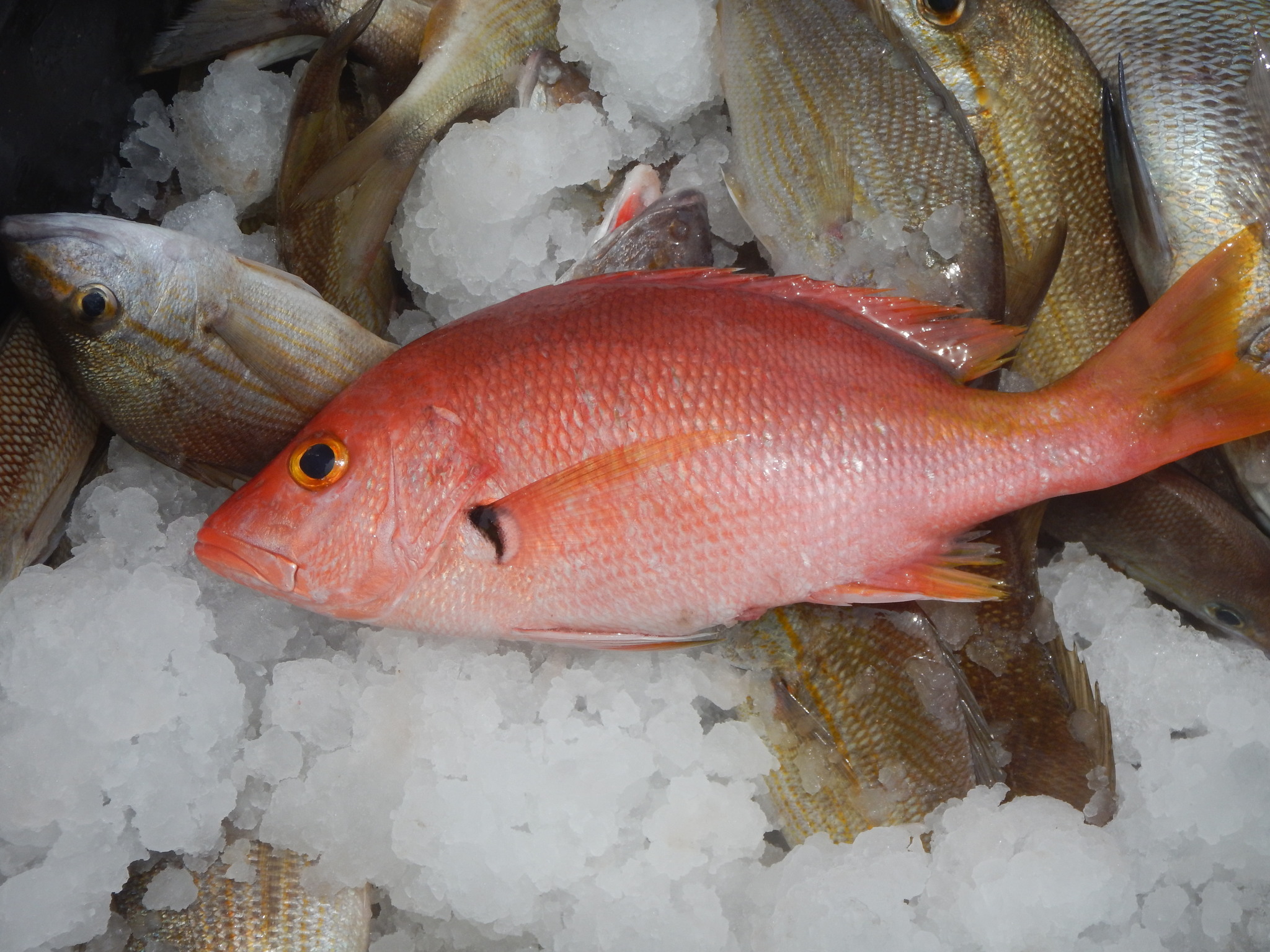
Blackfin snapper
- Family
- Lutjanidae
- Depth
- 20–200 m
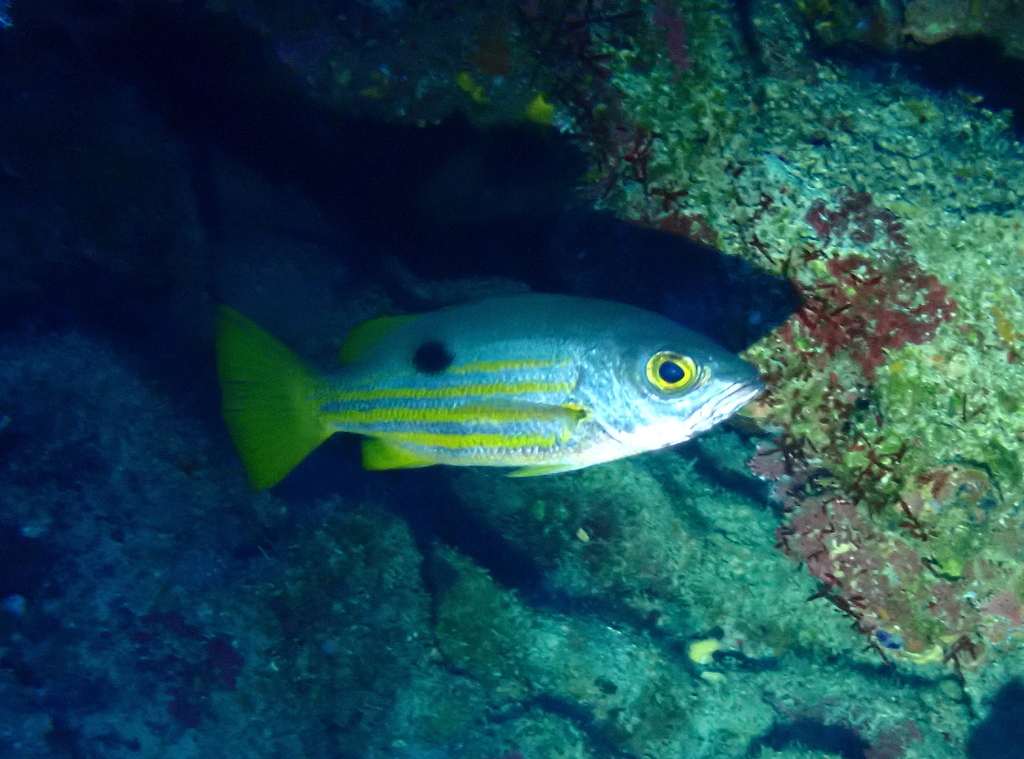
Blackspot snapper
- Family
- Lutjanidae
- Depth
- 5–20 m
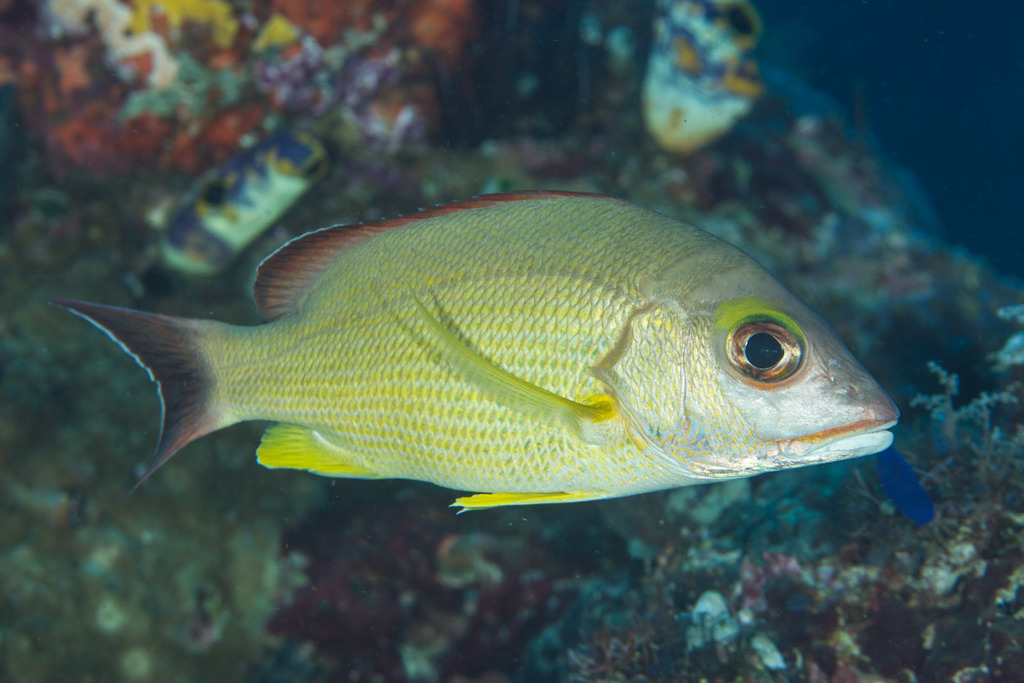
Blacktail snapper
- Family
- Lutjanidae
- Depth
- 1–80 m
- Season
- Jan, Feb, Mar, Apr, May, Jun, Jul, Aug, Sep, Oct, Nov, Dec
Guides for this water
Technique, gear and safety guides that fit Schoolmaster snapper.