
Mullet snapper
The fin formula is eleven or twelve dorsal spines with twelve soft rays, and three anal spines with seven or eight rays. The preopercular notch is moderate, and the scale rows on the back run parallel to the lateral line. The back is dark grey-green and the belly pale, but the signature is in the scales themselves: each has a yellowish white centre, so the flank reads as alternating dark and light stripes.
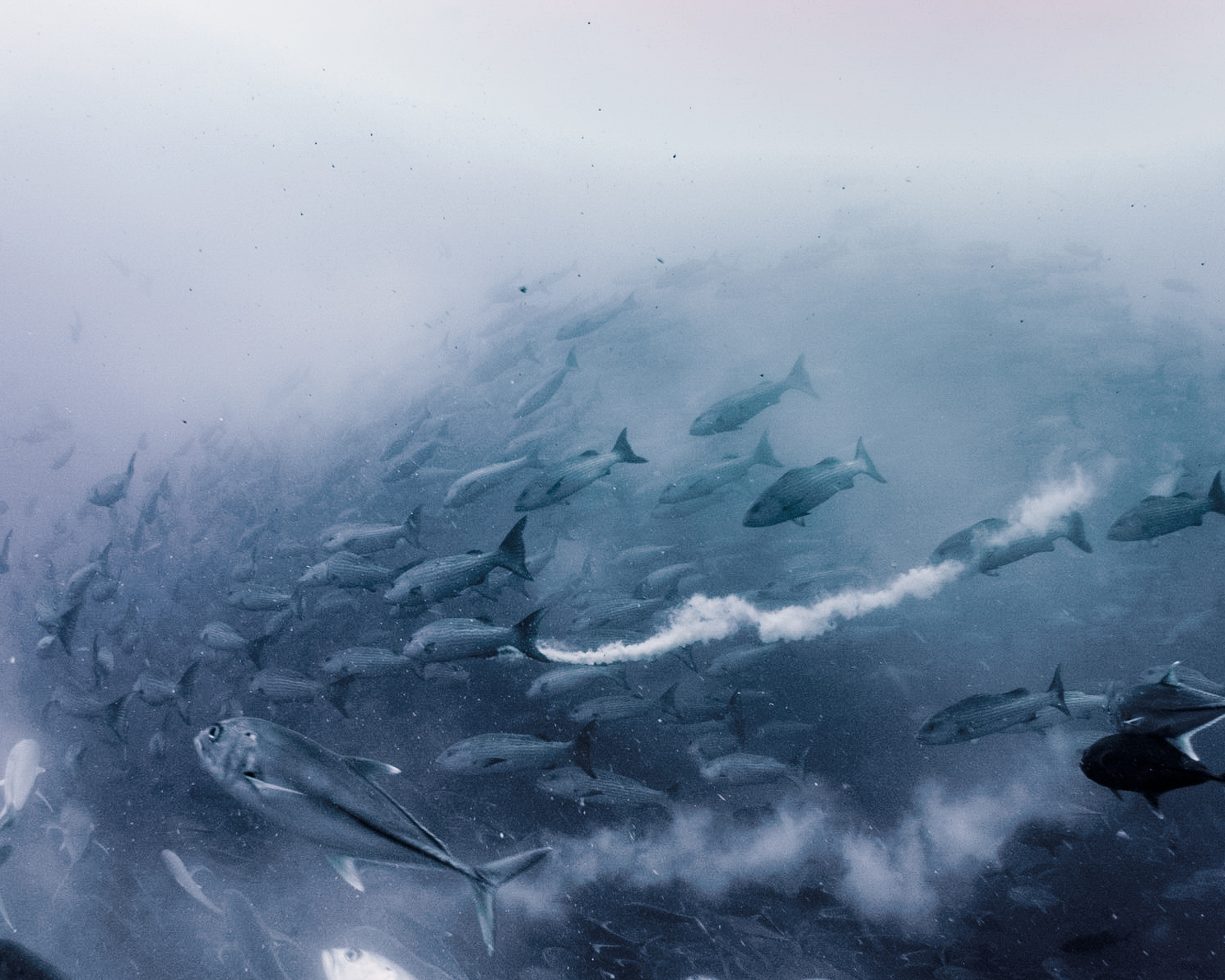
The fin formula is eleven or twelve dorsal spines with twelve soft rays, and three anal spines with seven or eight rays. The preopercular notch is moderate, and the scale rows on the back run parallel to the lateral line. The back is dark grey-green and the belly pale, but the signature is in the scales themselves: each has a yellowish white centre, so the flank reads as alternating dark and light stripes. Fish from deeper water come up mainly reddish, which is a trap for anyone identifying by colour alone. Anglers working the Mexican coast also watch for a tail with a yellow cast and a body longer than a typical snapper's; those are field impressions rather than record characters, and the scale pattern remains the safer test.
Hard bottom, from Mexico to Ecuador
FishBase gives the range as Mexico to Ecuador, inside a box from 33°N to 5°S and 117°W to 77°W. The country table adds Colombia, Costa Rica, Guatemala, Honduras, Nicaragua, Panama, El Salvador and the Galápagos. The species is inshore and reef-dwelling, holding over hard bottom to at least 50 m, and the recorded band runs from the surface down to 60 m. Adults may school in groups of several hundred, while juveniles turn up in shallow water, including littoral pools and estuaries. That split matters for planning: the big schools are a boat target, and the nursery ground is a shoreline you can walk to. The written range is only Mexico to Ecuador, yet the country table folds the Gulf of California and both Baja coasts into that single Mexican row, and the gulf fishes differently from the outer coast.
A tropical range with no spawning calendar
No spawning months and no maximum age are recorded. The species is tropical, and the whole range sits in water warm enough that the season is governed by current and temperature rather than by a date on a closed-season list. The schooling habit changes the priorities: finding a school matters more than timing one, because once a mark produces, the window is the tide and the current rather than the month. A trip planned for the wrong week can still be rescued by a good mark; a trip with no mark to start on cannot.
Bottom first, then up
The standard approach is a boat on the bottom, with cut fish or whole squid on a single hook around rocky reefs and pinnacles. When a mark produces, work it properly instead of running to the next one. Slow-pitch jigs along the reef edge cover the fish suspended above the rock, and a live bait drifted into a current seam beside structure does the same job more slowly. Current dictates weight: add lead when it pushes and take it off when it slackens, so the bait moves naturally rather than being dragged. Mullet snapper will rise for a lure, which is uncommon enough among snappers to be worth planning around.
Gear for a hundred-centimetre fish
The record tops out at 100 cm and 15 kg, against a common length of 35 cm. That spread is wide, and the fish lives over rock, so line capacity and a leader that survives abrasion matter more than a delicate tip. A slow-pitch rod covers both the bottom bait and the jig without changing outfit. Set the drag for the reef rather than the record: enough to turn a fish, loose enough that the first run does not finish on a rock. There is no age data for the species, which is a reason to release the large ones rather than a reason to doubt their size. A leader of about a rod's length is long enough to take abrasion at the edge without spoiling the cast, and a net sized for 100 cm looks generous until the one good fish of the trip arrives.
Sold fresh, regulated twice
FishBase notes that the catch is marketed fresh. Under NOM-017-PESC-1994 as revised in 2013, the daily ceiling is ten fish and five of one species; a personal licence is required for every person aged 12 and over on a boat, shore fishing avoids the licence but not the limit, and nothing taken recreationally may be sold. Baja California sells state permits through its own portal, with 2024 reference prices of 188 pesos for a day, 470 for a week, 706 for a month and 941 for a year; Baja California Sur runs a separate system through FONMAR. Any boat carrying tackle in Mexican waters needs a permit for each person aboard, and entering a national park or protected area adds a park pass. Grouper and some other species carry local spawning closures, so check CONAPESCA and state notices before fixing dates.
Where the record is thin
iNaturalist holds only 83 observations for the taxon, and GBIF's species page publishes no overall total, so neither platform supports a statement about abundance. The country table names ten jurisdictions, which is a political map rather than a measure of habitat. The Baja permit prices are 2024 reference figures and will change. There is no maximum age, no maturity length and no local size limit in the packet, so the depth band and the bag limit are the only hard numbers to plan around.
How to catch it
Bottom fishing
Fished with the listed approach, matched to the recorded depth and size.
Jigging
Fished with the listed approach, matched to the recorded depth and size.
Boat fishing
Fished with the listed approach, matched to the recorded depth and size.
Where these facts come from
Check these pages before you rely on a size, range or protection status.
- FishBase — Lutjanus aratus — FishBase · T2
- GBIF — Lutjanus aratus occurrence records — GBIF · T2
- IUCN Red List — Lutjanus aratus — IUCN · T1
- Photo record — iNaturalist — iNaturalist · T3
Fish in the same water
These fish live in the same place.
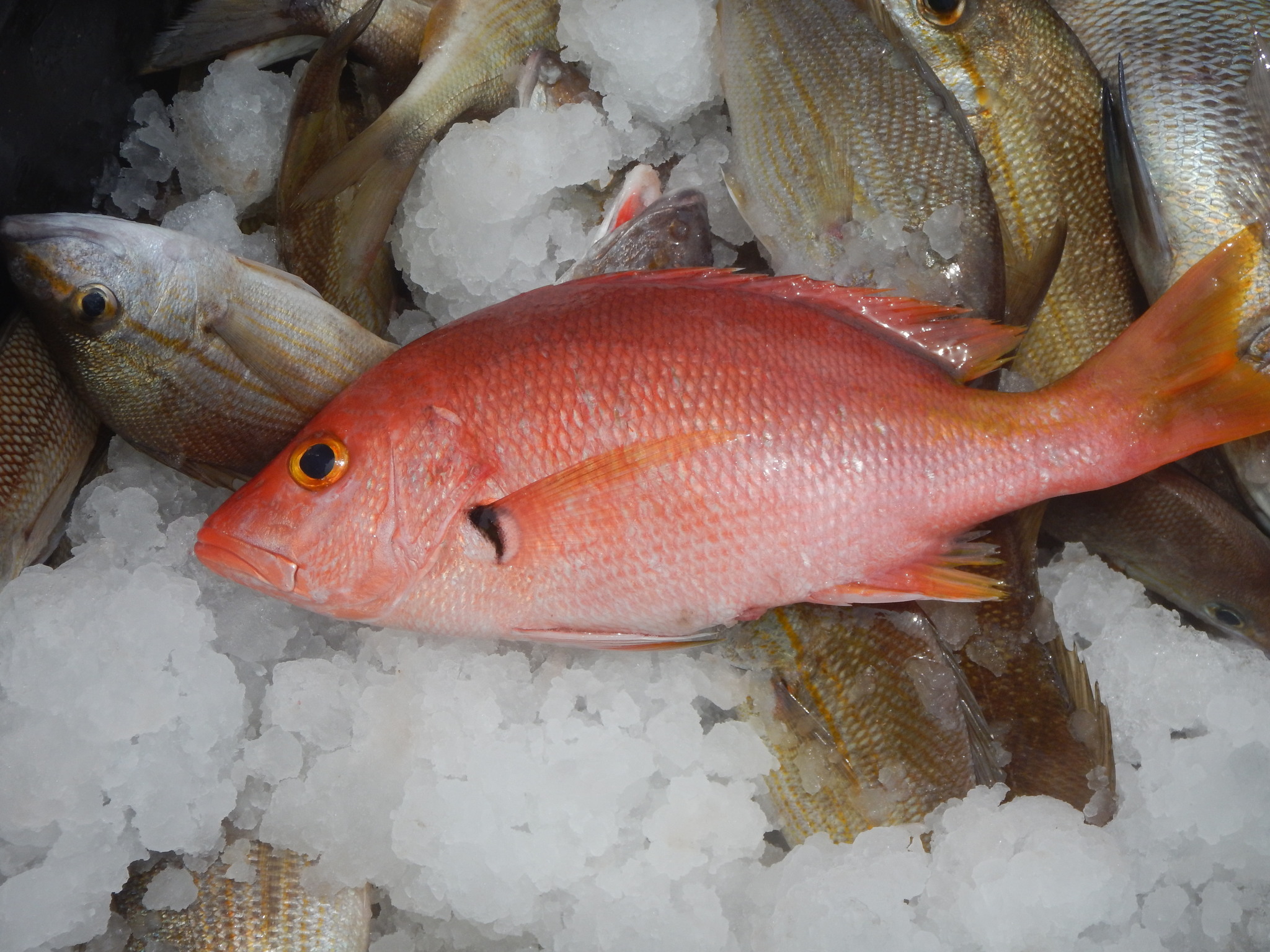
Blackfin snapper
- Family
- Lutjanidae
- Depth
- 20–200 m
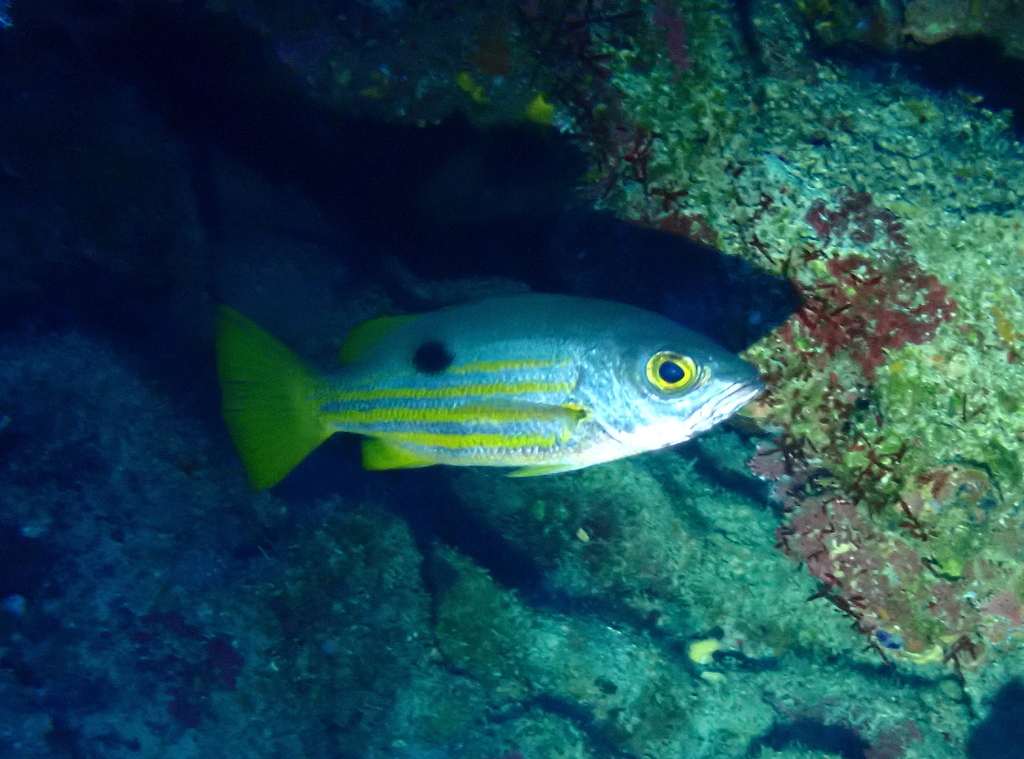
Blackspot snapper
- Family
- Lutjanidae
- Depth
- 5–20 m
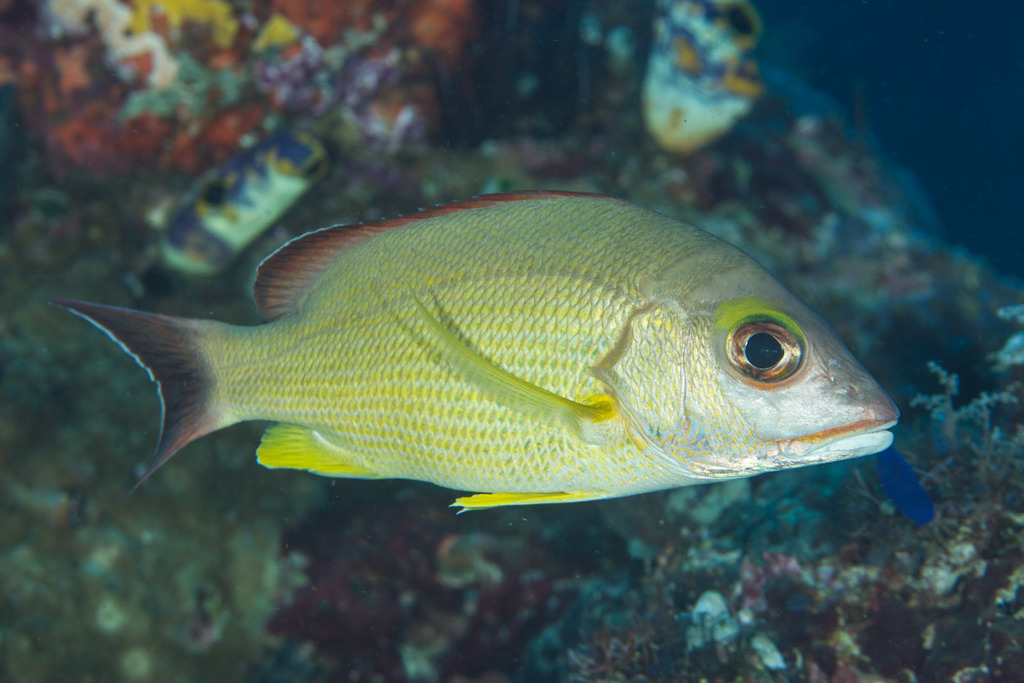
Blacktail snapper
- Family
- Lutjanidae
- Depth
- 1–80 m
- Season
- Jan, Feb, Mar, Apr, May, Jun, Jul, Aug, Sep, Oct, Nov, Dec
Guides for this water
Technique, gear and safety guides that fit Mullet snapper.