
Blubberlip snapper
The blubberlip snapper is named for a feature that only adults show: the lips thicken until the head looks blunt and almost swollen. The body is very deep, 2.1–2.4 times into standard length, and the tail is truncate or only slightly emarginate. Counts on the checked page are 10 dorsal spines and 15–16 soft rays, three anal spines and eight soft rays, and 17–18 gill rakers on the first arch.

The blubberlip snapper is named for a feature that only adults show: the lips thicken until the head looks blunt and almost swollen. The body is very deep, 2.1–2.4 times into standard length, and the tail is truncate or only slightly emarginate. Counts on the checked page are 10 dorsal spines and 15–16 soft rays, three anal spines and eight soft rays, and 17–18 gill rakers on the first arch. Colour is brown with a red tinge, each scale edged pale brown and carrying two or three small bluish-white spots, with undulating blue lines across the head. Juveniles wear three to eight brown bars and a chalky white spot under the soft dorsal. Do not use the lips to identify a small fish.
Two addresses: the slope and the runoff
The range runs from East Africa to Tahiti, north to southern Japan and south to Australia. The depth band is 3–150 m, and the species uses two different parts of it. Adults are found singly or in small groups of 15 to 20 on deep coastal slopes. Juveniles are on shallow algae-reef flats, often near freshwater run-offs. That last detail is the most usable line in the file: a shallow flat with a stream or drain entering it is a juvenile mark, not a big-fish mark. The adults are further out and further down, on the slope the flat leads to.
Fifty-six years on a 60 cm fish
The maximum recorded age is 56 years, and the maximum length is 85.5 cm total length. The common length is 60 cm. Put those together and the arithmetic stops working the way anglers expect. A 60 cm fish is not a young fish on its way up; it may be decades old, and an 85 cm fish is not simply a 60 cm fish with more years on it. Growth and age are not interchangeable here. Maturity starts around 37 cm, well below the common length, so most of the fish an angler keeps are mature and many are old. The record gives no spawning month. The honest use of the age figure is caution: removing the largest fish removes the oldest ones, and a 56-year maximum does not promise a fast rebuild.
Bait on the deep slope
Handlines, traps and gill nets take this species commercially, and it is also caught by trawling occasionally. For rod and line, the deep slope is the mark. The bait has to reach the slope foot and stay there long enough for a fish that feeds on fishes, cephalopods and benthic crustaceans to find it. Whole small fish, squid and shrimp are all consistent with that diet. The mistake is to fish the flat top because it is easier to anchor. That is the juvenile address, and the fish there are small. Work the slope with the current, keep the lead in contact, and let the bait lift and settle rather than drag.
Rigging for weight, not for the record
The everyday fish is 60 cm, so that is the number to rig for. PE 3 with a 50 lb leader covers it; if the plan includes fish near 80 cm, step up to PE 4 and a 60–80 lb leader. Hooks in the 5/0–7/0 range with a wide gap suit the mouth and the bait. On a deep slope the lead meets the bottom more often than the hook does, so carry more weight than feels necessary. Set the drag at roughly 70 per cent of the line's rating and adjust after the first run. The fish is a slope fighter, not a surface runner; it will try to get its head back into the wall.
Good eating, real ciguatera, three sets of rules
FishBase calls it an excellent food fish and records it in Hong Kong live fish markets, which is the market side of the story. It also records ciguatera poisoning, which is the other side. The toxin is accumulated from benthic dinoflagellates through the food chain; larger, older fish carry more. Do not eat the liver, head or viscera. No field test is reliable, and numbness of the lips or tongue, or stomach symptoms, mean a clinic rather than a second helping. Fish from the same reef vary, so another boat's experience is not evidence. Red List status is Least Concern, assessed 5 March 2015. Thailand closes Similan and Surin national parks in the monsoon, roughly May to October, and sets separate closures and gear limits under its marine fisheries plan. Sri Lanka protects the core zones of Bar Reef, Hikkaduwa and Pigeon Island, and has no single national minimum size for this species. The Maldives bans reef shark fishing, closes reef-fish spawning sites seasonally, requires export permits and forbids sale of tourist catches. Verify the current notice for the specific park or atoll.
What the counts and the names leave open
The identification counts are from the same summary: 10 dorsal spines, 15–16 soft rays, three anal spines, eight soft rays, 17–18 gill rakers. The thick lips and the truncate tail separate adults from most similar snappers; juveniles need the bars and the white spot. iNaturalist holds 512 observations. The Sri Lankan name Badawa comes from the regional file, where it sits in the rock-fish column of a local common-name table. None of this fixes a spawning date, because the source does not give one.
How to catch it
Boat bottom fishing
Fished with the listed approach, matched to the recorded depth and size.
Handline
Fished with the listed approach, matched to the recorded depth and size.
Where these facts come from
Check these pages before you rely on a size, range or protection status.
- FishBase — Lutjanus rivulatus — FishBase · T2
- GBIF — Lutjanus rivulatus occurrence records — GBIF · T2
- IUCN Red List — Lutjanus rivulatus — IUCN · T1
- Photo record — iNaturalist — iNaturalist · T3
Fish in the same water
These fish live in the same place.
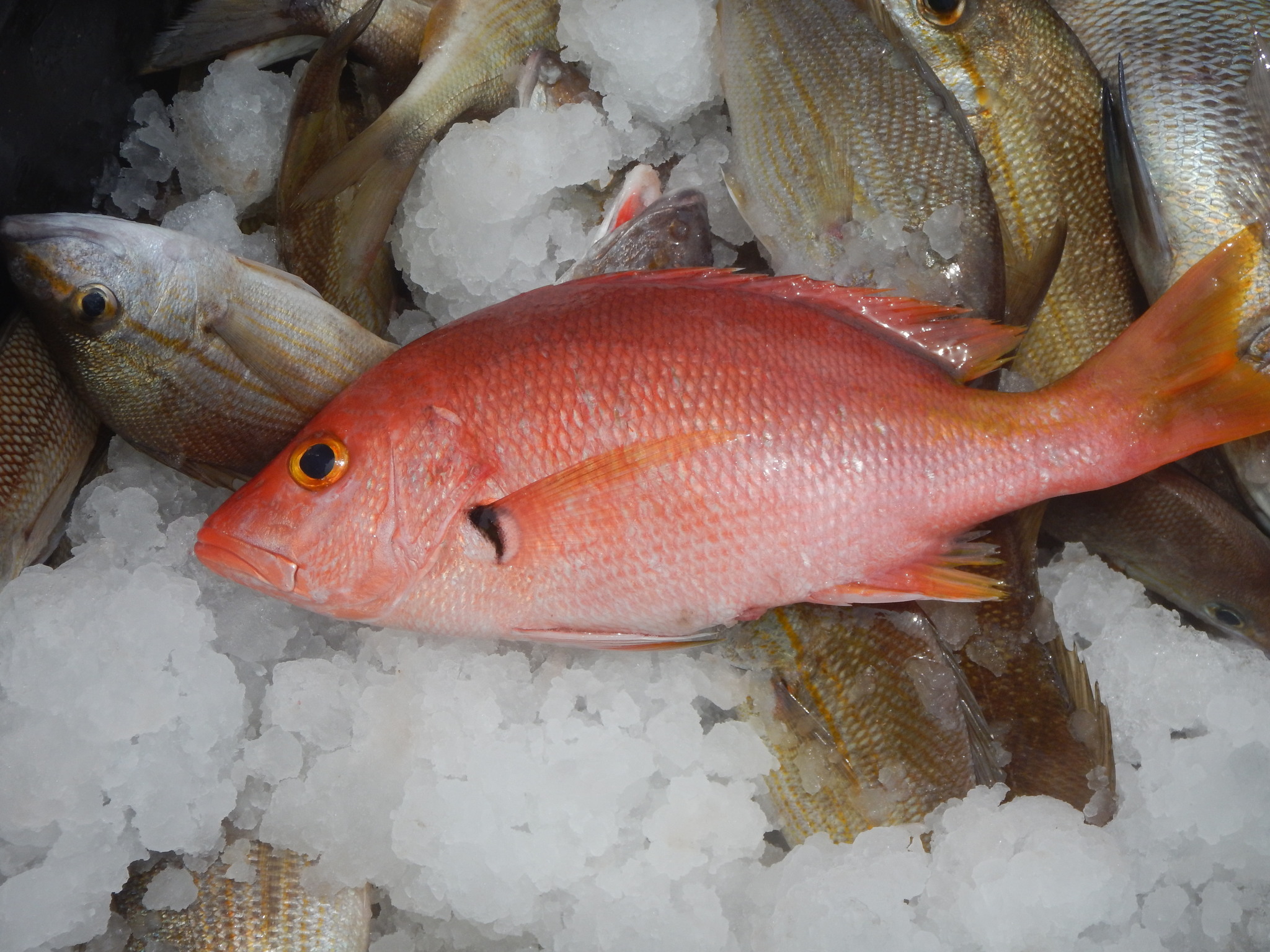
Blackfin snapper
- Family
- Lutjanidae
- Depth
- 20–200 m
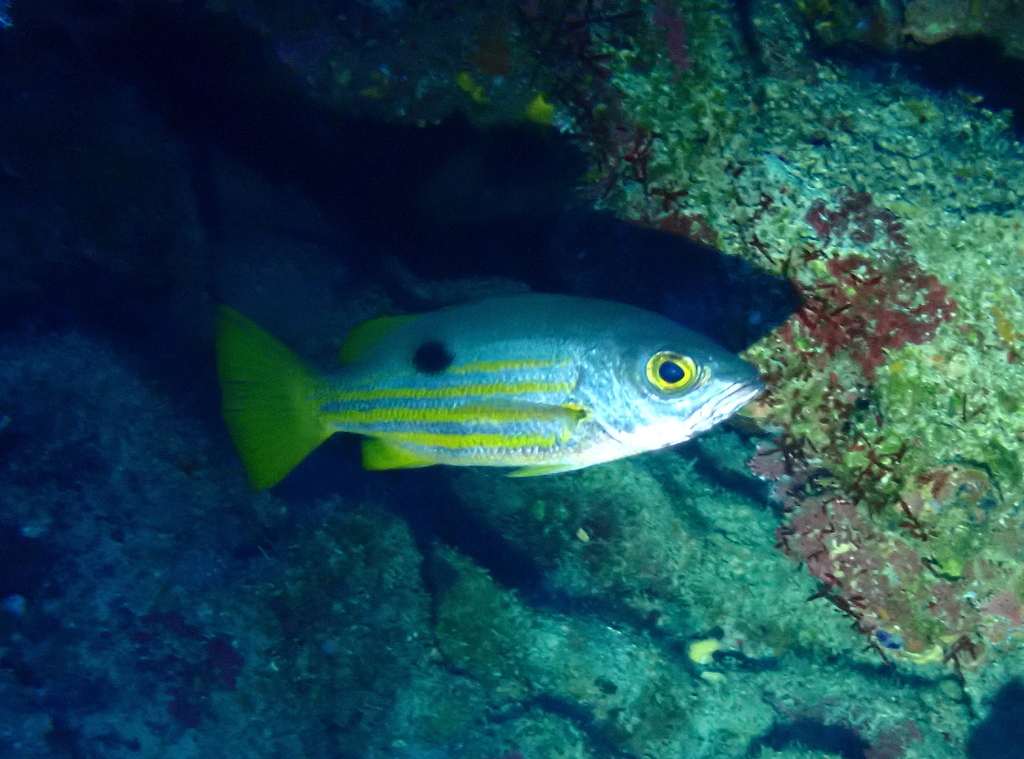
Blackspot snapper
- Family
- Lutjanidae
- Depth
- 5–20 m
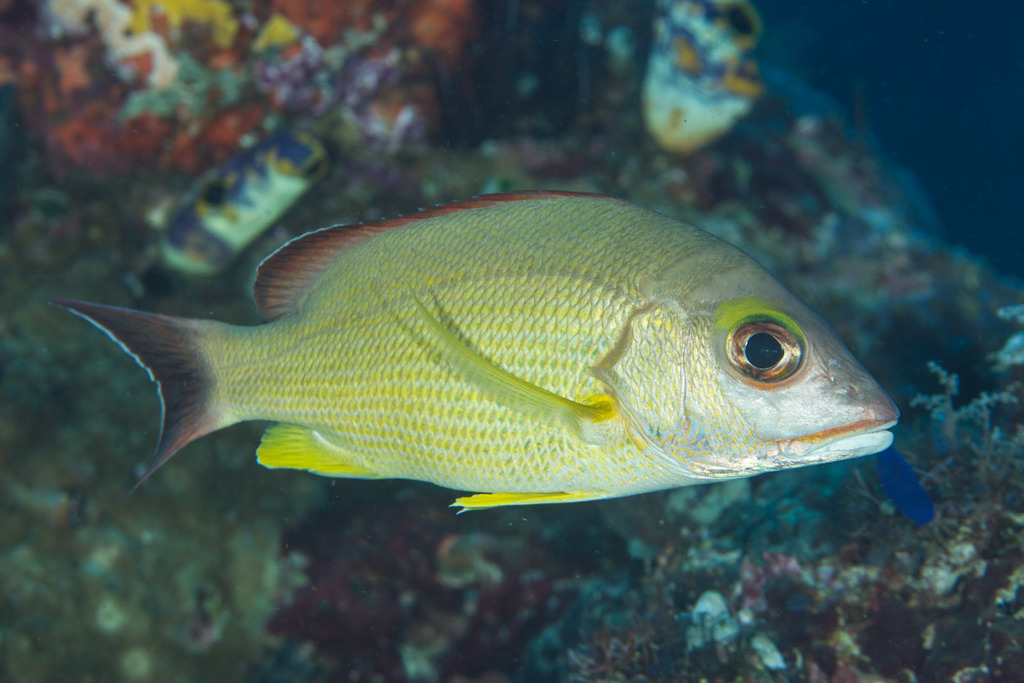
Blacktail snapper
- Family
- Lutjanidae
- Depth
- 1–80 m
- Season
- Jan, Feb, Mar, Apr, May, Jun, Jul, Aug, Sep, Oct, Nov, Dec
Guides for this water
Technique, gear and safety guides that fit Blubberlip snapper.