
Cubera snapper
Cubera snapper is a large lutjanid of the western Atlantic, from Nova Scotia and Bermuda to the Amazon. It lives from 18 to 70 m in subtropical water, reaches 160 cm TL and 57 kg, can live 55 years, and feeds on fish. Its season runs June to August.
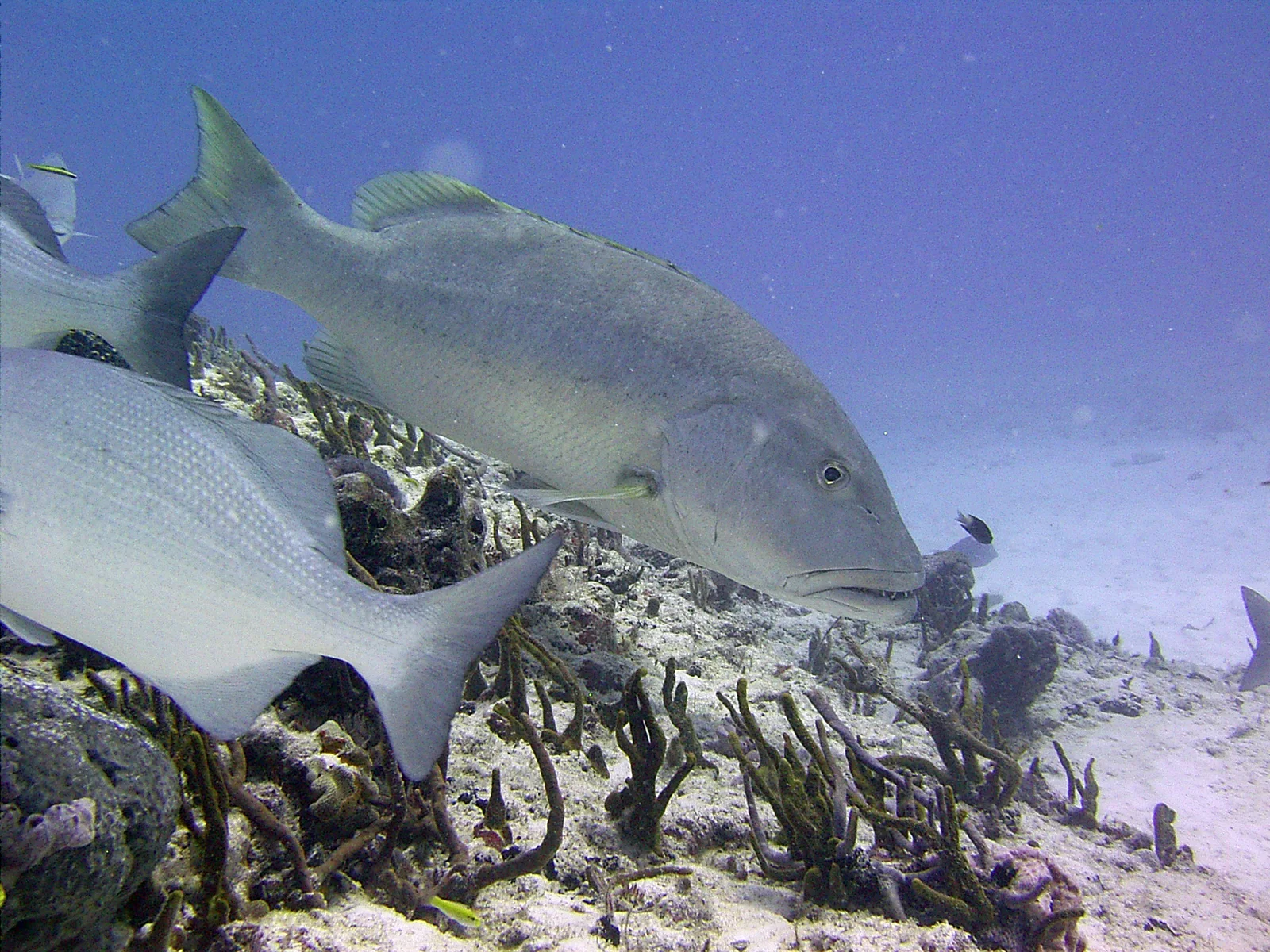
Cubera snapper (Lutjanus cyanopterus) is a fish of the family Lutjanidae. FishBase gives its range as: Western Atlantic: Nova Scotia and Bermuda (Anderson, pers. comm.) to the Amazon, Brazil. It is recorded from 18 to 70 m, in subtropical water. The recorded maxima are 160 cm TL, 57 kg, 55 years. Diet includes fishes. IUCN status: Vulnerable (VU). Chinese name: .
Three labels, one animal
"Reef-associated" is an ecological statement: the fish is found near reef. "Rocky" is a substrate statement: the bottom is hard. "Brackish" is a salinity statement. They can all be true of one fish without describing one place, because a rocky reef in slightly diluted water satisfies all three. What they cannot do is tell you which label to plan a trip around.
The useful ordering is by how directly each label is observed. A salinity record comes from a measurement; a substrate word comes from a trawl or a dive note; "reef-associated" is an inference about association. When they disagree, trust the measurement first, the substrate second, and the association last.
The name list repeats the pattern. Canteen snapper, Cuban snapper, cubera and gray snapper are all on file for this one fish. The labels multiply in every column.
The numbers that outlast the assessment
A 160 cm maximum and 57 kg are the figures on this page, and the 90 cm common length is the fish a rod is likely to meet. The maximum age is 55 years. That is the number with the longest reach: a fish landed this season can have been alive before the 2015 assessment, before the regulations now in force, and before most of the boats currently working its range.
A 55-year lifespan also changes what a size limit protects. Removing a 160 cm fish removes decades of spawning; a 90 cm fish is already a mature animal of unknown age. The record gives no maturity length at all, so there is no second number to compare the 90 cm common size against.
Rare north of Florida, listed in Canada
The distribution sentence runs from Nova Scotia and Bermuda to the Amazon, then adds that the species is rare north of Florida and apparently rare in the Gulf of Mexico. The country table includes Canada. Read together, the northern limit is a place the fish has been recorded and a place it is said to be rare, and those are not the same statement.
This article will not decide which one governs a trip. The practical reading is that a Canadian record is an occurrence and not a fishery, and that the working range begins where the species stops being described as rare. The note about the Gulf matters more to most anglers, because it removes a large body of water from the expected range without saying it is empty.
Eighteen to seventy metres, no usual band
The depth range is 18 to 70 m with no "usually" clause. That is a narrower band than most of the groupers here, and it sits entirely inside the range a recreational boat can work with a sounder and a safe amount of line. There is no deep floor to avoid and no shallow band declared atypical.
The single substrate word, rocky, therefore points at a specific kind of mark: hard relief inside a 52-metre window. Whether that relief is coral or not is exactly what the keyword refuses to say. For a drifting boat, the sounder's hard-bottom return is the practical version of the word.
iNaturalist holds 347 observations for the species. A low count on a large fish is a statement about how hard it is to photograph at depth, not about how rare it is.
The common length is ninety
Ninety centimetres is the common length against a 160 cm maximum, and it is a big fish by any recreational standard. The gap between 90 and 160 is where the record's rare fish live, and the gap between 90 and the absent maturity figure is where this article cannot go. There is no Lm value on the page, only the size data and the age.
For gear, the 57 kg ceiling is real but the 90 cm figure is the planning number. A rod that handles a 90 cm fish handles most of what the species produces; a rod chosen for 57 kg is chosen for a fish the page does not call typical. The same logic applies to the leader, except that rock rather than size is the abrasion problem.
Spawning known from one place
The spawning table gives June to August, from a single Cuban record. One record for a species distributed across 72 degrees of latitude does not establish a season for the species; it establishes a Cuban season, and the page presents it as the only one it has.
For a trip, that means the months are a hint rather than a rule. A closed season in one jurisdiction may be based on the same Cuban data, may be based on local data not in this record, or may not exist. The season should be checked country by country, and the single record should not be stretched to cover the Atlantic.
Vulnerable since 2015
Vulnerable, from an assessment dated 10 October 2015. With a 55-year lifespan, a 2015 category describes a generation of fish that is still being fished now; the assessment is not stale so much as slow, and the animals it describes are still in the water.
Ciguatera is listed separately. As with the other snappers in this group, the conservation category and the human-risk note answer different questions, and a healthy stock does not make a poisonous fish safe. The commercial and gamefish flags sit on the same line, which is why the species is known to two fleets.
When labels disagree, count something
The three habitat labels cannot be resolved by argument; they can be resolved by counting. Fish a rocky mark in full salinity and a rocky mark near fresh outflow, and record which produces cubera. That is the only test that turns "brackish" from a flag into a location, and it is the same test this article recommends for every adjective on the page.
The numbers to carry are 160, 90 and 55: a ceiling, a typical fish, and a lifespan. The labels can wait. A fish that large and that old is not described by a habitat word; it is described by how long it takes to replace.
GBIF's distribution file for the species holds 63 records: a national checklist for Brazil, three Colombian entries including the 2024 Resolución 0126 that lists it as Vulnerable and a separate migratory-species list, Mexico's national list, an IUCN record marked Vulnerable and a Venezuelan one marked Data Deficient. A NOAA review of western Atlantic snappers logged cubera at only three stations, all on Campeche Bank at 23, 25 and 26 fathoms, well offshore from estuarine conditions. Identity is settled; abundance, habitat and season are all still arguments.
Where these facts come from
Check these pages before you rely on a size, range or protection status.
- FishBase — Lutjanus cyanopterus — FishBase · T2
- GBIF — Lutjanus cyanopterus occurrence records — GBIF · T2
- IUCN Red List — Lutjanus cyanopterus — IUCN · T1
- Photo record — iNaturalist — iNaturalist · T3
Fish in the same water
These fish live in the same place.
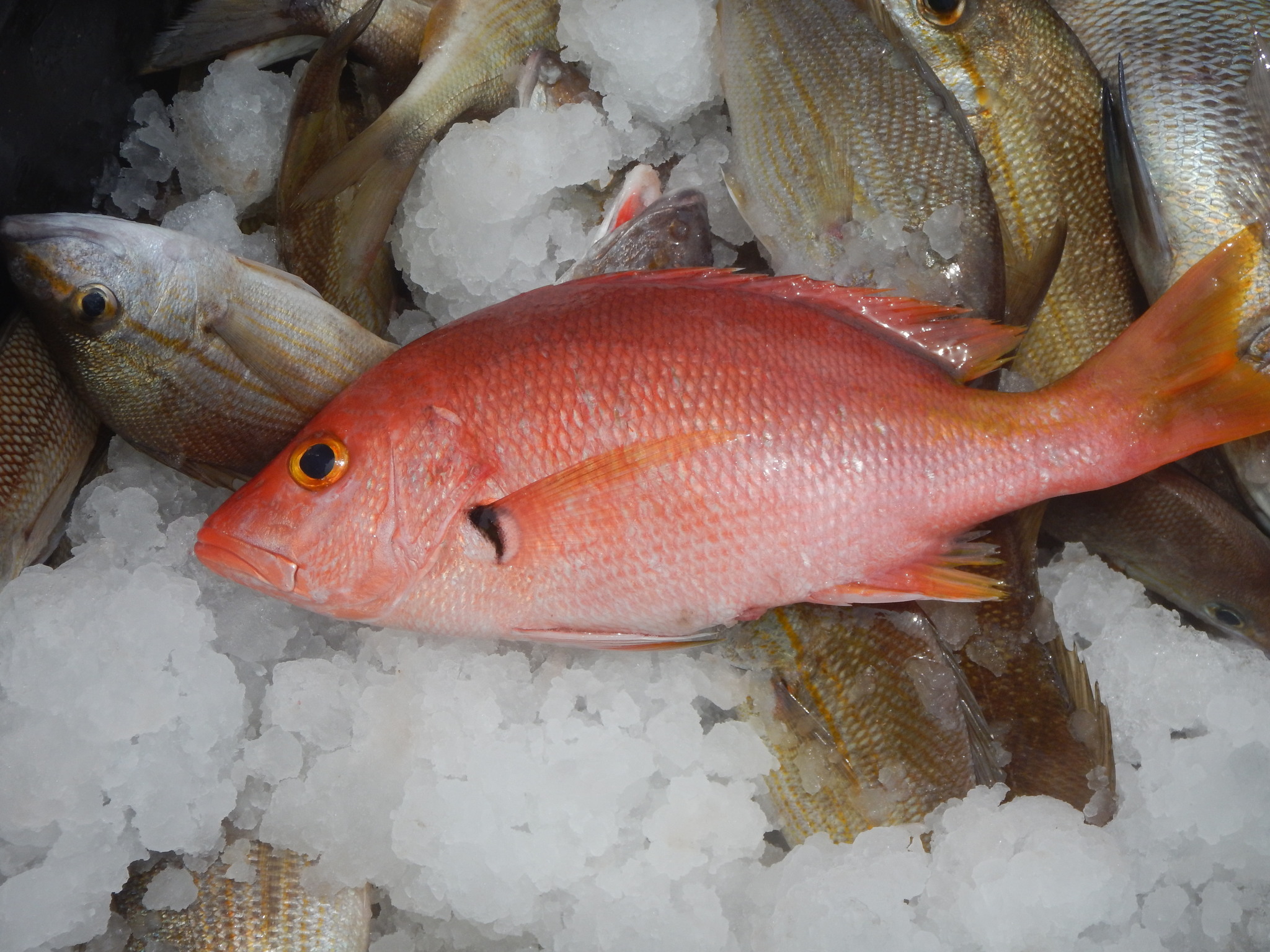
Blackfin snapper
- Family
- Lutjanidae
- Depth
- 20–200 m
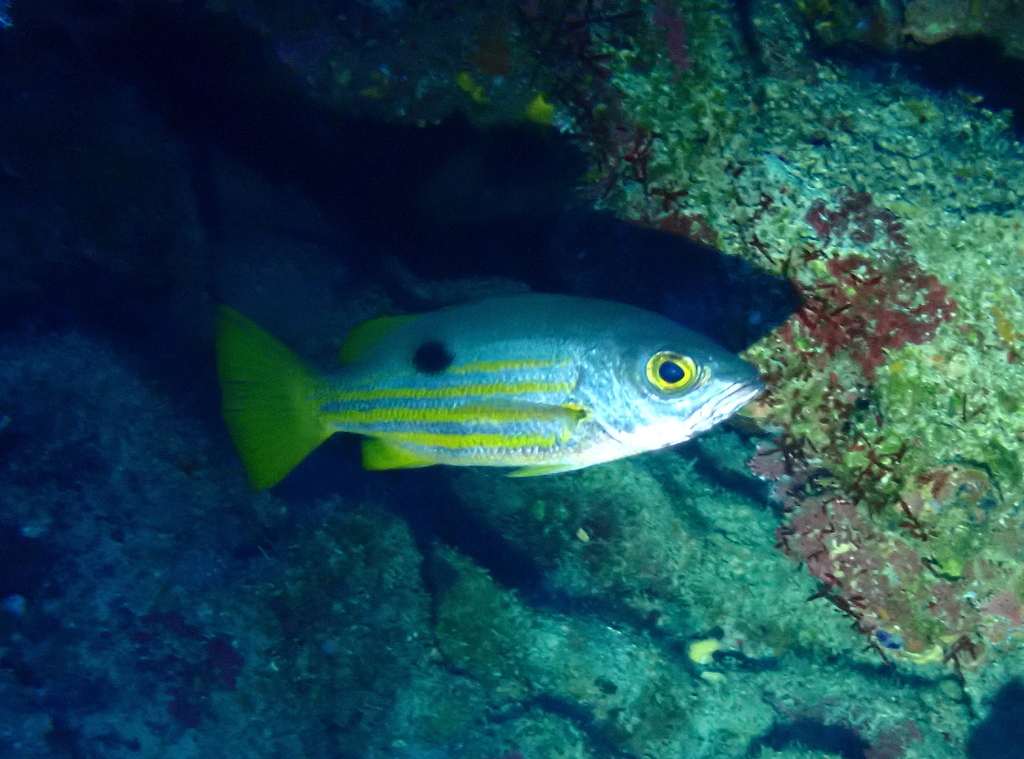
Blackspot snapper
- Family
- Lutjanidae
- Depth
- 5–20 m
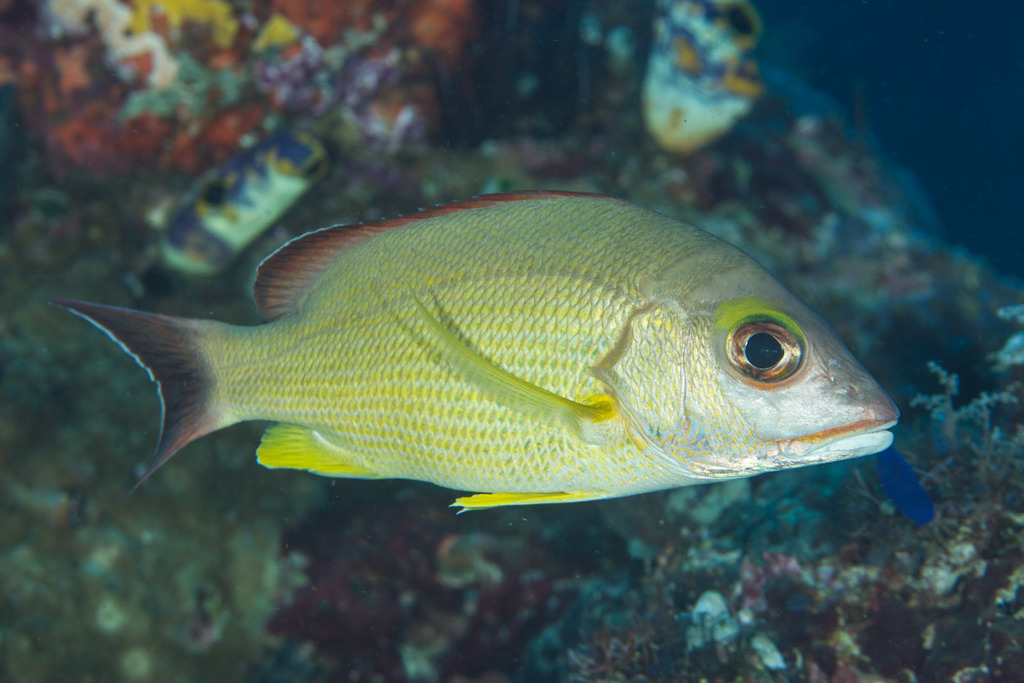
Blacktail snapper
- Family
- Lutjanidae
- Depth
- 1–80 m
- Season
- Jan, Feb, Mar, Apr, May, Jun, Jul, Aug, Sep, Oct, Nov, Dec
Guides for this water
Technique, gear and safety guides that fit Cubera snapper.