
Humpback red snapper
Two things decide where a humpback red snapper is worth fishing: a tail that is deeply forked with rounded lobes, and a body that sits on a slope rather than a flat. It is why a hooked fish turns downward and tries to reach the reef, and it is why a leader that survives the first ten seconds usually survives the fight.
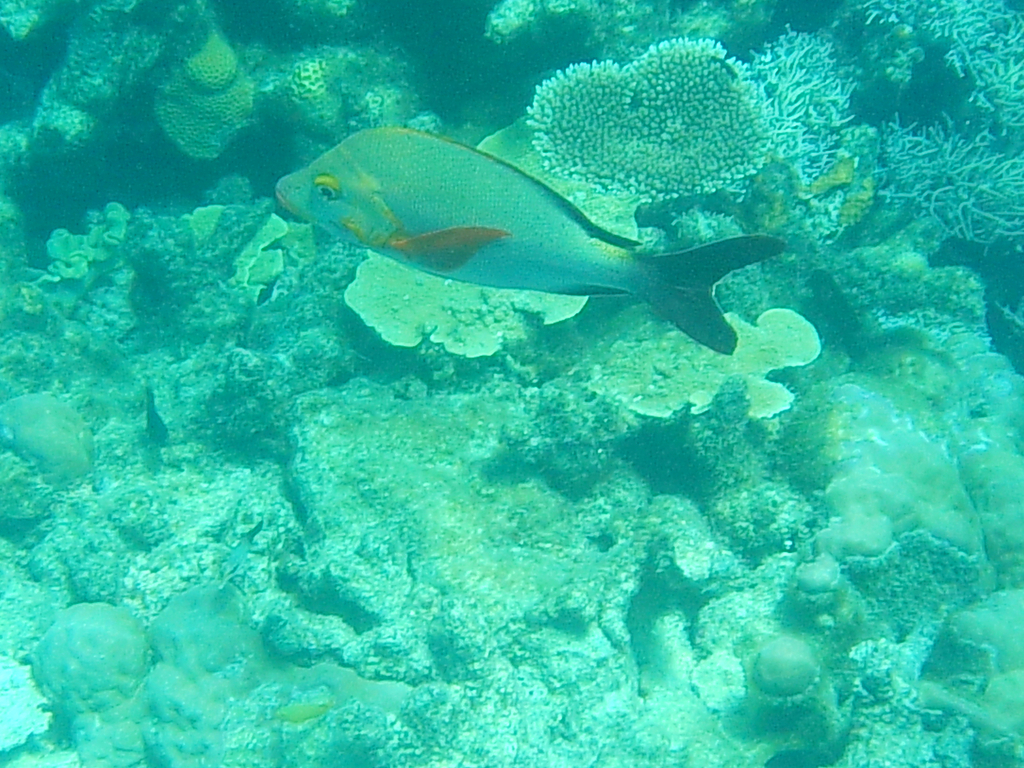
Two things decide where a humpback red snapper is worth fishing: a tail that is deeply forked with rounded lobes, and a body that sits on a slope rather than a flat. The tail is not decoration. It is why a hooked fish turns downward and tries to reach the reef, and it is why a leader that survives the first ten seconds usually survives the fight. FishBase puts the maximum at 56.8 cm fork length, the common length at 45 cm total length, and the maximum weight at 2.8 kg. Those are two different measurements, and the file does not reconcile them; treat the difference as tail fin, not as an error.
Slope, grass, and the gap between
The recorded depth range is 1 to 150 m, and the range alone will not find the fish. Adults are the slope fish: coral reefs and coastal slopes, often in large aggregations that hang almost still during the day. Sub-adults form big schools that hold or drift slowly along the same slopes. Juveniles are somewhere else entirely, in seagrass beds and mixed sand-and-coral shallows on sheltered reefs. Read that as three different marks, not one. A flat reef top with grass patches is a nursery; a slope with a visible break is where the adults are. The 150 m end is a record, not a daily target.
No spawning month in the file
FishBase does not give a spawning season for this species, only the aggregation behaviour. That absence is worth respecting. A page that invents a month would send a boat out on the wrong week. What the file does give is age: a maximum reported age of 24 years, with low resilience and a minimum population doubling time of 4.5 to 14 years. A 45 cm fish is not a young fish by default. Spawning is unrecorded; the practical signal is the school itself, and a school that stays on the same slope for several days is a better indicator than any calendar.
Fishing the foot of the slope
Bottom gear is the method the record supports, along with traps and gill nets in the commercial fishery. For a rod, the useful placement is the foot of the slope: the lead has to hold, the bait sits half a metre to a metre off the bottom, and the current works it slowly away from the wall. The diet is broad — fishes, shrimps, crabs, lobsters, stomatopods, cephalopods, echinoderms and brittle stars — so fresh fish, shrimp or crab all have a case. During the day the school is stationary and the bite is slow; a bait that moves too much is ignored. Toward evening the school starts to move, and the search should move with it.
Tackle for the everyday 45 cm fish
Build the outfit around 45 cm, not around the 56.8 cm record. PE 2–3, a 40–50 lb fluorocarbon leader, and a wide-gap hook in the 5/0–7/0 range will handle the ordinary fish and still land most of the big ones. Maturity is recorded at 21.5 cm, so a fish below that line has not spawned. The slope is the real opponent: check the last metre of leader after every snag, and cut and retie at the first sign of abrasion. Teeth are not the problem here; rock is.
Ciguatera, and rules that follow the reef
FishBase records ciguatera poisoning for this species, and that belongs in the trip plan, not in a footnote. The toxin comes from benthic dinoflagellates and accumulates up the food chain; larger and older individuals carry more of it. The liver, head and viscera are the parts not to eat. There is no reliable field test, and numbness around the mouth or gastrointestinal symptoms after a meal need medical attention rather than another beer. Individual fish from the same reef differ widely, so a companion who ate one without problems proves nothing. Uses recorded are commercial fishing, gamefishing and public aquariums, and the Red List status is Least Concern, assessed 4 March 2015. Rules differ by coast. The Maldives bans reef shark fishing nationwide, closes spawning aggregation sites for groupers and other reef fish seasonally, requires export permits and bars sale of tourist catches. Thailand closes Similan and Surin national parks in the monsoon, roughly May to October, and the marine fisheries management plan sets separate closures and gear limits. Indonesia zones its marine protected areas and manages reef-fish exports and sizes by ministerial regulation. The Philippines works through RA 8550 as amended by RA 10654, with closures and MPAs set by national and local government. Mozambique, Kenya and Tanzania each apply their own fisheries law, with different export and reef protection rules. Check the current notices for the specific site and month.
What this page can and cannot settle
The identification counts — 10 dorsal spines, 13–14 soft rays, three anal spines and eight soft rays, 25–30 gill rakers — are from the same summary. The juvenile caudal spot is the cleanest field mark; adults lose it. iNaturalist holds 1,866 observations for the species. The local names and the regional note that this snapper is among the dominant reef species around the Gili Islands come from the project's regional file. Nothing here is a promise that a school will be on the same slope tomorrow.
How to catch it
Boat bottom fishing
Fished with the listed approach, matched to the recorded depth and size.
Handline
Fished with the listed approach, matched to the recorded depth and size.
Where these facts come from
Check these pages before you rely on a size, range or protection status.
- FishBase — Lutjanus gibbus — FishBase · T2
- GBIF — Lutjanus gibbus occurrence records — GBIF · T2
- IUCN Red List — Lutjanus gibbus — IUCN · T1
- Photo record — iNaturalist — iNaturalist · T3
Fish in the same water
These fish live in the same place.
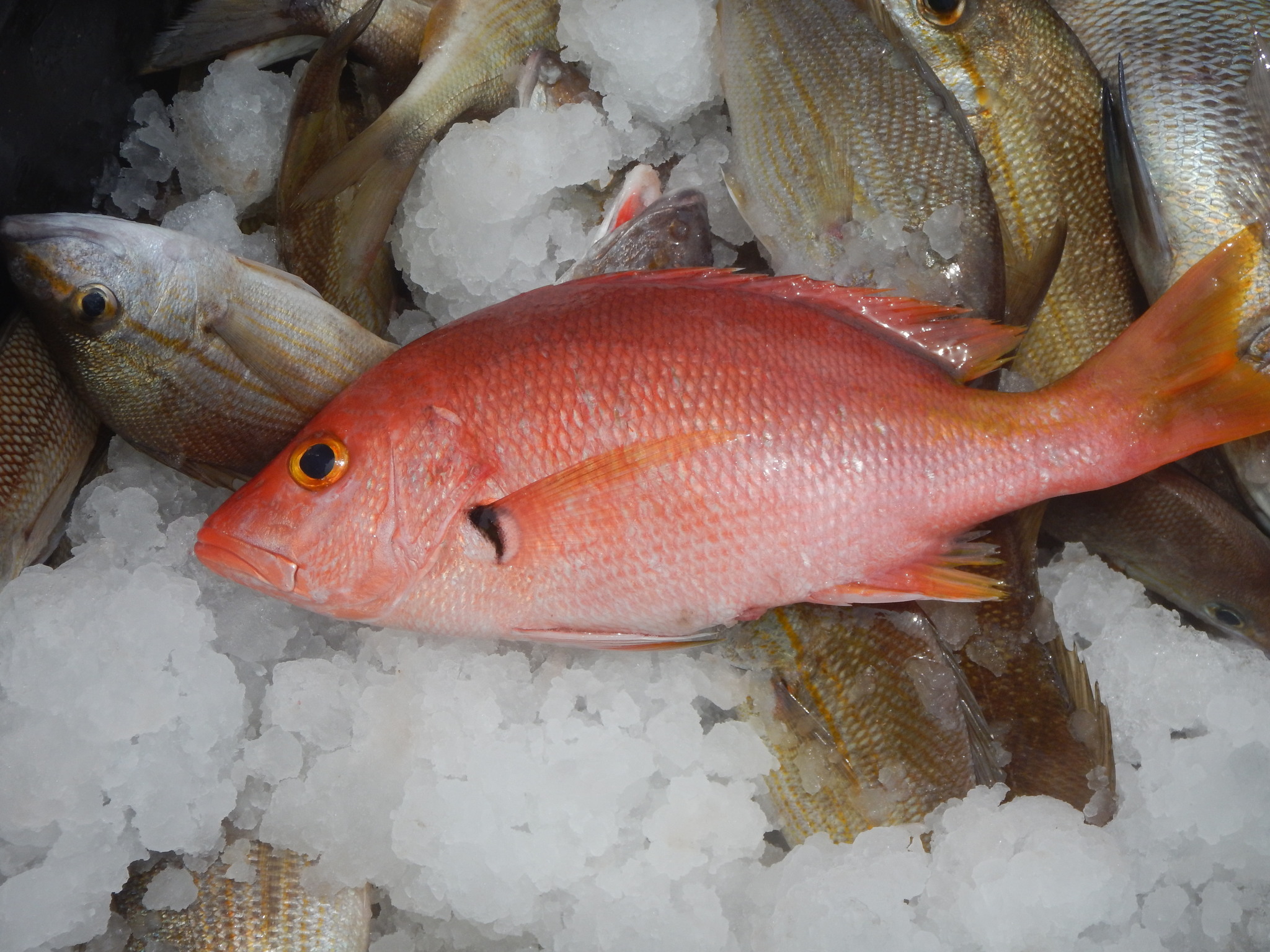
Blackfin snapper
- Family
- Lutjanidae
- Depth
- 20–200 m
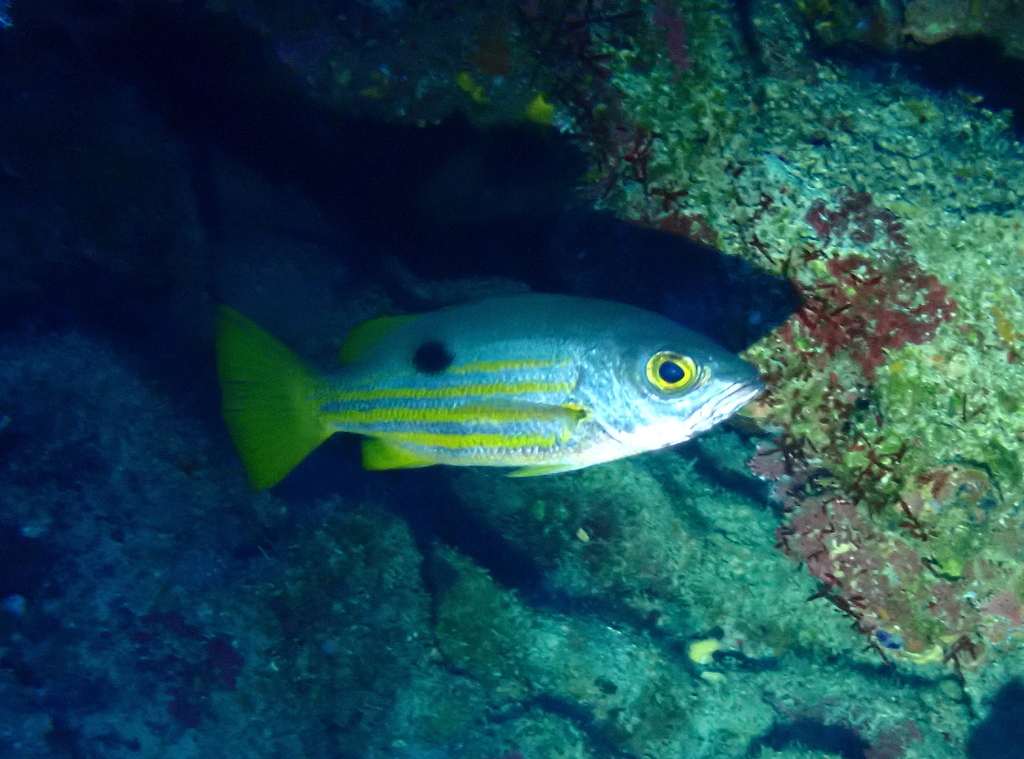
Blackspot snapper
- Family
- Lutjanidae
- Depth
- 5–20 m
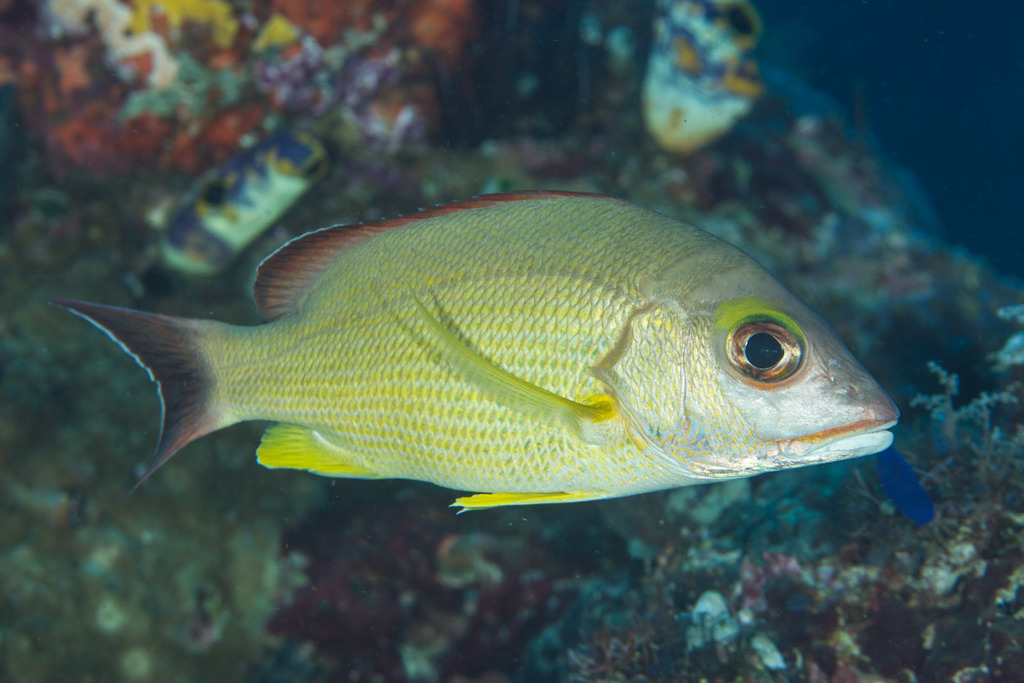
Blacktail snapper
- Family
- Lutjanidae
- Depth
- 1–80 m
- Season
- Jan, Feb, Mar, Apr, May, Jun, Jul, Aug, Sep, Oct, Nov, Dec
Guides for this water
Technique, gear and safety guides that fit Humpback red snapper.