
Dog snapper
Dog snapper is a lutjanid of the western Atlantic, from Massachusetts through the Gulf of Mexico and Caribbean to São Paulo. It lives from 2 to 40 m in subtropical water, reaches 128 cm TL and 28.6 kg, can live 33 years, and feeds on fish and molluscs. Its season runs March to December.

Dog snapper (Lutjanus jocu) is a fish of the family Lutjanidae. FishBase gives its range as: Western Atlantic: Massachusetts, USA to São Paulo, Brazil, including the Gulf of Mexico and the Caribbean Sea. Eastern Atlantic: St. Paul's Rocks and Ascension Island, Tinhosa Grande, south of Príncipe Island (L.A. It is recorded from 2 to 40 m, in subtropical water. The recorded maxima are 128 cm TL, 28.6 kg, 33 years. Diet includes fishes and molluscs. IUCN status: Data Deficient (DD). Chinese name: .
Two numbers, two fishes
Sixty centimetres is the fish that fills a fish box, feeds a family and appears in most photographs. One hundred and twenty-eight is the fish that appears in a record book. The page gives both without ranking them, and that is the correct presentation: the maximum is a documented event, the common length is a documented norm, and neither is a prediction for the next cast.
The practical use of the pair is to stop planning for the wrong one: a trip built around 128 cm is built around an outlier, while 60 cm is what the species actually produces.
Nine times the weight
Weight does not scale with length in a straight line; it scales with volume, so doubling length multiplies mass by roughly eight. At 128 cm against 60 cm the length ratio is about 2.1, which puts the weight ratio near 9. A 28.6 kg fish is therefore not "twice" a 60 cm one in any useful sense; it is a different order of animal.
This arithmetic is the reason the record fish is a separate category rather than a bigger version of the common one. A rod, a leader and a net chosen for 60 cm are not merely lighter versions of the gear for 128 cm; they are gear for a different problem. The number to remember is that the gap is multiplicative, not additive.
Maturity at half the common size
Maturity averages 32.4 cm, within a 31–36 cm range. Compared with the 60 cm common length, that puts the typical landed fish well above the size of first maturity — roughly twice it. This is the opposite of the pattern in the groupers in this group, where the common fish sits near or below the maturity midpoint.
The consequence is that the 60 cm fish is an adult, not a juvenile that happens to be legal. The bottom of the range, 31 cm, is the size at which maturity is already possible, and a 60 cm one almost certainly is. That does not make small fish a resource; it makes the common size a mature size, which is a different and more useful statement than "the fish are getting smaller".
Two to forty metres, usually five to thirty
The depth range is 2 to 40 m, usually 5 to 30 m. That is shallow water by any standard, and the "usually" band is shallow enough to be reached from shore in places and by a small boat everywhere else. There is no deep floor in this article, and no need for a sounder to find the first mark.
The habitat keywords are reef, rocky and estuary. The third word decides access: an estuary mouth is a place a land-based angler can stand, and a rocky shoreline is the other. A dog snapper is one of the few species in this batch that a shore caster can meet on equal terms with a boat.
iNaturalist holds 874 observations for the taxon. For a shallow, shore-reachable fish that is a modest number, which fits a fish photographed in estuaries rather than on offshore reefs.
The estuary is in the keyword list
Unlike some snappers in this group, this one carries estuary in its habitat field, and the environment line adds freshwater as well as brackish. That is a stronger statement than a tolerance flag: the fish is recorded in the habitat where fresh and salt water meet, not merely in water that happens to be diluted.
For a shore angler this is the most actionable line on the page. A river mouth at the right tide is a place where the species is expected, and the 5 to 30 m usual band keeps it reachable without a boat.
Data Deficient is a real category
The Red List entry is Data Deficient, assessed on 10 October 2015. That differs from Not Evaluated and from Least Concern: it means an assessment exists and the data behind it were insufficient to place the species in a category. The absence of a population number is therefore a finding, not an oversight.
For the record-versus-common argument, Data Deficient is the missing middle. There is no stock estimate to say whether 128 cm fish are 1 in a thousand or 1 in a million, and no trend to say whether the common length is stable. The two size figures stand alone precisely because the number that would connect them does not exist.
GBIF's 72 distribution records include a British entry flagged as introduced, an Italian one from the Ligurian Sea, and checklists from Portugal, São Tomé and Sint Maarten; the IUCN entry is Data Deficient. A NOAA survey of western Atlantic snappers logged the species at five stations — two at 5 fathoms and three at 13 — off British Honduras and the Colombian coast, with its known northern limit at southern Florida and the Bahamas. Identity is the one thing in this article that is not in doubt.
March to December, five records
The spawning table gives March to December, backed by five regional records: Bahia in Brazil, June through December across 2005–07; Ceará in Brazil in December; Cuba from April to June; the north-eastern Caribbean in March; and Jamaica in March. Five records across a wide range is thin but not empty, and it is more than the groupers in this batch can offer.
For planning, the season covers most of the year and the records are regional. A closed season in one country is a local instrument; the species-level line should not be treated as a single calendar.
Fishing for the fish that exists
Start with the habitat the record actually names: an estuary mouth or a coastal rock, five to thirty metres, at a state of tide that brings clear water into the outflow. Fish for the 60 cm animal, because that is the one the species produces, and treat anything larger as a bonus rather than a plan.
The 128 cm and 28.6 kg figures are real and documented, and they are not a promise. A Data Deficient stock cannot tell you how many of them are left, which is an argument for releasing the big ones rather than an argument for chasing them. The gap between 60 and 128 is where the record lives; the space around 60 is where the fishing lives.
Where these facts come from
Check these pages before you rely on a size, range or protection status.
- FishBase — Lutjanus jocu — FishBase · T2
- GBIF — Lutjanus jocu occurrence records — GBIF · T2
- IUCN Red List — Lutjanus jocu — IUCN · T1
- Photo record — iNaturalist — iNaturalist · T3
Fish in the same water
These fish live in the same place.
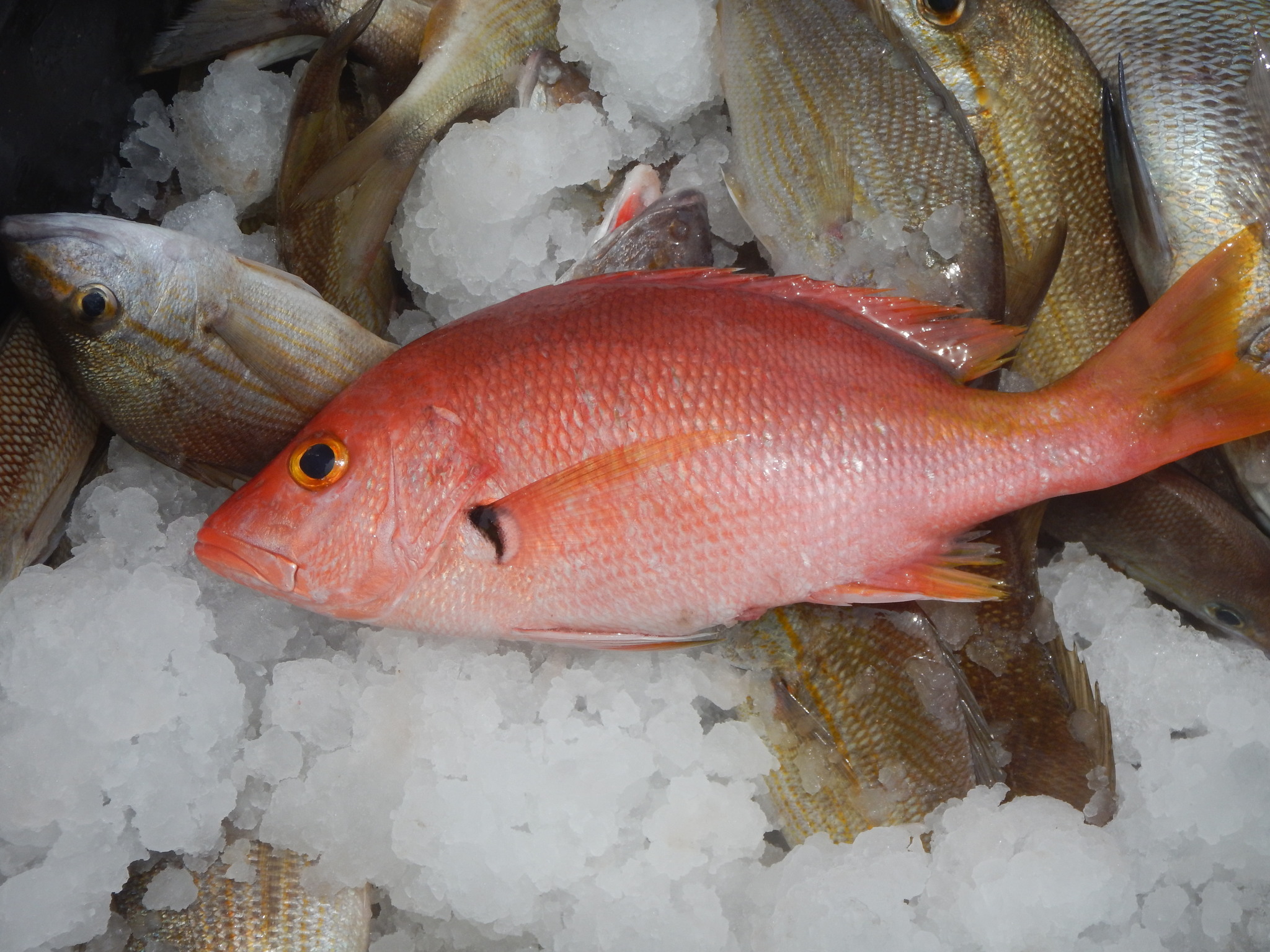
Blackfin snapper
- Family
- Lutjanidae
- Depth
- 20–200 m
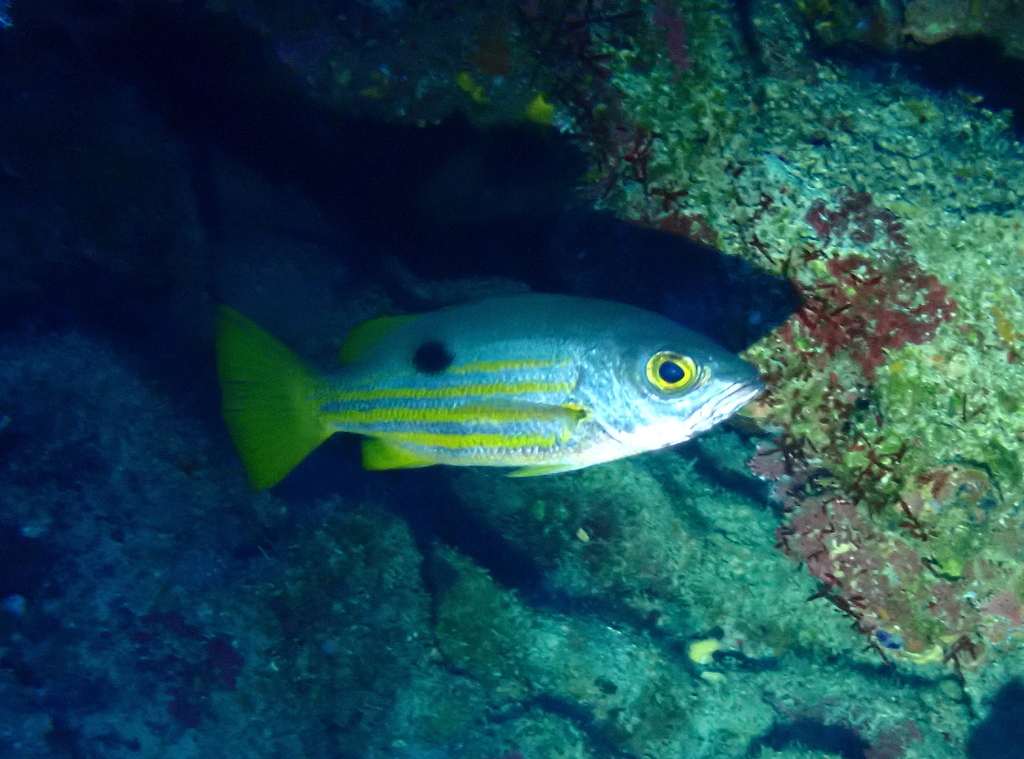
Blackspot snapper
- Family
- Lutjanidae
- Depth
- 5–20 m
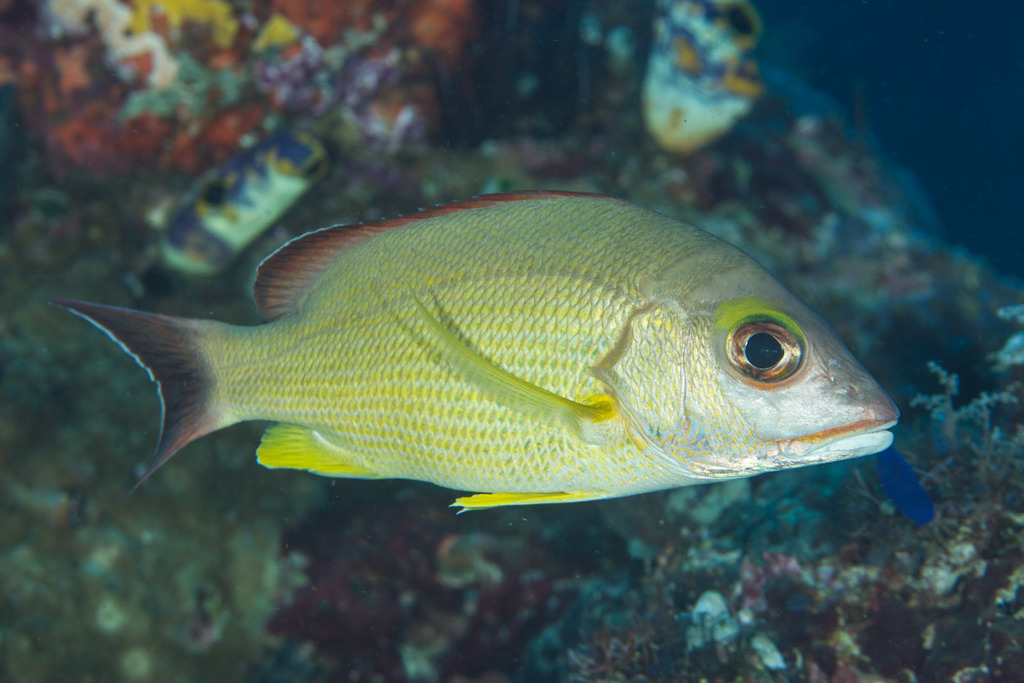
Blacktail snapper
- Family
- Lutjanidae
- Depth
- 1–80 m
- Season
- Jan, Feb, Mar, Apr, May, Jun, Jul, Aug, Sep, Oct, Nov, Dec
Guides for this water
Technique, gear and safety guides that fit Dog snapper.