
Pacific dog snapper
The two numbers that should not belong to the same fish are 170 cm and five to twelve metres. One hundred and seventy centimetres is a maximum length; five to twelve metres is the usual depth band. A fish of that size living in water that shallow is not an offshore animal with a shallow accident; it is a shallow-water animal with a very large maximum.
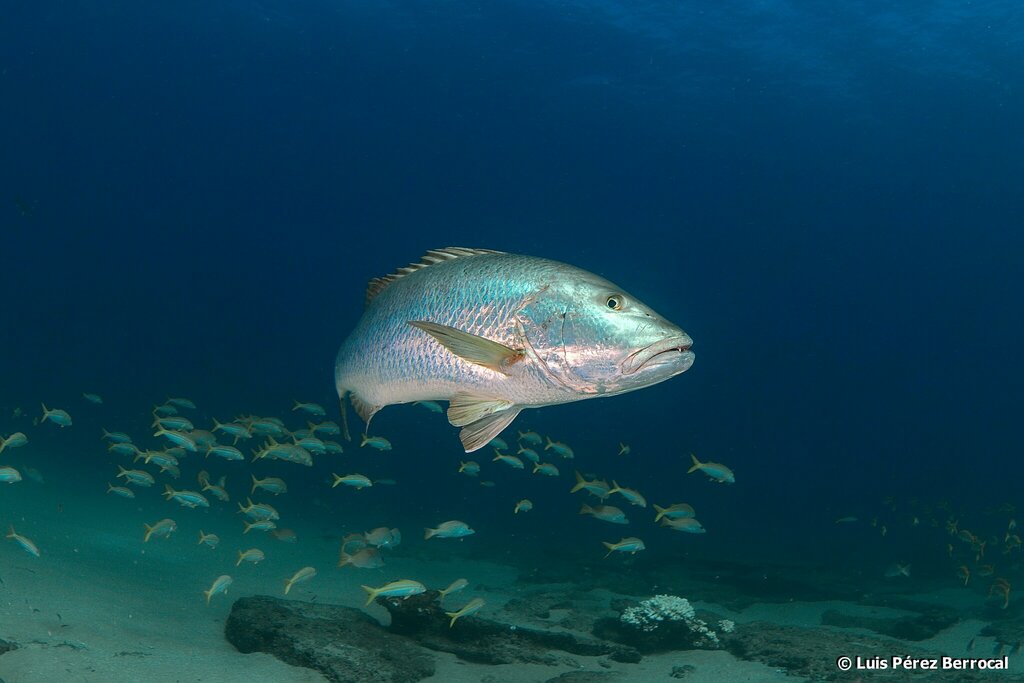
The two numbers that should not belong to the same fish are 170 cm and five to twelve metres. One hundred and seventy centimetres is a maximum length; five to twelve metres is the usual depth band. A fish of that size living in water that shallow is not an offshore animal with a shallow accident; it is a shallow-water animal with a very large maximum. That combination is the subject here, because it decides where on the bottom you fish: not how deep, but exactly which piece of hard ground a 170 cm ambusher would choose.
A giant in the shallows
Most of the large snappers and groupers in this batch live deep enough that a sounder and a long line are prerequisites. This one is recorded from 0 to 60 m, usually 5 to 12 m. Twelve metres is a comfortable free-dive or a short cast from a rock in many places; five metres is barely below a boat. The species is therefore reachable by almost anyone, which is unusual for a fish with a 170 cm ceiling.
The habitat keywords are reef, rocky, estuary and coastal. Four words, and all four describe ground that a shore or small-boat angler can see, which changes the method from searching to reading.
iNaturalist holds 566 observations for the taxon. For a fish this large and this shallow, that is a modest archive, and it is consistent with a species that is seen by fishers more often than by photographers.
Zero metres, and what the column says
The lower bound is zero, which is a real record and not a rounding error: the fish has been recorded at the surface. For a snapper of this size, a zero-metre record is more likely to describe a fish moving over an extremely shallow reef crest or a river mouth than one living at the air interface. The record does not say which, and this article will not guess.
What the column does say clearly is the shape of the distribution: a wide outer limit and a very shallow usual band. The fishing consequence is that the first ten metres matter more than the last fifty. A boat that starts at 60 m because that is the maximum has started at the wrong end of the column.
Four substrate words, one ambush point
Reef, rock, estuary and coastal are four descriptions of the same shallow edge seen from four directions. A rocky reef inside a coastal zone near an estuary mouth satisfies all four at once, and that is precisely the kind of place a large ambush predator would hold. The words do not conflict; they narrow.
For a drifting boat, the practical version is the seam where hard bottom meets soft, because that is the seam where a fish sits against structure and still sees open water. The record cannot tell you which seam on which coast; it can tell you that the seam is the target, and that it lies inside twelve metres most of the time.
The strike, inferred from the diet
The diet keyword is fishes, in one word, and the use line lists commercial fishing and gamefishing. A fish-eater of that size in shallow water is built to take prey in a short burst rather than to chase across open ground, but that is an inference from size and diet rather than something the record states.
The method that follows is a bait or a lure presented close to structure and allowed to sit, not one retrieved across empty water. Whole fish and large fish-profile lures match the keyword; a fast surface retrieve does not, because the record calls the fish a bottom-dwelling reef associate, and the depth column puts its usual band at five to twelve metres rather than at the surface.
One hundred and seventy without a common size
The maximum is 170 cm at 35.7 kg, and the common length is blank. The age is blank as well. So the record gives the largest known fish and nothing about the one an angler is likely to meet. A blank common length is not a zero and should not be read as one; it means the source has no figure.
For planning, a 35.7 kg ceiling is a real possibility and an unlikely one. The gear question cannot be answered from the page, so it has to be answered from the ground: heavy leader for rock, a drag that can be locked by hand, and a net large enough for a fish that is longer than most landing mats. The 170 cm figure is the reason to bring the net, not the reason to expect the fish.
Names that belong to another ocean
The English list carries Pacific cubera, Pacific dog snapper and plain dog snapper, and the last one is also the common name of an Atlantic species in this same batch. A name that travels between oceans is a name that cannot be used to settle an identification, which is why the scientific name is the only reliable label here.
The adjective "Pacific" is doing the work that the unqualified name cannot. In a region where both oceans are fished and both names are sold, the unqualified word is the one to distrust. This is not a taxonomy problem to be corrected in a market; it is a reason to ask for the binomial.
Least Concern since 2007
The Red List category is Least Concern, assessed on 23 May 2007. It is the oldest assessment date in this batch and the only entry that does not sit above Least Concern. An eighteen-year-old listing describes a stock not considered at risk when the assessment was made, not one monitored since.
The threat-to-humans field is recorded as none, which is a different column from the conservation category. It means the record carries no ciguatera note for this species, not that every fish is safe. For a large shallow predator, the absence of a toxin flag is worth noticing precisely because several relatives in this batch do carry one.
Where to put the bait
Fish the usual band first: five to twelve metres, on hard ground, at the seam against soft bottom. Do not start at the maximum depth because the maximum is not the norm, and do not start in the middle of open water because the keywords are reef and rock rather than coastal alone.
The 170 cm and 35.7 kg figures are the outer edge of what exists, with the common length left blank in between. Sit the bait, wait longer than feels natural, and measure anything you land — because the only way this page's missing middle gets filled for your coast is with numbers from fish that were actually caught.
GBIF's distribution file holds five records: an ITIS East Pacific entry, a 2010 checklist of Bahía Solano mangroves in Chocó, a Neotropical freshwater assessment, the IUCN Least Concern entry, and a Mexican national list. A 2014 DataMares survey of more than 30 mangrove sites in the western Gulf of California found L. novemfasciatus and L. aratus with size distributions shifted toward more, larger fish than L. argentiventris, and total snapper density varying by a factor of four between sites. That division is the last useful thing on the page: identity from the database, position from the ground.
Where these facts come from
Check these pages before you rely on a size, range or protection status.
- FishBase — Lutjanus novemfasciatus — FishBase · T2
- GBIF — Lutjanus novemfasciatus occurrence records — GBIF · T2
- IUCN Red List — Lutjanus novemfasciatus — IUCN · T1
- Photo record — iNaturalist — iNaturalist · T3
Fish in the same water
These fish live in the same place.
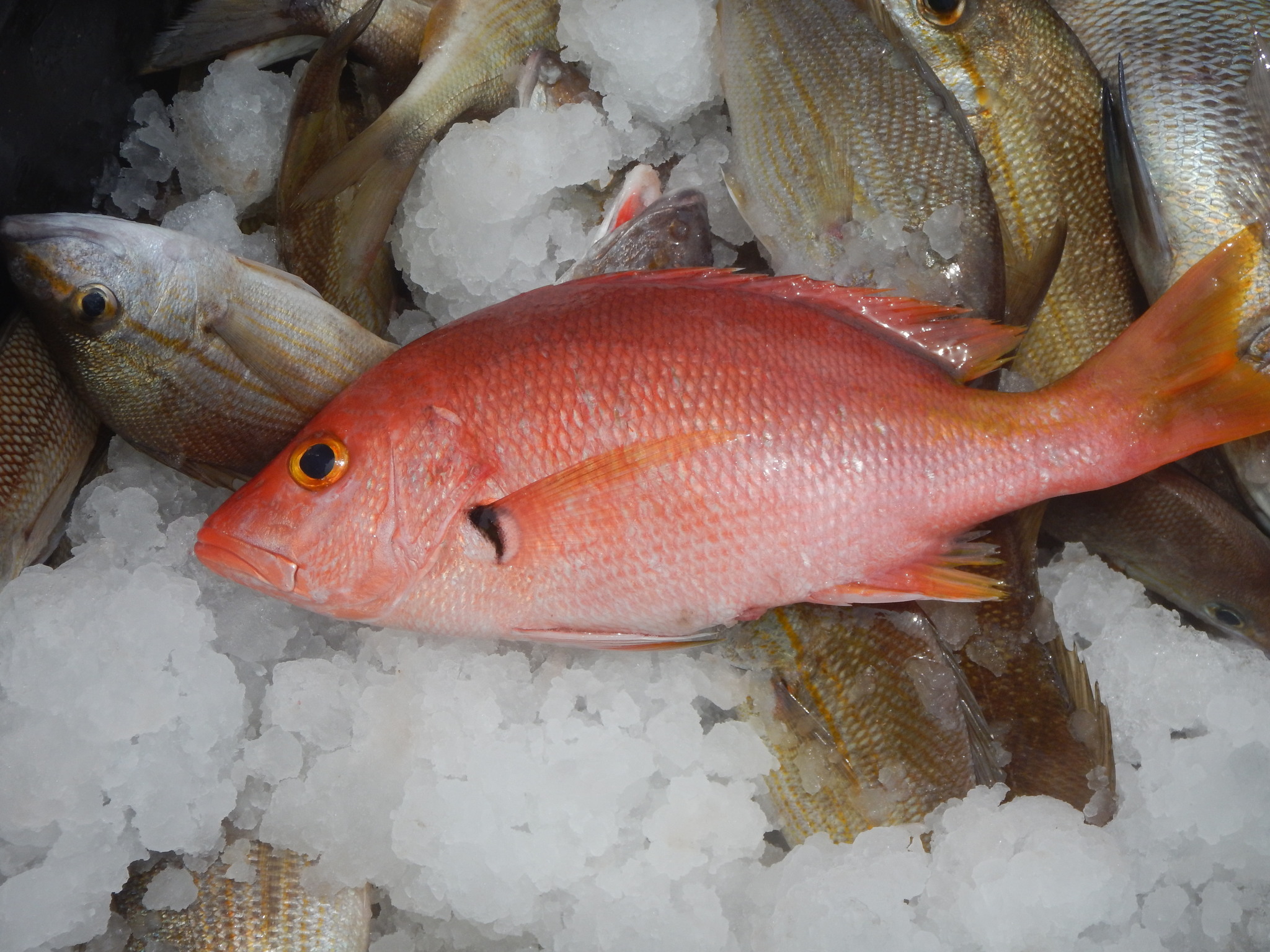
Blackfin snapper
- Family
- Lutjanidae
- Depth
- 20–200 m
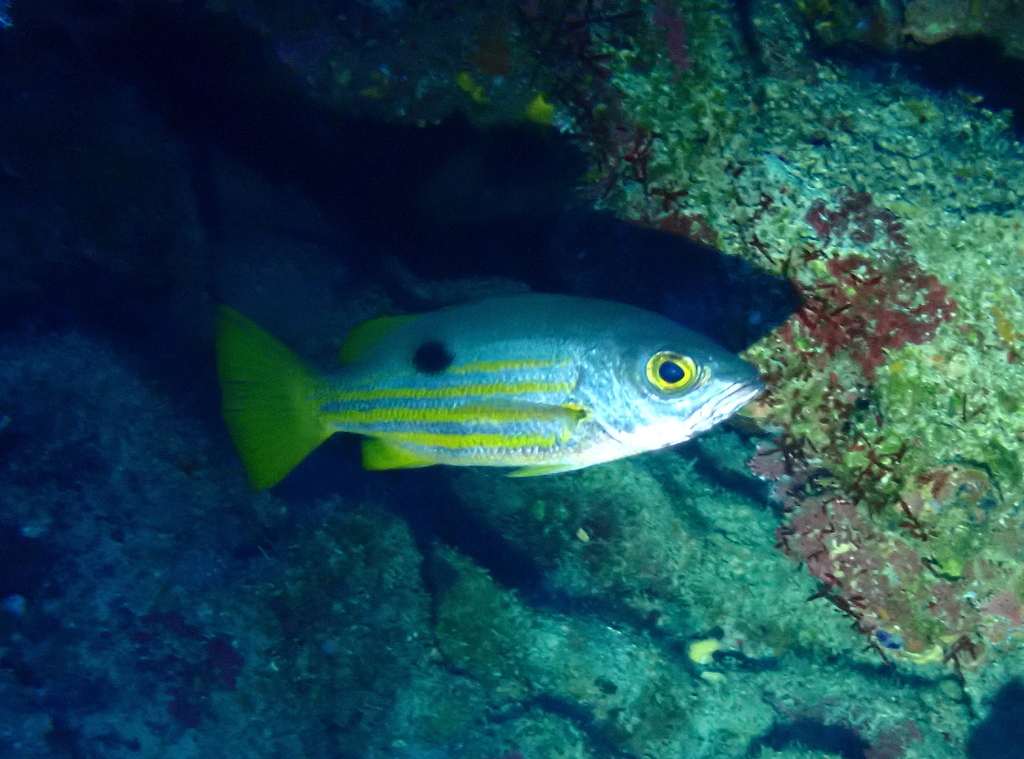
Blackspot snapper
- Family
- Lutjanidae
- Depth
- 5–20 m
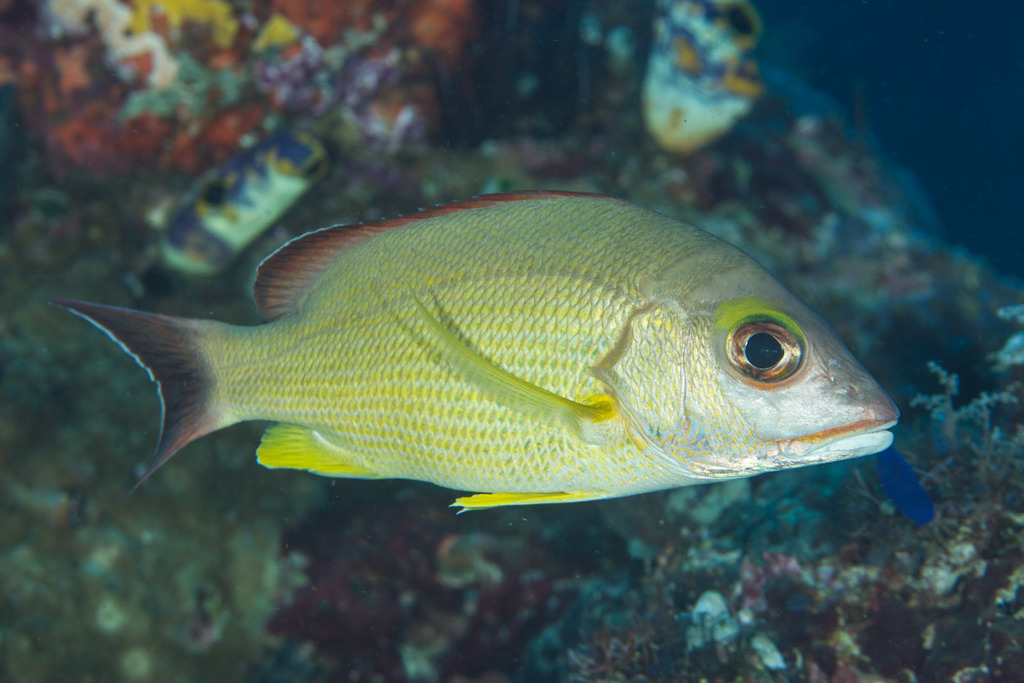
Blacktail snapper
- Family
- Lutjanidae
- Depth
- 1–80 m
- Season
- Jan, Feb, Mar, Apr, May, Jun, Jul, Aug, Sep, Oct, Nov, Dec
Guides for this water
Technique, gear and safety guides that fit Pacific dog snapper.