
Five-lined snapper
The five-lined snapper is an Indo-West Pacific lutjanid, from the Persian Gulf and Gulf of Oman to Fiji, north to southern Japan. Older literature referred to it as Lutjanus spilurus. It is recorded as marine and reef-associated, at 2–40 m, in tropical water from 35°N to 37°S and 42°E to 176°W.
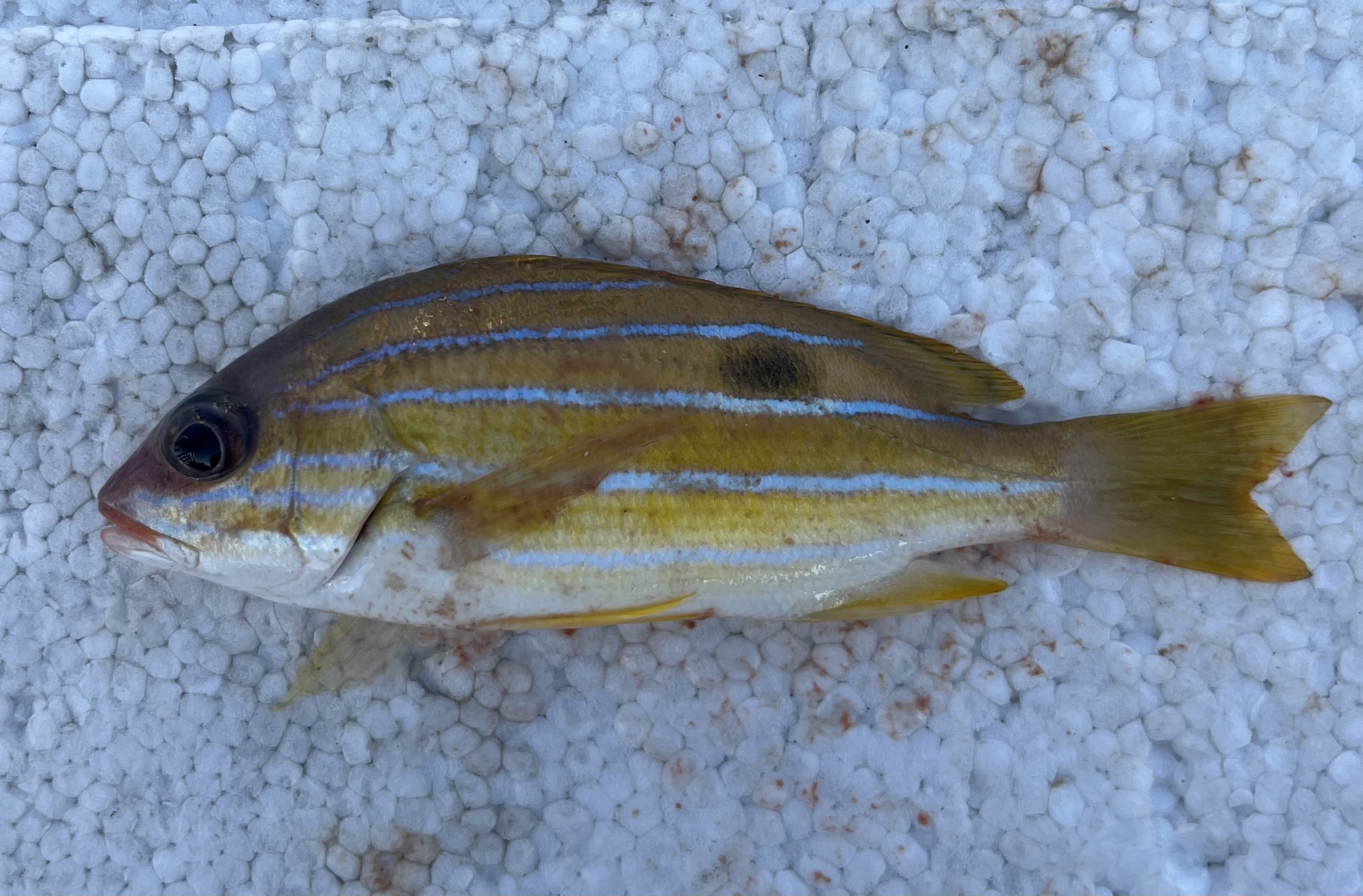
The five-lined snapper is an Indo-West Pacific lutjanid, from the Persian Gulf and Gulf of Oman to Fiji, north to southern Japan. Older literature referred to it as Lutjanus spilurus. It is recorded as marine and reef-associated, at 2–40 m, in tropical water from 35°N to 37°S and 42°E to 176°W. FishBase gives a maximum of 38 cm total length, a common length of 30 cm total length and a maximum reported age of 31 years. IUCN lists it as Least Concern, assessed on 5 March 2015.
Yellow body, blue lines, one black spot
The dorsal fin has 10 spines and 13–15 soft rays; the anal fin has 3 spines and 8 soft rays. The dorsal profile of the head is steeply sloped; the preorbital width is usually less than the eye diameter; the preopercular notch and knob are well developed; scale rows on the back rise obliquely above the lateral line; body depth is 2.3–2.9 times in standard length. Colour is the best field mark: generally bright yellow, including the fins, with a series of blue stripes along the side; a round black spot about the size of the eye or larger sits below the anteriormost soft dorsal rays, touching the lateral line but mostly above it. Blue stripes, yellow ground and the black spot together are close to unmistakable; the “five lines” are blue, not five dark bars.
Lagoons, outer slopes and big schools
FishBase's range is the Indo-West Pacific: the Persian Gulf and Gulf of Oman to Fiji, north to southern Japan. The country table includes the Andaman and Nicobar Islands, Australia, Bahrain, Bangladesh, Cambodia, China, the Cook Islands, Djibouti, Fiji, Guam, Hong Kong SAR, India, Indonesia, Iran, Iraq, Japan, Kiribati, South Korea, Kuwait, Lord Howe Island, Macau, Malaysia, Myanmar, New Caledonia, Oman, Pakistan, Papua New Guinea, the Philippines, Qatar, the Ryukyu Islands, Samoa, Saudi Arabia, Singapore, Socotra, the Solomon Islands, Sri Lanka, Taiwan region, Thailand, Timor-Leste, Tokelau, Tonga, Tuvalu, the UAE, Vanuatu, Vietnam, Wallis and Futuna and Yemen. Adults live on sheltered lagoons and exposed outer-slope reefs; they are often found in large aggregations, sometimes over 100 fish, at moderate depths usually of 30–40 m in some Pacific locations; juveniles are solitary in shallow, protected bays with algae and rubble; they feed mainly on fishes and crustaceans. GBIF's 2,801 records are led by Australia (1,731), New Caledonia (263), Japan (241), Indonesia (140), the Philippines (82), Thailand (52), Taiwan region (45), Fiji (37), Tonga (32) and India (22); iNaturalist has a taxon for the species.
A southern-hemisphere spawning record
FishBase gives a single spawning record: January, November and December in New Caledonia. That is a southern-summer window and cannot be moved directly to the northern hemisphere; it shows the New Caledonian population spawns in the warm season, and elsewhere the timing must be worked out locally. No water temperature is recorded, only the tropical label and the 35°N–37°S band. Plan around local temperature and tide. Adults school at 30–40 m, so boat fishing meets them more often than shore fishing, and slack water or the change of tide is the main window.
School fishing
Boat fishing is the main approach, with bottom rigs and light metal jigs both working. Because it schools, once a group is found, prawn, fish chunk and squid strip can produce fish after fish; hooks should be small, since a 30 cm fish has a small mouth. Lures are 40–80 g metal jigs or jighead soft plastics, dropped to the bottom and worked with sharp lifts and falls to imitate a wounded fish; school fish compete, so steer the hooked fish away from the reef quickly to avoid tangles. Juveniles sit in shallow bays over algae and rubble and can be reached with small soft plastics from shore; release them.
Light tackle, slow growth
For 38 cm maximum and 30 cm common length, use a medium boat rod, a 3000–5000 spinning reel, 1–1.5 braid and a 20–30 lb fluorocarbon leader. The fish is not large, but it lives in reef schools, so the leader must resist abrasion; heavy tackle is unnecessary. The 31-year maximum age matters: a 38 cm fish can live over three decades and grows slowly, so the bag should be conservative. No maturity length is recorded, so no release size can be defended; keep a middle-sized fish and release fish near the maximum.
Eating and the rules
Recorded uses are commercial fisheries, gamefishing and the commercial aquarium trade. Steam, braise or soup the flesh; bleed, gut and ice promptly. The threat field says harmless and there is no ciguatera report, but large reef snappers should still follow local advice. In Taiwan region, the Fisheries Agency and local governments manage inshore fishing through closed areas, closed seasons, gear restrictions and minimum sizes. Hong Kong SAR's Fisheries Protection Ordinance regulates methods, and marine parks and reserves prohibit angling and collecting. Southeast Asian states differ widely, with Malaysia, Indonesia, the Philippines and Thailand setting size and closed-season rules and usually prohibiting take in core protected-area zones. Check the current local notice.
What the record leaves open
The page uses FishBase taxonomy, morphology, distribution, environment, biology, reproduction, use and IUCN entries, with the country table for range and GBIF/iNaturalist for occurrence. The spawning months are one New Caledonian record and are flagged as a southern-hemisphere signal, not extrapolated. No temperature or maturity length is recorded and no estimates are added. and are local aliases; the formal name is .
How to catch it
Bottom fishing
Fished with the listed approach, matched to the recorded depth and size.
Jigging
Fished with the listed approach, matched to the recorded depth and size.
Lure fishing
Fished with the listed approach, matched to the recorded depth and size.
Where these facts come from
Check these pages before you rely on a size, range or protection status.
- FishBase — Lutjanus quinquelineatus — FishBase · T2
- GBIF — Lutjanus quinquelineatus occurrence records — GBIF · T2
- IUCN Red List — Lutjanus quinquelineatus — IUCN · T1
- Photo record — iNaturalist — iNaturalist · T3
Fish in the same water
These fish live in the same place.
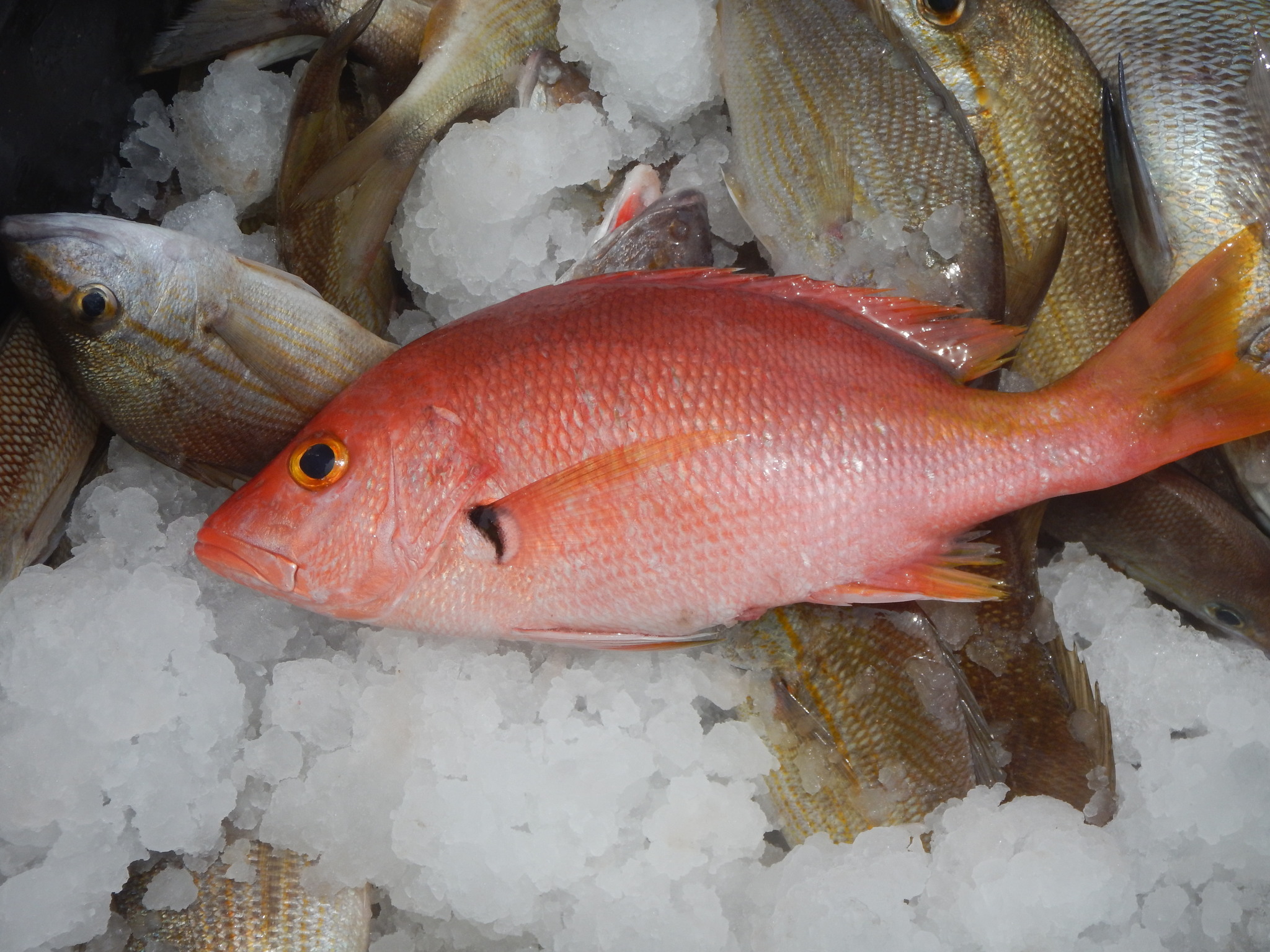
Blackfin snapper
- Family
- Lutjanidae
- Depth
- 20–200 m
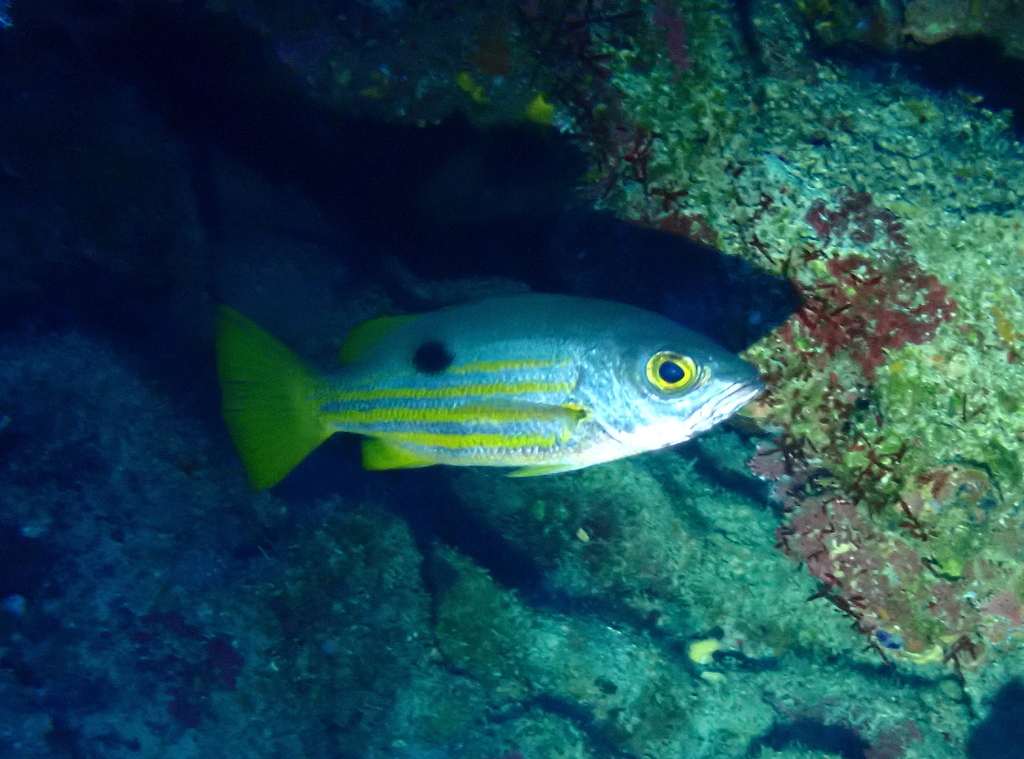
Blackspot snapper
- Family
- Lutjanidae
- Depth
- 5–20 m
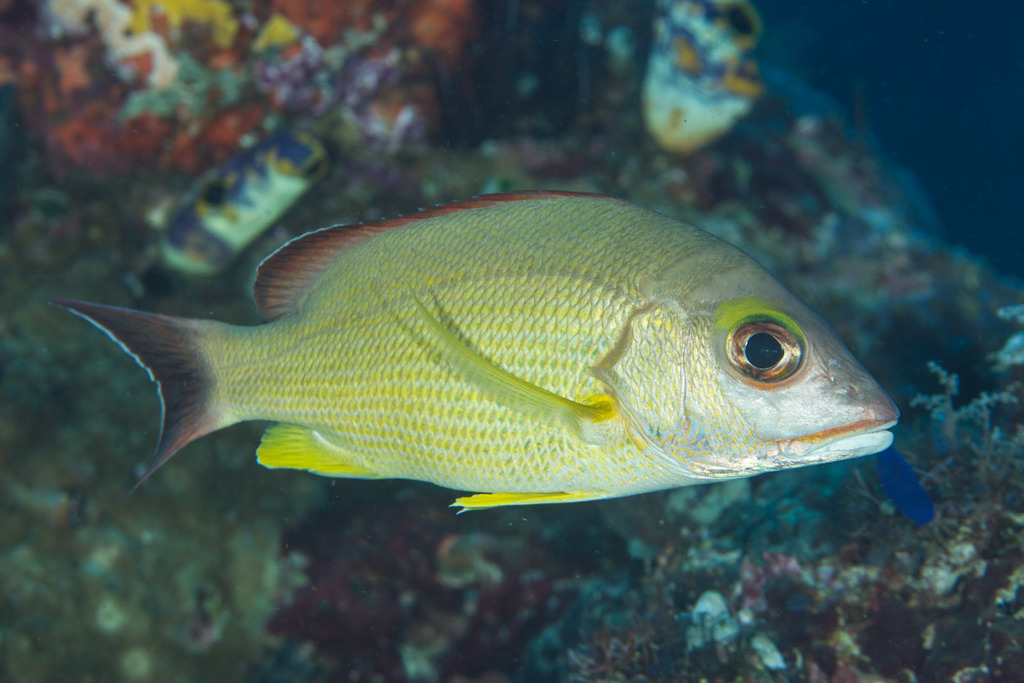
Blacktail snapper
- Family
- Lutjanidae
- Depth
- 1–80 m
- Season
- Jan, Feb, Mar, Apr, May, Jun, Jul, Aug, Sep, Oct, Nov, Dec
Guides for this water
Technique, gear and safety guides that fit Five-lined snapper.