
Silk snapper
Silk snapper is a deep-shelf lutjanid, recorded from North Carolina and Bermuda to southern Brazil and most abundant around the Antilles and Bahamas. It works 90 to 242 m, feeds on fish, crustaceans and cephalopods, and is red with a yellow eye and no pectoral blotch. It reaches 83 cm and 8.3 kg. Boat bottom fishing, drifting and electric reels are the methods listed.
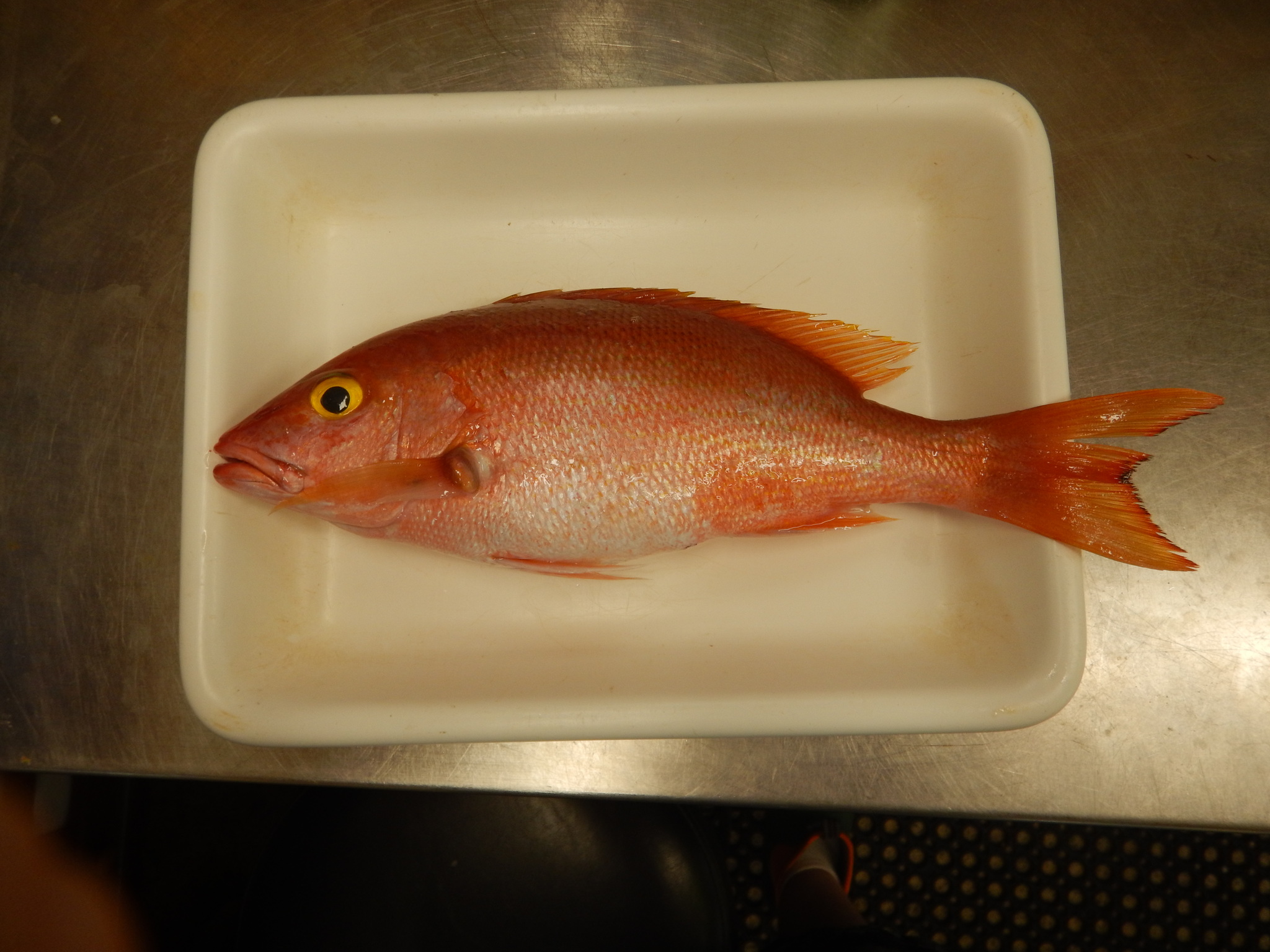
Silk snapper is a Lutjanidae snapper of the deep shelf edge, recorded from North Carolina and Bermuda to southern Brazil and most abundant around the Antilles and Bahamas. It is red with a yellow eye and no pectoral blotch, reaches 83 cm and 8.3 kg, and feeds on fish, crustaceans and cephalopods.
Identification
Silk snapper is a slim red snapper with a yellow eye and a silky, almost lacquered sheen on the flank. The pectoral fin base is plain, with no black blotch, and the fins carry a reddish to pale margin rather than a hard black edge.
FishBase gives 83 cm total length, a common 45 cm, 8.3 kg and maturity at about 41.6 cm. Blackfin snapper is shorter-bodied, has a black pectoral blotch and usually sits shallower at 80 to 150 m; queen snapper has a much larger eye and a more slender body.
Distribution and Habitat
Recorded from North Carolina and Bermuda south to São Paulo, Brazil, and described as most abundant around the Antilles and the Bahamas. The Gulf of Mexico sits at the western edge of the range, where records are thinner than in the Caribbean.
Depth is 90 to 242 m, usually 90 to 140 m, near the edge of the continental and island shelves. Adults may descend below 200 m and commonly rise into shallower water at night, which is why evening and night drifts can outfish midday.
Habits and Diet
Silk snapper feed on fishes, shrimps, crabs, gastropods, cephalopods and tunicates, a broad menu that makes cut bait and squid both work. They are fish of the shelf edge rather than the shallow reef.
The nightly ascent is the behaviour worth planning around. Fish sitting deep in the afternoon often move up after dark, so the same drift line can be fished shallower at night with less lead.
Fishing Methods
Deep bottom fishing along the shelf edge is the standard method. Heavy lead holds a cut bait on the contour while the boat drifts, and the bait should just tick bottom rather than drag.
At night, shorten the leader and lift the bait 10 to 20 m off the bottom. The bite is usually a steady pull rather than a run, so set the hook with a smooth lift and keep winding.
Gear and Approach
Forty pound braid, a 40 to 60 lb leader, 6/0 to 8/0 circle hooks and 10 to 20 oz of lead are normal at these depths. A 6 to 7 ft heavy rod with a conventional or electric reel handles both lead and current.
Silk snapper have soft mouths and come up through 100 m of water, so a smooth drag matters more than brute power. Keep a descending device aboard for releases.
Seasonal Window
Fish are present all year and the Deepwater Horizon-era pattern of summer and autumn calm is when small boats reach the 90 to 140 m line most often. Winter trips are possible but weather-dependent.
Spawning records are scattered: November and December off Ceará, Brazil, February to November in Cuba, and mature fish in every month in Puerto Rico. There is no single closed season for the species in federal Gulf waters.
Edibility and Handling
Marketed fresh and described as a good food fish, with white flesh that holds together well on the grill.
Bleed and ice immediately, and keep the fish out of the sun on the run home. FishBase notes ciguatera reports, so large individuals from known areas are a poor choice for regular meals.
Regulations and Conservation
In the federal Gulf EEZ, the snapper aggregate is 10 per person per day, excluding red, lane and vermilion snapper, with mutton snapper capped at 5. Silk snapper has no federal minimum size and no species-specific closure.
Florida uses a 10 fish snapper aggregate with no state minimum for silk snapper. Louisiana also allows 10 per day with no state minimum, but a Recreational Offshore Landing Permit is required to possess or transport the fish.
Mississippi allows 10 per day with no state minimum. Alabama does not list silk snapper separately and applies its 20 fish reef-fish aggregate. Texas does not list the species in state water, so federal rules apply beyond 9 nautical miles. The IUCN Red List lists silk snapper as Least Concern, assessed 10 October 2015. Rules change yearly, so check the current notices before you go.
How to catch it
Boat bottom fishing
Drift fishing
Electric reel
Where these facts come from
Check these pages before you rely on a size, range or protection status.
- FishBase — Lutjanus vivanus — FishBase · T2
- GBIF — Lutjanus vivanus occurrence records — GBIF · T2
- IUCN Red List — Lutjanus vivanus — IUCN · T1
- Photo record — iNaturalist — iNaturalist · T3
Fish in the same water
These fish live in the same place.
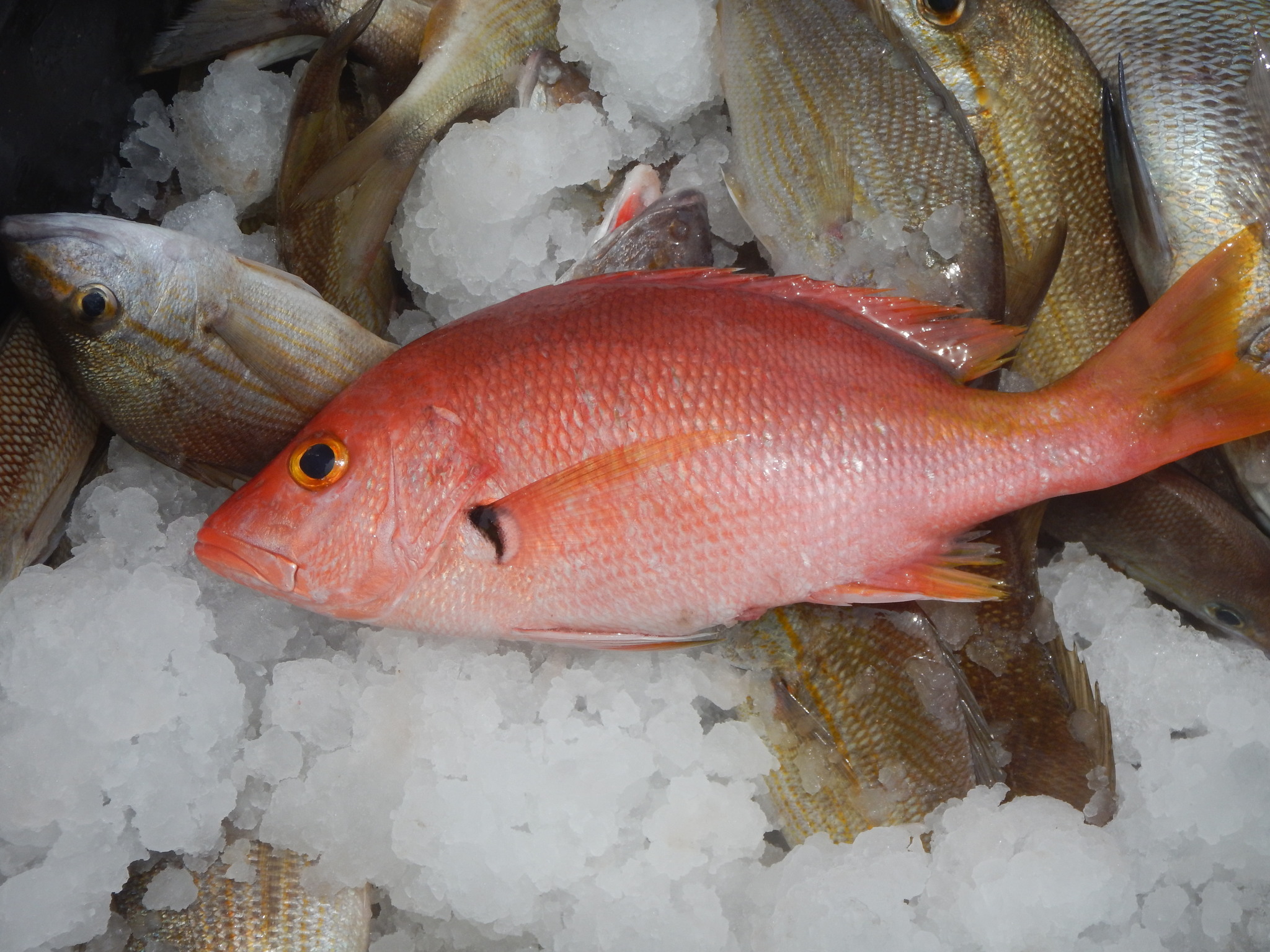
Blackfin snapper
- Family
- Lutjanidae
- Depth
- 20–200 m
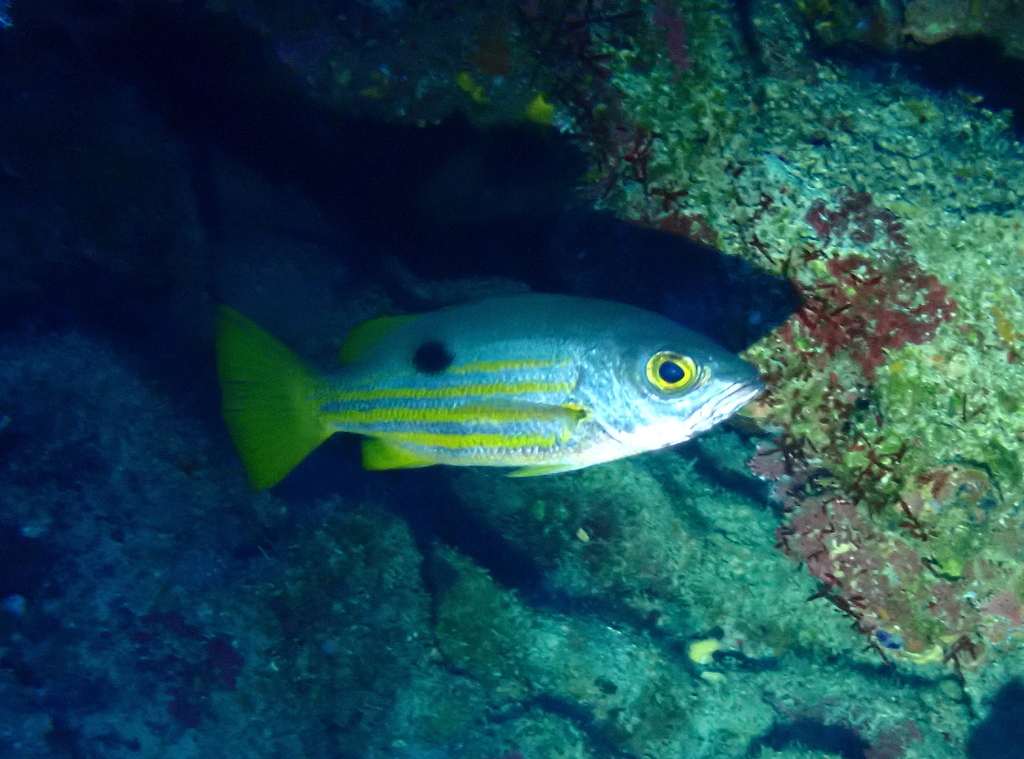
Blackspot snapper
- Family
- Lutjanidae
- Depth
- 5–20 m
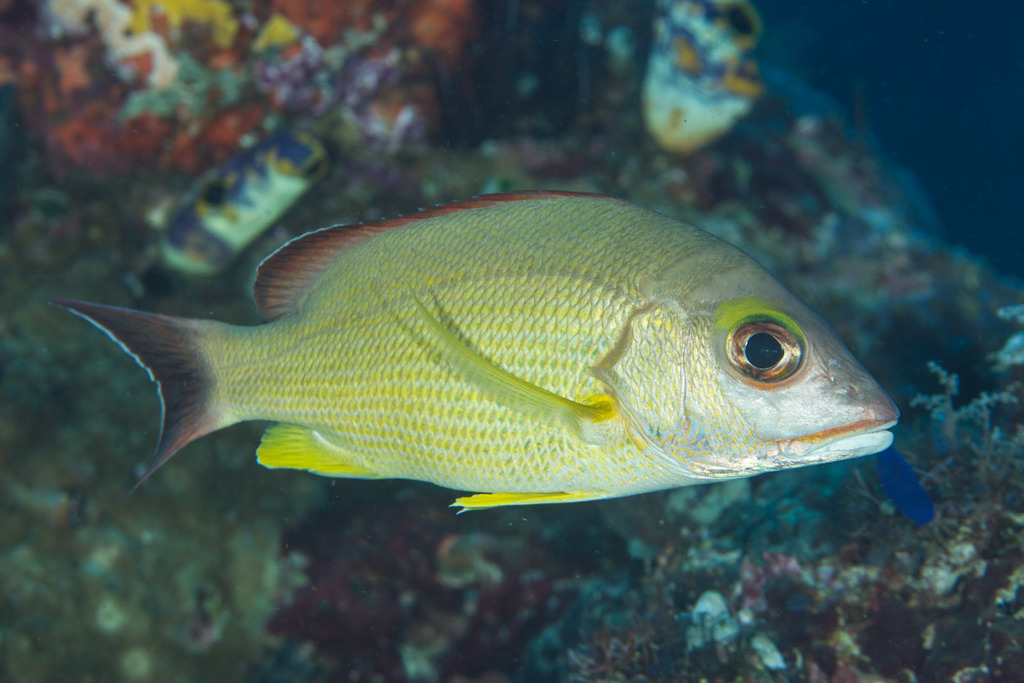
Blacktail snapper
- Family
- Lutjanidae
- Depth
- 1–80 m
- Season
- Jan, Feb, Mar, Apr, May, Jun, Jul, Aug, Sep, Oct, Nov, Dec
Guides for this water
Technique, gear and safety guides that fit Silk snapper.