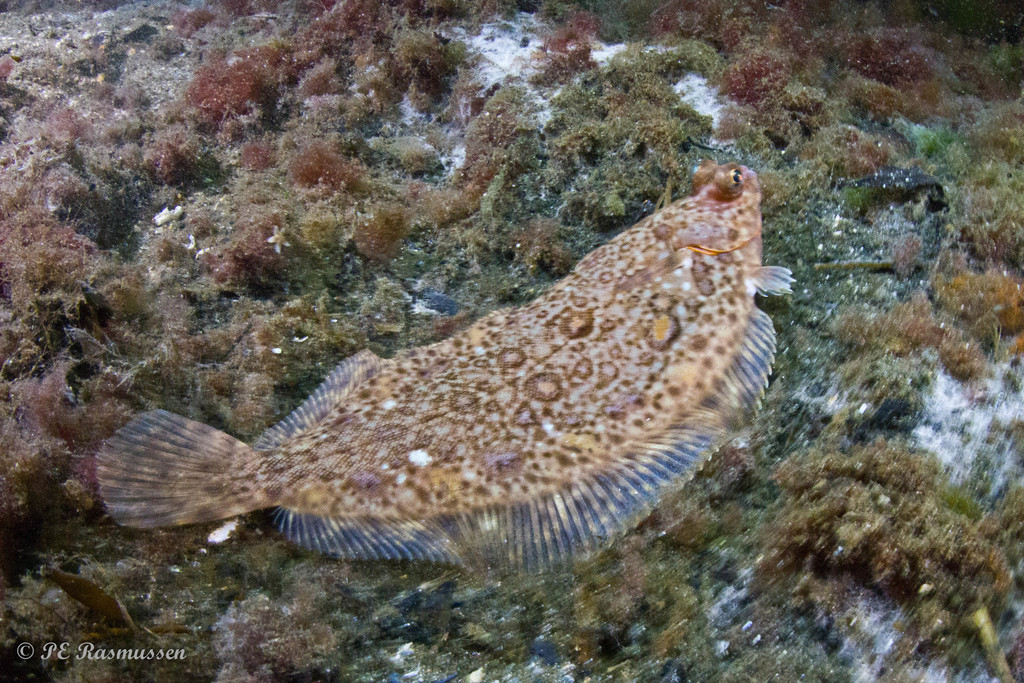
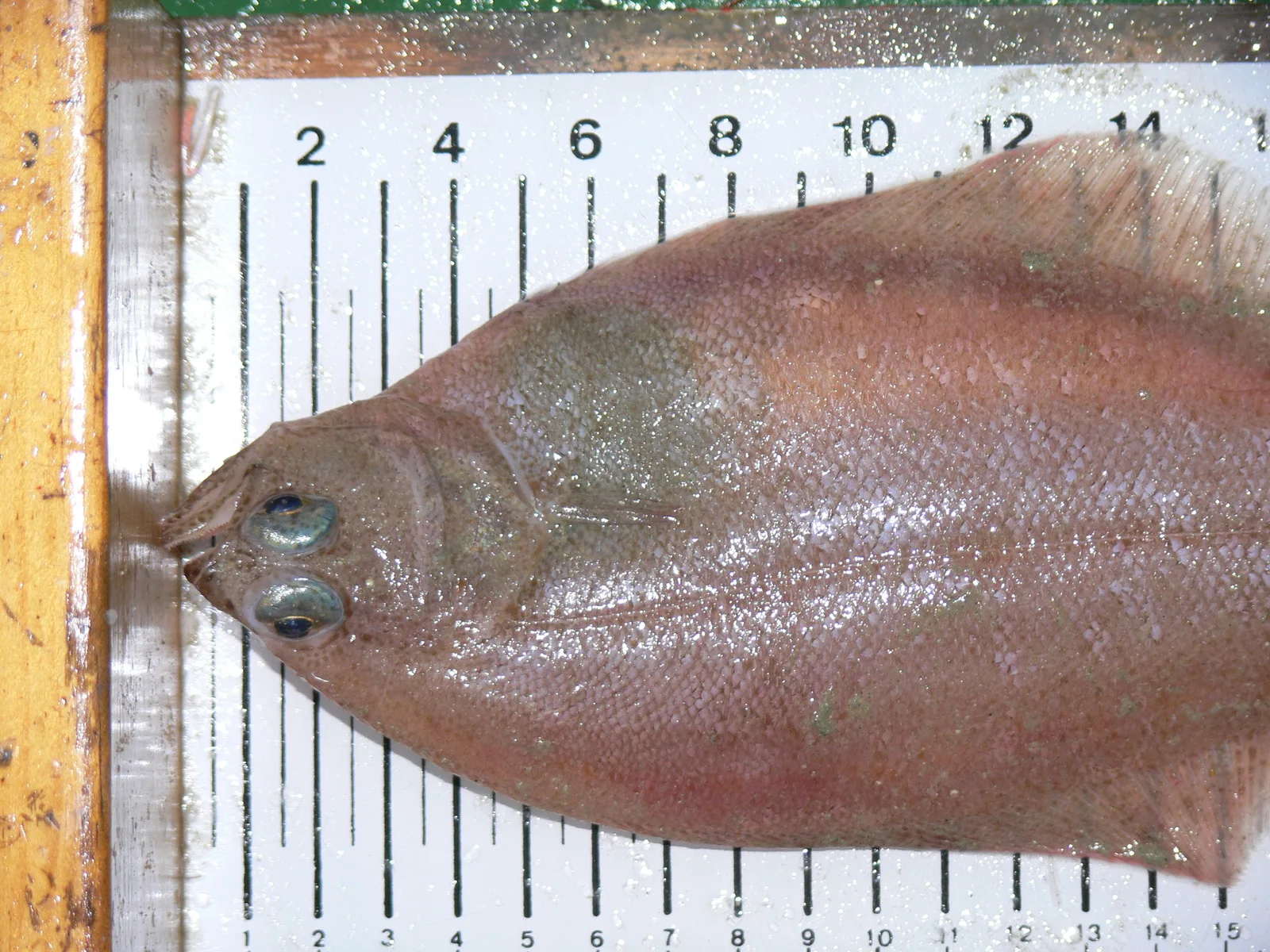
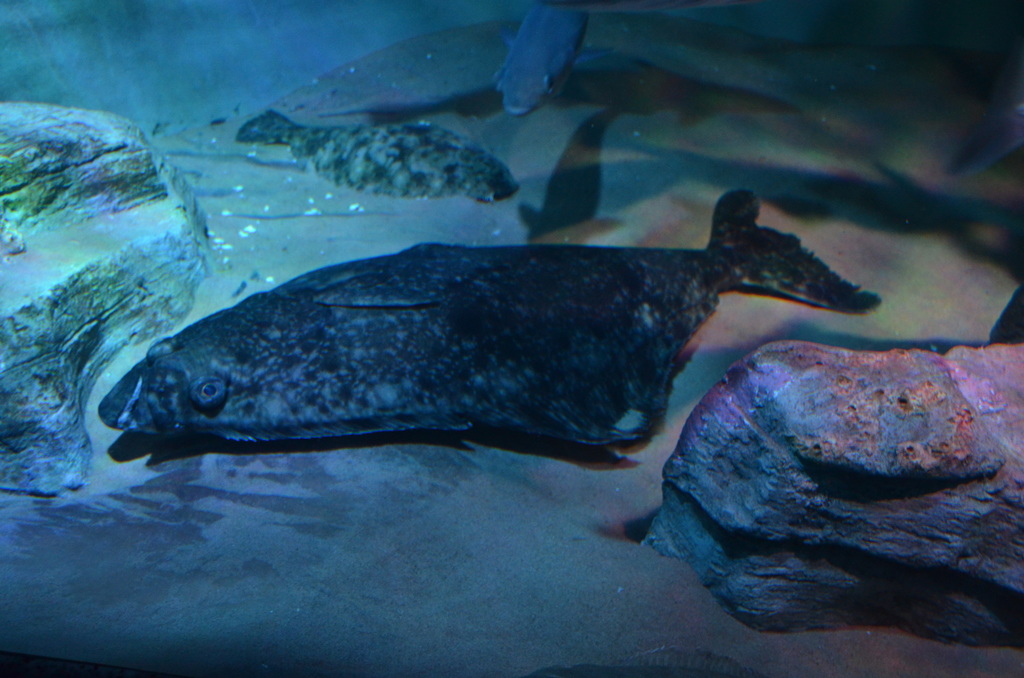
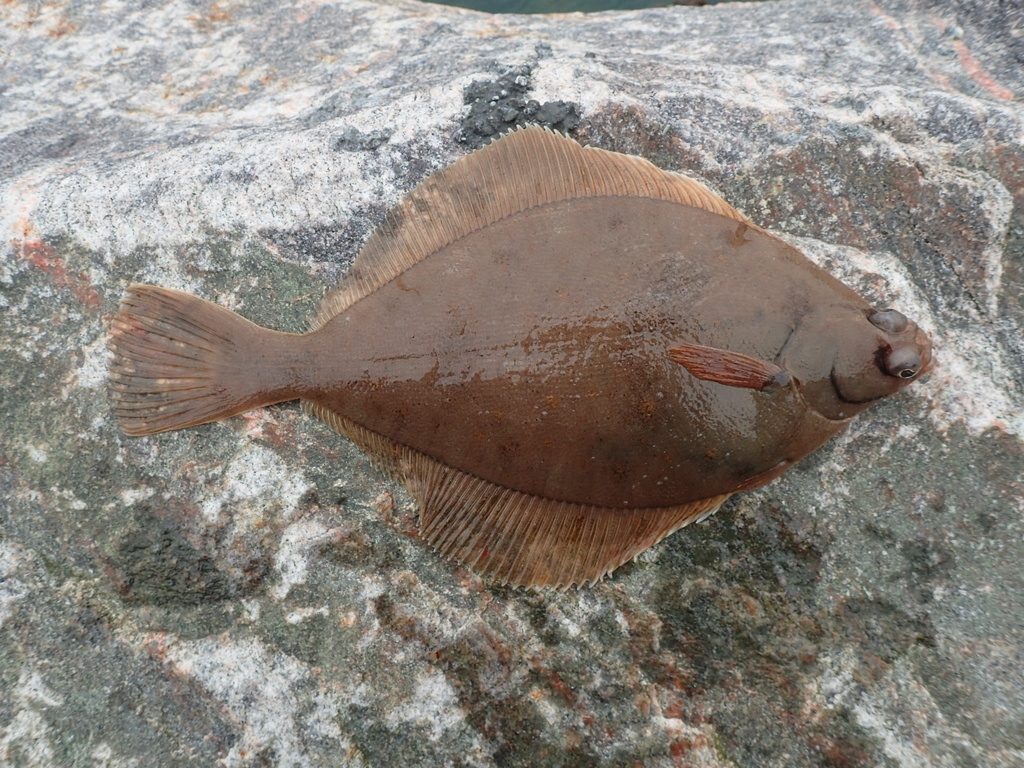
The structured habitat row for this species is empty. No substrate keyword, no bottom type, nothing to filter a mark by. The prose sources then disagree about what that empty row should contain: the encyclopaedic summary puts the fish on stony bottoms down to about 1,400 metres, while the FishBase page stops its depth range at 200. An empty field here is not an absent fact; it is the first instruction for finding the fish.
The habitat row is empty
The species table carries no habitat keyword at all, and the diet keyword is the single word "worms". That combination is unusual: most flatfish records name at least a bottom type. This one names food and leaves the ground blank.
The summary fills the blank with "stony bottoms". Stony is not sand and not mud: it is a mixed ground where a lead can lodge, a hook can hang, and a flatfish can lie between stones rather than on a flat plain. The prose word is the only bottom description anywhere in the sources, and because the structured row says nothing, it is the one to carry to the chart.
Stony to fourteen hundred, or a record that stops at two hundred
The same summary says the stony grounds run down to about 1,400 metres. The FishBase depth field reads 10–200 metres, usually 10–150.
The gap is no small calibration error: it is a factor of seven. This article will not choose between them. What can be said is that 1,400 metres is a statement about the species' tolerance, while 200 metres is the limit of the sampled range in the source that supplies the fishing data. The usual band, 10–150 metres, belongs to the second source and is the only one that describes where the fish is normally encountered.
Ten to two hundred, with a usual band
Unlike some deep-water flatfish pages, this record does give a usual band: 10 to 150 metres inside a recorded maximum of 200. The box spans latitudes 72°N to 43°N and longitudes 26°W to 45°E, which is the northeast Atlantic from the White Sea to the Bay of Biscay.
That usual band is the most actionable number on the page. It identifies a shelf animal rather than an abyssal one, and it puts the working depth in the same range as most continental-shelf flatfishing. The 1,400 metre sentence should not pull the plan deeper; it belongs in a separate note about tolerance.
GBIF's distribution layer returns 17 records across seven countries — Belgium, Denmark, France, Ireland, Norway, Sweden and the UK — all native, with the Irish and Belgian exclusive economic zones named. The iNaturalist taxon page carries 76 observations. Neither layer changes the depth reading; together they confirm that the published records are concentrated on the same northeast Atlantic shelf that the usual band describes.
No common length, a 29.3 cm maturity
The record's maximum is 65 cm TL; the heaviest fish weighed 3 kg; the oldest was 23 years; first maturity is 29.3 cm, spanning 20–30 cm. The common-length cell is empty.
The maturity figure is close to half the maximum length, and the range is narrow enough to be usable: a 20 cm fish is at the bottom of the recorded range, a 30 cm fish is at the top. The missing common length means the page cannot say what a typical fish measures, so the maturity line is the better anchor. Twenty-nine centimetres is the only middle value the record provides.
Eight spawning rows from one coast
The spawning table has eight rows, running from March to November. Seven of the eight are Scottish or North Sea records: Aberdeenshire, the east coast of Scotland, the Moray Firth, the Shetlands, the west coast, west of the Orkneys, and the west central North Sea. The eighth is simply "Northeast Atlantic".
Eight rows and one coast amount to a sampling pattern rather than a range statement. The table documents nine months of spawning records in the northern half of the species' range; it does not claim nine months of spawning everywhere. The single "Northeast Atlantic" row is the only entry that is not British, and it is also the least specific.
Worms, and a small head
The diet keyword is "worms", and the Chinese name describes the small head. There is no second prey category and no size of worm given.
For bait, that is a narrow but real instruction: the record supports a worm-type presentation on the bottom, not a fish bait and not a chasing lure. The small head and the worm diet together suggest a fish that picks rather than swallows, which is consistent with the stony ground description but is still an inference, not a sourced fact.
Lemon sole is a trade name
FishBase lists Lemon sole, Lemon dab, Lemon fish, Mary sole, Smear dab and Sweet fluke as English names, with Lemon sole as the FAO name. The Chinese table lists only and .
Six English names for one fish is a market pattern, not a taxonomic one. Several of the names are British trade labels, and a buyer who asks for "sweet fluke" is asking for the same animal as a buyer who asks for "lemon sole". The Chinese name is more anatomical: small head, oily flounder. None of the labels changes the identification; the binomial does.
Prospect stone, fish the usual band
Start from the empty habitat row: the one bottom word in the record is stony, so look for mixed ground rather than clean sand. Fish the usual 10–150 metre band and treat 200 metres as the edge of the sampled range, not as a target.
Use 29.3 cm as the maturity anchor and expect the fish to take worm-type bait slowly rather than chase. The 1,400 metre claim stays in the record as a tolerance statement; it does not turn a shelf flatfish into a deep-water trip.
Regulations before you keep it
These are the published regulations for this fish. Read the number first. The notice below it is the actual regulation.
Minimum size3
The minimum size for Lemon sole in Spain is ≥25 cm.
| Mendo limón (Microstommus kitt) | 25 |
The minimum size for Lemon sole in France is ≥25 cm.
| LIMANDE SOLE | Microstomus kitt | 25 cm |
≥25 cm (ICES divisions 7d and 7e only)
United Kingdom · UK
The minimum size for Lemon sole in UK waters is ≥25 cm (ICES divisions 7d and 7e only).
| Lemon Sole | Microstomus kitt | 25 cm (7d and 7e only) |
Every record above names its source and the date it was retrieved. See the regulation register for the full list, or how to read these regulations.
Where these facts come from
Check these pages before you rely on a size, range or protection status.
-
FishBase — Microstomus kitt
— FishBase · T2
-
GBIF — Microstomus kitt occurrence records
— GBIF · T2
-
IUCN Red List — Microstomus kitt
— IUCN · T1
-
Photo record — iNaturalist
— iNaturalist · T3