
Dusky smooth-hound
Dusky smooth-hound is a small triakid shark of the western Atlantic, from Massachusetts to Florida, through the Gulf and Caribbean, and from southern Brazil to northern Argentina. It reaches 150 cm TL with a common length of 100 cm and 12.2 kg, and matures at about 99.8 cm. May to July is the season. Shore casting and boat bottom fishing are the methods listed.
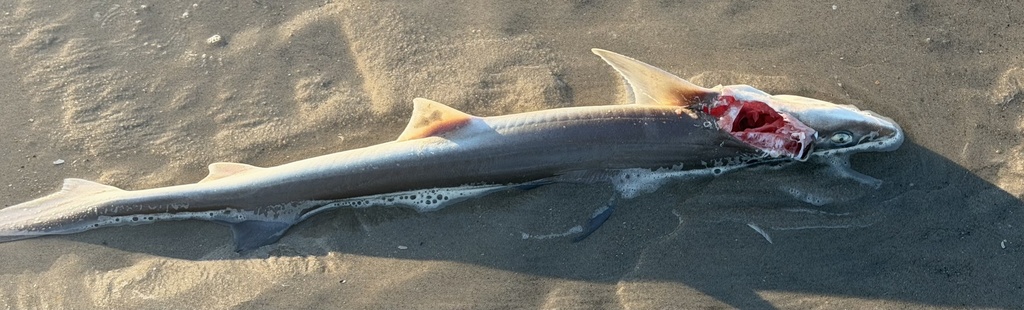
The dusky smooth-hound is a small triakid shark of the western Atlantic, recorded from Massachusetts to Florida, through the northern and western Gulf of Mexico and the Caribbean, and from southern Brazil to northern Argentina. FishBase gives a maximum length of 150 cm TL, a common length of 100 cm, a maximum published weight of 12.2 kg and a length at maturity of about 99.8 cm (95–100 cm). The depth range is 0 to 800 m, with most records between 18 and 200 m. It is also called the smooth dogfish.
Identification
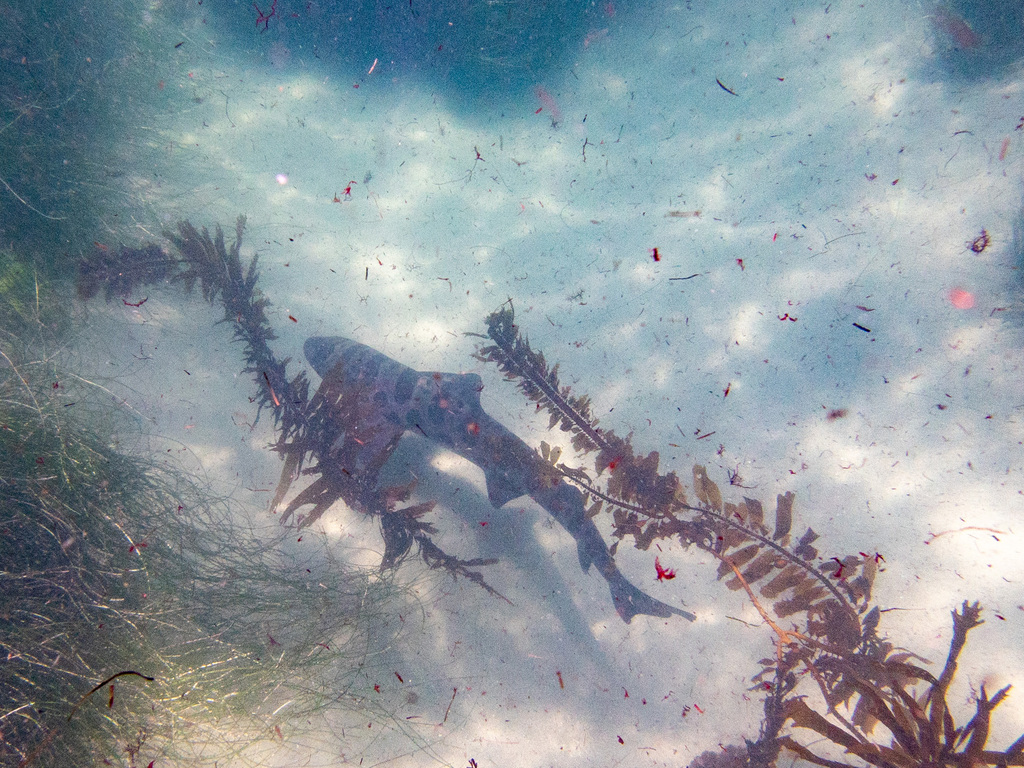
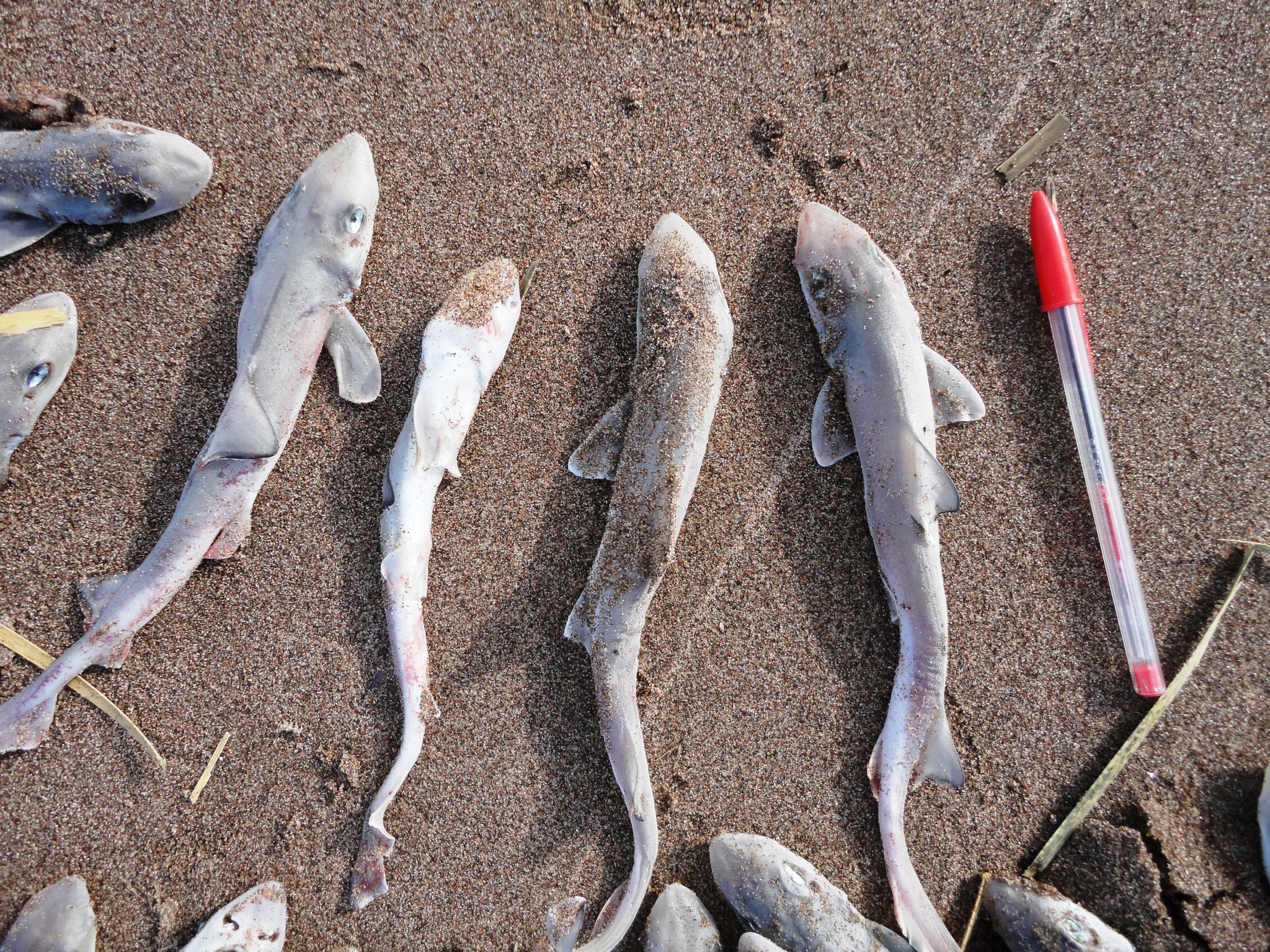
A small, slim shark with a blunt snout, olive-grey to brown above and white below, and no spots. The second dorsal fin is nearly as large as the first, and there are no dorsal spines. The teeth are flat and pavement-like, adapted to crushing rather than to cutting. That is the practical separation from a spiny dogfish, which carries dorsal spines and usually pale spots along the back; this species has neither.
FishBase records the body shape but no fin formula for this species, so these field marks should be checked against photographs before an identification is treated as certain.
Habitat and distribution
The species lives on continental and insular shelves and upper slopes, from the intertidal down to about 200 m and occasionally deeper. It swims in packs, is an active swimmer and a bottom feeder, and feeds mainly on large crustaceans, especially crabs, with lobsters also important. Populations off the U.S. Atlantic coast are migratory. Reproduction is viviparous with a yolk-sac placenta, with 4 to 20 young per litter.
The range covers the western Atlantic from Massachusetts to Florida, the Gulf of Mexico, Cuba, Jamaica, Barbados, Bermuda and the Bahamas, with a separate southern population from Brazil to Argentina. GBIF holds 8,859 records, 8,489 of them from the United States.
Season and fishing approach
FishBase's spawning table has a single entry: May to July off New England. That is a spawning signal, not a promise of fish on any given tide. Because the U.S. Atlantic population is migratory, the practical shore window is the warm season, with fish moving offshore or south as the water cools.
The approved methods for this line are shore casting and boat bottom fishing. Fish crab, shrimp, squid or fish strips on the bottom. The species hunts by smell, so a strong-scented bait is more useful than a live one, and the last of the flood or first of the ebb carries that scent along the bottom.
Edibility and regulations
FishBase records the species as a commercial catch and a gamefish, utilised fresh, dried-salted and smoked. Sharks need fast handling for the table: bleed, gut and ice them promptly.
The IUCN Red List category is NT (Near Threatened), assessed on 21 June 2019. In U.S. Atlantic federal waters, smoothhound sharks have no minimum size and no federal bag limit, and no species-specific federal closed season was verified. State rules can add limits, so check the state where you land the fish. Given the Near Threatened status, releasing fish — particularly large females — is the conservative choice.
How to catch it
Shore casting
Fished with the listed approach, matched to the recorded depth and size.
Boat bottom fishing
Fished with the listed approach, matched to the recorded depth and size.
Where these facts come from
Check these pages before you rely on a size, range or protection status.
- FishBase — Mustelus canis — FishBase · T2
- GBIF — Mustelus canis occurrence records — GBIF · T2
- IUCN Red List — Mustelus canis — IUCN · T1
- Photo record — iNaturalist — iNaturalist · T3
Fish in the same water
These fish live in the same place.

Guides for this water
Technique, gear and safety guides that fit Dusky smooth-hound.